Xin Zhongshi Runway Trends at Paris Fashion Week 2026
The 2026 Xin Zhongshi Movement on the Global Stage
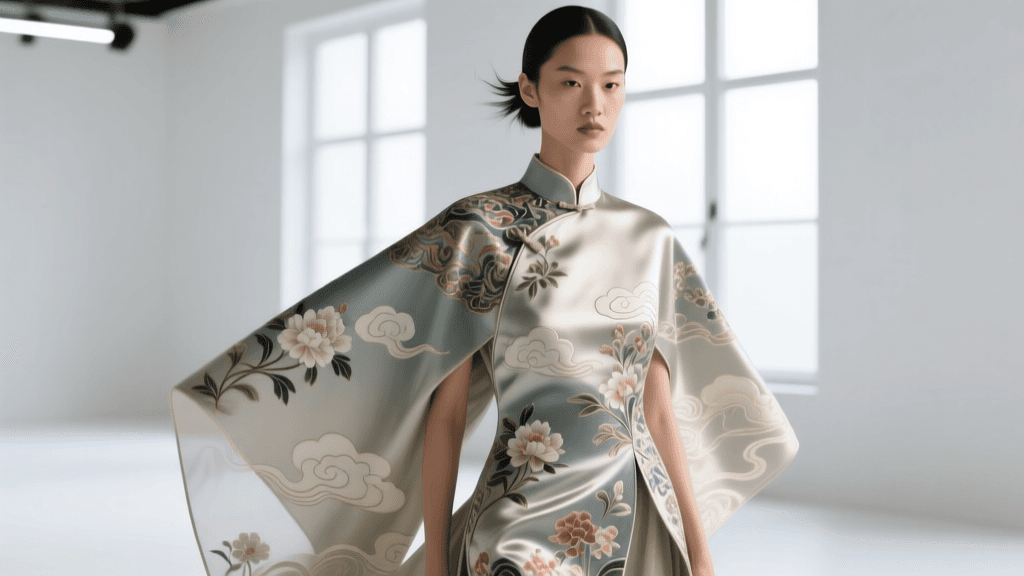
The Spring/Summer 2026 runway season has unequivocally cemented Xin Zhongshi (New Chinese Style) as a dominant force in international haute couture and ready-to-wear. No longer confined to niche streetwear or localized boutique markets, Chinese heritage fashion has taken center stage at Paris and Milan Fashion Weeks. This year, the narrative has shifted from superficial motif appropriation to a profound, structural integration of ancient weaving techniques, traditional silhouettes, and indigenous textile craftsmanship. Designers are deconstructing Ming dynasty outerwear, reimagining Tang dynasty drapery, and utilizing centuries-old dyeing methods to create garments that speak to a modern, global aesthetic while remaining deeply rooted in Asian traditions.
At the Palais de Tokyo and the Grand Palais Éphémère, the 2026 collections showcased a sophisticated maturation of the Xin Zhongshi movement. The focus is heavily on materiality and the tactile experience of heritage fabrics. International buyers, fashion archivists, and cultural enthusiasts are now looking past the silhouette to examine the very threads that compose these garments. Understanding the origins, applications, and sourcing logistics of these textiles is essential for anyone looking to acquire, study, or preserve these runway masterpieces.
Xiangyunsha: The Gambiered Silk of 2026
Among the most celebrated textiles on the 2026 runways is Xiangyunsha, often referred to as gambiered silk or 'soft gold.' Originating from the Guangdong province, this unique fabric is created through a painstaking, multi-step process involving the dyeing of silk with the juice of the Dioscorea cirrhosa (a type of yam) and subsequently coating it with iron-rich mud from specific riverbeds. The chemical reaction between the tannins and the iron creates a distinctive, dual-toned fabric that is black on one side and rich brown on the other, characterized by a subtle, crackled texture and a crisp, papery drape.
The cultural and historical significance of this craft is immense. As recognized by the UNESCO Intangible Cultural Heritage registry, traditional Chinese silk craftsmanship represents a vital link to ancient agrarian and artisanal practices. On the 2026 runways, designers like Uma Wang and emerging avant-garde labels have utilized Xiangyunsha for fluid, oversized trench coats, wide-leg trousers, and structured, asymmetrical wrap dresses. The fabric's natural water-resistance and cooling properties make it exceptionally well-suited for modern trans-seasonal wear, bridging the gap between historical utility and contemporary luxury.
Song Brocade and Su Embroidery in Modern Couture
While Xiangyunsha provides fluidity, Song Brocade (Song Jin) offers architectural rigidity. Originating from Suzhou during the Song Dynasty, this intricate jacquard-woven silk features complex geometric and floral patterns woven with multiple colored threads and, occasionally, metallic yarns. In the 2026 couture presentations, Song Brocade has been repurposed away from traditional flat panels and instead used for structured corsetry, sharp lapel detailing on oversized blazers, and avant-garde bodices. The stiffness of the brocade allows designers to manipulate the fabric into gravity-defying shapes that echo traditional Hanfu collars and Ming dynasty armor.
Complementing the structural brocades is the delicate art of Su Embroidery. Known for its incredibly fine needlework, split-silk threads, and photorealistic depth, Su Embroidery is being applied sparingly in 2026 to maximize impact. Rather than covering entire garments, designers are using it to create sheer, illusion-net overlays and isolated, three-dimensional floral motifs that appear to float across the collarbones and cuffs of evening gowns. The historical continuity of these techniques is meticulously documented by institutions such as The Metropolitan Museum of Art's Heilbrunn Timeline of Art History, which traces the evolution of Chinese silk from ancient trade routes to modern artistic expressions.
Data Table: Heritage Fabrics in 2026 Runway Collections
For boutique owners, private collectors, and design students looking to source these materials or understand the economic landscape of heritage textiles in 2026, the following data table outlines the current market realities for these premium fabrics.
| Textile | Origin Region | 2026 Runway Application | Sourcing Cost (Per Meter) | Lead Time |
|---|---|---|---|---|
| Xiangyunsha (Gambiered Silk) | Foshan, Guangdong | Draped outerwear, wide-leg trousers | $120 - $180 USD | 3 - 4 Months |
| Song Brocade (Song Jin) | Suzhou, Jiangsu | Structured corsets, lapel detailing | $250 - $400 USD | 5 - 6 Months |
| Su Embroidery (Bespoke Panels) | Suzhou, Jiangsu | Haute couture gowns, sheer overlays | $1,500+ USD (per panel) | 8 - 12 Months |
| Zhuang Brocade | Guangxi | Geometric accent panels, accessories | $90 - $130 USD | 2 - 3 Months |
Sourcing and Acquiring 2026 Runway Pieces
Acquiring authentic Xin Zhongshi pieces directly from the 2026 runway shows or sourcing the raw heritage textiles requires strategic planning and an understanding of the artisanal supply chain. For buyers looking to source raw Xiangyunsha or Song Brocade, direct engagement with mills in Foshan and Suzhou is necessary. In 2026, most heritage mills require a Minimum Order Quantity (MOQ) of 50 meters for custom colorways, though stock lots of traditional brown/black Xiangyunsha can sometimes be negotiated at 20-meter minimums.
When commissioning bespoke Su Embroidery panels for private collections, buyers must provide highly detailed technical packs. Artisans require 14-point measurement charts and precise vector files of the desired motifs. Because the silk threads are split into fractions as thin as 1/48th of a single strand, the lead time for a single, heavily embroidered bodice panel frequently exceeds ten months. It is highly recommended to factor in a 15% buffer for material waste and artisanal variations, as no two hand-woven brocades or hand-dyed silks are perfectly identical.
For collectors aiming to purchase finished runway samples, note that 2026 sample sizes typically conform to a standard EU 36 (US 4). If alterations are required, it is imperative to use tailors who specialize in heritage fabrics. Standard ironing will destroy the crackled patina of Xiangyunsha and flatten the raised weaves of Song Brocade. Tailors must use specialized steam-draping techniques and Teflon-coated pressing cloths to preserve the textile's structural integrity.
Archival Storage and Maintenance for Heritage Silks
The longevity of Xin Zhongshi garments relies heavily on proper archival storage. Heritage silks, particularly those dyed with natural, plant-based tannins like Xiangyunsha, are highly sensitive to environmental fluctuations. According to preservation guidelines echoed in the curatorial archives at the Victoria and Albert Museum's Asian Collections, maintaining a stable microclimate is non-negotiable for organic textiles.
- Climate Control: Store garments in a dark, climate-controlled environment maintained strictly at 18-20°C (64-68°F) with a relative humidity (RH) of 50-55%. Fluctuations in humidity can cause the natural dyes to bloom or the silk proteins to become brittle.
- Light Exposure: UV radiation is devastating to natural dyes. Garments must never be displayed in direct sunlight or under unfiltered halogen lighting. LED lighting with a UV filter, kept below 50 lux, is mandatory for exhibition.
- Physical Support: Never hang heavy Song Brocade garments or heavily embroidered pieces on standard hangers, as the weight will distort the warp threads over time. Instead, pad the folds with unbleached, acid-free tissue paper and store them flat in archival-grade polypropylene boxes.
- Protective Covers: Wrap Xiangyunsha pieces in unbleached cotton muslin. Avoid plastic dry-cleaning bags entirely, as they trap off-gassing chemicals and moisture, which can lead to irreversible mold growth on the organic mud-dye coating.
Exhibition Highlights and Cultural Impact
The 2026 exhibition circuit has fully embraced the Xin Zhongshi movement, providing unprecedented access for the public to study these garments up close. Major retrospectives in Paris and London are currently juxtaposing 15th-century Ming dynasty artifacts with their 2026 runway counterparts, highlighting the direct lineage of the tailoring techniques. These exhibitions not only validate the commercial success of Chinese designers on the global stage but also serve as vital educational platforms, ensuring that the intricate, time-honored techniques of Asian weaving and dyeing are preserved, respected, and continuously reinvented for the future of global fashion.