Hanfu Fabric Texture, Drape, and Comfort Guide 2026
The Xin Zhongshi Movement and the Science of Hanfu Drape
The Xin Zhongshi (new Chinese style) movement has reached an unprecedented zenith in 2026, seamlessly blending traditional Hanfu silhouettes with modern urban lifestyles. No longer confined to ceremonial wear, historical reenactments, or specialized photography, traditional garments like the mamianqun (horse-face skirt) and beizi (open-front coat) are now integrated into daily commutes and office environments. The secret to this successful transition lies not just in pattern cutting, but in advanced textile engineering and a deep understanding of fabric drape.
Unlike Western tailoring, which relies heavily on darts, seams, and structured interfacing to create three-dimensional shapes, traditional Hanfu utilizes a flat-pattern cutting system. The entire aesthetic silhouette—known in Chinese as chuí zhuì gǎn (the sense of drape or fluidity)—relies entirely on gravity, fabric weight, and the natural bias of the textile. In 2026, selecting the right fabric is the most critical decision a Hanfu wearer makes, dictating both the historical accuracy of the garment's flow and its all-day physical comfort.
Top Hanfu Fabrics Analyzed for 2026
To understand how traditional garments perform in modern settings, we must analyze the texture, drape coefficient, and skin-feel of the most prominent fabrics dominating the 2026 market.
1. Xiangyunsha (Gambiered Canton Gauze)
Often referred to as "soft gold" in the textile world, Xiangyunsha remains the pinnacle of luxury Hanfu fabrics. Originating from Guangdong, this silk is dyed using the juice of the gambier plant and coated with iron-rich river mud, a process that requires intense sunlight and manual labor. In 2026, authentic Xiangyunsha commands a premium price, often ranging from $180 to $350 per meter, due to the shrinking number of master dyers and strict environmental regulations on river mud harvesting.
Texture & Drape: Xiangyunsha possesses a unique dual-texture. The front is matte and slightly crisp, while the back (the mud-coated side) is glossy and smooth. Its drape is highly structural; it does not cling to the body but rather cascades in stiff, elegant folds. This makes it the absolute best choice for mamianqun, as the heavy weight (typically 120-150 g/m²) ensures the pleats remain razor-sharp and the skirt swings with a dignified, rhythmic momentum when walking.
2. Modern Bamboo-Silk Blends (Zhú Sī)
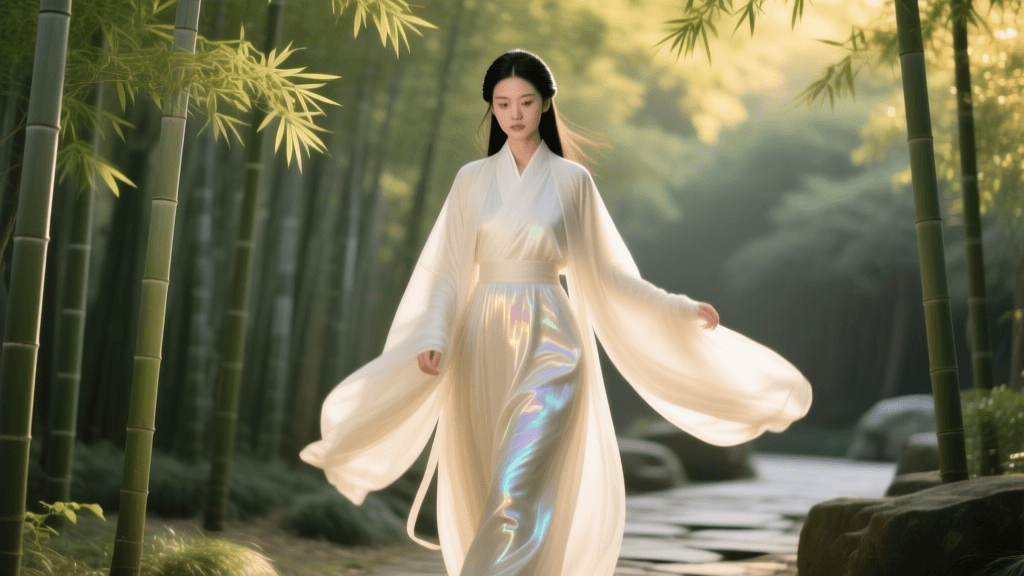
As sustainability and comfort take center stage in 2026 fashion, bamboo-silk blends have revolutionized the summer Hanfu market. By combining the tensile strength and luster of mulberry silk with the micro-porous, moisture-wicking properties of bamboo lyocell, textile mills have created a fabric that feels like liquid against the skin.
Texture & Drape: Zhú Sī is buttery soft with a subtle, pearlescent sheen. Its drape coefficient is exceptionally high, meaning it is highly fluid and tends to cling slightly to the body's natural curves. According to the Textile Exchange Preferred Fiber Matrix, modern bamboo lyocell blends offer superior thermal regulation compared to pure synthetic alternatives. This fabric is ideal for Song Dynasty-style beizi and lightweight summer ruqun, where a breezy, ethereal, and highly breathable silhouette is desired.
3. Song Brocade (Sòng Jǐn) vs. 2026 Jacquard Weaves
Historically, Song Brocade was a thick, stiff, and heavily ornate fabric used primarily for mounting scrolls or winter outerwear. Historical textile routes and the evolution of silk weaving are extensively documented by the UNESCO Silk Roads Programme, highlighting how ancient techniques inform modern drape expectations. Today, 2026 iterations of Song Brocade utilize advanced computerized jacquard looms and finer mercerized cotton or rayon warp threads to reduce the fabric's rigidity.
Texture & Drape: Modern Song Brocade features a raised, tactile texture with intricate woven motifs (such as cranes, lotuses, or geometric lattices). While it lacks the fluidity of bamboo-silk, its medium-weight drape provides excellent volume and structure. It is the premier choice for winter aoqun (jacket and skirt sets) and formal outerwear, as it holds its shape against the wind without requiring heavy synthetic linings.
2026 Fabric Drape & Comfort Comparison Matrix
The following table provides a structured analysis of the top Hanfu fabrics available in 2026, measuring their physical properties against their ideal garment applications.
| Fabric Type | Weight (g/m²) | Drape Coefficient | Breathability Index | Best Hanfu Garment | 2026 Avg. Cost/Meter |
|---|---|---|---|---|---|
| Xiangyunsha (Gambiered Silk) | 120 - 150 | Medium-Structural | High | Mamianqun (Horse-face skirt) | $180 - $350 |
| Bamboo-Silk Blend (Zhú Sī) | 60 - 85 | High-Fluid | Very High | Beizi (Open-front coat), Summer Ruqun | $45 - $90 |
| Modern Song Brocade (Jacquard) | 180 - 220 | Low-Structured | Low-Medium | Winter Ao (Jacket), Formal Outerwear | $60 - $120 |
| Mulberry Silk Crepe de Chine | 90 - 110 | Medium-Fluid | High | Shan (Inner shirt), Pleated skirts | $70 - $130 |
Comfort and Skin-Feel Analysis
Comfort in traditional garments is dictated by three main factors: friction, thermal regulation, and moisture management. The structural evolution of these garments can be traced through historical artifacts, such as those preserved in The Metropolitan Museum of Art's Silk Collection, which serves as a benchmark for authentic textile weight and weave density. However, modern wearers demand more than just historical accuracy; they require textiles that perform in climate-controlled offices and humid summer streets.
- Friction and Chafing: Pure silk can sometimes create static friction against modern synthetic undergarments. Bamboo-silk blends neutralize this static, providing a frictionless glide that prevents the outer Hanfu layers from bunching up around the waist or shoulders.
- Thermal Regulation: Xiangyunsha's unique mud-coating process creates a microscopic porous layer on the fabric's surface. This makes it naturally antibacterial and incredibly cooling to the touch, acting as a natural heat sink in high-temperature environments.
- Moisture Management: For humid climates, avoiding pure polyester jacquards is critical. While cheap polyester Song brocade mimics the look of traditional weaves, it traps sweat against the skin. Opting for rayon-blended or mercerized cotton jacquards in 2026 ensures the garment remains breathable during extended wear.
Maintaining Drape and Texture in 2026
The longevity of a Hanfu's drape relies heavily on proper maintenance. The fibers must be cared for to retain their natural bias and structural memory.
Pro-Tip for Xiangyunsha: Never use alkaline detergents on gambiered silk, as it will strip the iron-rich mud coating and ruin the fabric's structural crispness. In 2026, specialized pH-neutral silk washes with added amino acids are recommended to preserve the patina.
For bamboo-silk blends, machine washing on a delicate cycle inside a mesh laundry bag is generally safe, but air-drying flat is mandatory to prevent the heavy wet fibers from stretching out of shape, which would permanently alter the garment's drape coefficient. Song brocade should be spot-cleaned or dry-cleaned to maintain the raised integrity of the jacquard weave.
Conclusion: Choosing Your 2026 Hanfu Wardrobe
The beauty of the Xin Zhongshi movement lies in its adaptability. By understanding the physics of fabric drape and the tactile comfort of modern textile blends, enthusiasts can curate a Hanfu wardrobe that is both historically resonant and practically suited for the demands of 2026. Whether you are investing in the structural majesty of Xiangyunsha for formal events or embracing the fluid comfort of bamboo-silk for daily wear, the fabric you choose is the true foundation of your traditional silhouette.