Hanfu Travel Guide 2026: Packing Tips & Top Photo Destinations
The Renaissance of Hanfu Tourism in 2026
As we move through 2026, the global and domestic surge in Hanfu tourism continues to redefine cultural travel across Asia. Travelers are no longer just visiting historical sites; they are immersing themselves in the living history of traditional Chinese garments. However, traveling with delicate silks, intricate brocades, and structured pleats presents a unique set of logistical challenges. Whether you are embarking on a high-speed rail journey across China or flying internationally to attend a cultural festival, mastering the art of packing and maintaining your Hanfu is essential for capturing breathtaking, wrinkle-free photographs.
This comprehensive guide explores the most effective packing strategies, fabric care techniques, and the premier photography destinations for Hanfu enthusiasts in 2026.
Strategic Fabric Selection for Travel
Before you even begin packing, the success of your travel wardrobe depends on fabric selection. Traditional Hanfu utilizes a vast array of textiles, but not all are travel-friendly. According to the Metropolitan Museum of Art's extensive archives on Chinese silk, historically accurate silks like Zhangzhou velvet or heavy Song brocade are notoriously difficult to maintain on the road. They absorb moisture, wrinkle permanently if compressed, and require professional steaming.
For travel in 2026, prioritize modern, high-quality blends and travel-friendly naturals:
- Chiffon and Organza: Ideal for summer Ruqun (blouse and skirt sets) and flying-sleeve styles. These synthetic or silk-blend fabrics resist wrinkling and dry rapidly if caught in a sudden rainstorm.
- Cotton-Linen Blends: Perfect for Ming Dynasty-style Beizi (open-front jackets) and everyday Song Dynasty aesthetics. They offer breathability and a structured drape without the fragility of pure silk.
- Wrinkle-Resistant Jacquard: Many contemporary Hanfu brands now offer polyester-jacquard blends that mimic the look of heavy brocade for Mamianqun (horse-face skirts) but can be rolled tightly without losing their luster.
The Ultimate 2026 Hanfu Packing Checklist
To protect your investment and ensure your garments arrive in pristine condition, upgrade your luggage setup with these specialized travel accessories:
- Canvas Garment Folders: Unlike flimsy plastic dry-cleaning bags, structured canvas folders with velvet-lined hangers prevent shoulder bumps on delicate jackets.
- Compression Packing Cubes: Use these for undergarments, Zhongyi (inner layers), and accessories to maximize suitcase space.
- Portable Travel Steamer: The 2026 Philips Travel Steamer Pro or the compact Dreame GlideGo are indispensable. They heat up in under 30 seconds and safely release wrinkles from silk without direct contact.
- Silk Sleep Bonnets and Bags: To protect intricate hairpieces and delicate embroidered collars from suitcase friction.
Master the 'Scroll and Fold' Wrinkle-Free Technique
The most critical skill for any Hanfu traveler is the 'Scroll and Fold' method, which prevents hard creases from forming across the garment's natural drape lines.
Folding the Mamianqun (Horse-Face Skirt)
The Mamianqun is famous for its intricate, sharp pleats. Folding it incorrectly will ruin the pleat structure and require hours of steaming to fix.
- Lay the skirt flat on a clean surface, aligning the pleats perfectly.
- Place a sheet of acid-free tissue paper over the pleated sections to reduce friction.
- Fold the skirt vertically along its natural panel lines, never cutting across the pleats.
- Instead of folding it in half horizontally, roll the skirt tightly from the hem up to the waistband. This 'scrolling' technique prevents horizontal creases across the knees and calves.
Packing Ruqun and Beizi
For upper garments, button or tie all closures to maintain the garment's shape. Fold the sleeves inward toward the center back panel. Place tissue paper in the armpits and collar areas to maintain volume, then roll the garment from the hem upward.
Fabric Type vs. Packing Strategy
| Garment / Fabric | Packing Method | Storage Location |
|---|---|---|
| Mamianqun (Jacquard/Silk) | Vertical alignment, tight bottom-up roll | Hard-shell suitcase (top layer) |
| Chiffon Ruqun / Pibo | Loose folding, interleaved with tissue | Compression cube (medium pressure) |
| Ming Dynasty Ao (Heavy Brocade) | Hung in canvas garment folder | Carry-on closet bag or garment folder |
| Song Dynasty Beizi (Linen) | Standard flat fold with tissue at joints | Packing cube (bottom layer) |
Top Hanfu Photography Destinations for 2026
Choosing the right backdrop is just as important as the garment itself. In 2026, several destinations have optimized their infrastructure for traditional dress photography, offering dedicated changing rooms, prop rentals, and historically accurate lighting.
Suzhou: Classical Gardens and Song Dynasty Elegance
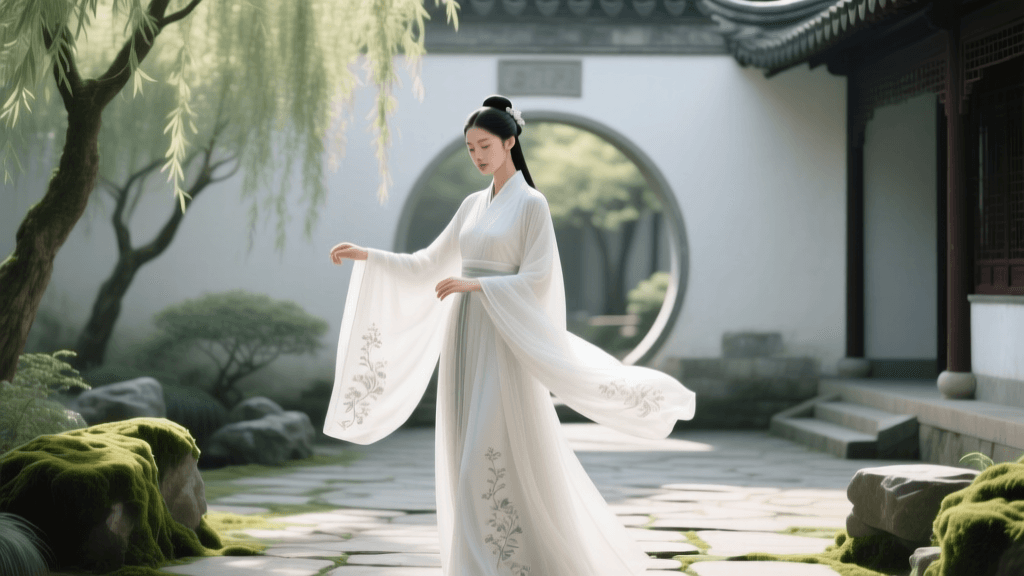
The Classical Gardens of Suzhou, recognized as a UNESCO World Heritage site, provide an unparalleled backdrop for Song and Ming dynasty styles. The Humble Administrator's Garden and the Lingering Garden feature winding corridors, moon gates, and lotus ponds that perfectly frame the minimalist elegance of Song-era Beizi and pleated skirts.
Photography Tip: Arrive at 6:30 AM right when the gates open. The morning mist over the ponds and the soft, diffused light through the bamboo groves eliminate harsh shadows, allowing the subtle textures of linen and cotton-linen blends to stand out beautifully.
Dunhuang: Desert Dunes and Flying Apsara Styles
For those seeking dramatic, ethereal imagery, the Mogao Caves and the surrounding Mingsha Shan (Echoing Sand Mountains) in Dunhuang are mandatory visits. This is the premier destination for 'Feitian' (Flying Apsara) style Hanfu, characterized by ultra-long Pibo (silk ribbons), bare-arm wraps, and vibrant jewel-toned silks inspired by Silk Road murals.
Photography Tip: Shoot during the 'golden hour' just before sunset. The deep orange of the desert dunes contrasts magnificently with the emerald green and lapis lazuli blue typical of Dunhuang-inspired textiles. Ensure your ribbons are weighted slightly at the ends to catch the desert breeze elegantly.
Xi'an: Tang Dynasty Grandeur at the West Market
Xi'an remains the heart of Tang Dynasty cosplay and historical appreciation. The reconstructed Tang West Market and the imposing City Wall offer vast, cinematic spaces for the voluminous, high-waisted Qixiong Ruqun and wide-sleeved Dahu jackets.
Photography Tip: Utilize the vibrant nightlife. Xi'an's historical districts are brilliantly illuminated with traditional red and gold lanterns after dark. Use a fast prime lens (f/1.4 or f/1.8) to capture the glow of the lanterns reflecting off gold-threaded Tang brocades.
Navigating Transit: Airports and High-Speed Rail
Traveling in full Hanfu or carrying it through transit hubs requires situational awareness, particularly regarding security protocols.
- Airport Security: Traditional Hanfu hairstyles often utilize metal hairpins, Buyao (dangling hair ornaments), and crowns. To avoid triggering metal detectors and delaying your line, remove all metallic hair accessories and place them in a dedicated velvet pouch in your carry-on before reaching the scanner. Opt for wooden, resin, or bamboo hairpins for travel days.
- High-Speed Rail Storage: China's expansive high-speed rail network in 2026 features ample luggage space, but overhead racks can be cramped. If you are carrying a structured garment bag, board early to secure the dedicated closet space available in first-class and business-class carriages, or lay your garment bag flat across your lap to prevent crushing.
On-the-Go Garment Care and Steaming
Even with perfect packing, garments may need a refresh upon arrival. Never use a hotel's standard iron directly on Hanfu, as the extreme heat and direct pressure will scorch silk and flatten jacquard weaves.
Instead, hang the garment in the bathroom while running a hot shower to let the ambient steam relax minor wrinkles. For stubborn creases, use your portable travel steamer. Always steam from the inside out to protect delicate embroidery and metallic threads on the exterior. Keep a small bottle of distilled water in your travel kit; tap water in various regions can contain minerals that spit and stain light-colored silks during the steaming process.
Cultural Etiquette and Photography Respect
As Hanfu tourism grows, so does the responsibility to respect the spaces we photograph. When visiting active temples, historical shrines, or UNESCO heritage sites, always adhere to posted photography guidelines. Avoid using flash photography near ancient murals or fragile textiles. Furthermore, ensure your Hanfu is worn correctly and respectfully—avoid dragging hems through muddy or sacred areas, and use a travel skirt-guard or hem-clips when navigating crowded markets or unpaved historical trails.
By combining meticulous packing techniques with a deep respect for cultural heritage, your 2026 Hanfu travel experience will be as seamless and beautiful as the garments themselves.