Vintage Silk Kimono Preservation & Pest Control 2026
The Art and Science of Vintage Silk Kimono Preservation in 2026
Owning a vintage silk kimono—whether it is a heavily embroidered Uchikake from the Meiji era, a vibrant Yuzen-dyed piece from the Taisho period, or a classic Showa-era Houmongi—is akin to holding a piece of living history. However, as we navigate the unpredictable global humidity shifts and temperature fluctuations of 2026, preserving these delicate protein-based textiles requires more than just placing them in a closet. Silk is highly susceptible to environmental degradation, light damage, and biological threats. According to the Smithsonian Museum Conservation Institute, improper storage is the leading cause of irreversible damage to historical silk garments. This comprehensive guide outlines the museum-grade techniques, modern smart-home integrations, and traditional Japanese methods you need to protect your investment and heritage in 2026.
Understanding Silk Degradation and the Threat of Pests
Silk is a natural protein fiber produced by the Bombyx mori silkworm. While it possesses remarkable tensile strength, it is inherently vulnerable to three main enemies: ultraviolet (UV) light, excessive moisture, and protein-eating insects. In 2026, the most pervasive biological threats to stored garments remain the webbing clothes moth (Tineola bisselliella) and the varied carpet beetle (Anthrenus verbasci). These pests are attracted to the amino acids in silk, as well as the organic residues from sweat, oils, and starches that may remain on vintage garments if they were not professionally cleaned prior to storage.
Furthermore, metallic threads (kinran and ginran) often woven into formal kimonos are highly reactive. Traditional mothballs containing naphthalene or paradichlorobenzene emit sublimation gases that not only degrade the silk fibers over time but also cause severe tarnishing and blackening of metallic threads. Therefore, modern preservation strictly forbids the use of chemical fumigants in enclosed kimono storage.
The Traditional Foundation: Tatou Paper and Hondatami Folding
The cornerstone of Japanese garment care is the use of tatou (traditional garment wrapping paper) and the hondatami (standard folding) method. Tatou paper is crafted from unbleached, acid-free mulberry (kozo) fibers. Unlike standard tissue paper, which can become acidic and brittle over time, high-quality tatou paper neutralizes ambient acids and allows the silk to breathe, preventing the trapping of moisture that leads to mildew.
Executing the Hondatami Fold
The hondatami fold is designed to distribute the tension of the fabric evenly and prevent hard creases from forming along the embroidered or painted motifs. When folding your kimono for long-term storage in 2026, follow these steps:
- Surface Preparation: Lay a clean, flat sheet of tatou paper on a large, dry surface. Ensure your hands are clean and free of lotions or oils.
- Aligning the Panels: Fold the kimono along its natural seams. The front panels are folded inward, followed by the sleeves, ensuring that the delicate crest (mon) and central motifs are not subjected to sharp creases.
- Padding the Folds: For heavily embroidered areas or three-dimensional gold leaf work, insert small, loose rolls of acid-free tissue paper into the folds to prevent the threads from crushing against one another.
- The Final Wrap: Once folded into a neat rectangle, wrap the kimono completely in a fresh sheet of tatou paper. Secure the paper with a flat, unbleached cotton tie or a specialized paper band. Never use plastic clips, rubber bands, or adhesive tape.
As of 2026, authentic Japanese kozo tatou paper can be sourced from specialized textile conservation suppliers, typically costing between $15 and $25 per large sheet, an essential investment for garments valued in the thousands.
Climate Control: Smart Monitoring for 2026
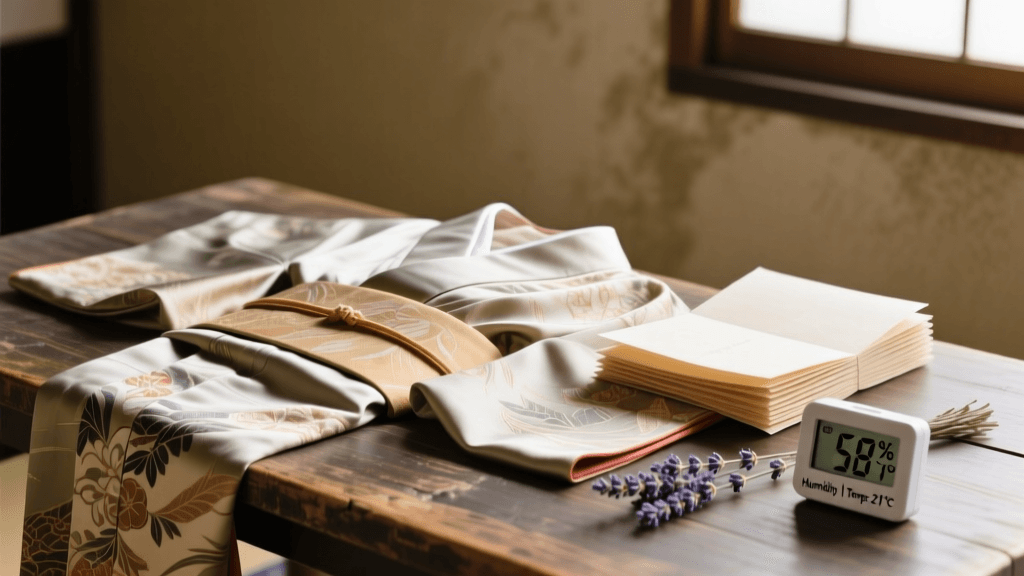
The Victoria and Albert Museum recommends maintaining a stable environment for historic textiles, specifically targeting a temperature of 18°C to 20°C (64°F to 68°F) and a relative humidity (RH) of 45% to 55%. Fluctuations in humidity cause silk fibers to expand and contract, leading to mechanical stress and the eventual shattering of the fabric.
Integrating Smart Hygrometers
Relying on a standard wall thermostat is no longer sufficient for serious collectors. In 2026, the integration of Wi-Fi-enabled smart hygrometers inside your storage chests or climate-controlled closets is the industry standard. Devices like the Temp Stick or the latest Govee Wi-Fi Thermometer Hygrometer models allow you to set strict alerts on your smartphone. If the RH inside your Paulownia wood chest drops below 40% or spikes above 60%, you receive an immediate notification, allowing you to adjust your HVAC system or deploy localized desiccants before damage occurs.
Choosing the Right Storage Vessel
Where you place your tatou-wrapped kimono is just as critical as how you fold it. Below is a comparison of the most common storage materials used by collectors and archivists today.
| Storage Material | Pros | Cons | Best For |
|---|---|---|---|
| Paulownia Wood (Kiri) | Natural humidity buffer, pest resistant, breathable | Heavy, expensive, requires significant floor space | Heirloom pieces, long-term archival storage |
| Acid-Free Archival Boxes | Affordable, customizable sizes, chemically inert | No active moisture buffering, degrades if exposed to water | Rotating collections, closet shelving, limited budgets |
| Plastic Bins (Polypropylene) | Waterproof, cheap, easily stackable | Traps moisture, off-gasses over time, promotes mold | Never use for vintage silk or natural fibers |
| Cedar Chests | Pleasant scent, deters some insects | Cedar oil can stain silk, wood acidity can transfer | Only if lined completely with washed cotton and tatou |
Traditional Kiri (Paulownia) wood chests remain the gold standard in 2026. Paulownia wood possesses unique hygroscopic properties; it absorbs excess moisture from the air during humid summers and releases it during dry winters, creating a microclimate that naturally stabilizes the RH around the 50% mark. Furthermore, the wood contains natural compounds that repel insects without emitting harmful gases.
Natural Pest Prevention Strategies
Since chemical mothballs are strictly prohibited for vintage silk, collectors must rely on integrated pest management (IPM) and natural deterrents. The Canadian Conservation Institute emphasizes that prevention and environmental control are vastly superior to reactive chemical treatments.
Effective Natural Deterrents
- Hinoki Wood Blocks: Untreated Japanese cypress (Hinoki) emits a natural aroma that deters insects while imparting a fresh, clean scent to the textiles. Sand the blocks lightly every six months to refresh the oils.
- Dried Neem Leaves: Neem is a powerful, natural insect repellent. Place small, breathable cotton sachets of dried neem leaves in the corners of your storage boxes. Ensure the leaves do not directly touch the silk to prevent oil transfer.
- Lavender and Rosemary: While effective against moths, these must be used with caution. Always enclose them in unbleached muslin bags and replace them annually before they degrade and attract secondary pests.
The Importance of Air Circulation
Even in optimal storage, kimonos require periodic aeration. In Japan, the tradition of mushiboshi (airing out garments) is practiced during the dry, cool days of late autumn. In 2026, collectors should remove their kimonos from storage twice a year, unwrap them from the tatou paper, and allow them to rest on a clean, padded surface in a dark, climate-controlled room for 24 hours. This process releases any trapped volatile organic compounds (VOCs) and allows you to inspect the garments for early signs of pest activity or mold.
Restoration Triage: What to Do When You Find Damage
If you discover a small tear, a stain, or evidence of insect frass (droppings) during your bi-annual inspection, do not attempt to clean or repair the garment yourself. Modern dry-cleaning solvents can dissolve the natural sericin coating of vintage silk and cause hand-painted dyes to bleed.
Instead, isolate the affected garment in a sealed, acid-free box to prevent the potential spread of pests to your wider collection. Contact a professional textile conservator or a specialized somenuri (traditional Japanese garment restorer) who understands the specific chemistry of Meiji and Taisho-era dyes. In 2026, advanced techniques such as localized enzyme cleaning and microscopic silk thread re-weaving are available through certified conservation guilds, ensuring that the historical integrity of the garment is maintained without the use of harsh, modern adhesives.
Conclusion
Preserving a vintage silk kimono is a commitment to cultural stewardship. By combining the time-honored Japanese techniques of tatou wrapping and hondatami folding with 2026's smart climate monitoring and strict natural pest management protocols, you can ensure that these magnificent textiles survive for future generations. Treat your storage environment as a micro-museum, and your collection will continue to tell its vibrant story for decades to come.