Vintage Silk Kimono Storage & Preservation Guide 2026
The Unique Challenges of Preserving Vintage Silk Kimono
Preserving a vintage silk kimono is an act of cultural stewardship. Whether you have inherited a Taisho-era (1912–1926) meisen silk garment, a heavily embroidered Showa-era uchikake, or a delicate Edo-period kosode, the organic nature of the materials requires meticulous care. As of 2026, textile conservation science has advanced significantly, offering home collectors and archivists access to museum-grade preservation tools. However, the fundamental vulnerabilities of silk remain unchanged.
Silk is a natural protein fiber composed of fibroin and sericin. Unlike plant-based cellulose fibers such as cotton or linen, protein fibers are highly susceptible to environmental fluctuations, acidic degradation, and biological threats. Furthermore, vintage kimonos often feature metallic threads (surihaku), intricate Shibori dyeing techniques, and historical weighting agents (like tin salts) that can cause the silk to shatter or 'mikire' over time if not stored correctly. Understanding the intersection of traditional Japanese garment care and modern 2026 archival science is critical for ensuring these wearable artifacts survive for future generations.
The Chemistry of Vintage Silk and Fugitive Dyes
Before selecting a storage method, it is vital to understand the chemical composition of your garment. Many vintage kimonos from the late 19th and early 20th centuries were treated with metallic salts to increase the weight and drape of the silk. Over decades, these salts can become acidic, leading to a phenomenon known as 'silk shattering,' where the fabric literally breaks apart along the fold lines. According to the American Institute for Conservation (AIC) Textile Wiki, protein fibers require a strictly neutral pH environment to prevent catalytic degradation.
Additionally, traditional Japanese dyes, such as safflower red (beni) and indigo (ai), are notoriously fugitive, meaning they fade rapidly when exposed to ultraviolet (UV) light and environmental pollutants. The Victoria and Albert Museum (V&A) Textile Conservation Guidelines emphasize that light damage is cumulative and irreversible. Therefore, storing vintage silk in total darkness is not just a preference; it is a strict chemical necessity to preserve the vibrancy of historical Yuzen and Kaga dyeing techniques.
2026 Standards for Archival Storage Materials
The materials that come into direct contact with your vintage kimono must be chemically inert. In 2026, the market standard for home archivists has shifted away from generic 'acid-free' boxes toward specifically buffered or unbuffered archival enclosures, depending on the textile.
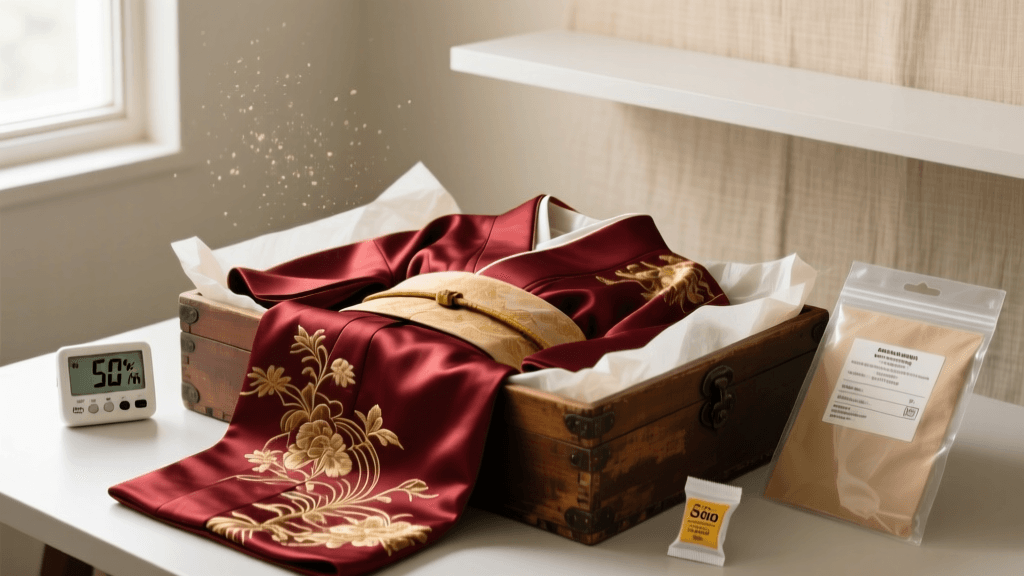
- Unbuffered Acid-Free Tissue Paper (pH 7.0): Silk is a protein fiber and should never be stored in alkaline-buffered tissue, which is meant for plant-based fibers like cotton. Alkaline environments can degrade protein structures over time. Always use unbuffered, neutral pH tissue to pad the folds of your kimono.
- Archival Polypropylene Boxes: While traditional Japanese paulownia wood boxes (tansu) are beautiful and historically accurate, modern archival-grade corrugated polypropylene boxes offer superior protection against off-gassing and moisture intrusion. Brands like Hollinger Metal Edge and University Products remain the gold standard in 2026 for textile enclosures.
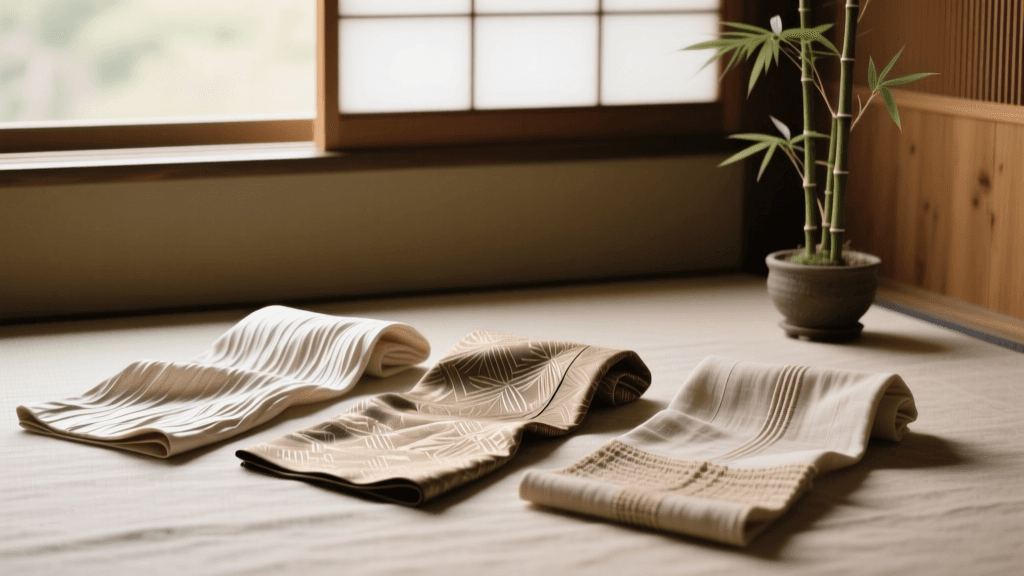
- Unbleached Cotton Washcloths: If you prefer the traditional method of wrapping the kimono in a cloth (tatou), ensure the cotton is unbleached, undyed, and washed multiple times in a textile-safe, pH-neutral detergent to remove any manufacturing sizing or optical brighteners.
Climate and Humidity Control: The 2026 Smart Approach
Temperature and relative humidity (RH) are the most critical factors in textile preservation. High humidity encourages mold growth and attracts pests, while low humidity makes silk brittle and prone to shattering. The ideal environment for vintage silk is a stable 65°F (18°C) with a relative humidity of 50%. In 2026, IoT-enabled microclimate sensors have become highly affordable, allowing collectors to monitor the exact conditions inside their storage boxes via smartphone applications.
Below is a comparison of the primary storage methods available to collectors today, including current 2026 pricing and environmental controls.
| Storage Method | Target RH | Temperature | 2026 Estimated Cost | Best For |
|---|---|---|---|---|
| Traditional Paulownia Tansu | 45-55% (Passive) | 65°F (18°C) | $800 - $2,500 | Display, frequent access, and traditional aesthetics |
| Archival Polypropylene Box | 50% (Buffered via Silica) | 65°F (18°C) | $45 - $120 | Long-term deep storage and space efficiency |
| Smart Climate-Controlled Cabinet | 50% (Active IoT Control) | 65°F (18°C) | $3,000 - $5,500 | Museum-grade home collections and high-value antiques |
If you are using archival boxes, you must include indicating silica gel cassettes to buffer the humidity. Unlike standard desiccant packets that dry out the air completely (which damages silk), conditioned silica gel maintains a specific RH level, absorbing excess moisture during humid summers and releasing it during dry winters.
Integrated Pest Management (IPM) Without Toxic Chemicals
The webbing clothes moth (Tineola bisselliella) and the carpet beetle are the natural enemies of vintage silk and wool uchikake linings. Historically, collectors relied on naphthalene mothballs or paradichlorobenzene (PDB) crystals. In 2026, these chemicals are strictly avoided by conservation professionals. Not only are they toxic to humans, but their off-gassing can chemically react with metallic threads, causing irreversible tarnishing and blackening of gold and silver surihaku elements.
Instead, modern preservation relies on Integrated Pest Management (IPM). The Smithsonian Museum Conservation Institute advocates for a multi-tiered approach to pest prevention:
- Pheromone Monitoring Traps: Place sticky traps with species-specific pheromones in the storage room to detect male moths before a breeding population can establish.
- Quarantine and Freezing: If you acquire a new vintage kimono, isolate it immediately. To eradicate any hidden eggs or larvae, seal the garment in a polyethylene bag, remove the air, and place it in a deep freezer at -4°F (-20°C) for 72 hours. Thaw it slowly at room temperature before unsealing to prevent condensation.
- Botanical Deterrents: While essential oils like lavender and cedarwood are popular, they must never touch the silk directly, as the oils can stain and degrade the fibers. Use them only in the surrounding room environment, never inside the archival storage box.
The Art of Folding: Preventing Stress and Creasing
How you fold a kimono is just as important as the box you put it in. The traditional Japanese folding method, known as 'tato,' is specifically designed to align with the garment's seams, preventing stress on the hand-stitched threads. However, even with proper folding, sharp creases will eventually cause the silk fibers to break along the fold lines.
To mitigate this, archivists use a technique called 'padding.' Before folding the kimono, roll up small 'sausages' of unbuffered acid-free tissue paper. Place these tissue rolls inside every fold, sleeve, and hem. This creates a soft, rounded curve rather than a sharp, hard crease, distributing the physical stress across a wider area of the fabric. For heavily embroidered or metallic-threaded obis and kimonos, the garment should ideally be rolled around an acid-free cardboard tube padded with polyethylene foam, rather than folded, to prevent the metallic threads from cracking.
Handling and Inspection Routines
Human skin contains natural oils, salts, and acids that can easily transfer to delicate silk, leaving permanent stains that attract pests. Always wear clean, lint-free cotton or nitrile gloves when handling vintage kimonos. Avoid using latex gloves, as the sulfur compounds in the latex can tarnish metallic threads.
Establish a biannual inspection routine. Every six months, carefully unfold your stored kimonos in a clean, dimly lit room. This process, traditionally known as 'mushiboshi' (airing out the bugs), allows the fibers to rest in a different position, prevents permanent crease setting, and gives you the opportunity to check for early signs of mold, pest activity, or silk shattering. By combining the wisdom of traditional Japanese garment care with the rigorous, science-backed standards of 2026 textile conservation, you can ensure your vintage silk kimono collection remains vibrant, intact, and historically significant for centuries to come.