2026 Kimono Auction Guide: Appraising Vintage Silk Value
The 2026 Landscape of Vintage Kimono Auctions
The global fascination with Japanese traditional garments has evolved significantly by 2026. No longer confined to museum archives or regional souvenir shops, vintage kimono have firmly established themselves as highly sought-after assets in the global circular fashion economy. As sustainability metrics and artisanal appreciation dominate the 2026 fashion discourse, collectors and investors are turning to the secondary market to acquire wearable art. Navigating kimono auctions today requires a sophisticated blend of historical knowledge, textile science, and strategic bidding.
In 2026, the secondary market is defined by digital accessibility. International buyers leverage advanced proxy bidding platforms that offer real-time translation, high-resolution macro photography, and AI-assisted condition reports. However, while technology can identify basic weave patterns, the discerning eye of a human appraiser remains irreplaceable for evaluating the subtle nuances of silk degradation, natural dye fading, and historical provenance. Whether you are bidding on a pristine Taisho-era masterpiece or a rustic Edo-period workwear jacket, understanding the core pillars of kimono appraisal is essential for success in today's market.
Key Factors in Kimono Value Appraisal
Era and Provenance
The historical era in which a kimono was crafted is the primary driver of its baseline auction value. Appraisers categorize vintage garments into distinct periods, each with unique aesthetic and structural hallmarks:
- Meiji Era (1868–1912): Characterized by heavy, elaborate embroidery and auspicious motifs. The silk used during this period is often exceptionally thick, and the garments were designed to convey strict social status.
- Taisho Era (1912–1926): Widely considered the golden age of vintage kimono. According to the Victoria and Albert Museum, the Taisho period represents a fascinating intersection of traditional Japanese aesthetics and Western modernism. Garments from this era feature romantic, Art Deco-influenced designs, vibrant synthetic dyes mixed with natural pigments, and flowing, dramatic compositions that are fiercely contested in 2026 auctions.
- Early Showa Era (1926–1945): Pre-war garments often feature bold, modernist geometric patterns, while wartime pieces reflect material restrictions, utilizing simpler weaves and subdued colors.
Textile and Dyeing Techniques
Beyond age, the manufacturing technique dictates the ceiling of a kimono's market value. The Metropolitan Museum of Art notes that the intricate weaving and dyeing techniques developed in Japan elevated the kimono from a simple garment to a canvas of extraordinary technical complexity. In 2026, auction premiums are heavily awarded to the following techniques:
- Yuzen (Paste-Resist Dyeing): Hand-painted Yuzen, particularly Kaga Yuzen with its realistic, nature-inspired motifs and Kyo Yuzen with its stylized elegance, commands top dollar. Appraisers look for the crispness of the resist lines and the depth of the indigo vats.
- Oshima Tsumugi: A highly prized pongee silk from Amami Oshima, dyed with iron-rich mud and bark. Authentic 2026 appraisal requires checking the reverse side of the fabric; true Oshima Tsumugi is dyed in the yarn, meaning the pattern should be nearly identical on both sides.
- Shibori (Tie-Dye): Micro-shibori (Kanoko shibori), where thousands of tiny dots are individually tied and dyed, is incredibly labor-intensive. A fully intact, un-tied vintage shibori kimono is a rare find and a centerpiece in any serious collection.
Condition and Flaws
Condition is the ultimate veto in kimono appraisal. Even a rare Meiji-era masterpiece can lose 80% of its value if plagued by severe structural or cosmetic damage. When reviewing auction listings in 2026, buyers must scrutinize the following:
- Shimi (Stains): Organic stains from sweat or makeup, particularly around the collar (eri) and inner hem (hakkake). While some surface stains can be treated by specialist cleaners, deep-set oxidation is often permanent.
- Yake (Sun Fading): Uneven fading caused by display or improper storage. Fading on the shoulders or back panels significantly diminishes the garment's structural integrity and visual appeal.
- Kamaboko (Folding Lines): Deep, permanent creases along the traditional folding lines that have caused the silk fibers to fracture. This is a critical red flag for collectors intending to wear the garment.
2026 Kimono Value Comparison Chart
To provide a clear benchmark for buyers and sellers, the following table outlines the estimated 2026 auction hammer prices for various vintage kimono categories, assuming good to excellent condition with minor, non-intrusive flaws.
| Kimono Type | Era | Key Feature | 2026 Est. Auction Range (USD) |
|---|---|---|---|
| Taisho Yuzen Furisode | Taisho (1912-1926) | Long sleeves, Art Deco motifs | $1,200 - $4,500 |
| Meiji Kaga Yuzen Tomesode | Meiji (1868-1912) | Formal black silk, hem painting | $800 - $2,500 |
| Oshima Tsumugi (Vintage) | Mid-Showa | Mud-dyed, cross-hatch pattern | $600 - $1,800 |
| Antique Kanoko Shibori | Meiji / Taisho | Micro tie-dye, spiderweb motifs | $2,000 - $6,000+ |
| Haori (Silk Brocade) | Taisho / Early Showa | Nishijin-ori weave, hidden lining | $150 - $450 |
Navigating Online and Live Auctions in 2026
The mechanics of acquiring vintage kimono have shifted heavily toward digital platforms. While live, in-person auctions in Kyoto and Tokyo still yield the most exceptional museum-quality pieces, the vast majority of international transactions occur via Japanese domestic online marketplaces like Yahoo! Auctions Japan and Rakuten. In 2026, international collectors rely on sophisticated proxy services such as Buyee, ZenMarket, and FROM JAPAN to bridge the language and shipping gap.
When bidding online, understanding Japanese auction terminology is crucial. Listings marked as 'Junk' do not necessarily mean the item is garbage; in the context of vintage textiles, it simply means the seller is not an expert and will not accept returns for undisclosed flaws. Conversely, listings from established antique kimono dealers (furugi-ya) often include detailed condition reports and professional measurements.
A critical strategy for 2026 bidders is to request 'jitsubutsu' (actual item) photos of specific areas: the inner collar, the hemline, and the armpit seams. Furthermore, always verify the 'mitake' (back length) and 'yuki' (sleeve-to-center-back length). Antique kimono were often tailored to much shorter statures than modern global averages; a beautiful Taisho-era kimono may require costly and complex fabric extensions to fit a contemporary wearer.
Expert Tips for Bidding and Appraising
To maximize your success in the 2026 vintage kimono market, adopt these expert appraisal habits:
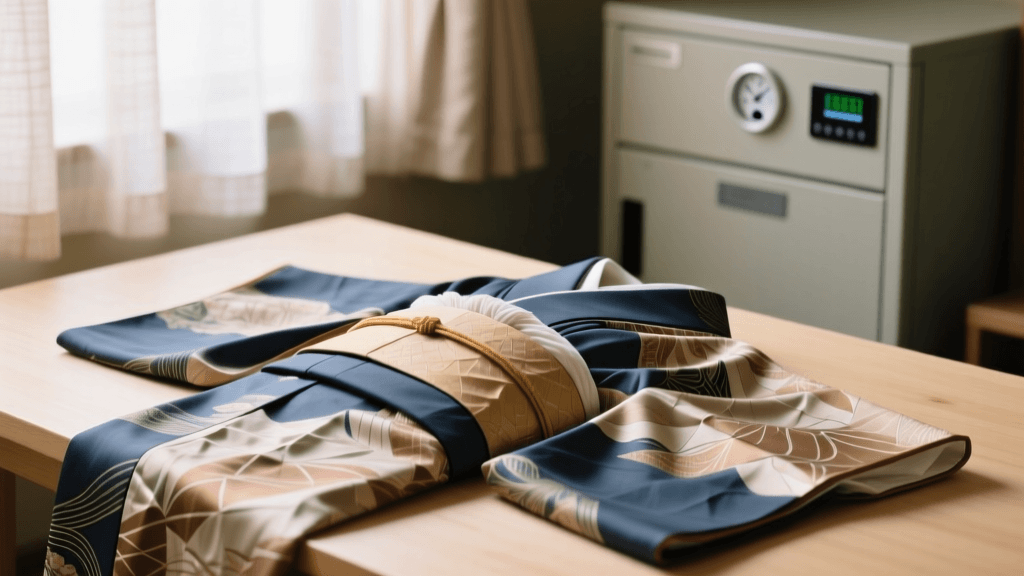
- Inspect the Lining: A high-value vintage kimono will often feature a vibrant, hand-dyed silk lining, particularly a deep crimson (beni-iro). If the lining is cheap synthetic or heavily stained, it may indicate the garment has been altered or poorly maintained.
- Check the Family Crests (Kamon): Garments featuring five meticulously hand-embroidered or dyed crests denote the highest level of formality. The presence of genuine gold leaf or metallic thread in the crests can increase the appraisal value by 20% to 30%.
- Snipe Strategically: Online auction platforms in Japan are notorious for last-minute bid sniping. Utilize the automated sniping tools provided by modern 2026 proxy services to place your maximum bid in the final five seconds, preventing emotional bidding wars that artificially inflate the final hammer price.
Conclusion
The 2026 kimono auction market offers an unprecedented opportunity to own a tangible piece of Asian cultural history. By mastering the nuances of era identification, respecting the complexity of traditional dyeing techniques, and approaching condition reports with a critical eye, collectors can navigate the secondary market with confidence. Whether you are seeking a dramatic Taisho-era furisode for a high-fashion editorial shoot or a resilient Oshima Tsumugi for everyday wear, the key to successful appraisal lies in patience, education, and a deep reverence for the artisan's craft.