Authentic Viking Smokkr Apron Dress Weaving Guide 2026
The Evolution of the Smokkr in 2026 Reenactment
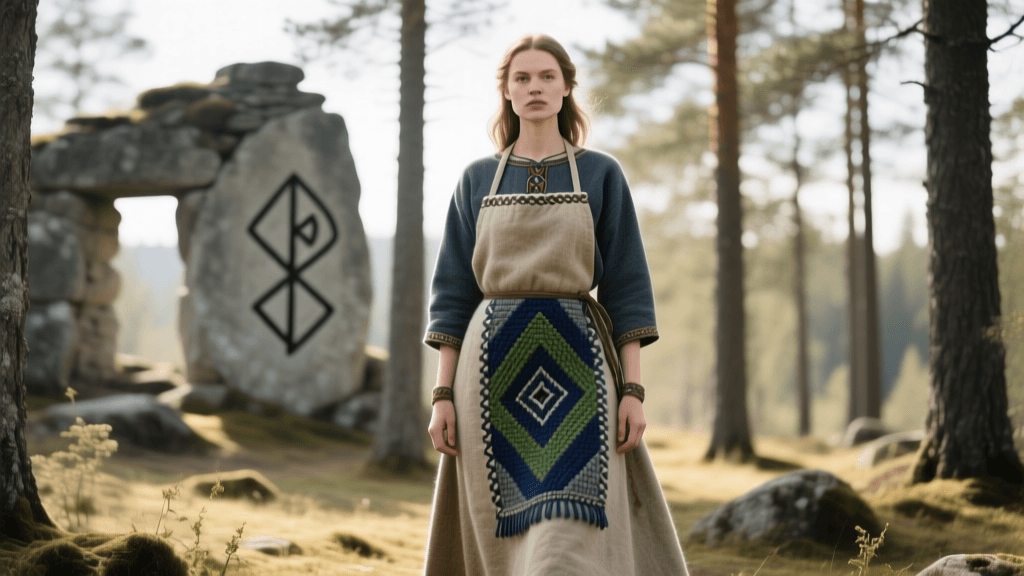
The Viking Smokkr, commonly known as the apron dress or Hängerock, remains one of the most iconic garments of the Nordic and Celtic-influenced Viking Age. As we move through 2026, the historical reenactment community has seen a massive shift away from mass-produced, synthetic costumes toward rigorous archaeological accuracy. Major European festivals, such as the Moesgård Viking Moot, now enforce strict textile authenticity standards, requiring participants to utilize natural fibers, period-correct dyes, and traditional weaving techniques. For modern makers and historical textile enthusiasts, crafting a Smokkr in 2026 is not just about sewing a garment; it is an immersive exercise in experimental archaeology.
This comprehensive guide explores the materials, tablet weaving techniques, and construction methods required to build an authentic Viking apron dress today, drawing upon the latest archaeological consensus and sustainable sourcing practices available in 2026.
Archaeological Foundations: Birka, Hedeby, and Køge
To understand how to construct a Smokkr, we must look to the surviving textile fragments. The most crucial evidence comes from the graves of Birka (Sweden), the harbor finds of Hedeby (modern-day Germany), and the Køge find in Denmark. According to the National Museum of Denmark, the apron dress was typically suspended from the shoulders by two loops, fastened at the collarbone with a pair of oval tortoise brooches.
The Hedeby harbor fragment provides vital clues about the garment's shape, revealing a pleated or gathered waist and a distinct curved top edge. Meanwhile, the Birka graves show that the outer layers of the Smokkr were often made of high-quality, diamond-twill wool, while the underdresses (the serk) were constructed from finely woven linen. In 2026, researchers at the Jorvik Viking Centre continue to highlight the importance of these layered textiles, noting that the interplay between the linen underdress and the woolen Smokkr was essential for both thermal regulation and social display in harsh Nordic climates.
Sourcing Authentic Heritage Wool in 2026
The foundation of any authentic Smokkr is the textile. Modern commercial wool is often too soft, uniformly spun, and heavily processed to replicate the sturdy, water-resistant garments of the Viking Age. In 2026, historical weavers prioritize heritage sheep breeds that retain the dual-coated fleece characteristics of their ancient ancestors. These breeds produce a long, coarse outer coat (tog) ideal for warp threads, and a soft, insulating inner coat (thel) perfect for the weft.
Comparing Heritage Wool Breeds for the Smokkr
| Breed | Origin | Staple Length | Best Use in Smokkr |
|---|---|---|---|
| Spælsau | Norway | 15-25 cm (Tog) | Outer warp threads, tablet weaving |
| Gotland | Sweden | 10-18 cm | Diamond twill weaving, lustrous finish |
| Shetland | Scotland (Celtic/Nordic overlap) | 5-15 cm | Softer weft threads, intricate embroidery |
| Icelandic | Iceland | 15-30 cm (Tog) | Heavy outer garments, extreme weather gear |
Sourcing these wools has become significantly easier in 2026, with specialized Nordic fiber cooperatives offering hand-spun, single-ply, and two-ply yarns specifically spun with a Z-twist or S-twist to match archaeological finds. When purchasing yarn, always verify the twist direction, as this dramatically affects the final drape and the behavior of the fabric during tablet weaving.
Mastering Tablet Weaving for Shoulder Straps
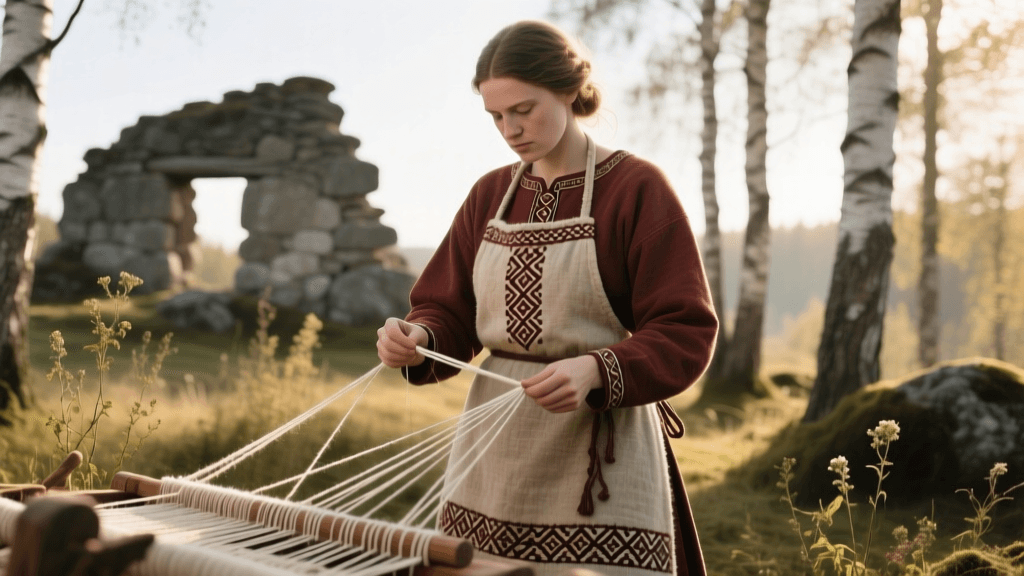
No Viking Smokkr is complete without its elaborately woven shoulder straps and decorative trims. Tablet weaving (or card weaving) was the premier method for creating strong, patterned bands in the Viking Age. The straps of the Smokkr were not merely functional; they were prime real estate for displaying wealth, status, and artisan skill.
In 2026, while 3D-printed biodegradable tablets are available for beginners, serious reenactors opt for traditional materials like polished bone, antler, or hardwood, which provide the correct tension and historical weight. The Lofotr Viking Museum in Norway frequently hosts workshops demonstrating how the friction and tension of wooden tablets replicate the exact wear patterns found on original Viking loom weights and weaving tools.
Step-by-Step Threading and Turning
To weave a classic diagonal or diamond pattern suitable for a Smokkr strap, follow these foundational steps:
- Select Your Pattern: Choose a historically accurate motif, such as the 'Birka Band' or a simple diagonal chevron. Determine the number of tablets required (typically 12 to 24 for a shoulder strap).
- Thread the Tablets: Thread four warp threads through the holes of each tablet. The direction of threading (S or Z) dictates the direction the thread will twist when the tablet is turned. Alternating S and Z threading is crucial for creating symmetrical diamond patterns.
- Establish Tension: Tie the warp to a sturdy anchor point (or use a traditional backstrap loom setup). Tension must be high and consistent; Viking bands were woven tightly to withstand the pulling weight of heavy bronze or silver oval brooches.
- The Turning Sequence: Turn the tablets forward (away from you) four quarter-turns, passing the weft thread through the shed and beating it firmly with a bone or wooden beater. Then, turn backward four quarter-turns. This prevents the warp threads from over-twisting and creates a clean, reversible band.
- Weft Management: Use a fine, strong linen or tightly spun wool for the weft. The weft should be virtually invisible on the surface of the finished band.
Natural Dyeing: Woad and Madder Revival
Color was a profound indicator of status in Norse society. While the common perception of Viking clothing is drab brown or grey, archaeological analysis proves that the elite wore vibrant reds, blues, and yellows. In 2026, the push for sustainable, eco-friendly textile arts has led to a massive revival in historical natural dyeing.
Woad (Isatis tinctoria): The primary source of blue in the Viking Age. Woad requires a complex vat dyeing process involving fermentation and an alkaline environment. Modern 2026 recipes utilize sustainable, organically farmed woad balls and eco-friendly reducing agents, avoiding the harsh chemicals of the early 2000s reenactment scene.
Madder Root (Rubia tinctorum): Used to achieve deep reds and oranges. Madder requires a mordant, typically alum, to bind the color to the wool fiber. The temperature of the dye bath must be carefully controlled (around 60-70°C) to prevent the colors from turning muddy brown. Achieving a true, vibrant 'Viking Red' requires multiple dips and a deep understanding of water pH levels.
Constructing the Garment: Measurements and Seams
The construction of the Smokkr remains a subject of passionate debate among historians, with the 'tube dress' and 'wrapped dress' theories dominating the discourse. However, the most widely accepted and practical reconstruction for 2026 reenactors is the gored tube dress, which provides excellent mobility and conserves fabric.
Essential Measurements and Assembly
To construct a standard Smokkr, you will need approximately 2 to 2.5 meters of diamond-twill wool (assuming a standard loom width of 60-80 cm). The garment is typically composed of a front panel, a back panel, and two side gores that flare out from the waist to the hem, allowing for walking and working.
- Cut the Panels: Cut the front and back panels to measure from just above the bust to the mid-calf. The side gores should be cut as right-angled triangles to insert into the side seams.
- Sew the Seams: Viking Age seams were incredibly durable. Use a running stitch to join the panels, then fold the raw edges inward and secure them with a whip stitch or a flat-felled seam. This encloses the raw edges, preventing the wool from fraying and adding structural integrity.
- Attach the Loops: Create the shoulder loops using your tablet-woven bands or folded strips of the same wool fabric. Sew them securely to the top edge of the front and back panels.
- Add Decorative Trims: Appliqué additional tablet-woven bands around the top hem of the Smokkr. This not only decorates the garment but also reinforces the edge where the heavy bronze brooches will bear the most stress.
Conclusion
Crafting an authentic Viking Smokkr in 2026 is a deeply rewarding endeavor that bridges the gap between modern sustainability and ancient Nordic ingenuity. By sourcing heritage wools, mastering the rhythmic turning of tablet weaving, and utilizing natural botanical dyes, you are doing far more than making a costume. You are participating in the living preservation of European folk dress, keeping the textile traditions of the Celtic and Nordic worlds alive for future generations. Whether you are preparing for a summer encampment or simply expanding your historical weaving repertoire, the Smokkr stands as a testament to the enduring beauty and functionality of Viking Age design.