Uyghur Atlas Silk & Silk Road Fashion: A Sourcing and Styling Guide
The Silk Road Crucible: Where East Met West in Textile Form
The Silk Road was never merely a conduit for spices, jade, and precious metals; it was the ancient world’s most vibrant fashion highway. Nowhere is this cross-cultural pollination more evident than in the traditional garments of the Tarim Basin, where Han Chinese sericulture collided with Persian and Central Asian resist-dyeing techniques. For modern enthusiasts of Asian traditions, understanding and wearing these garments—specifically the Uyghur Atlas silk and the sweeping Chapan robe—offers a tangible connection to a millennium of global trade.
According to the UNESCO Silk Roads Programme, the exchange of textile technologies fundamentally altered regional dress codes. Chinese silk threads traveled westward, while Central Asian motifs, weaving structures, and tailoring methods traveled eastward into the heart of the Chinese empire. Today, sourcing and styling these historical garments requires an understanding of their diverse roots, fabric weights, and traditional tailoring metrics.
The Sogdian Influence and Tang Dynasty Hufu
To understand the cross-cultural impact of the Silk Road on Chinese fashion, one must look to the Tang Dynasty (618–907 CE). As documented by the World History Encyclopedia, Sogdian merchants from Central Asia brought their distinct sartorial habits to the cosmopolitan capital of Chang'an. This resulted in the massive popularity of Hufu (foreign clothing). Unlike the wide-sleeved, flowing, cross-collared robes of traditional Han Chinese dress, Hufu featured narrow sleeves,翻领 (fanling or lapels), and fitted trousers designed for horseback riding. This nomadic silhouette permanently influenced the evolution of later Chinese garments, including the Yuan Dynasty Mongol robes and the Qing Dynasty Manchurian changshan, proving that Silk Road trade routes literally rewired the DNA of Asian fashion.
Decoding the Textiles: Atlas, Adras, and Shashi
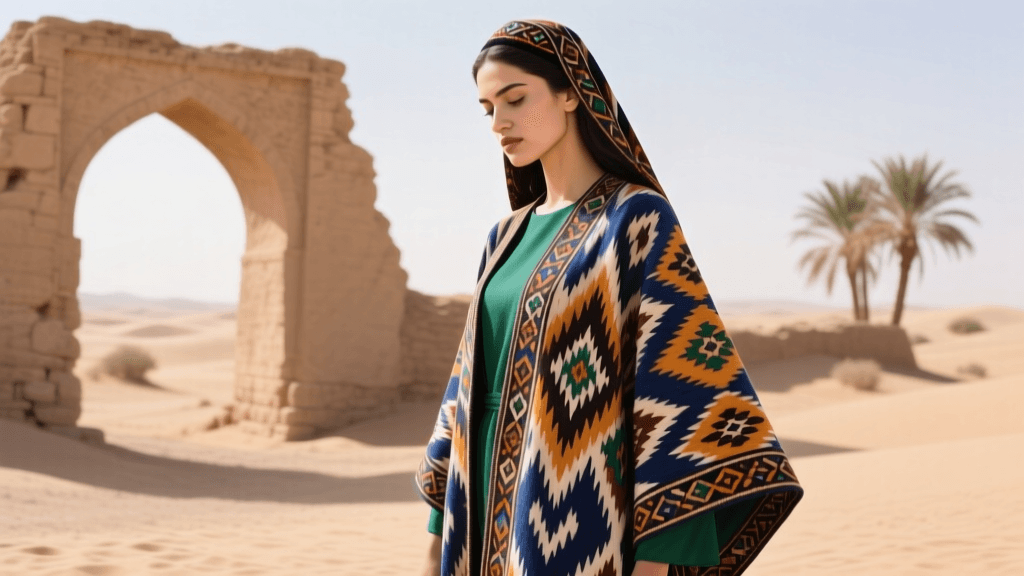
When sourcing traditional Uyghur garments, you are primarily looking for ikat—a resist-dyeing technique where the warp threads are tightly bound and dyed before weaving, creating the signature blurred, cloud-like patterns. In the Xinjiang region, these textiles are categorized into three distinct grades, each with specific use cases, costs, and drape qualities.
- Atlas (Pure Silk): The most luxurious and historically significant variant. Woven entirely from silk, it is lightweight, highly lustrous, and features the most vibrant, complex patterns. It is traditionally reserved for festive dresses and high-end Chapans.
- Adras (Silk-Cotton Blend): Features a silk warp and a cotton weft. This makes the fabric heavier, more durable, and less prone to wrinkling than pure silk. It is the most practical choice for everyday outerwear and structured robes.
- Shashi (Pure Cotton): A fully cotton ikat. While less lustrous, it is breathable, easy to wash, and highly affordable, often used for summer garments and linings.
Sourcing Authentic Silk Road Textiles Today
Acquiring authentic, hand-loomed Atlas silk requires specific knowledge of local markets and timing. While modern power-loom imitations flood tourist shops, true heritage textiles are still woven in the cities of Hotan and Kashgar.
Actionable Sourcing Advice
- Where to Go: The Hotan Sunday Grand Bazaar is the premier destination for raw silk and woven Atlas. In Kashgar, the textile shops surrounding the Id Kah Mosque offer tailored options.
- Timing: Arrive at the bazaars between 7:30 AM and 8:30 AM. Local tailors and wholesalers purchase the highest-grade, hand-loomed silk bundles early in the morning. By noon, only factory-made or lower-grade remnants remain.
- Cost Expectations: Pure silk Atlas typically costs between 250 to 400 RMB ($35 to $55 USD) per meter. Adras ranges from 80 to 150 RMB ($11 to $21 USD) per meter. If a vendor quotes significantly less for pure silk, it is likely synthetic rayon or a polyester blend.
- Verification: Perform a burn test on a single frayed thread. Pure silk will smell like burning hair and leave a crushable black ash, whereas synthetic blends will melt into a hard plastic bead.
Tailoring the Chapan: Measurements and Construction
The Chapan is the traditional quilted or silk robe worn across Central Asia and Xinjiang. Tailoring a Chapan requires different measurements than Western suiting, as the garment is designed for layering, modesty, and ease of movement on horseback or while sitting cross-legged.
Essential Measurements for a Traditional Chapan
- Fabric Width & Yardage: Traditional hand-loomed Atlas is woven on narrow looms, typically only 40 cm (16 inches) wide. To make a standard adult Chapan, you will need 6 to 8 meters of narrow fabric. Modern power-loom Atlas is 115 cm wide, requiring only 3 to 4 meters.
- Chest & Ease: Measure the chest at its widest point, then add 15 to 20 cm (6 to 8 inches) of ease. The Chapan must drape loosely and overlap significantly at the front.
- Sleeve Length: Unlike Western jackets that end at the wrist bone, traditional Chapan sleeves extend 5 to 8 cm past the wrist. This historically protected the hands from the harsh desert winds and served as a makeshift pocket.
- Hemline: The robe should fall to the mid-calf or ankle, typically measuring 120 to 135 cm from the base of the neck, depending on the wearer's height.
- Collar and Lapels: Request a stand collar with a slight overlap. Traditional tailoring avoids darts; the shape is achieved through strategic gussets under the arms and a sash tied at the waist.
Silk Road Fabric Comparison Chart
| Fabric Type | Composition | Weight & Drape | Cost per Meter (USD) | Best Application |
|---|---|---|---|---|
| Atlas | 100% Silk | Lightweight, fluid, high luster | $35 - $55 | Festive dresses, luxury robe exteriors |
| Adras | Silk warp / Cotton weft | Medium-heavy, structured, matte finish | $11 - $21 | Everyday Chapans, winter outerwear |
| Shashi | 100% Cotton | Light, breathable, crisp | $5 - $10 | Summer robes, garment linings |
Integrating Heritage into Modern Styling
Wearing a full, heavily quilted Chapan in a modern urban environment can sometimes border on costumery. However, integrating Silk Road textiles into a contemporary wardrobe is highly achievable with the right styling approach.
- The Atlas Silk Kimono Jacket: Have a tailor use pure silk Atlas to create a modern, unlined kimono-style duster jacket. Pair it with a plain black turtleneck, tailored wool trousers, and leather Chelsea boots. The vibrant, blurred ikat patterns act as a statement piece, while the modern silhouettes ground the outfit.
- Adras Vest (Waistcoat): Use the more structured Adras fabric to tailor a fitted, sleeveless vest. This provides the cross-cultural aesthetic without the bulk of full sleeves. It layers beautifully over a crisp white Oxford shirt for a sophisticated, eclectic look.
- Accessorizing with the Doppa: The traditional Uyghur Doppa (skullcap) is often embroidered with silk threads in geometric patterns. For a subtle nod to Silk Road heritage, opt for a minimalist, monochrome black or deep green Doppa, wearing it as a casual beanie alternative during colder months.
Garment Care and Preservation
Historical textiles require meticulous care to preserve their structural integrity and natural dyes. Museums like the Victoria and Albert Museum's Asian Collections emphasize strict environmental controls for silk preservation, principles that can be adapted for home care.
- Cleaning: Never machine wash pure silk Atlas. The friction will destroy the delicate warp threads and cause the natural dyes to bleed. Always opt for professional dry cleaning, specifically requesting a gentle, silk-friendly solvent. Adras can be carefully hand-washed in cold water with a pH-neutral detergent, but should never be wrung out.
- Storage: Silk is a protein fiber and is highly susceptible to damage from direct sunlight and moisture. Store your Chapans and silk garments in breathable cotton garment bags. Avoid plastic, which traps humidity and encourages mildew.
- Pest Control: Use natural cedar blocks or lavender sachets in your wardrobe to deter moths. Never place mothballs directly near or inside silk garments, as the harsh chemicals will permanently stain the fabric and degrade the fibers.
By understanding the historical trade routes that birthed these textiles, and by applying precise sourcing and tailoring techniques, modern wearers can keep the legacy of the Silk Road alive. Whether draping a pure silk Atlas robe or integrating an Adras vest into daily wear, you are participating in a cross-cultural dialogue that has spanned continents and centuries.