Japanese Festival Costumes: Dressing for Bon Odori and Awa Odori
The Heartbeat of Summer: Japanese Matsuri Attire
Japanese summer festivals, known as matsuri, are a vibrant explosion of culture, music, and communal dance. At the core of these celebrations are the performers and participants who don traditional garments specifically designed for movement, breathability, and visual impact. While everyday traditional Japanese clothing like the formal kimono requires meticulous, restrictive layering, festival attire—often referred to as matsuri-bashigi—prioritizes agility and comfort in the sweltering summer heat. Whether you are preparing to join the synchronized, joyous circle dances of Bon Odori or the high-energy, rhythmic stomping of Tokushima's Awa Odori, understanding the anatomy of Japanese festival costumes is essential for an authentic and comfortable experience.
According to the Japan National Tourism Organization (JNTO), summer festivals are deeply rooted in agricultural rituals and ancestral veneration, meaning the clothing worn is not merely decorative but carries profound cultural weight. This guide breaks down the essential components of Japanese festival wear, offering practical advice on sizing, styling, and sourcing these iconic garments.
The Happi Coat: The Iconic Festival Uniform
The happi coat is arguably the most recognizable symbol of Japanese festival attire. Originally worn by house servants and firefighters during the Edo period, the happi has evolved into the standard uniform for festival dancers, shrine bearers, and street vendors. It is a lightweight, straight-lined jacket that typically falls to the hips or mid-thigh, featuring wide sleeves and an open front secured by a simple belt or inner ties.
Materials and Construction
Authentic happi coats are crafted from breathable, durable cotton. Many high-quality happi feature sashiko (decorative reinforcement stitching) and are dyed using traditional aizome (indigo dye). Indigo is not only visually striking but also possesses natural insect-repellent and odor-resistant properties, making it highly practical for humid summer evenings. The back of the coat usually displays a mon (crest) or a kanji character representing the local neighborhood association, dance troupe, or shrine.
Actionable Advice: Sizing and Styling
- Sizing: Happi coats are generally designed to be loose and boxy. When purchasing, focus on the yuki (sleeve-to-center-back) measurement rather than chest width. A standard adult happi will have a yuki of around 75-80 cm.
- Securing the Coat: While some happi have inner himo (ties), performers dancing vigorously should wear a thin cotton sash or a date-jime underneath to keep the jacket securely closed during dynamic arm movements.
- Cost Estimate: Mass-produced polyester happi can be found for $20-$30, but authentic cotton, indigo-dyed happi from specialized retailers typically range from $60 to $150.
The Yukata: Elegance in Motion for Bon Odori
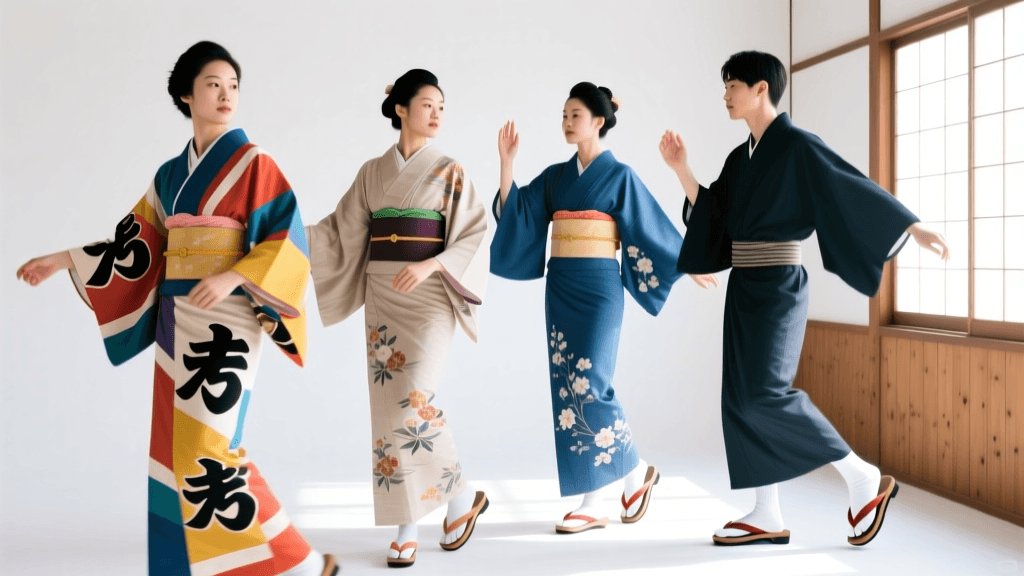
For dances like Bon Odori, which celebrate the spirits of ancestors during the Obon season, the yukata provides a beautiful canvas of motion. Unlike the multi-layered silk kimono, the yukata is a single-layer, unlined garment made of lightweight cotton or hemp blend, making it the perfect summer performance costume.
Adapting the Yukata for Vigorous Dance
Standard yukata dressing involves an ohashori (a waist tuck) that allows the hem to rest gracefully at the ankles. However, for the rhythmic stepping and spinning of Bon Odori, an ankle-length hem poses a severe tripping hazard. Performers utilize a technique called karage to shorten the garment securely.
As noted in the comprehensive styling guides by Japan Experience, modifying the hemline is crucial for active participation. To execute a karage tuck:
- Wrap the yukata around your body, overlapping the left panel over the right (always left over right; right over left is reserved for the deceased).
- Instead of folding the excess fabric at the waist, pull the hem up to just below your knees.
- Secure the lifted fabric tightly with a koshi-himo (a thin, woven cotton tie).
- Fold the outer layer of the yukata down over the tie, creating a crisp, knee-length silhouette that allows for unrestricted leg movement.
Securing the Obi
For festival dancing, elaborate, bulky obi knots are impractical. Dancers typically opt for a hanhaba obi (half-width obi) tied in a simple bunko (bow) or katakamushi knot. To prevent the obi from slipping during hours of dancing, use an obi-ita (obi board) to keep the fabric flat and tie a decorative obi-jime (cord) over the center for added structural support.
Footwear and Accessories: Tabi, Geta, and Zori
Footwear can make or break a festival performance. Traditional Japanese footwear requires specific split-toe socks and elevated sandals that alter the dancer's center of gravity, promoting a grounded, rhythmic stomp essential to traditional Japanese dance.
The Essential Tabi
Tabi are split-toe socks that separate the big toe from the other four toes, allowing the wearer to grip the thong of traditional sandals. For festival performers, white cotton tabi with kohaze (metal clasps) at the back are the standard.
Sizing Advice: Tabi sizing is strictly in centimeters and they do not stretch. Measure your foot from the heel to the base of the big toe. If your foot measures 24.5 cm, purchase a 25 cm tabi. A slightly longer fit prevents the split-toe seam from rubbing and causing blisters during prolonged dancing.
Geta vs. Zori
- Zori: Flat, woven straw or vinyl sandals. These are preferred for Bon Odori as they are lightweight and allow for smooth, gliding steps.
- Geta: Elevated wooden clogs. Geta are iconic in the Awa Odori Festival, where the sharp, percussive clacking of the wood against the pavement acts as a secondary musical instrument. Warning: Breaking in the hanao (the fabric thong) is mandatory. Wear them with thick tabi around the house for at least a week before the festival to prevent severe chafing.
Headwear and Accents: Tenugui and Hachimaki
No festival costume is complete without headwear. The tenugui is a versatile, rectangular cotton towel (typically 35 cm by 90 cm) used to wipe sweat, but in a performance context, it is tied around the head, neck, or even the waist. For high-energy dances, the tenugui is often folded and tied into a hachimaki (headband) to keep hair out of the face and absorb perspiration. The method of tying the tenugui—such as the ne-jiri (twisted rope style) or the simple musubi (knot) at the nape of the neck—can denote the dancer's specific troupe or regional style.
Comparison Chart: Bon Odori vs. Awa Odori Costumes
While both are summer festival dances, the regional variations in their choreography dictate distinct differences in their traditional costumes.
| Garment Element | Bon Odori (General Summer Dance) | Awa Odori (Tokushima Dance Festival) |
|---|---|---|
| Top | Yukata or Happi coat | Happi coat or Yukata (often with one shoulder dropped for men) |
| Bottom | Yukata skirt (ankle or knee-length) | Chikiri (short hem) or Momohiki (tight-fitting cotton trousers) |
| Footwear | Zori (flat sandals) or barefoot in Tabi | Geta (wooden clogs) or Tabi |
| Accessories | Uchiwa (paper fan), Obi sash | Hachimaki (headband), Tenugui, Kasa (straw hat) |
Practical Guide: Sourcing and Budgeting for Festival Wear
If you are looking to assemble your own festival wardrobe, sourcing authentic garments requires knowing where to look. While tourist shops in Kyoto and Tokyo sell synthetic, mass-produced sets, serious performers seek out specialized retailers.
- Specialty Shops: Stores like Suzuran or Itoya in Japan offer high-quality cotton yukata and authentic happi coats. For international buyers, online platforms specializing in Japanese workwear and matsuri gear (such as Japan Store or specialized Etsy vintage sellers) are excellent resources.
- Vintage Markets: Second-hand markets like Tokyo's Shimokitazawa or Kyoto's Toji Temple flea market are goldmines for vintage, hand-stitched happi coats and broken-in geta at a fraction of the retail cost. Expect to pay $30-$50 for a vintage happi in good condition.
- Maintenance: Authentic indigo-dyed cotton will bleed color during the first few washes. Always hand-wash your happi and tabi in cold water with a mild, pH-neutral detergent, and hang them to dry in the shade to prevent the cotton from becoming brittle and the indigo from fading.
Conclusion
Dressing for Japanese summer festivals is an exercise in balancing tradition with physical endurance. By understanding the functional design behind the happi coat, mastering the karage tuck of the yukata, and properly sizing your tabi and geta, you can fully immerse yourself in the rhythmic, joyous spirit of the matsuri. Whether you are swaying gently in a neighborhood Bon Odori circle or stomping fiercely in the streets of Tokushima, the right garments will ensure you dance comfortably from dusk until dawn.