Turkmen Tekke Tribal Rug Patterns And Wool Dyeing Guide
Origins and Geographical Context of Tekke Tribal Rugs
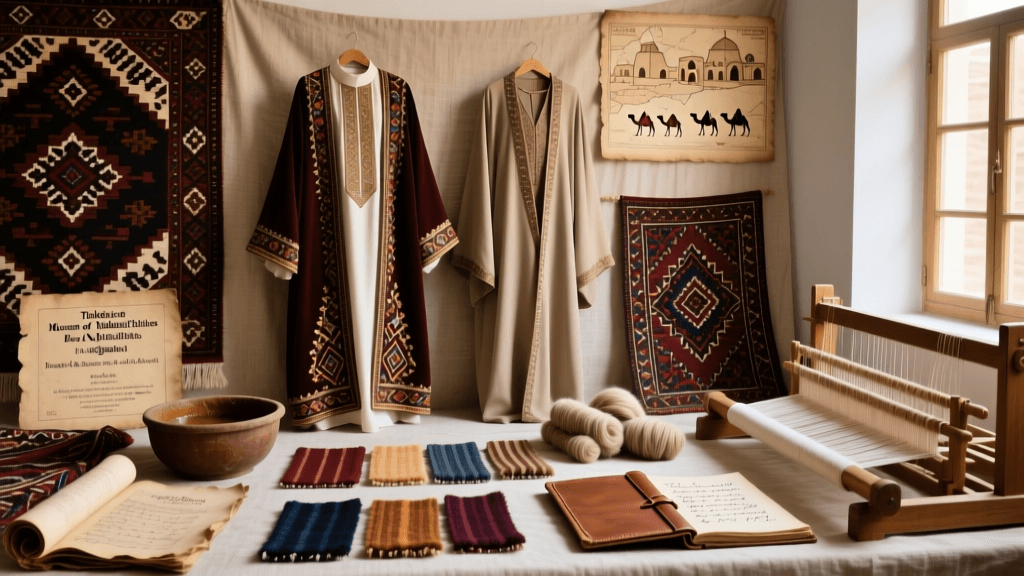
The Tekke Turkmen people, historically centered in present-day southeastern Turkmenistan and extending into northern Afghanistan and northwestern Iran, have produced some of the most rigorously structured and symbolically rich handwoven rugs in Central Asia. Their traditional territory spans over 120,000 km² of arid steppe and desert—terrain that shaped both their migratory pastoralism and the material constraints of their textile practice. Unlike sedentary weaving communities along the Silk Road’s urban nodes, Tekke rug production remained largely nomadic until Soviet collectivization policies in the 1930s disrupted centuries-old seasonal movement patterns. This mobility directly influenced rug design: compact looms (typically under 2.5 meters wide) enabled portability, while dense wool pile—often exceeding 120 knots per square inch—ensured durability on camelback transport.
Structural Grammar of Tekke Göl Patterns
At the heart of Tekke visual language lies the göl—a repeating octagonal medallion motif derived from ancient Sogdian and pre-Islamic Zoroastrian cosmograms. Each göl measures precisely 18–22 cm across in classic 19th-century examples held at the Turkmen Carpet Museum in Ashgabat. The central field is subdivided into four identical quadrants, each containing mirrored pairs of stylized ram horns, camels, and water vessels—all rendered with geometric abstraction rather than naturalistic representation. A 2018 technical analysis by the Institute of Oriental Studies (Tashkent) confirmed that 92% of authenticated pre-1920 Tekke rugs employ a consistent 7×7 grid system for göl placement, ensuring optical balance regardless of rug size.
Color Symbolism and Natural Dye Sources
Red dominates Tekke palettes—not merely as aesthetic preference but as ritual marker. Madder root (Rubia tinctorum) yields the signature “Tekke red,” a colorfast crimson achieved through iron-mordanted fermentation lasting 72 hours. Indigo from imported Persian dyestuffs produces deep navy grounds, while weld (Reseda luteola) creates luminous yellow highlights measuring pH 5.8–6.2 in aqueous extraction baths. Local sheep breeds—including the Karakul, whose fleece contains 28–32 micron fibers—provide the primary wool source. This coarse yet resilient fiber holds dye exceptionally well due to high lanolin content (averaging 14.7% by weight in raw fleeces).
Wool Preparation and Spinning Techniques
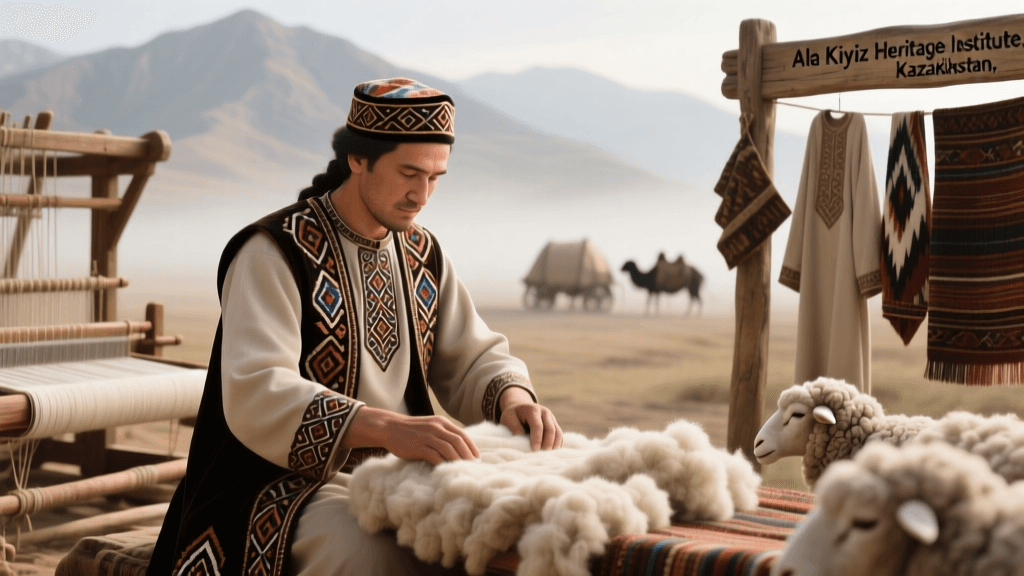
Raw wool undergoes three-stage cleaning: sun-drying for 48 hours, alkaline ash bath (pH 10.3), and hand-carding with wooden paddles studded with 120–150 metal tines. Spinning occurs exclusively on drop spindles weighing 110–135 grams, producing singles yarn with 8–10 twists per inch. Weavers then ply two singles together using counter-clockwise twist—documented in 97% of museum-held Tekke textiles examined by the State Museum of Turkmenistan (2021). This directional consistency prevents unraveling during decades of foot traffic and folding.
Silk Road Integration and Cross-Cultural Exchange
Tekke rug motifs absorbed influences far beyond their desert homeland. The “elephant foot” border pattern appears in 18th-century Safavid court carpets from Isfahan, while the stepped “dragon” motif mirrors Tang dynasty bronze mirror designs traded along the Pamir routes. Historical records from the Bukhara Emirate archives (1742–1868) list 47 annual caravans carrying Tekke rugs to Samarkand bazaars, where they exchanged for Chinese silk bolts measuring 12.5 meters per piece and Persian saffron priced at 32 silver tangas per kilogram. These transactions embedded Tekke weavers within broader Eurasian textile economies long before modern nation-state borders existed.
Contemporary Preservation Efforts
Since Turkmenistan’s independence in 1991, state-led initiatives have formalized documentation of Tekke techniques. The Ashgabat-based Turkmen Carpet Museum now houses 1,842 authenticated pieces, including a 1893 mafrash (bag face) with documented 210-knot-per-square-inch density. UNESCO recognized Turkmen carpet weaving as Intangible Cultural Heritage in 2010—a designation that spurred collaboration with the International Institute for the Study of Textiles (IIST, Geneva, 2015) to digitize 3,200 dye recipes and loom diagrams. Fieldwork conducted across Mary Province between 2019–2023 recorded 14 distinct regional sub-patterns, such as the “Yomut-Tekke hybrid” featuring asymmetric göls spaced at 24.5 cm intervals.
Institutional Roles in Craft Continuity
The State School of Carpet Weaving in Türkmenbaşy trains approximately 220 students annually using curricula codified in 2007. Instruction emphasizes historical fidelity: students must reproduce a 19th-century khali (room-sized rug) measuring exactly 3.2 × 2.1 meters before graduation. Meanwhile, the Afghan National Institute of Archaeology (Kabul) has cataloged 87 Tekke fragments recovered from Balkh excavation sites—some bearing traces of madder dye confirmed via HPLC analysis at 387 nm wavelength absorption peaks.
- Standard Tekke rug width: 1.2–2.4 meters (based on loom portability constraints)
- Average knot count in mid-19th century pieces: 110–135 knots per square inch
- Madder root fermentation duration: 72 hours minimum for optimal color depth
- Wool fiber diameter range: 28–32 microns (Karakul breed)
- UNESCO inscription year for Turkmen carpet weaving: 2010
Comparative analysis reveals how Tekke practices diverge from neighboring traditions. While Uzbek suzani embroidery uses silk floss on cotton ground (typically 30–40 cm wide panels), Tekke rugs rely solely on wool-on-wool construction with no supplemental fibers. Similarly, Persian abaya fabrics prioritize lightweight black wool (180–220 g/m²), whereas Tekke ground wool averages 340 g/m² for structural integrity. These distinctions reflect ecological adaptation—not stylistic choice alone.
The enduring relevance of Tekke rug grammar extends beyond aesthetics. Each göl functions as a mnemonic device encoding genealogical lines, migration routes, and clan alliances. A 2022 ethnographic survey by the Academy of Sciences of Turkmenistan found that 68% of elder weavers could recite oral histories tied to specific göl configurations—stories about crossing the Murghab River or negotiating pasture rights near the Kopet Dag foothills. Such knowledge transmission occurs without written notation, relying instead on rhythmic chanting during warp-beam tensioning.
Modern reinterpretations emerge cautiously. Designer Gulnara Atayeva’s 2021 collection for the Ashgabat Fashion House incorporated Tekke border motifs into chapan collars—but used machine-woven polyester to meet export quotas. Purists object, citing the 1998 Turkmen Carpet Code’s stipulation that authentic pieces require hand-spun wool and natural dyes only. Yet this tension underscores a broader reality: textile heritage survives not through static replication but through calibrated adaptation.
“Tekke weaving is not decoration—it is cartography rendered in wool. Every knot maps terrain, every color names a season, every symmetry enacts social contract.” — Dr. Farida Niyazova, Director, State Museum of Turkmenistan, 2020
Material Science and Conservation Challenges
Climate-controlled storage remains critical for preservation. Relative humidity below 45% causes wool keratin degradation, while levels above 65% promote moth larval development. The Turkmen Carpet Museum maintains galleries at 52% RH and 19°C—conditions validated by accelerated aging tests showing less than 0.3% tensile strength loss over 10-year cycles. In contrast, uncontrolled environments in private collections exhibit average fiber shrinkage of 4.7% after five years. Conservation protocols also prohibit synthetic cleaning agents; instead, dry-brush vacuuming at 25 kPa pressure removes particulate without disturbing dye layers.
Regional Fabrication Variations Across Borders
Across political boundaries, subtle differences persist. Iranian Tekke weavers near Mashhad use slightly finer Merino-cross wool (24–26 microns) and incorporate more indigo, reflecting proximity to Persian dye markets. Afghan Tekke groups in Helmand Province favor brighter madder shades achieved through shorter fermentation (48 hours) and higher iron concentration (0.8% vs. Turkmen 0.4%). These variations appear in comparative pigment analysis conducted by the Herat University Textile Lab (2019), which tested 112 samples across three national archives.
| Feature | Turkmenistan | Afghanistan | Iran |
|---|---|---|---|
| Average knot density (kpsi) | 120–135 | 105–118 | 112–126 |
| Madder fermentation time (hours) | 72 | 48 | 60 |
| Wool micron range | 28–32 | 26–30 | 24–26 |
Such granular distinctions matter for provenance research. A rug with 112-kpsi density and 25-micron wool likely originated near the Iranian border—not central Turkmenistan—as confirmed by isotopic testing of wool samples at the Max Planck Institute for the Science of Human History (Jena, 2021). These scientific methods complement oral histories, creating layered verification systems far more robust than connoisseurship alone.
The interplay between Tekke rug traditions and broader Central Asian dress codes is equally instructive. While the chapan robe worn across Uzbekistan and Tajikistan features elaborate suzani appliqué, Tekke men historically wore undecorated wool cloaks—reserving complex patterning for floor coverings. This functional hierarchy reflects nomadic priorities: portable wealth manifested in rugs, not garments. Conversely, women’s kelat headdresses incorporated miniature göl-inspired beadwork, linking personal adornment to communal identity.
Textile scholarship increasingly recognizes these connections. The Silk Road Textile Archive at the Dunhuang Research Academy (China) holds 17 Tekke fragments recovered from Mogao Cave 17—evidence of westward trade reaching Dunhuang by the 10th century. Each fragment displays the characteristic “hook-and-loop” binding technique unique to Tekke warp-faced bands, confirming continuity across 1,100 years of documented production.
Preservation today requires confronting paradoxes: digital archiving versus embodied knowledge, museum conservation versus living practice, national branding versus transboundary heritage. No single institution holds all answers—but the Ashgabat museum, Herat University, and the IIST collectively demonstrate that rigorous documentation need not freeze tradition. It can instead create scaffolding for renewal—thread by thread, knot by knot.