Hanfu for Extreme Climates: 2026 Tropical & Winter Guide
Adapting Ancient Elegance to Modern Extremes
As the global appreciation for traditional Chinese clothing continues to expand in 2026, enthusiasts are no longer confined to mild, temperate zones. From the sweltering, humid streets of Singapore and the arid deserts of the Middle East to the sub-zero, wind-swept avenues of Harbin and Montreal, Hanfu has become a truly global wardrobe. However, wearing historical garments in extreme climates presents unique challenges. The traditional silhouettes and fabrics that flourished in the temperate Yellow and Yangtze River valleys require strategic adaptations when faced with modern environmental extremes.
In 2026, the intersection of heritage craftsmanship and advanced textile technology has revolutionized how we approach climate-specific Hanfu. By understanding the historical precedents of seasonal dressing and leveraging modern fabric innovations, you can maintain both authenticity and comfort. This comprehensive guide explores the best practices, garment styles, and material science required to wear Hanfu in tropical, desert, and freezing cold regions.
Tropical and Desert Climates: Beating the Heat in Hanfu
Wearing Hanfu in high-heat environments—whether the suffocating humidity of Southeast Asian tropics or the dry, blazing sun of desert regions—demands a meticulous focus on breathability, moisture management, and UV protection. The goal is to maximize airflow while minimizing skin exposure to direct sunlight.
The Power of Ramie and Leno Weaves
Historically, ancient Chinese commoners and scholars alike relied heavily on ramie (known as Xia Bu, or 'summer cloth') to survive brutal summers. Ramie is a bast fiber that is naturally highly absorbent, dries much faster than cotton, and possesses inherent antibacterial properties. In 2026, heritage weavers have refined ramie processing to eliminate the historical 'scratchiness,' resulting in ultra-soft, high-thread-count ramie blends that drape beautifully.
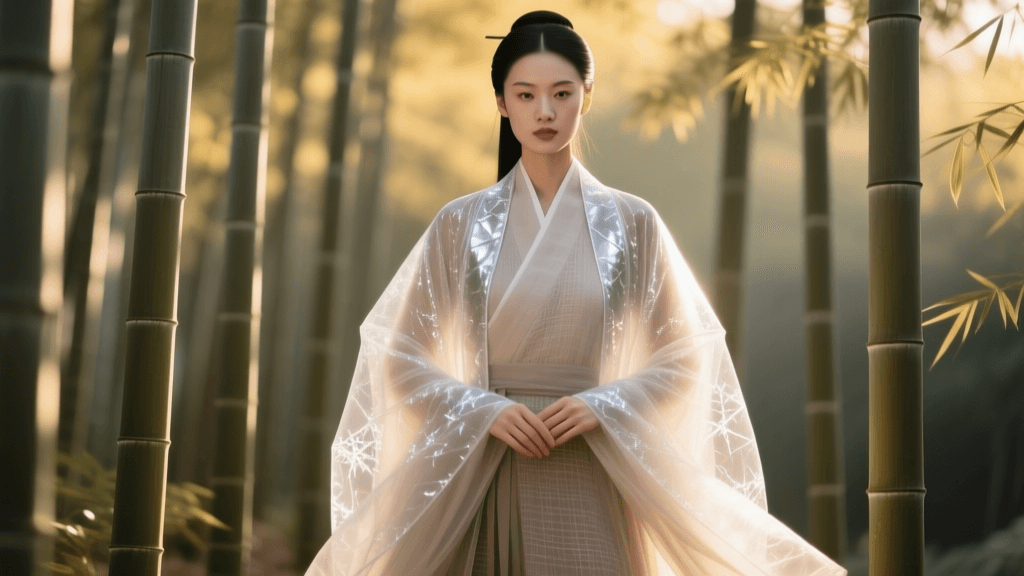
For silk lovers, the 'Luo' (leno) weave is the ultimate tropical solution. This ancient technique twists adjacent warp threads around the weft, creating microscopic, stable pores in the fabric that allow continuous air circulation without sacrificing the structural integrity of the garment. Modern 2026 iterations of Luo silk often incorporate Tencel or bamboo viscose threads to enhance moisture-wicking capabilities.
Recommended Tropical Silhouettes
- Song Dynasty Beizi (褙子): A lightweight, open-front jacket with side slits. Worn over a simple camisole or thin Ru, the Beizi acts as a breathable sun-shield while allowing cross-breezes to cool the torso.
- Banbi (半臂): A half-sleeve jacket that provides shoulder and chest coverage without trapping heat under the arms. Ideal for pairing with lightweight, wide-leg Song-style trousers.
- Qixiong Ruqun (齐胸襦裙): While popular, chest-high skirts can trap heat against the torso. For extreme humidity, opt for a waist-high Ruqun with a loose, unlined A-line skirt to promote vertical airflow.
Desert Adaptations: Sun and Sand
In arid desert climates, the challenge shifts from humidity to intense solar radiation and abrasive dust. Here, coverage is your best defense. Long, flowing Ming Dynasty Daopao (道袍) made from tightly woven, lightweight linen or raw silk protect the skin from UV rays while creating a microclimate of cooler air trapped between the fabric and the body. A wide-brimmed traditional bamboo hat (Douli) or a lightweight silk veil completes the desert-ready ensemble.
Cold and Freezing Regions: Winter Layering and Aerogel Tech
When temperatures plummet below freezing, the traditional Ming Dynasty winter wardrobe becomes a masterclass in insulation and layering. The historical reliance on heavy padding, fur trims, and dense weaves has been spectacularly augmented by 2026 textile engineering, allowing for warmth without the crushing weight of traditional winter gear.
Heritage Insulation Meets 2026 Material Science
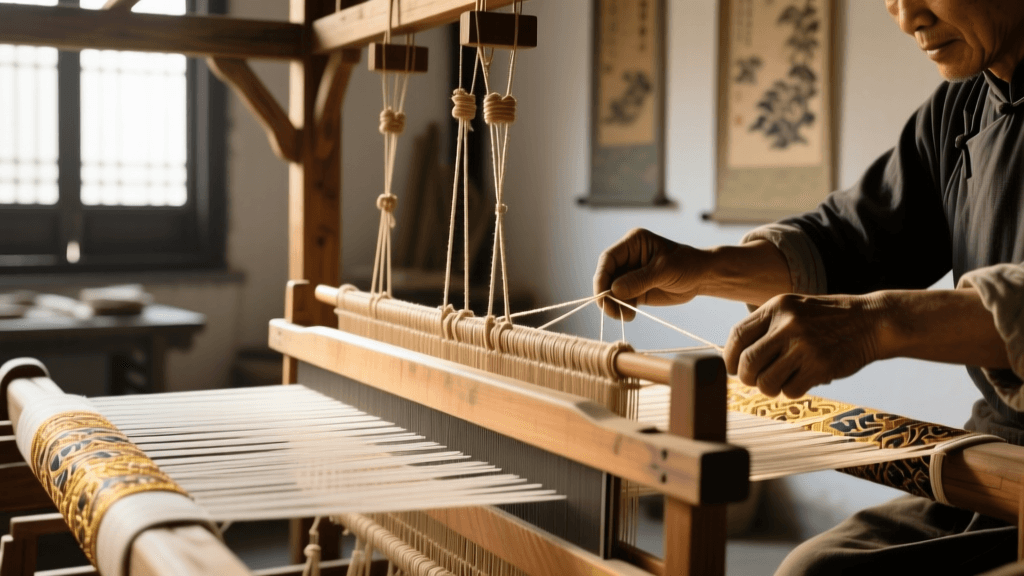
The foundation of cold-weather Hanfu is the sericulture and silk craftsmanship that has defined Chinese textiles for millennia. Heavyweight silk satin and velvet (Zhangrong) act as excellent windbreakers. However, the true revolution in 2026 winter Hanfu is the integration of aerogel-infused linings. Originally developed for space exploration, aerogel is one of the lightest and most insulating solid materials known. Modern textile mills have successfully bonded microscopic aerogel particles to silk and cotton batting, creating winter Ao (padded jackets) that are half the thickness of traditional cotton-padded garments but offer superior thermal retention.
Recommended Winter Silhouettes
- Ming Dynasty Aoqun (袄裙): The quintessential winter uniform. The Ao is a lined or padded jacket with a high collar (Liling) that seals out drafts. In 2026, look for Ao jackets featuring removable aerogel liners and windproof outer shells made of heavy silk-satin.
- Doupeng (斗篷): A sweeping, sleeveless winter cloak that fastens at the neck. Historically lined with animal fur, modern 2026 Doupeng utilize high-pile synthetic shearling or thermal-reflective fleece linings, providing full-body wind protection over your base Hanfu layers.
- Mamianqun (马面裙) with Fleece Lining: The iconic pleated skirt is highly adaptable. For extreme cold, winter-specific Mamianqun feature a bonded polar-fleece inner layer that traps heat while maintaining the crisp, structured pleats on the exterior.
The Art of the Zhongyi (Inner Layer)
No winter Hanfu is complete without proper Zhongyi (inner clothes). In 2026, thermal base layers designed specifically for Hanfu silhouettes are widely available. These feature the traditional crossed collar (Jiaoling) but are constructed from phase-change material (PCM) fabrics that actively regulate body temperature, absorbing excess heat when you move indoors and releasing it when you step back into the freezing wind.
2026 Extreme Climate Hanfu Fabric Matrix
To help you build your climate-specific wardrobe, refer to the matrix below detailing the best fabric and style combinations for various extreme environments.
| Climate Zone | Traditional Base Fabric | 2026 Tech-Enhanced Upgrade | Best Hanfu Silhouette | Optimal Temp Range |
|---|---|---|---|---|
| Tropical Humid | Pure Ramie (Xia Bu) | Ramie-Tencel Moisture-Wicking Blend | Song Beizi, Banbi | 28°C to 38°C (82°F - 100°F) |
| Desert Arid | Raw Silk, Dense Linen | UPF 50+ Tightly Woven Hemp-Silk | Ming Daopao, Wide Trousers | 30°C to 45°C (86°F - 113°F) |
| Sub-Zero Winter | Cotton Batting, Wool | Aerogel-Infused Silk Linings | Ming Liling Ao, Doupeng | -10°C to -30°C (14°F - -22°F) |
| Windy Coastal | Heavy Silk Satin | Windproof Membrane-Bonded Velvet | Bixia, Pifeng (Cape) | 5°C to 15°C (41°F - 59°F) |
Practical Packing and Layering Checklist for 2026
Whether you are traveling to a tropical resort or a snowy mountain retreat, packing Hanfu requires foresight. Use this actionable checklist to ensure your garments survive the journey and perform in extreme conditions.
- Vacuum Compression Bags: Essential for winter travel. Aerogel and fleece-lined Doupeng cloaks are bulky. Use vacuum bags to reduce their volume by 70% in your luggage without damaging the structural pleats of your Mamianqun.
- Anti-Chafe Balms: In tropical humidity, the friction of crossed collars (Jiaoling) against damp skin can cause severe chafing. Pack a silicone-based anti-chafe balm for your neckline and waist.
- Static Guard Spray: Cold, dry winter air creates massive static cling, which ruins the drape of silk skirts. A travel-sized static guard spray is mandatory for winter Hanfu wearers.
- Hidden Suspenders: Winter layering adds weight. If you are wearing a heavy, multi-layered Ruqun, use discreet, skin-toned suspenders to hold up the skirt, relieving pressure from the waist ties which can restrict circulation over thick thermal underlayers.
- Microfiber Drying Towels: If you are caught in a tropical monsoon, heavy silks will take days to dry and may mildew. Pack a microfiber towel to aggressively wick moisture from your ramie or linen garments before hanging them in an air-conditioned room.
Preserving the Garments in Extreme Conditions
Extreme climates do not just affect the wearer; they affect the garments. In desert environments, fine sand and dust can become embedded in the intricate weaves of historical silk weaving techniques and modern replicas alike. Always use a soft-bristled garment brush to sweep dust off your Hanfu before storing it. In tropical climates, the high humidity is a breeding ground for mold and fabric-eating insects. Never store worn Hanfu in plastic bins in humid regions; instead, use breathable cotton garment bags and store them with natural camphor or cedar blocks to repel pests and absorb excess moisture.
Conclusion
The evolution of Hanfu in 2026 proves that traditional clothing is not a static relic of the past, but a living, adaptable art form. By respecting the historical wisdom of ancient weavers who mastered the use of ramie for summer and padded silk for winter, and by embracing modern textile innovations like aerogel and moisture-wicking blends, enthusiasts can confidently wear their heritage in any corner of the globe. Whether you are navigating the scorching dunes of a desert or the frozen landscapes of a northern winter, the right fabric and silhouette will ensure you remain elegant, comfortable, and culturally connected.