Traditional Japanese Garments 2026: Kimono & Hakama Guide
The Enduring Legacy of Japanese Sartorial Heritage in 2026
As we navigate the fashion landscape of 2026, the global appreciation for traditional Japanese garments has evolved from mere historical fascination into a vibrant, living sartorial practice. The kimono, hakama, and their accompanying accessories are no longer confined to museum archives or strict ceremonial obligations. Today, a new generation of artisans, stylists, and cultural preservationists are redefining how these garments are worn, sourced, and maintained. This comprehensive guide explores the intricate anatomy, layering techniques, and modern styling of traditional Japanese clothing, offering actionable insights for collectors, fashion historians, and enthusiasts looking to integrate these timeless pieces into contemporary wardrobes.
The philosophy underlying Japanese fashion is deeply rooted in the concept of 'ma' (negative space) and the seasonal awareness known as 'kisetsukan'. Unlike Western tailoring, which focuses on cutting and shaping fabric to contour the human body, traditional Japanese clothing relies on straight seams, geometric precision, and the art of draping. This fundamental difference not only dictates how the garments are constructed but also how they are preserved, making them inherently sustainable and highly adaptable to changing body types over generations.
The Anatomy of the Kimono: Beyond the Silhouette
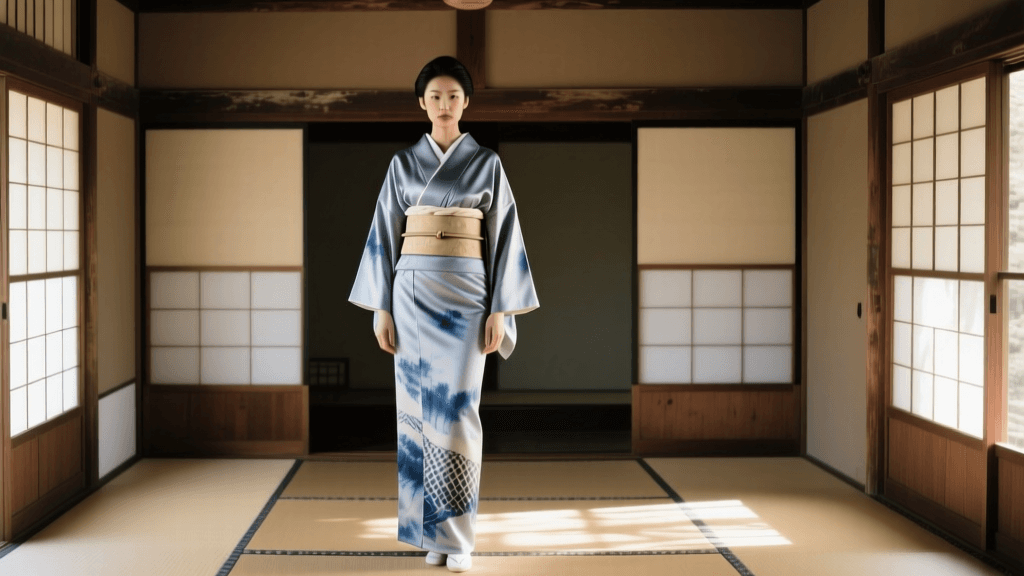
To truly understand the kimono, one must look past its iconic T-shaped silhouette and examine its structural components. A standard kimono is constructed from a single bolt of fabric, known as a 'tanmono', which measures approximately 36 centimeters in width and 11.5 meters in length. This narrow width dictates the straight-line construction method, ensuring that almost no fabric is wasted during the cutting process. The primary components include the 'sode' (sleeves), 'eri' (collar), 'okumi' (front panels), and 'miyatsukuchi' (the open slits beneath the armholes found exclusively on women's kimono, which allow for ease of movement and the adjustment of the 'ohashori', or waist tuck).
Textile Choices and the 2026 Market Dynamics
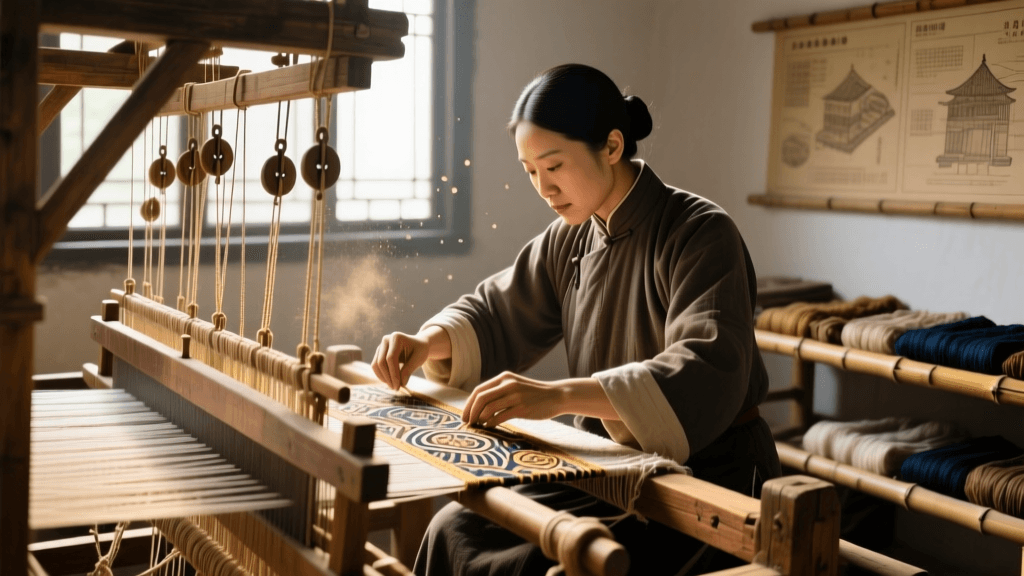
In 2026, the textile market for traditional garments is characterized by a stark contrast between artisanal heritage weaves and innovative, sustainable synthetics. Authentic silk weaves such as 'chirimen' (silk crepe) and 'rinzu' (silk damask) remain the gold standard for formal wear. However, due to the rising costs of sericulture and artisanal dyeing, a new, high-quality kimono crafted from Nishijin-ori silk can easily command prices starting at 450,000 JPY. Conversely, the vintage and upcycled market has exploded. Enthusiasts can source exquisite, mid-century silk kimono in specialized recycling shops across Kyoto and Tokyo for between 5,000 and 30,000 JPY, making authentic silk more accessible than ever before.
For everyday wear and summer festivals, the 'yukata' remains the most popular entry point. Originally a hemp bathing robe, the modern yukata is crafted from lightweight cotton or advanced breathable poly-blends. In 2026, we are seeing a surge in 'washable silk' and high-tech moisture-wicking yukata designed for increasingly hot summer climates, blending traditional aesthetics with modern textile engineering.
Hakama: Pleated Tradition and Modern Formality
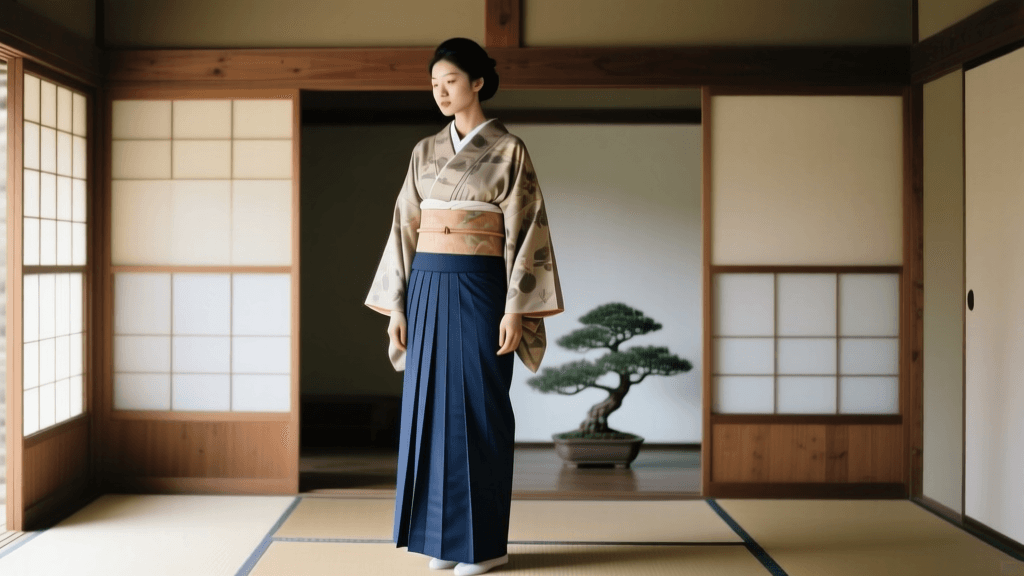
While the kimono is universally recognized, the 'hakama' represents a more specialized tier of Japanese traditional clothing. Originally designed as protective outerwear for samurai horsemen, the hakama is a pleated, divided skirt (or sometimes a long undivided skirt) worn over a kimono. The standard formal hakama features exactly seven deep pleats: five in the front and two in the back. These pleats are historically said to represent the seven virtues of the samurai code (Bushido), including righteousness, courage, and benevolence.
In contemporary 2026 fashion, the hakama is predominantly worn by men for highly formal occasions such as weddings and tea ceremonies, and by women for university graduation ceremonies. The women's graduation hakama is typically paired with a 'furisode' (long-sleeved kimono) and features intricate embroidery or woven patterns. The rigid 'koshita' (back board) of the hakama ensures that the pleats fall perfectly, creating a striking, architectural silhouette that commands respect and conveys a deep sense of academic and cultural achievement.
The Art of Kitsuke: Layering and Undergarments
The process of dressing in a kimono, known as 'kitsuke', is a meticulous art form that relies heavily on a structured system of undergarments and ties. The kimono itself is never worn directly against the skin, as the natural oils and friction would degrade the delicate silk. Instead, a series of layers are used to protect the garment, shape the body into the idealized cylindrical silhouette, and provide structural support for the heavy outer sashes.
| Component | Japanese Term | Function and Placement |
|---|---|---|
| Under-kimono | Nagajuban | A lightweight robe worn over basic undergarments to protect the outer kimono from sweat and oils. Features a removable collar (han-eri). |
| Waist Padding | Hip Pads / Towels | Used to create a cylindrical torso shape, preventing the kimono from clinging to the body's natural curves and ensuring a smooth drape. |
| Thin Ties | Koshihimo | Long, narrow cotton or silk cords used to secure the nagajuban and the outer kimono at the waist and hips during the dressing process. |
| Wide Belt | Datejime | A stiff, wide under-belt that flattens the koshihimo ties and provides a smooth, stable foundation for the decorative outer obi. |
| Collar Stiffener | Eri-shin | A plastic or cardboard insert placed inside the nagajuban collar to keep the neckline crisp, perfectly curved, and structurally sound. |
Mastering these layers is essential for achieving the correct 'eri-nuki' (the pulled-back collar that exposes the nape of the neck, considered a focal point of traditional Japanese elegance). In 2026, many modern kitsuke practitioners utilize innovative, pre-tied slip-on nagajuban and elasticized datejime to reduce dressing time from forty-five minutes down to fifteen, without sacrificing the traditional silhouette.
The Obi: The Focal Point of Japanese Fashion
The 'obi' is the wide sash that secures the kimono, but it is far more than a functional belt; it is often the most expensive and visually striking element of the entire ensemble. Obi are categorized by their formality, width, and construction. The 'maru obi' is the most formal, heavily brocaded, and incredibly stiff, while the 'nagoya obi' is pre-folded and stitched for easier tying in semi-formal settings.
The knot, or 'musubi', tied at the back is a language of its own. The 'taiko musubi' (drum knot) is the standard, elegant knot for married women and formal events, creating a smooth, box-like shape. Younger, unmarried women traditionally wear the 'fukura-suzume' or elaborate floral knots, though in 2026, the strict rules regarding age and marital status have relaxed significantly, with wearers choosing musubi based on aesthetic preference and the specific geometry of the obi's pattern. According to the Metropolitan Museum of Art's Heilbrunn Timeline of Art History, the evolution of the obi from a narrow functional tie to a massive, decorative centerpiece reflects the shifting economic and cultural centers of Japan from the Kyoto aristocracy to the Edo merchant classes.
Footwear: Zori, Geta, and Tabi in Contemporary Styling
No traditional Japanese ensemble is complete without the correct footwear. The 'tabi' sock, characterized by its split toe design, is essential for wearing 'zori' (flat, woven sandals) or 'geta' (wooden clogs). In 2026, the tabi has transcended its traditional boundaries, heavily influencing global high fashion and streetwear. Modern iterations include stretch-terry tabi for comfort, and even tabi-sneakers that blend the split-toe silhouette with athletic soles.
For formal kimono wear, white cotton tabi and cork-soled zori covered in brocade or vinyl are the standard. The height of the zori's sole often indicates formality; higher platforms are reserved for the most formal occasions. When wearing a yukata, bare feet or colored tabi paired with wooden geta are appropriate, providing a satisfying, rhythmic 'clack' that is synonymous with Japanese summer festivals.
Preservation, Sourcing, and Sustainable Fashion
The preservation of vintage silk is a critical aspect of the Japanese garment community. Silk is highly susceptible to light damage, moisture, and creasing. Proper storage requires wrapping the garments in acid-free 'tatou-shi' paper and storing them flat in shallow drawers, never on Western-style hangers which distort the shoulder seams. When a kimono becomes stained or unwearable, the culture of 'boro' (mending) and upcycling comes into play. Artisans frequently deconstruct damaged kimono to create 'haori' (jackets), tote bags, or even patchwork quilts, ensuring that the precious textile continues its lifecycle.
For those looking to source authentic pieces, the Victoria and Albert Museum notes that the global appreciation for the kimono has led to a surge in specialized vintage curators operating outside of Japan, making it easier for international collectors to acquire verified, high-quality garments. Whether purchasing a brand-new, custom-woven piece from a Kyoto atelier or rescuing a Showa-era silk furisode from a Tokyo flea market, engaging with traditional Japanese garments in 2026 is an act of cultural preservation, sustainable fashion, and profound personal expression.