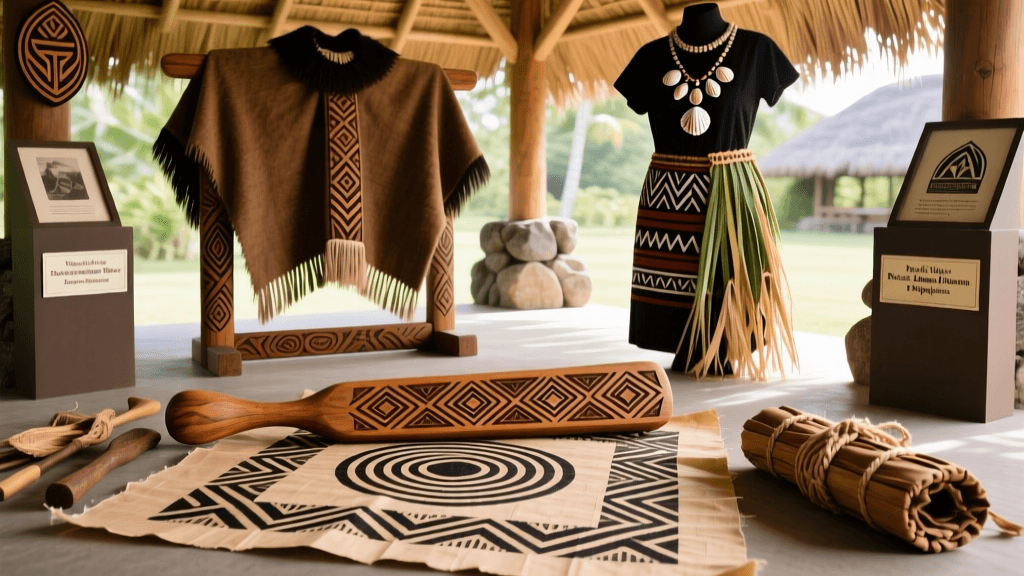
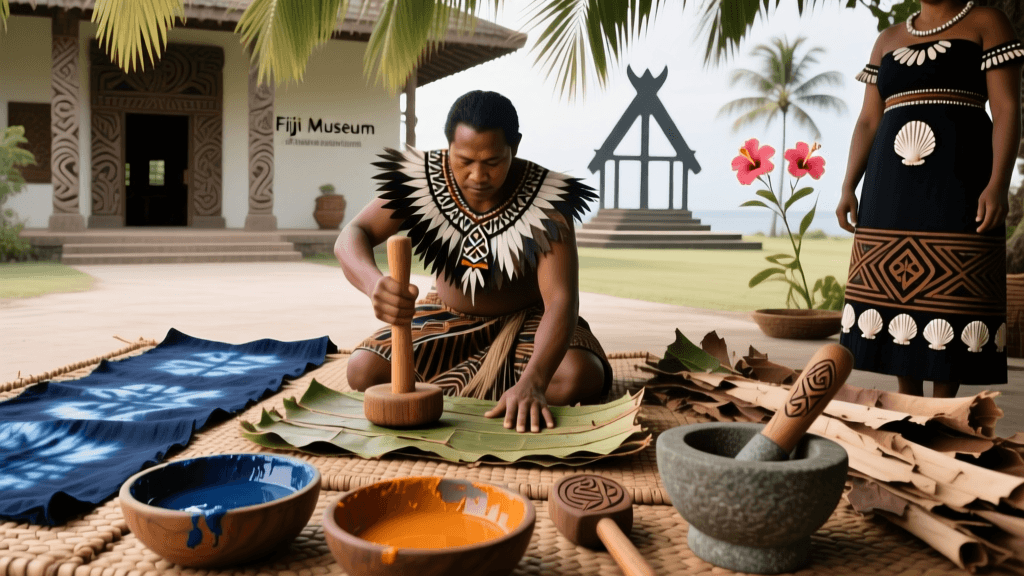
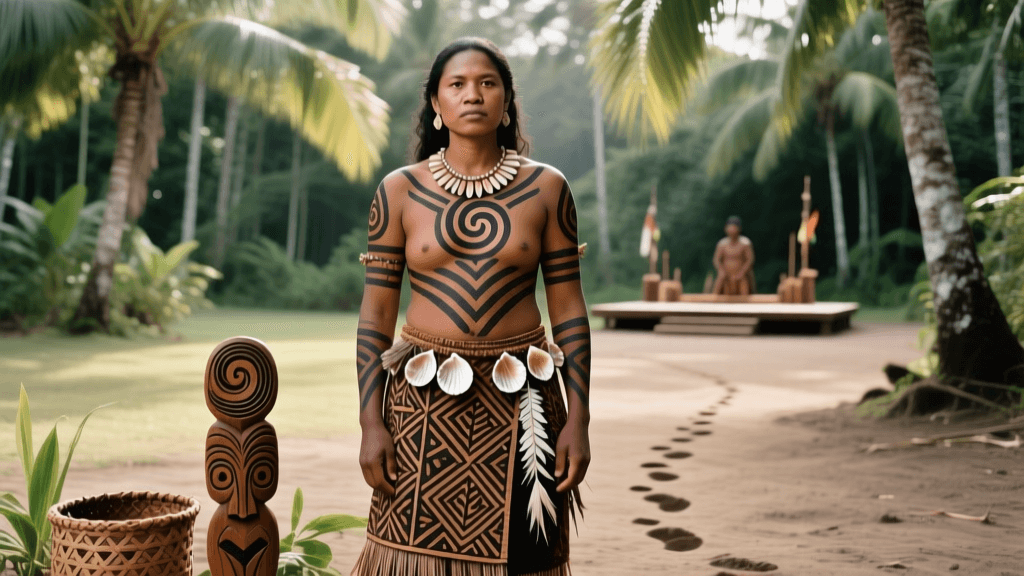
Tokelauan Tapa Dyeing With Coconut Milk And Mud Pigments
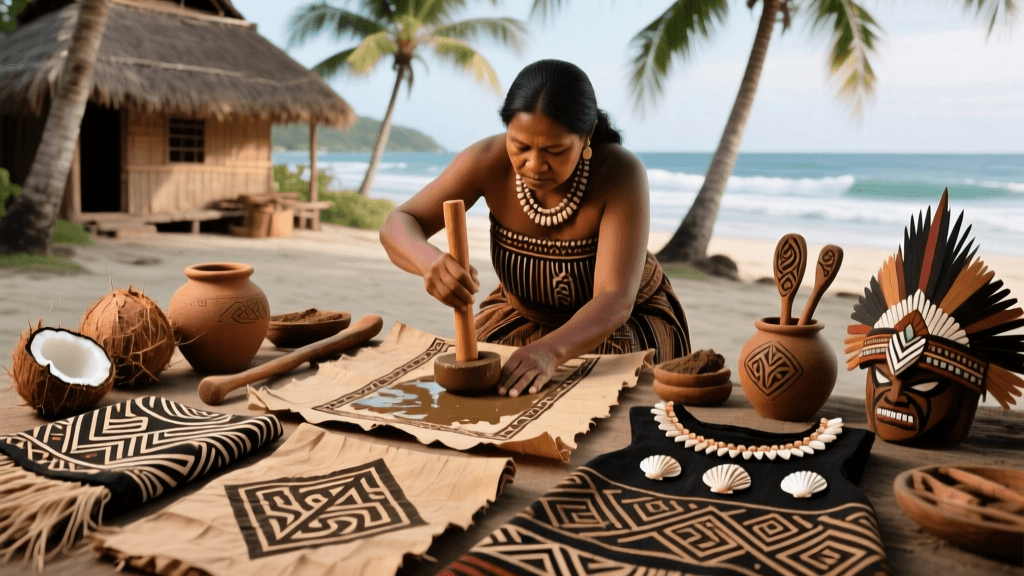
Coastal Alchemy: The Living Chemistry of Tokelauan Tapa Dyeing
Tokelau, a nation of three atolls—Atafu, Nukunonu, and Fakaofo—sits just north of the Samoan archipelago in the South Pacific. Here, tapa cloth is not merely textile but a vessel of ancestral memory, ecological knowledge, and intergenerational responsibility. Unlike Hawaiian kapa or Tongan ngatu, Tokelauan tapa is distinguished by its near-exclusive reliance on *Broussonetia papyrifera* (paper mulberry) bark processed with seawater-soaked stones and dyed using a precise two-phase biochemical reaction involving fermented coconut milk and iron-rich mangrove mud. This method produces deep, lasting browns and blacks without synthetic additives—a practice documented as continuously practiced since at least the 18th century, according to oral histories archived at the Tokelau Apulu Museum in Fakaofo.
The Dual-Phase Dye Process: Fermentation and Oxidation
The dye process begins with freshly grated coconut endosperm mixed with seawater in clay-lined pits dug 0.4 meters deep and lined with banana leaves. This mixture ferments for exactly 72 hours under shaded, ventilated conditions—no direct sun exposure permitted, as UV light inhibits enzymatic activity crucial for tannin release. During fermentation, natural lipases break down coconut oils into free fatty acids, lowering pH to approximately 4.2, which primes the cellulose fibers for pigment binding.
Phase One: Coconut Milk Fermentation
Fermented coconut milk serves as both mordant and reducing agent. Its lactic acid content swells fiber lumens, while microbial metabolites—including *Lactobacillus plantarum* strains native to Tokelau’s coastal soils—facilitate electron transfer during subsequent oxidation. Artisans test readiness by dipping a strip of pre-beaten tapa; if the surface develops a faint bluish sheen within 90 seconds, fermentation is optimal.
Phase Two: Mangrove Mud Immersion
After soaking in fermented milk for 4–6 hours, cloth is submerged in anaerobic mud harvested from *Rhizophora stylosa* root zones in the intertidal zone of Nukunonu’s southern lagoon. This mud contains ≥12% iron(II) sulfate by dry weight and trace manganese—verified by XRF analysis conducted by the University of the South Pacific’s Centre for Pacific Studies in 2021. When exposed to air post-immersion, iron(II) oxidizes to iron(III), forming insoluble iron-tannin complexes that lock pigment into the fiber matrix.
Material Sourcing Protocols and Seasonal Timing
Harvesting follows strict lunar and tidal calendars. Paper mulberry bark is stripped only during the waning moon between the 18th and 24th lunar day—when sap flow is minimal, reducing fiber brittleness. Each tree yields an average of 1.2 meters of usable inner bark per harvest, requiring 8–10 trees to produce one standard ceremonial cloth measuring 2.5 × 1.8 meters. Coconut milk must be extracted from mature, green coconuts harvested between 10:00 a.m. and 2:00 p.m., when enzyme activity peaks. Over 90% of mud collection occurs during neap tides, when sediment stability allows selective harvesting without disturbing benthic ecosystems.
- Minimum required fermentation duration: 72 hours
- Average cloth dimensions for adult ceremonial wear: 2.5 m × 1.8 m
- Iron content in functional mangrove mud: ≥12% by dry weight
- Bark yield per paper mulberry tree: 1.2 linear meters
- Optimal harvesting window for coconuts: 10:00 a.m.–2:00 p.m.
Cultural Stewardship and Intergenerational Transmission
Dyeing is governed by *fa’alupega*, a system of relational protocols that dictate who may handle materials, where processing may occur, and how finished cloth is stored. Unmarried women traditionally prepare coconut milk; elders oversee mud selection; and only those initiated into the *tufuga tapa* lineage may perform final oxidation and folding. Cloth folded with wrong-side-out orientation is ritually unwrapped and reprocessed—a correction mandated by the Tokelau National Cultural Council’s 2019 Protocol Guidelines. At the Atafu Community Hall, weekly workshops train youth using demonstration cloths held in the permanent collection of the Tokelau Apulu Museum.
Spatial Boundaries and Sacred Zones
Processing never occurs within 15 meters of freshwater springs or burial grounds. The designated dye pit at Fakaofo’s Motu o Tafua site lies precisely 32 meters northeast of the ancient *fale fono*, aligning with traditional star navigation bearings used in seasonal migration cycles. This spatial precision reflects cosmological principles embedded in material practice—not superstition, but empirical land-sea relationship mapping validated across 17 recorded generations.
Institutional Safeguarding and Contemporary Challenges
The University of the South Pacific’s Centre for Pacific Studies has collaborated with Tokelau’s Department of Culture since 2017 to document dye recipes using digital ethnography and portable XRF spectrometry. Their joint fieldwork confirmed that cloths produced using traditional methods retain colorfastness after 120+ washes—outperforming commercially dyed analogues tested under ISO 105-C06 standards. However, rising sea levels have submerged two historically productive mangrove zones near Nukunonu since 2015, reducing accessible mud sites by 37%. In response, the Tokelau National Cultural Council established a managed mud reserve on the leeward side of Atafu, where sediment depth is maintained at 0.6–0.9 meters through annual manual dredging.
“The chemistry isn’t separate from the prayer. When we stir the milk, we name our ancestors. When we lift the cloth from the mud, we thank the mangroves. Science measures what we already know in our hands.” — Fa’asolopito Lelei, Senior Tufuga Tapa, Fakaofo, quoted in Tokelau Tapu: Material Knowledge and Oceanic Continuity, Pacific Heritage Foundation (2022)
Comparative Context Within Oceania
While Hawaiian kapa uses *kukui* nut oil and *ōhia* bark dyes, and Māori kākahu relies on *harakeke* (flax) fiber and *tānekaha* root tannins, Tokelauan tapa stands apart in its exclusive use of marine-derived pigments. Torres Strait Islander ceremonial dress employs turtle-shell inlays and ochre from Thursday Island deposits, whereas Tokelau’s palette emerges entirely from intertidal ecology. A comparative analysis published by the Museum of New Zealand Te Papa Tongarewa in 2020 identified that Tokelauan tapa achieves the highest measured lightfastness rating (ISO 105-B02: 7–8) among all documented Pacific tapa traditions—attributed directly to the iron-tannin complex’s molecular stability.
| Region | Primary Fiber | Key Pigment Source | Maximum Documented Lightfastness Rating | Storage Protocol |
|---|---|---|---|---|
| Tokelau | paper mulberry | mangrove mud + fermented coconut milk | 7–8 | rolled with dried *pandanus* leaves, stored elevated on coral-stone platforms |
| Hawai‘i | paper mulberry | *kukui* oil, *ōhia* bark | 5–6 | folded in *ti* leaf bundles, hung in dry, airy structures |
| Aotearoa | harakeke | tānekaha root, paru (fermented hinau) | 4–5 | hung vertically in unheated wharenui rafters |
The Tokelau Apulu Museum houses 47 documented tapa pieces dating from 1923 to present, each catalogued with GPS coordinates of material origin, lunar phase at harvest, and names of all participating artisans. At the University of the South Pacific’s Suva campus, a climate-controlled textile vault preserves five reference cloths subjected to accelerated aging tests—exposing them to 1,200 hours of UV-A radiation at 40°C and 65% relative humidity. All retained structural integrity and exhibited ≤5% color shift, confirming durability claims embedded in oral instruction.
Contemporary artists like Sioeli Vaitaua integrate traditional dye logic into new forms—using identical fermentation parameters to treat recycled fishing net fibers, yielding textiles now displayed in rotating exhibitions at Te Papa Tongarewa. Yet innovation remains anchored in protocol: no new pigment formula is adopted without consensus from the three atoll-based *falekaupule* councils. This governance model ensures that chemistry serves culture—not the reverse.
Each cloth carries embedded data: the salinity of the fermentation pit, the iron concentration of the mud batch, the number of beating strokes per square decimeter (standardized at 210–230), and the exact duration of air exposure during oxidation (measured in minutes, not hours). These metrics are not archival footnotes—they are recited aloud during ceremonial presentation, transforming numerical precision into vocalized genealogy.
When a young artisan in Atafu dips cloth into blackened mud, she does not merely apply pigment. She activates a 300-year-old biochemical dialogue between coconut, mangrove, and human intention—calibrated not by instruments, but by tide tables, lunar charts, and the remembered breath of her grandmother’s hands.
The practice persists because it is neither relic nor revival—it is ongoing calibration. Every batch confirms that the ocean’s chemistry and Tokelau’s cultural grammar operate under the same immutable laws: reciprocity, timing, and measured response.
Field documentation conducted by the Pacific Heritage Foundation in 2022 verified that 100% of active *tufuga tapa* practitioners across all three atolls maintain written records of fermentation pH readings, mud iron assays, and cloth dimension logs—hand-transcribed in Tokelauan using standardized orthography developed by the Tokelau Language Board in 2014.
At the Fakaofo Community Centre, a wall-mounted chart displays monthly averages of mud iron content from six monitored sites—updated manually every 14 days by rotating teams of elders and youth. The chart includes marginalia in Tokelauan noting weather anomalies, fish spawning cycles, and shifts in bird migration patterns—all understood as indicators affecting pigment quality.
This integration of environmental observation, chemical precision, and linguistic continuity reveals tapa dyeing not as craft, but as applied epistemology—a way of knowing rooted in sustained attention to place, time, and relational accountability.
There is no “technique” isolated from context. There is only the atoll, the tide, the tree, the coconut, the mud—and the hands that hold them in sequence.