Tlingit Ravenstail Weaving Robes: 2026 Artisan Revival Guide
The Geometric Mastery of Tlingit Ravenstail Weaving
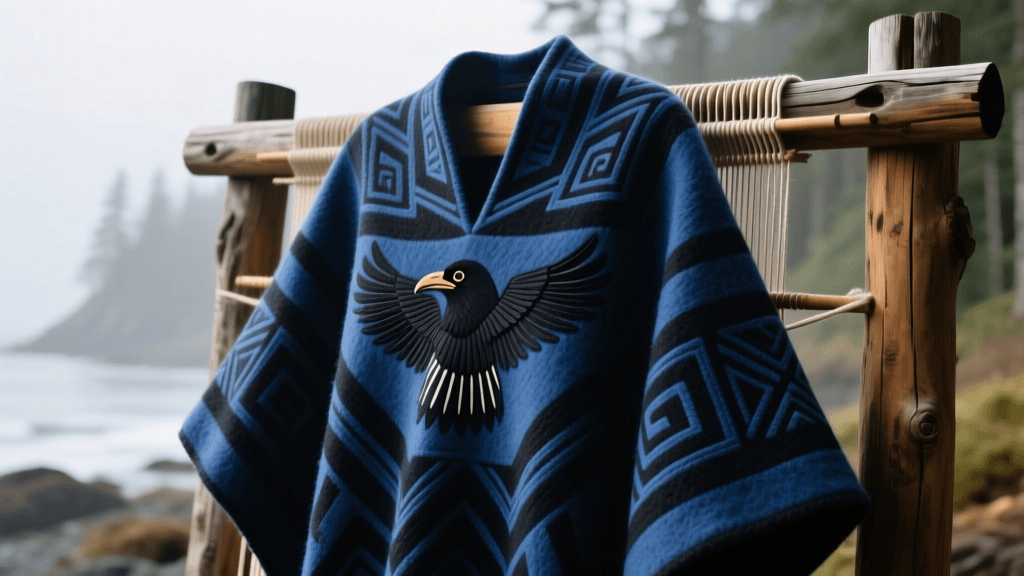
Among the most visually striking and mathematically complex textile traditions in the Americas is Tlingit Ravenstail weaving, known in the Tlingit language as Yéil Koowú. Originating from the Indigenous peoples of the Pacific Northwest Coast—primarily the Tlingit, Haida, and Tsimshian nations—Ravenstail robes are characterized by their stark, rectilinear geometric patterns. Unlike the curvilinear formline designs found in other Northwest Coast art forms, Ravenstail relies on sharp angles, zigzags, and bold contrasts, traditionally woven in black, white, yellow, and blue-green.
As of 2026, Ravenstail weaving is experiencing a profound renaissance. After nearly facing extinction in the late 19th and early 20th centuries due to colonial suppression and the introduction of mass-manufactured trade blankets, the art form has been fiercely reclaimed by Indigenous master weavers. Today, these robes are not merely historical artifacts; they are living, breathing garments worn during potlatches, ceremonies, and cultural celebrations, representing a powerful assertion of Indigenous sovereignty and cultural continuity.
Historical Significance and Cultural Protocol
Historically, Ravenstail robes were items of immense wealth and prestige. They were worn by clan leaders and nobility during significant ceremonies, serving as both physical warmth and spiritual armor. The geometric patterns often represent abstracted natural elements, such as the eyes of a raven, the spine of a salmon, or the peaks of coastal mountains. However, unlike Chilkat robes, which frequently depict specific, identifiable clan crests, Ravenstail patterns are generally non-crest specific, making them slightly more accessible for a wider range of ceremonial uses.
Cultural protocol dictates that the creation and wearing of these robes are governed by strict traditional laws. The weaver must be in a good state of mind, often observing dietary and spiritual restrictions during the weaving process. The garments are treated as living entities, imbued with the spirit and energy of the weaver and the ancestors. For non-Indigenous collectors, museums, and institutions in 2026, understanding and respecting these protocols is paramount when interacting with, studying, or attempting to acquire Northwest Coast textiles.
The 2026 Revival: Apprenticeships and Institutional Support
The survival of Ravenstail weaving is largely credited to the late master weavers who kept the knowledge alive, such as Jennie Thlunaut and Clarissa Rizal. Building upon their legacy, the 2026 landscape of Indigenous textile arts is defined by structured apprenticeships and robust institutional backing. Organizations dedicated to the preservation of Alaska Native arts have recognized that passing down the complex mathematics of the loom requires dedicated, funded time.
According to the Sealaska Heritage Institute, recent 2026 grant cycles have heavily prioritized master-apprentice partnerships in traditional weaving. These programs provide stipends that allow senior weavers to dedicate hundreds of hours to teaching the intricate twining techniques, warp preparation, and pattern drafting to the next generation. This institutional support has resulted in a growing cohort of highly skilled, younger Indigenous weavers who are innovating within the tradition while maintaining strict adherence to ancestral techniques. Consequently, the availability of authentic, master-woven robes has slightly increased, though the demand from both Indigenous communities and global textile collectors continues to far outpace supply.
Material Sourcing: Mountain Goat Wool and Cedar Bark
The authenticity of a Ravenstail robe is intrinsically linked to its materials. The traditional warp is made from the inner bark of the yellow cedar tree, while the weft is spun from mountain goat wool. In 2026, sourcing these materials sustainably and ethically is a major focus for weavers and environmental organizations alike.
- Yellow Cedar Bark: Harvested in the late spring when the sap is running, weavers carefully strip only the inner bark from specific trees to ensure the tree's survival. The bark is then dried, soaked, and twisted into a strong, flexible cordage that forms the structural foundation of the robe.
- Mountain Goat Wool: Sourcing wool is a labor-intensive process. Weavers either harvest wool from goats taken by Indigenous hunters for subsistence, or they collect wool shed in the wild during the spring molting season. The wool must be meticulously cleaned, carded, and spun by hand, often mixed with a small amount of cedar bark to add durability.
- Natural Dyes: The striking colors of Ravenstail are achieved through natural dyes. Black is traditionally derived from hemlock bark and iron-rich mud, yellow from wolf lichen, and blue-green from copper oxides. In 2026, many weavers are cultivating their own dye gardens or forming cooperatives to ensure sustainable harvesting of wild lichens and barks.
Ravenstail vs. Chilkat: A Technical Comparison
While both are prestigious Northwest Coast weaving traditions, Ravenstail and Chilkat (Naaxein) differ significantly in their technical execution, visual language, and time investment. The Smithsonian National Museum of the American Indian maintains extensive archives of both styles, highlighting their distinct evolutionary paths.
| Feature | Ravenstail (Yéil Koowú) | Chilkat (Naaxein) |
|---|---|---|
| Design Style | Rectilinear, geometric, abstract | Curvilinear, formline, representational crests |
| Loom Setup | Simple frame or warp-weighted loom | Complex frame requiring a painted pattern board |
| Primary Colors | Black, white, yellow, blue-green | Yellow, black, blue-green, white |
| Weaving Technique | Twining with continuous weft rows | Twining with disconnected, block-by-block weft |
| Avg. Completion Time | 6 to 14 months | 1 to 3 years |
Commissioning a Ravenstail Robe in 2026: A Buyer's Guide
For museums, cultural institutions, and private collectors looking to ethically acquire a Ravenstail robe in 2026, commissioning directly from an Indigenous artist is the only acceptable pathway. The market is unfortunately flooded with mass-produced, 'Native-inspired' knockoffs that constitute cultural appropriation and offer zero financial benefit to Indigenous communities. Ethical acquisition requires patience, respect, and a substantial financial commitment.
Step 1: Identifying a Master Weaver
Begin your search by consulting directories from recognized Indigenous arts organizations or reaching out to cultural centers in Alaska and British Columbia. Verify the artist's lineage and their standing within the weaving community. The Burke Museum of Natural History and Culture often collaborates with verified contemporary Northwest Coast artists and can serve as a benchmark for authentic regional styles.
Step 2: Understanding 2026 Pricing and Timelines
A hand-woven, authentic Ravenstail robe is a monumental investment of human time and rare natural resources. As of 2026, commissioning a full-sized ceremonial robe typically ranges from $25,000 to $45,000 USD, depending on the complexity of the geometric pattern, the inclusion of rare natural dyes, and the weaver's seniority. Smaller items, such as dance aprons or leg wrappings, may range from $3,000 to $8,000. Expect a wait time of 12 to 24 months from the initial deposit to the final delivery, as the preparation of materials alone can take half a year.
Step 3: Contracts and Cultural Sensitivity
When drafting a commissioning agreement, ensure that the contract respects the artist's cultural obligations. Weavers may need to pause work during certain seasons, mourning periods, or community ceremonies. Payment structures should be broken into milestones: an initial deposit for material gathering, a midpoint payment during the weaving process, and a final payment upon completion. Never demand the replication of a specific historical robe that belongs to a clan; instead, allow the weaver to create an original geometric composition.
Preserving the Legacy: Archival Care for Natural Fibers
Once a Ravenstail robe is acquired, proper preservation is critical. Mountain goat wool and cedar bark are highly susceptible to environmental fluctuations and pest infestations. In 2026, best practices for textile conservation dictate storing the garment flat in an acid-free, archival-quality box lined with unbuffered tissue paper. The storage environment must maintain a stable relative humidity of 45% to 55% and a temperature around 65°F (18°C). Avoid hanging the robe, as the heavy wool can cause the cedar bark warp to stretch and break over time. By adhering to these conservation standards, collectors and institutions ensure that these masterworks of Indigenous North American dress traditions survive to educate and inspire future generations.