Pacific Northwest Chilkat Weaving & Regalia Guide 2026
The Living Legacy of Pacific Northwest Coast Textiles
The Pacific Northwest Coast is home to some of the most complex and visually striking textile traditions in the world. Among the Tlingit, Haida, and Tsimshian peoples, woven garments are not merely clothing; they are profound expressions of lineage, spiritual power, and clan identity. As we move through 2026, the region is experiencing a monumental renaissance in traditional weaving. Driven by Indigenous-led cultural revitalization programs and the return of ancestral garments from global institutions, a new generation of master weavers is reclaiming techniques that were pushed to the brink of extinction over the last century.
For collectors, cultural enthusiasts, and those seeking to understand Indigenous North American dress traditions, navigating the landscape of Pacific Northwest regalia requires an understanding of both the meticulous craftsmanship and the strict cultural protocols that govern these textiles. This guide explores the intricate worlds of Chilkat and Ravenstail weaving, detailing the materials, techniques, and contemporary realities of commissioning and witnessing these sacred garments in 2026.
Deconstructing Chilkat Weaving: Formline and Fiber
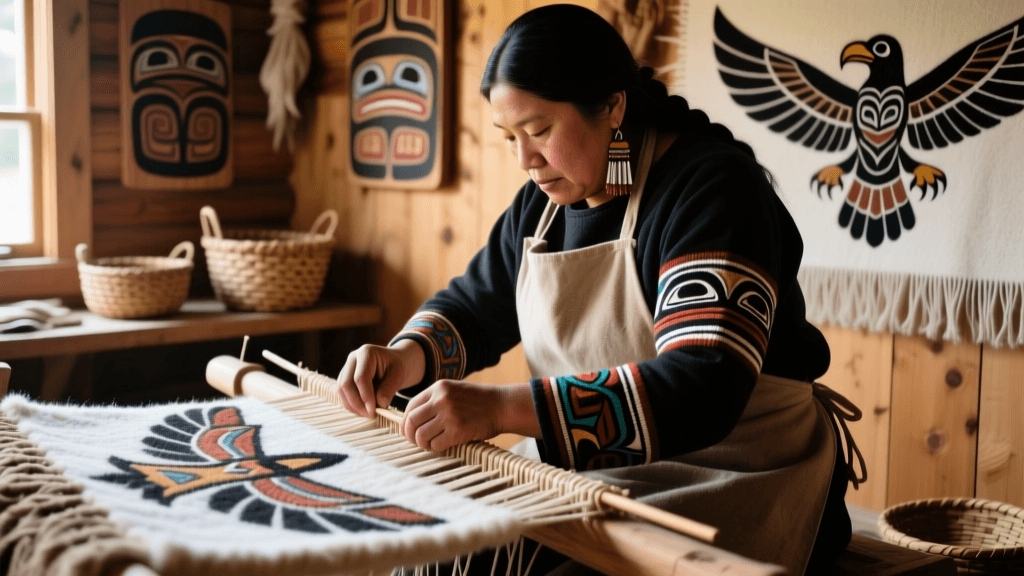
Chilkat weaving, known as naaxiin in the Tlingit language, is widely considered one of the most difficult weaving techniques ever developed. Originating with the Tsimshian people and later perfected and popularized by the Tlingit Chilkat tribe, this art form translates the bold, curvilinear formline designs of Northwest Coast carving and painting into a flexible textile medium.
The creation of a single Chilkat robe is an astonishing feat of engineering and patience. The weaver does not use a traditional loom; instead, the warp threads are suspended from a simple crossbar, and the weaver works from the top down, using their fingers to twist and interlock the weft threads. The designs are dictated by a painted pattern board, historically created by a male artist, while the weaving itself is exclusively the domain of female artisans, though contemporary 2026 practices see more gender fluidity in the learning spaces of cultural workshops.
A full-sized Chilkat dancing robe typically takes between 1,500 and 2,000 hours to complete. The imagery almost always represents clan crests—such as the Whale, Raven, Eagle, or Bear—distorted and stretched to fit the geometric boundaries of the weaving grid. When worn during a potlatch or ceremonial dance, the heavy fringe along the bottom and sides of the robe flares outward, giving the garment a kinetic, living energy that mimics the movement of the animal spirits it depicts.
Ravenstail Weaving: The Geometric Predecessor
Before the curvilinear complexity of Chilkat weaving emerged, there was Ravenstail. Characterized by stark, rectilinear geometric patterns—primarily utilizing black, white, and yellow—Ravenstail weaving is the older, ancestral cousin of the Chilkat robe. The designs feature sharp angles, stepped diamonds, and zigzag patterns that represent the eyes, teeth, and skeletal structures of spiritual beings.
For much of the 20th century, Ravenstail weaving was believed to be entirely lost, surviving only in fragmented museum pieces and historical photographs. However, the late 20th and early 21st centuries sparked a fierce revival that has fully blossomed by 2026. Today, master weavers study high-resolution scans of 18th-century Russian and American expedition records to reconstruct the complex twining techniques required for Ravenstail. The garments are highly prized in the contemporary potlatch economy, valued for their striking visual contrast and the immense historical research required to reproduce them accurately.
Material Sourcing and Preparation in 2026
The soul of a Northwest Coast robe lies in its materials. Traditionally, the warp is made from the inner bark of the yellow cedar tree, while the weft is a blend of cedar bark and mountain goat wool. Harvesting and preparing these materials is a deeply spiritual process, governed by seasonal cycles and prayers of gratitude to the natural world.
In 2026, climate shifts and environmental protections have made the ethical sourcing of traditional materials both a priority and a challenge. Weavers are increasingly collaborating with tribal forestry departments to ensure sustainable harvesting of cedar, while mountain goat wool is often gathered from natural shedding in alpine regions or sourced through regulated, respectful hunting practices. To meet the demands of apprentices and practice pieces, many weavers utilize sustainable substitutes.
| Material Component | Traditional Source | 2026 Sustainable / Practice Alternative | Preparation Time |
|---|---|---|---|
| Warp (Core) | Yellow Cedar Inner Bark | Processed Raffia or Basswood Fiber | 3-5 days (Traditional) |
| Weft (Surface) | Mountain Goat Wool | Ethically Sourced Merino or Alpaca Fleece | 40+ hours (Cleaning/Spinning) |
| Dyes (Yellow) | Wolf Lichen / Hemlock Bark | Commercial Acid Dyes (for practice only) | 1-2 days (Foraging/Boiling) |
| Dyes (Black) | Iron-rich Mud / Spruce Roots | Iron and Tannin Botanical Baths | 2-3 days (Fermentation) |
The Economics and Commissioning of Regalia Today
Understanding the economics of Indigenous regalia in 2026 is crucial for anyone looking to support these artisans. It is vital to recognize that these are not mass-produced souvenirs; they are masterworks of fine art and sacred cultural property. The pricing reflects the thousands of hours of labor, the cost of rare materials, and the generational knowledge required to execute the work.
As of 2026, commissioning a full-sized, master-level Chilkat or Ravenstail robe from an established artisan typically ranges from $35,000 to over $75,000 USD, depending on the complexity of the crest design and the materials used. Smaller items, such as woven dance aprons, leggings, or ceremonial headbands, generally start between $4,500 and $12,000 USD. Because a single robe can take up to two years to complete, waitlists for master weavers often stretch several years into the future. Buyers and cultural institutions are encouraged to engage directly with tribal art cooperatives or recognized Indigenous galleries to ensure ethical compensation and provenance.
Protocols, Potlatches, and Repatriation Impacts
In the Pacific Northwest, a woven robe is not considered 'finished' until it has been danced. The potlatch—a complex system of ceremonial feasting, gift-giving, and legal validation—remains the central arena where these garments fulfill their purpose. When a dancer dons a Chilkat robe, the heavy fringe swings rhythmically, and the crest comes alive, asserting the wearer's ancestral rights and social standing.
The contemporary weaving boom of 2026 is deeply intertwined with the global repatriation movement. Institutions like the Burke Museum and the Smithsonian National Museum of the American Indian have increasingly facilitated the return of ancestral garments or provided high-resolution access to their archives. When a 200-year-old robe returns to its descendant community, it serves as a master teacher. Modern weavers study the tension, the hidden repairs, and the specific spinning techniques of their ancestors, allowing them to bridge the gap between historical mastery and contemporary creation. Organizations such as the Sealaska Heritage Institute have been instrumental in funding apprenticeships, ensuring that the mathematical precision of formline weaving is passed down without dilution.
Supporting the Next Generation of Weavers
For those outside the culture who wish to appreciate and support Pacific Northwest textile traditions, education and ethical patronage are key. Attend public exhibitions, support Indigenous-led museums, and purchase directly from verified Native artists at recognized markets. Never attempt to replicate sacred crest designs or mass-produce ceremonial garments, as these actions violate Indigenous intellectual property and spiritual protocols.
The year 2026 stands as a testament to the resilience of the Tlingit, Haida, and Tsimshian weavers. Through their hands, the cedar and wool continue to sing, wrapping new generations in the warmth, protection, and undeniable power of their ancestors. Whether viewed in the grand hall of a museum or witnessed in the rhythmic sway of a potlatch dance, Pacific Northwest weaving remains one of humanity's most breathtaking textile achievements.