Tlingit & Haida Button Blankets & Chilkat Robes 2026
The Living Textiles of the Pacific Northwest Coast
The Pacific Northwest Coast is home to some of the most visually striking and technically complex textile traditions in the world. For the Tlingit, Haida, and Tsimshian peoples, garments are not merely clothing; they are living manifestations of clan history, spiritual authority, and ancestral connection. As we navigate the 2026 potlatch season and contemporary Indigenous fashion exhibitions, the demand for authentically crafted Chilkat robes and button blankets has reached new heights. Today's Indigenous artists are masterfully balancing centuries-old weaving and appliqué techniques with modern ethical sourcing and innovative design, ensuring these sacred garments continue to move, dance, and speak in the modern era.
Understanding the nuances of these garments requires a deep dive into the specific materials, regional variations, and the rigorous protocols that govern their creation and wear. Whether you are a textile historian, a regalia maker, or an enthusiast of Indigenous North American dress traditions, this comprehensive 2026 guide explores the enduring legacy of Pacific Northwest ceremonial robes.
The Chilkat Robe: Mountain Goat Wool and Cedar Bark
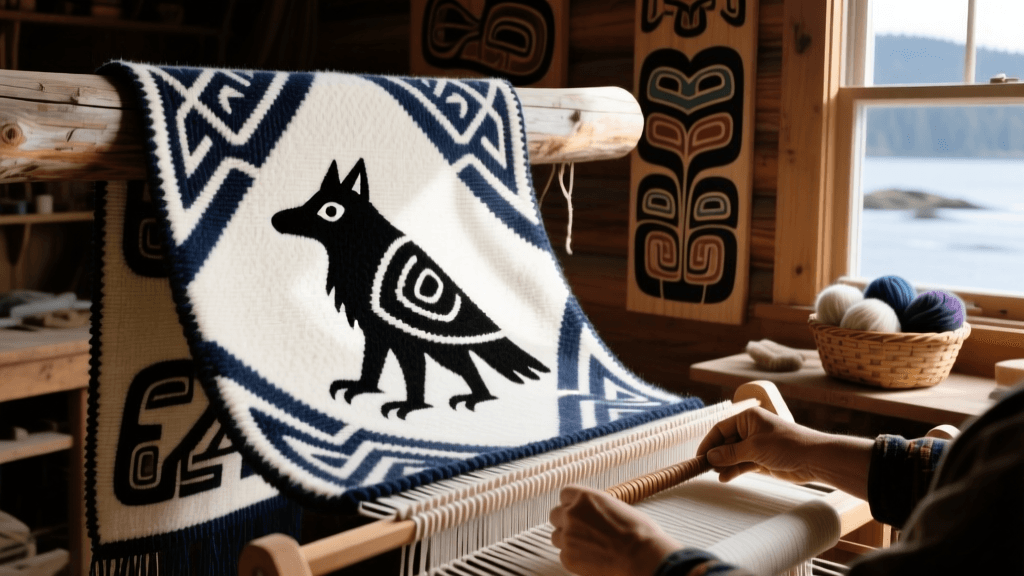
Long before the introduction of trade blankets, the Chilkat robe (known as naaxiin in Tlingit) stood as the pinnacle of Northwest Coast textile art. Originating with the Tsimshian and perfected by the Chilkat Tlingit weavers, these robes are entirely unique in the global textile landscape because they are not woven on a loom. Instead, they are created using a complex twining technique where the weaver works from the top down, twisting the weft threads around the warp threads by hand.
The traditional materials are as challenging to harvest as the weaving is to execute. The warp is made from the inner bark of the yellow cedar tree, which is stripped, boiled, and pounded into a soft fiber. This is then wrapped with mountain goat wool. In 2026, climate shifts and habitat changes in the Tongass National Forest have made wild yellow cedar and mountain goat wool increasingly difficult to harvest sustainably. In response, master weavers and organizations like the Sealaska Heritage Institute have established strict, community-led harvesting protocols and partnerships with local forestry services to ensure that the gathering of cedar bark does not harm the old-growth ecosystems.
A single Chilkat robe can take a master weaver over a year to complete. The designs are dictated by traditional formline art, featuring ovoids, U-shapes, and S-shapes that depict clan crests such as the Raven, Eagle, Whale, or Bear. The fringe at the bottom of the robe is a crucial element; when the dancer spins, the long, heavy fringe creates a mesmerizing, fluid motion that brings the animal crest to life.
The Button Blanket: Evolution of the Dance Robe
While the Chilkat robe represents ancient weaving mastery, the button blanket represents the brilliant adaptability of Northwest Coast artists following European contact in the late 18th century. When maritime fur traders introduced wool trade blankets, glass beads, and mother-of-pearl buttons, Tlingit and Haida women rapidly innovated, creating a new form of ceremonial regalia that remains the standard dance robe today.
The traditional button blanket is constructed from dark navy or black broadcloth or melton wool, lined with red flannel or felt. The clan crest is appliquéd onto the back using the contrasting red fabric, and the outlines and internal formline spaces are meticulously hand-stitched with hundreds—or sometimes thousands—of abalone shell buttons and glass seed beads.
In 2026, contemporary button blanket makers are pushing the boundaries of the medium while respecting strict cultural protocols. While traditionalists continue to use heavy wool broadcloth and natural abalone, some avant-garde Indigenous fashion designers participating in global runway shows are experimenting with sustainably sourced vegan leathers, upcycled high-visibility fabrics, and even micro-LED threading to make the crests glow during evening powwows and winter dances. However, for ceremonial potlatches, the heavy wool and natural shell remain the undisputed standard, prized for the way the heavy fabric swings and the abalone catches the firelight.
Ethical Material Sourcing Guide for 2026
For regalia makers and artisans, sourcing authentic and ethical materials is one of the most significant challenges in 2026. Overharvesting, legal protections for marine life, and global supply chain shifts have changed how artists acquire their supplies. Below is a practical sourcing guide for contemporary Northwest Coast regalia makers.
| Material | Traditional Source | 2026 Ethical Alternative & Sourcing | Approx. 2026 Cost |
|---|---|---|---|
| Abalone Shell | Wild California Red Abalone | New Zealand Paua (farmed) or antique salvaged shells. (Note: CA red abalone fishing remains strictly banned to protect endangered populations). | $15 - $25 per oz (Paua) |
| Yellow Cedar Bark | Wild old-growth cedar | Second-growth cedar harvested under USFS tribal permits, or cultivated inner-bark from tribal land trusts. | $40 - $60 per lb (prepared) |
| Mountain Goat Wool | Wild hunted mountain goat | Domesticated goat fleece blends or ethically shed wild goat wool collected from alpine trails in late spring. | $80 - $120 per lb (raw) |
| Trade Blanket Base | Hudson's Bay point blankets | Heavyweight Melton wool (30oz+) sourced from specialized textile mills in Oregon or imported from the UK. | $60 - $90 per yard |
| Seed Beads | Vintage Czech glass | Miyuki Japanese glass seed beads (Size 11/0 or 14/0) for uniform, high-durability appliqué work. | $8 - $12 per hank |
Regional Variations: Tlingit, Haida, and Tsimshian
While the untrained eye might group all Northwest Coast button blankets together, distinct regional and tribal variations exist in the cut, fringe, and formline execution of the robes. Understanding these differences is vital for anyone studying or collecting Indigenous garments.
- Tlingit Robes: Tlingit button blankets are often characterized by their massive scale and heavy, dramatic fringe. The formline designs tend to be highly structured, with bold, thick black outlines and extensive use of red appliqué. The fringe is frequently made of long strips of red flannel or heavily beaded leather strips that create a loud, rhythmic swishing sound during the dance.
- Haida Robes: Haida artists are renowned for their highly intricate, sometimes more fluid formline designs. Haida button blankets may feature more complex internal negative spaces and a slightly different approach to the ovoid shapes. Additionally, Haida regalia often incorporates intricate spruce root hat weaving and carved wooden frontlets attached to the top of the blanket, which are less common in Tlingit designs.
- Tsimshian Robes: As the originators of the Chilkat weaving technique, Tsimshian textile traditions heavily influence their modern button blankets. Tsimshian robes often feature a slightly more tailored, sometimes shorter cut to allow for specific ceremonial dances, and they frequently incorporate elaborate beaded panels along the bottom hem rather than just loose fringe.
Preservation and Care of Ceremonial Regalia
As institutions like the Smithsonian National Museum of the American Indian continue to repatriate sacred garments to tribal nations, many clans are facing the practical challenge of preserving these priceless textiles at home. Proper care of a button blanket or Chilkat robe requires moving away from outdated museum practices of the past and embracing modern, culturally responsive conservation.
First, never hang a heavy Chilkat robe or button blanket by the shoulders for long-term storage; the weight of the beads, buttons, and wet wool can warp the fabric and break the cedar warp threads. Instead, store the garment flat in an acid-free, archival-quality textile box lined with unbuffered, acid-free tissue paper.
Second, climate control is non-negotiable. Fluctuations in humidity can cause the abalone shells to crack and the cedar bark to become brittle. Maintain a stable environment of around 68°F (20°C) with a relative humidity of 45-50%. If the garment is worn for a potlatch and becomes damp from rain or sweat, it must be laid flat on a clean, dry cotton sheet in a well-ventilated room to air dry completely before being returned to storage. Never use direct heat or sunlight to dry ceremonial wool.
The Future of Northwest Coast Textiles
The year 2026 marks a renaissance in Pacific Northwest Coast textile arts. With a new generation of weavers and appliqué artists taking up the mantle, the transmission of knowledge from elders to youth is stronger than ever. Through the integration of sustainable material sourcing, the repatriation of ancestral patterns, and the unyielding dedication to the spiritual weight of the formline, the Tlingit, Haida, and Tsimshian peoples ensure that their robes will continue to dance, protect, and honor their communities for centuries to come.