Tarim Basin Silk Finds: 2026 Exhibit Guide & Preservation
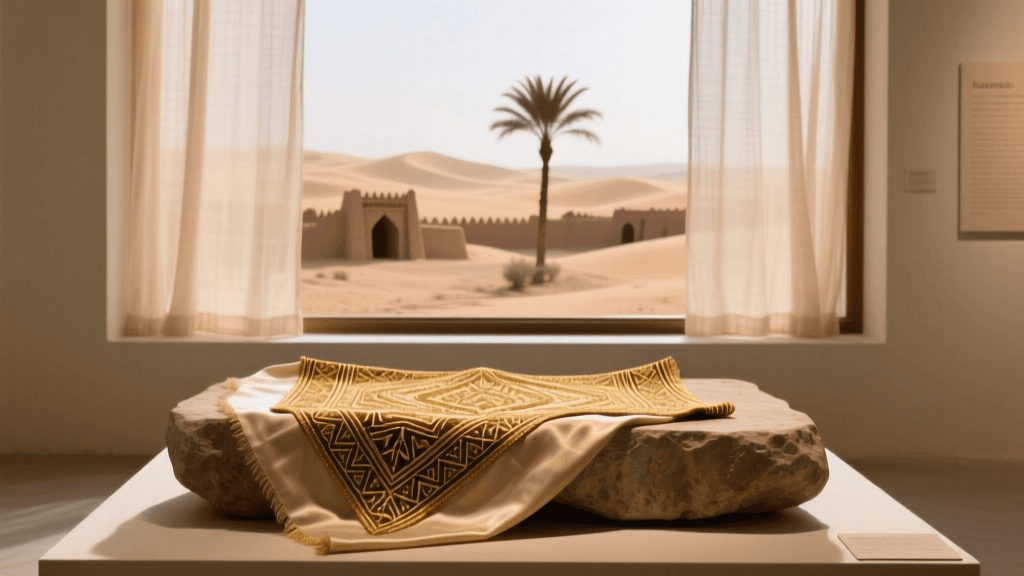
The arid sands of the Tarim Basin in Xinjiang, China, have long served as one of the world’s most remarkable natural time capsules. For centuries, the extreme desert climate preserved an astonishing array of Silk Road textiles, offering modern researchers and fashion historians an unparalleled glimpse into ancient Eurasian trade. As we navigate the cultural landscape of 2026, the intersection of archaeological discovery and modern garment care has never been more relevant. Whether you are a historian tracking the evolution of the Xin Zhongshi (new Chinese style) movement, or a collector seeking to preserve your own heritage garments, understanding the legacy of these Silk Road textile exchanges is essential.
The Legacy of Tarim Basin Textile Exchanges
The Silk Road was not merely a conduit for goods; it was a vibrant highway of technological and aesthetic exchange. The archaeological finds in the Tarim Basin perfectly encapsulate this cultural crossroads. Among the most famous discoveries is the 'Yingpan Man,' a male mummy dating back to the Han-Jin period, found wearing remarkably preserved garments that highlight a fusion of Eastern and Western motifs. His woolen tunic features Hellenistic and Persian-inspired embroidery, demonstrating how Sogdian merchants and local weavers adapted foreign artistic vocabularies into local textile traditions.
Equally significant are the silk finds from the ancient oasis town of Niya. The iconic 'Five Stars Rise in the East' brocade (wuxing chu dongfang li zhongguo) is a masterpiece of Han Dynasty warp-faced compound tabby weave (jin). This specific weave structure, characterized by its dense, multi-colored longitudinal threads, was highly prized across Central Asia. In contrast, Sogdian weavers specialized in samitum, a weft-faced compound twill that allowed for larger, more fluid circular motifs, such as the famous pearl-roundel designs featuring boars and ducks. By 2026, contemporary Asian fashion designers are heavily referencing these exact historical weaves, utilizing modern jacquard looms to recreate the structural integrity of ancient jin and samitum for high-end heritage collections.
Must-See 2026 Silk Road Textile Exhibitions
For enthusiasts and researchers, 2026 offers unprecedented access to these fragile artifacts through specialized, climate-controlled exhibitions. If you are planning your cultural itinerary this year, the following institutions are hosting premier collections of Tarim Basin and Silk Road textiles.
1. China National Silk Museum (Hangzhou, China)
In early 2026, the China National Silk Museum expanded its permanent Silk Road gallery, incorporating newly stabilized fragments from the Astana Tombs in Turpan. The museum's state-of-the-art low-oxygen display cases allow visitors to view vibrant Tang dynasty silks that would have otherwise degraded upon excavation. When visiting, allocate at least three hours to explore the 'Weaving the World' wing, which provides interactive digital looms demonstrating the complex programming required to weave Han Dynasty jin brocades. Admission remains free, but timed-entry reservations for the 2026 spring season must be booked via their official WeChat mini-program at least two weeks in advance.
2. The Victoria and Albert Museum (London, UK)
The V&A’s Central Asian textiles collection, heavily bolstered by early 20th-century expeditions, continues to be a cornerstone for Silk Road research. In 2026, the museum has rotated its fragile silk tapestries (kesi) and Sogdian samite fragments into the spotlight for a special focus exhibition on Eurasian motif migration. The gallery lighting is strictly maintained at 50 lux to prevent photochemical degradation. For textile students, the V&A also offers behind-the-scenes conservation study days, which can be applied for through their academic liaison office.
Translating Archaeological Conservation to Home Storage
The survival of the Tarim Basin silks is largely due to the desert's stable, dry, and dark environment. While we cannot replicate a desert oasis in our homes, we can apply the rigorous conservation protocols used by top-tier museums to our own traditional garment collections. As outlined in the Victoria and Albert Museum's textile conservation guidelines, preventive care is always superior to restorative intervention. Here is how you can implement museum-grade preservation for your Hanfu, Cheongsam, and heritage silks in 2026.
Climate Control and Archival Materials
Silk is a protein fiber that is highly susceptible to fluctuations in humidity and temperature. The ideal storage environment for silk garments is a stable 18°C to 20°C (64°F to 68°F) with a relative humidity (RH) of 45% to 55%. High humidity invites mold and biological pests, while low humidity makes the silk brittle and prone to shattering along fold lines.
- Avoid Wire Hangers: Never hang heavy, embroidered silk garments on wire or wooden hangers, as the stress on the shoulders will cause permanent distortion. Use padded hangers wrapped in unbleached, washed cotton muslin.
- Flat Storage for Fragiles: For heavily weighted silks or antique kesi tapestries, flat storage is mandatory. Line archival-grade polypropylene boxes with acid-free, unbuffered tissue paper. (Buffered tissue, which contains calcium carbonate, can damage protein fibers like silk and wool over time).
- The Roll, Don't Fold Rule: If a garment is too large for flat storage, roll it around an acid-free honeycomb cardboard tube, interleaving the layers with Tyvek sheets to prevent friction and crease-settling.
Pest Management and Anoxic Environments
Carpet beetles and clothes moths are the natural enemies of silk and wool. In 2026, the use of chemical mothballs (naphthalene or paradichlorobenzene) is strictly discouraged in the conservation community due to their toxicity and the acidic off-gassing that degrades textiles. Instead, utilize integrated pest management (IPM).
If you suspect an active infestation in a heritage garment, the safest eradication method is deep freezing. Seal the garment in a polyethylene bag with a desiccant packet to control moisture, and place it in a chest freezer set to at least -20°C (-4°F) for 72 hours. Thaw the garment slowly at room temperature before opening the bag to prevent condensation from forming on the delicate fibers. For long-term storage of highly valuable pieces, institutions increasingly use anoxic (oxygen-deprived) enclosures using oxygen scavengers and barrier films, a technique now available to private collectors through specialized conservation suppliers.
Comparative Guide: Historical Silk Weaves and Modern Care
Understanding the specific weave structure of your garment dictates its preservation needs. Below is a comparative guide to common Silk Road weaves and their 2026 care protocols.
| Weave Type | Historical Origin / Site | Structural Characteristics | 2026 Preservation Protocol |
|---|---|---|---|
| Jin (Brocade) | Han Dynasty / Niya | Warp-faced compound tabby; dense, stiff, multi-colored longitudinal threads. | Store flat; avoid folding to prevent warp-thread snapping. Keep RH at 50%. |
| Samitum (Samite) | Sogdiana / Astana Tombs | Weft-faced compound twill; supple, features large circular pearl-roundel motifs. | Can be gently rolled on acid-free tubes. Highly susceptible to light; store in total darkness. |
| Kesi (Silk Tapestry) | Tang-Song / Turpan | Slit tapestry weave; weft threads do not span the full width, creating tiny slits. | Extremely fragile at the slits. Never hang. Must be stored flat with tissue support under all slit areas. |
| Luo (Gauze) | Various / Mawangdui | Twisted warp threads creating an open, mesh-like, breathable structure. | Prone to snagging. Store in Tyvek enclosures to prevent catching on adjacent textiles or box edges. |
Digital Archives and 2026 Academic Research
For those who cannot travel to view these artifacts in person, the digital preservation of Silk Road textiles has reached new heights in 2026. High-resolution multispectral imaging now allows researchers to read faded inscriptions and analyze dye compositions without touching the artifacts.
The International Dunhuang Project (IDP) remains the premier online database for Silk Road manuscripts and textiles. In 2026, their expanded 3D artifact viewer allows users to rotate and zoom in on the micro-structure of Tarim Basin weaves, providing invaluable data for modern weavers attempting to replicate historical techniques. Furthermore, the UNESCO Silk Roads Programme continues to publish comprehensive, open-access research papers detailing the cross-cultural exchanges that shaped Asian garment traditions, making it an essential resource for anyone writing on or studying the historical context of Asian dress.
Conclusion
The textile exchanges of the Silk Road, perfectly preserved in the Tarim Basin, are more than just archaeological curiosities; they are the foundational blueprints for much of Asia's sartorial heritage. As the Xin Zhongshi movement continues to draw inspiration from these ancient weaves in 2026, the responsibility falls on both institutions and private collectors to protect these garments. By understanding the historical context of jin and samitum, and by rigorously applying modern, science-backed conservation methods, we ensure that the vibrant threads of the Silk Road will continue to be studied, admired, and worn for generations to come.