Kimono Textile Trade Routes: 2026 Collector Guide
The Global Threads of the Kimono: An Introduction
The kimono is frequently romanticized as an isolated, purely domestic symbol of Japanese culture. However, the truth of its textile history is deeply intertwined with global commerce, maritime exploration, and ancient overland caravans. Far from being developed in a vacuum, the most prized historical kimono textiles were born from a complex synthesis of indigenous craftsmanship and imported materials. As we navigate the collector market in 2026, there has been a massive resurgence in demand for garments that tell a global story. Collectors are no longer just looking for standard Yuzen dyeing; they are actively hunting for Edo-period and Meiji-era garments that showcase the tangible influence of the Silk Road, the Dutch East India Company, and Southeast Asian maritime networks.
In this comprehensive 2026 guide, we will explore the historical trade routes that fundamentally altered Japanese textile production, analyze current auction valuations, and provide actionable authentication and preservation advice for serious collectors and enthusiasts.
The Silk Road and the Evolution of Nishijin-ori
Long before the Edo period, the ancient Silk Road served as the primary artery for cultural and material exchange between East and West. While raw silk was a major export from Japan, the importation of advanced weaving techniques and exotic motifs from Tang Dynasty China and Persia revolutionized Japanese textile hubs. The most prominent beneficiary of this exchange was Kyoto's Nishijin district.
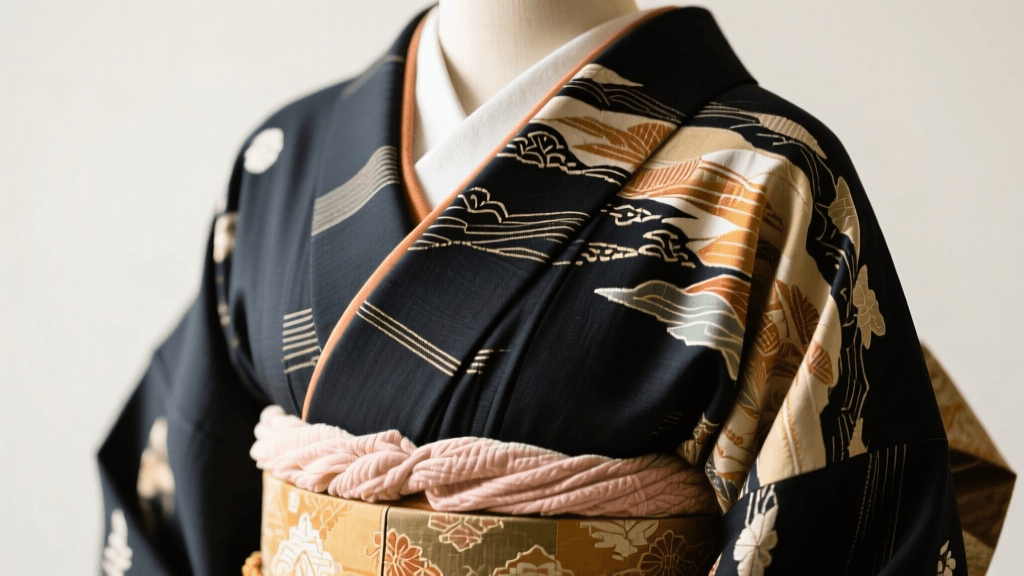
According to the Metropolitan Museum of Art's Heilbrunn Timeline of Art History, the Silk Road was not merely a conduit for raw materials, but a vital network for the exchange of complex weaving technologies. Persian weavers fleeing conflict in the centuries prior to the Edo period brought advanced brocade and twill techniques to Japanese artisans. Today, antique Nishijin-ori brocades featuring imported gold-leaf threads and Central Asian geometric motifs are among the most highly sought-after pieces in the 2026 Asian art market. Collectors specifically look for the 'kara-ori' (Chinese-style weave) technique, which mimics the heavy, embroidered feel of imported Ming dynasty textiles, utilizing floating weft threads to create lavish, three-dimensional patterns.
Maritime Routes: Sarasa Chintz and the VOC
While the Silk Road influenced the aristocracy, the maritime trade routes of the 16th and 17th centuries democratized exotic fashion through the port of Nagasaki. The arrival of Portuguese missionaries and, subsequently, the Dutch East India Company (VOC), introduced Japan to Indian chintz, known locally as 'sarasa'. This cotton textile, characterized by its vibrant madder-dye floral patterns and intricate block-printing, caused an absolute sensation among the Japanese merchant class.
The Victoria and Albert Museum's extensive research on the kimono highlights how foreign textiles were rapidly assimilated and reinterpreted by local artisans. Because imported Indian sarasa was heavily taxed and incredibly rare, Japanese dyers in regions like Sakai and Nabeshima began developing domestic techniques to replicate the exotic look. They utilized imported Dutch woolen cloth (rasha) and Indian cotton, applying local stencil-dyeing (katazome) and rice-paste resist methods to mimic the foreign aesthetic. In 2026, authentic Edo-period sarasa obi and haori linings are prized not just for their beauty, but for their chemical composition; collectors use portable spectrometers to verify the presence of authentic Indian madder root versus later synthetic aniline dyes.
The Ryukyu Kingdom and Southeast Asian Dyes
Situated between Japan and the broader Southeast Asian archipelago, the Ryukyu Kingdom (modern-day Okinawa) operated as a vital maritime trading hub. The Ryukyuans traded extensively with Siam, Java, and the Malacca Strait, importing exotic dyestuffs, pigments, and resist-dyeing techniques that would eventually culminate in the creation of 'bingata' textiles.
Bingata is a resist-dyeing technique characterized by its startlingly vibrant colors, which were highly unusual in mainland Japan during the Edo period. The brilliant yellows were derived from the bark of the native fukugi tree and imported turmeric, while deep reds and blues relied on trade-network pigments. The UNESCO Silk Roads Programme frequently documents how these maritime intersections allowed for the cross-pollination of motif design, resulting in bingata textiles that feature a unique blend of Japanese cranes, Chinese peonies, and Southeast Asian tropical flora. For the 2026 collector, a verified 19th-century Ryukyu bingata summer kimono (hitoe) represents a masterclass in maritime trade history.
2026 Market Trends and Auction Valuations
The 2026 auction season has seen a distinct pivot toward 'provenance-heavy' textiles. Buyers at major houses in Tokyo, London, and New York are willing to pay a premium for garments that can be definitively linked to historical trade routes. The market has moved away from pristine, unworn late-Meiji garments, favoring the slightly imperfect, historically rich textiles of the Edo and early Meiji periods that showcase imported materials.
| Textile Type | Origin / Trade Route | 2026 Estimated Auction Price (USD) | Key Identifying Feature |
|---|---|---|---|
| Edo-Period Sarasa | India via Dutch VOC | $4,500 - $12,000 | Madder dye, block-printed floral motifs, cotton base |
| Nishijin-ori Brocade | China / Silk Road | $8,000 - $25,000 | Gold-leaf thread, complex warp patterns, heavy drape |
| Ryukyu Bingata | Southeast Asia Maritime | $3,000 - $9,500 | Resist-dyeing, vibrant yellow pigment, tropical motifs |
| Nanban Jinbaori | Portuguese / European | $15,000 - $45,000 | Imported wool (rasha), European heraldic crests |
Authenticating Trade-Route Textiles in 2026
As valuations climb, so does the sophistication of counterfeit textiles. In 2026, serious collectors and appraisal houses rely on a combination of traditional tactile analysis and advanced portable technology to verify the origins of trade-route textiles.
- Portable Raman Spectroscopy: This non-destructive 2026 technology allows collectors to identify the exact molecular composition of dyes without damaging the fabric. It can easily distinguish between natural indigo imported via the Ryukyu trade and synthetic indigo developed in Europe in the late 19th century.
- Microscopic Weave Analysis: Using digital USB microscopes, appraisers examine the twist of the yarn. Early imported Indian cotton used in sarasa features a distinct 'Z-twist' that differs from the 'S-twist' commonly found in domestically spun Japanese cotton of the same era.
- Ultraviolet (UV) Fluorescence: Shining a specialized 365nm UV light on gold threads in Nishijin-ori can reveal the adhesive used. Historical trade-route brocades often utilized lacquer-based adhesives that fluoresce differently than the synthetic glues introduced in the 20th century.
Modern Preservation Techniques for Antique Imports
Textiles that have survived centuries of global travel require meticulous care in the modern era. The integration of foreign fibers, such as European wool and Indian cotton, alongside Japanese silk, means these garments often react differently to environmental stress. In 2026, museum-grade preservation has become accessible to private collectors through smart home integration.
First, all trade-route textiles must be stored in traditional 'kiribako' (paulownia wood boxes). Paulownia is naturally hygroscopic, meaning it absorbs and releases moisture to buffer the internal environment. However, in 2026, collectors are augmenting these boxes with Bluetooth-enabled IoT hygrometers. These ultra-thin sensors monitor the micro-climate inside the box, sending alerts to your smartphone if the relative humidity deviates from the strict 50% to 55% range required to prevent the metallic threads in brocades from tarnishing or the cotton sarasa from developing mildew.
Furthermore, garments should never be folded along the same lines repeatedly, as the heavy imported dyes and metallic threads can cause permanent crease-fractures. Collectors should use acid-free, unbuffered 'tato' paper to wrap the garments, and rotate the folding lines every six months. For heavily embroidered Nishijin-ori or stiff woolen Nanban textiles, custom-padded archival hangers in a climate-controlled, UV-filtered display cabinet are the recommended standard for long-term preservation.
Conclusion
The kimono is a canvas that records the history of global interaction. From the overland caravans that brought Persian weaving techniques to Kyoto, to the Dutch galleons that unloaded Indian chintz in Nagasaki, these garments are wearable archives of human connection. As the 2026 collector market continues to mature, the ability to identify, authenticate, and preserve these trade-route textiles is more valuable than ever. By understanding the global origins of these threads, collectors do more than acquire beautiful antiques; they become custodians of a deeply interconnected Asian history.