Tanmono Bolt Cutting: Zero-Waste Kimono Construction 2026
The Geometry of the Tanmono Bolt: A Masterclass in Zero-Waste
As the global fashion industry in 2026 faces strict environmental regulations and an urgent consumer demand for circularity, designers are increasingly looking backward to move forward. The traditional Japanese kimono, constructed from a single bolt of fabric known as a tanmono, represents one of the most sophisticated zero-waste garment construction systems in human history. Unlike Western tailoring, which relies on curved pattern pieces that generate up to 15-20% fabric waste, the tanmono method utilizes exactly 100% of the textile.
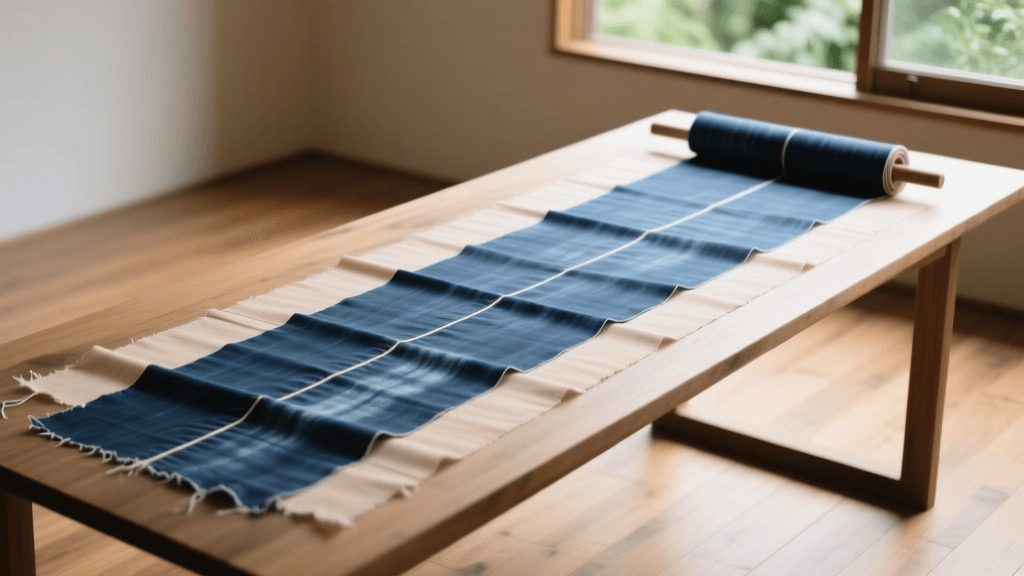
A standard tanmono bolt is precisely 36 to 38 centimeters (about 14 to 15 inches) wide and 12 to 14 meters long. This specific width is deeply rooted in the historical limitations of hand-looms, but in 2026, it is celebrated as a deliberate constraint that forces zero-waste pattern engineering. According to the Ellen MacArthur Foundation, transitioning to circular design models is the most critical step for the apparel sector this decade, and the tanmono blueprint offers a proven, centuries-old solution that modern brands are actively adopting.
The Eight-Piece Straight-Line Construction
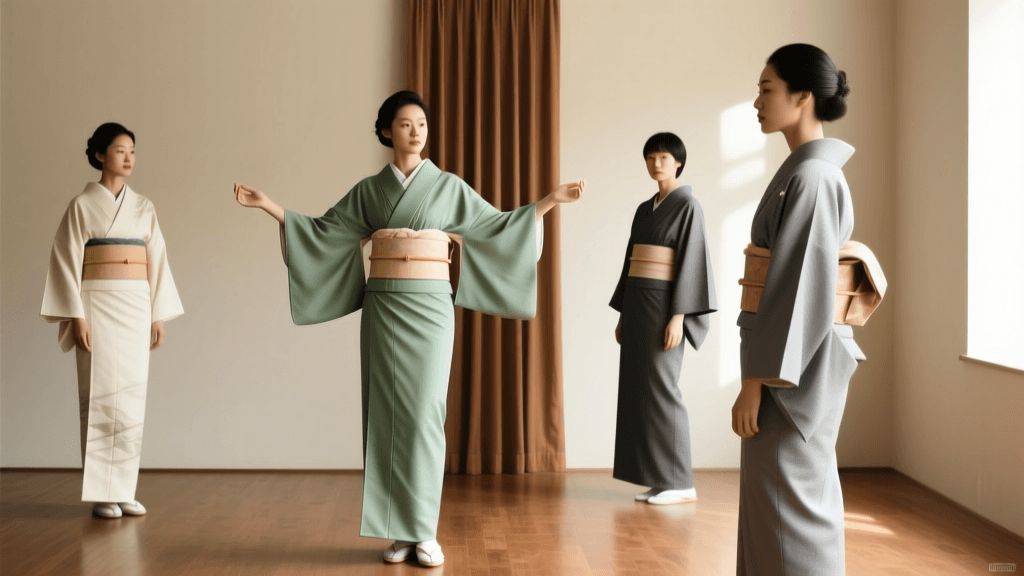
The genius of the kimono lies in its modular, rectangular anatomy. A standard kimono is constructed from eight primary pieces, all cut in straight lines without a single curved armhole or dart. Because the fabric is woven to the exact width required for the garment's panels, there are no offcuts to discard.
- Mi-goro (Body Panels): The back of the kimono is formed from two long rectangular panels. Uniquely, these are often cut as one continuous length and folded at the shoulder, eliminating the need for a shoulder seam entirely. This continuous fold allows the fabric's pattern to flow seamlessly from the front hem, over the shoulder, to the back hem.
- Sode (Sleeves): The sleeves are also rectangular and folded in half horizontally. The bottom of the sleeve features a deep, unsewn pouch called the furi. This pouch acts as a structural weight, allowing the sleeve to drape elegantly and swing with the wearer's movement, a feature highly prized in contemporary avant-garde adaptations.
- Okumi (Front Panels): These are the overlapping front panels that create the kimono's signature wrap silhouette. They are cut from the same continuous strip as the body panels, ensuring perfect pattern matching across the garment's vertical axis.
- Eri (Collar): A long, narrow strip folded and attached to the neckline, which can be easily replaced or adjusted for fit without altering the main body of the garment.
The Magic of Chokusen-date (Straight-Line Sewing)
The sewing technique, known as chokusen-date, relies entirely on straight seams. Because human bodies are curved and three-dimensional, the kimono achieves its fit not through tailoring the fabric to the body's contours, but through the strategic folding, tucking, and binding of the fabric using the obi (sash) and himo (ties). This means the garment is entirely size-inclusive; a single tanmono bolt can be adjusted to fit a wide variety of body types simply by altering the depth of the side folds and the placement of the waist ties.
Seam Allowances and the Art of Hon-buse
Perhaps the most revolutionary aspect of tanmono construction for 2026 sustainable fashion is the treatment of seam allowances. In Western manufacturing, seam allowances are typically trimmed to 1 cm and serged to prevent fraying. This permanently locks the fabric into its current shape and destroys the material's ability to be reused.
In contrast, the kimono utilizes a technique called hon-buse. The seam allowances are left remarkably wide—often 3 to 4 centimeters—and are folded inward, hiding the raw edges inside the garment. This creates a self-lined, incredibly durable seam. More importantly, it means that at the end of the garment's life, or when it requires deep cleaning, the entire kimono can be unpicked back into its original, pristine tanmono state. The flat fabric can then be washed, re-dyed, or re-sewn into a completely new garment. This is the ultimate manifestation of the circular economy, a concept that the Japan National Tourism Organization frequently highlights when promoting the enduring sustainability of regional textile crafts.
2026 Market Trends: Sourcing and Pricing
For designers and artisans looking to source authentic tanmono bolts in 2026, the market has bifurcated into luxury heritage silks and accessible sustainable fibers. Direct sourcing from weaving cooperatives in Tango (Kyoto) or Ojiya (Niigata) remains the gold standard.
- Heritage Silk (Nishijin-ori & Tango Chirimen): Due to raw silk scarcity and a declining number of master weavers, a premium silk tanmono bolt ranges from $650 to $2,200 USD in 2026. These are primarily used for bespoke formal wear and high-end fashion pieces.
- Sustainable Hemp & Ramie (Ojiya-chijimi): Highly breathable and durable, these traditional summer textiles are priced between $180 and $350 USD per bolt.
- Modern Organic Cotton Blends: To support emerging zero-waste designers, several Japanese mills now produce 36cm-wide organic cotton tanmono bolts priced accessibly between $90 and $140 USD.
Comparison: Western Draping vs. Tanmono Flat-Cutting
Understanding the structural differences between these two paradigms is essential for modern pattern makers. The table below outlines why the tanmono method is superior for zero-waste objectives.
| Feature | Western Draping & Cutting | Tanmono Flat-Cutting (2026 Standard) |
|---|---|---|
| Fabric Utilization | 80% - 85% (15-20% waste) | 100% (Zero-waste) |
| Seam Construction | Curved, trimmed, and serged | Straight-line, wide folded allowances |
| End-of-Life Recyclability | Low (mixed materials, complex deconstruction) | High (unpicked into pristine flat fabric) |
| Shoulder Structure | Seamed, shaped to body slope | Continuous fold, draped via ties/belts |
| Size Inclusivity | Requires graded patterns for each size | Single bolt fits multiple sizes via folding |
Adapting Tanmono for Modern 2026 Wardrobes
In 2026, the application of tanmono cutting extends far beyond the traditional kimono. Forward-thinking sustainable brands are using the strict 36cm width constraint as a digital design parameter. By restricting their CAD pattern-making software to a 36cm canvas width, designers are forced to engineer modern garments—such as wrap jackets, wide-leg hakama-inspired trousers, and modular tunics—without generating offcuts.
This constraint breeds immense creativity. For example, the 36cm width is perfectly suited for creating voluminous, straight-leg trousers where the front and back panels are cut as continuous tubes, or for designing wrap tops that tie at the waist using the fabric's selvedge edges as natural, fray-proof hems. As noted by curators at the Metropolitan Museum of Art's Asian Art Collection, the structural silhouettes of historical Asian garments continue to profoundly influence global avant-garde and sustainable fashion, proving that ancient constraints are the key to future innovation.
"The tanmono bolt is not merely a unit of measurement; it is a philosophical boundary. By respecting the width of the loom, we respect the labor of the weaver and the resources of the earth. In 2026, zero-waste is not a trend; it is a return to this fundamental respect."
— Master Artisan Collective, Kyoto Textile Guild, 2026 Sustainability Report.
Conclusion
The tanmono bolt cutting method proves that true sustainability in fashion does not require inventing new technologies, but rather relearning the profound efficiency of traditional Asian dress construction. By embracing straight-line sewing, wide folded seam allowances, and strict fabric-width constraints, modern designers can create garments that are not only beautiful and size-inclusive but entirely circular. As the industry moves deeper into 2026, the ancient geometry of the kimono remains our most reliable blueprint for a zero-waste future.