The Evolution of Hanfu: Tang to Ming Court Fashion
The Resurgence of Imperial Elegance
The traditional Chinese garment, universally known as Hanfu, is not a monolithic uniform but a dynamic tapestry that evolved across millennia. For the Han ethnic majority, clothing was deeply intertwined with cosmology, social hierarchy, and courtly etiquette. Today, the Hanfu revival movement has brought these historical silhouettes back to the streets, but understanding their origins requires a journey through the imperial courts. According to the Smithsonian Magazine, the modern Hanfu movement is driven by a younger generation seeking to reconnect with pre-Qing dynasty heritage. This article explores the dramatic evolution of Hanfu court fashion from the cosmopolitan Tang Dynasty to the structured grandeur of the Ming Dynasty, providing a practical guide for enthusiasts looking to acquire authentic reproductions today.
Tang Dynasty (618–907 AD): Cosmopolitan Opulence
The Tang Dynasty is widely regarded as the golden age of Chinese arts, culture, and global trade. The capital, Chang'an, was a cosmopolitan metropolis where Silk Road merchants brought Persian, Central Asian, and Indian influences. This cultural melting pot profoundly impacted court fashion. Tang elite women favored the Qixiong Ruqun, a high-waisted skirt tied above the bust, often paired with a Banbi (half-sleeve jacket) or a sheer, wide-sleeved Daxiushan (large-sleeve robe). The silhouettes were voluminous, emphasizing a sense of flowing opulence and freedom.
Court ladies, inspired by figures like the legendary consort Yang Guifei, embraced fuller figures, and their garments reflected this with generous cuts and lavish use of silk. Patterns featured large, symmetrical floral motifs, hunting scenes, and mythical beasts, heavily influenced by Sogdian textiles. The vibrant color palette—dominated by pomegranate reds, marigold yellows, and turquoise greens—was achieved through advanced dyeing techniques like Jiaxie (clamp-resist dyeing).
Song Dynasty (960–1279 AD): Intellectual Minimalism
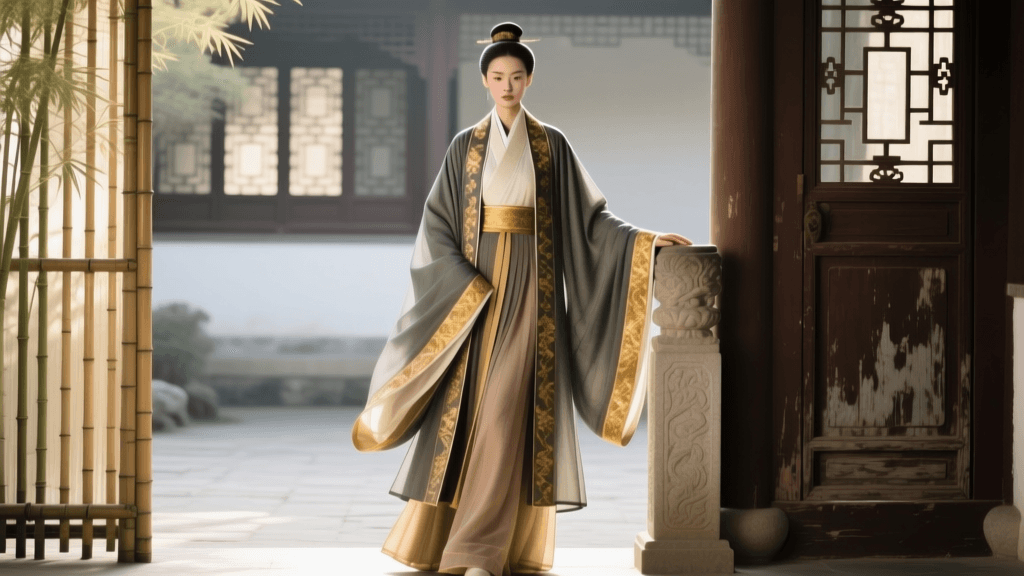
As the Song Dynasty emerged, the cultural pendulum swung from Tang extroversion to introspective elegance. The rise of Neo-Confucianism emphasized modesty, restraint, and intellectual refinement. Court fashion adapted accordingly, abandoning the exaggerated volume of the Tang in favor of slender, elongated silhouettes. The defining garment of the Song elite was the Beizi, a long, straight-cut outer jacket with side slits that fell below the knee or to the ankle.
Worn over a narrow-sleeved blouse and a pleated skirt, the Beizi created a vertical, streamlined look. Colors shifted to muted, earthy tones: celadon greens, pale lotus pinks, and soft silvers. The focus of luxury moved from bold patterns to the exquisite quality of the weave, with Song Brocade and delicate damasks becoming highly prized among the literati and court officials.
Ming Dynasty (1368–1644 AD): Structured Grandeur and the Mamianqun
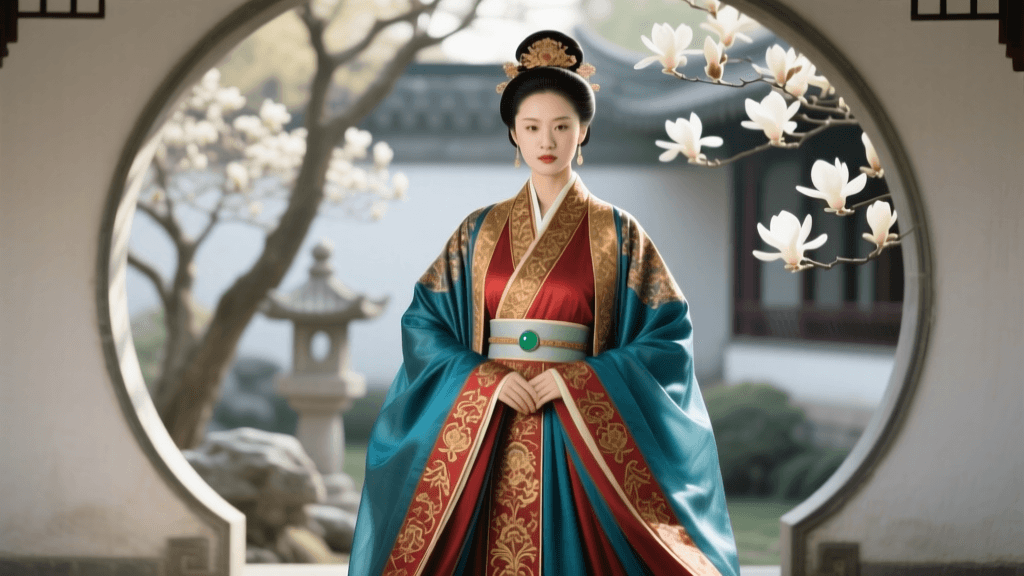
Following the expulsion of the Mongol-led Yuan Dynasty, the Ming emperors sought to restore traditional Han Chinese customs, including strict court dress codes. Ming fashion is characterized by its structured, dignified silhouettes and intricate craftsmanship. The most iconic ensemble for women was the Aoqun, consisting of a lined or padded cross-collar jacket (Ao) worn over a Mamianqun (horse-face skirt).
The Mamianqun is a marvel of traditional tailoring: it features two flat, unpleated panels (the 'horse faces') at the front and back, flanked by deeply pleated sides. This design allowed for ease of movement while maintaining a rigid, formal appearance when standing. According to the Metropolitan Museum of Art, Ming dynasty textiles reached unprecedented levels of technical sophistication, utilizing complex tapestry weaves (Kesi) and gold-wrought threads. Court officials and nobility were strictly regulated by the Buzi (rank badge) system, where specific birds and animals embroidered on square patches denoted exact civil and military ranks.
Dynasty Comparison Chart: Court Silhouettes
| Feature | Tang Dynasty (8th Century) | Song Dynasty (11th Century) | Ming Dynasty (15th Century) |
|---|---|---|---|
| Dominant Silhouette | Voluminous, high-waisted, flowing | Slender, elongated, vertical | Structured, layered, dignified |
| Key Garment | Qixiong Ruqun (Chest-high skirt) | Beizi (Long outer jacket) | Aoqun & Mamianqun (Horse-face skirt) |
| Sleeve Style | Exaggerated wide sleeves (Daxiushan) | Narrow, fitted sleeves | Pipa sleeves (curved, tapered at wrist) |
| Fabric & Pattern | Sheer silks, bold floral/foreign motifs | Heavy damasks, subtle tonal weaves | Gold-wrought brocades, rank badges |
| Court Vibe | Cosmopolitan opulence and freedom | Intellectual minimalism and restraint | Strict hierarchy and restored tradition |
Practical Guide: Sourcing and Wearing Authentic Hanfu Today
Transitioning from historical appreciation to practical ownership requires navigating the modern Hanfu market. Whether you are attending a formal tea ceremony, participating in a cultural festival, or curating a historical wardrobe, accuracy in fit, fabric, and construction is paramount.
Essential Measurements for Historical Fit
Unlike modern Western clothing, Hanfu relies on flat-pattern cutting, meaning the garment's drape is dictated by your measurements and how it is tied. When ordering from specialized ateliers, you must provide:
- Bust/Chest: Measure around the fullest part. For cross-collar (Jiaoling) tops, add 4-6 cm for ease to ensure the right-over-left lapel sits flat without pulling.
- Waist: Crucial for the Mamianqun. Measure exactly where the skirt waistband will sit (usually the natural waist, above the navel).
- Hollow-to-Hem: This is the most critical measurement for skirts. Measure from your collarbone hollow down to the desired skirt length. A standard Ming Mamianqun should end 3-5 cm above the ground when wearing traditional cloth shoes to prevent tripping and fabric damage.
Sourcing Authentic Reproductions: Brands and Costs
The market is divided into mass-market 'costume' brands and museum-grade ateliers. For serious collectors and court-fashion enthusiasts, avoid generic dropshippers and invest in established Hanfu brands:
- Minghuatang: The gold standard for Ming Dynasty reproductions. They utilize authentic weaving techniques, including genuine Xiangyunsha (Gambiered Canton Gauze) and heavy brocades. Prices range from $150 to $600+ USD per piece.
- Shisanyu: Excellent for Tang and Song Dynasty ensembles. They offer historically informed designs with modern comfort, utilizing lightweight silks and cotton-linen blends. Prices average $50 to $120 USD for a full set.
- Zhongling: Specializes in high-end Song Dynasty minimalism and intricate woven patterns, with sets ranging from $100 to $300 USD.
Navigating the Taobao Presale (Yushou) System
High-end Hanfu is rarely kept in stock. Brands operate on a Yushou (presale) model to fund the weaving of custom brocades. When you place an order during a presale window, expect a production and shipping timeline of 45 to 90 days. Always factor this timing into your planning if you need a garment for a specific historical convention or wedding. Shipping via EMS or specialized cross-border agents will add $20-$40 USD and 2-3 weeks in transit.
Conclusion
The evolution of Hanfu from the flowing, cosmopolitan grace of the Tang Dynasty to the structured, dignified elegance of the Ming Dynasty reflects the broader philosophical and political shifts of imperial China. By understanding these historical contexts and adhering to precise tailoring standards, modern wearers do more than just put on a costume; they embody a living, breathing continuum of Asian sartorial heritage. As the Encyclopedia Britannica notes regarding the historical Silk Road, the exchange of textiles was never merely about commerce, but about the profound transmission of culture, art, and identity—a legacy that continues to be woven into every pleat of the modern Mamianqun.