Silk Road Style: Sourcing Tang Dynasty Hufu Garments
The Cosmopolitan Wardrobe of Chang'an
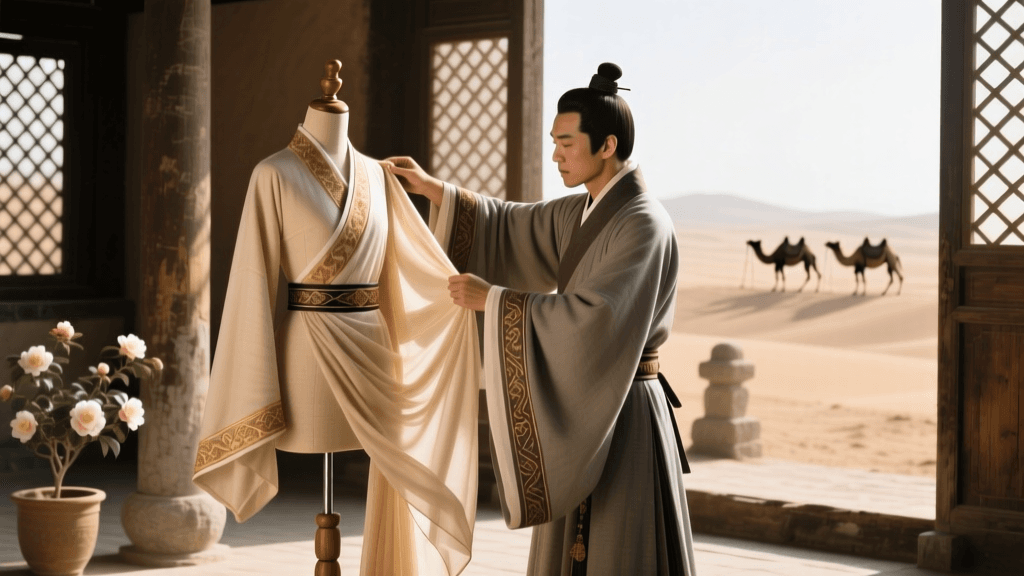
The Tang Dynasty (618–907 CE) is widely celebrated as a golden age of Chinese art, culture, and global connectivity. At the heart of this era was Chang'an (modern-day Xi'an), a sprawling metropolis and the eastern terminus of the Silk Road. As merchants, diplomats, and monks traversed the unforgiving terrains of Central Asia, they brought more than just spices, jade, and precious metals; they brought a sartorial revolution. According to The Metropolitan Museum of Art's Heilbrunn Timeline of Art History, the Tang elite were famously cosmopolitan, eagerly adopting foreign customs, music, and fashion. This cross-cultural exchange gave rise to the widespread popularity of Hufu (胡服), or 'foreign clothing,' which stood in stark contrast to the traditional, wide-sleeved, cross-collared robes of the Han Chinese.
For modern enthusiasts of Asian traditional garments, understanding and acquiring Tang Dynasty Hufu offers a fascinating glimpse into how historical trade routes physically shaped the cut, drape, and utility of everyday fashion. Unlike the flowing, ground-sweeping Shenyi or the delicate Ruqun of traditional Hanfu, Hufu was born from the equestrian and military necessities of the Sogdian, Persian, and Turkic nomads of the steppes. It was practical, rugged, and undeniably stylish, eventually becoming the preferred daily wear for Tang nobility, military officers, and even progressive women who enjoyed horseback riding and polo.
Deconstructing Hufu: Key Garments of the Silk Road
To build an authentic Tang Dynasty Hufu wardrobe, one must understand the core components that were imported and adapted via the Silk Road trade networks. The UNESCO Silk Roads Programme highlights how the movement of peoples across Eurasia facilitated a blending of textile techniques and garment structures, resulting in the following iconic pieces:
1. The Fanlingpao (翻领袍) - The Lapel Robe
The defining garment of Tang Hufu is the Fanlingpao, a knee-to-calf-length robe featuring a distinctive turned-down lapel collar. Originating from Sogdian and Persian caftans, this collar design allowed the wearer to open the neck for ventilation in the heat or button it tightly against the cold winds of the steppe. The sleeves are notably narrower than traditional Hanfu, often ending in fitted cuffs to prevent snagging while riding or handling archery equipment. The robe typically fastens on the right side (though left-over-right was sometimes seen in early foreign depictions) and features side slits for ease of movement on horseback.
2. The Diexie Belt (蹀躞带) - The Utility Belt
No Hufu ensemble is complete without the Diexie belt. Originally a functional leather belt worn by nomadic horsemen to carry essential survival and combat tools, it was adopted by the Tang military and later stylized for court wear. A historically accurate Diexie belt features a main leather band with several smaller, dangling leather straps. In a practical, historical context, these straps held items like a knife, a whetstone, a fire-starting flint, and a small pouch. Today, it serves as a striking visual anchor for the Hufu silhouette.
3. Kua (靴) - Equestrian Boots
Replacing the traditional cloth shoes of the Han, Hufu requires Kua, or leather riding boots. These boots usually reach mid-calf and feature a slightly upturned toe and a sturdy, low heel designed specifically to lock into stirrups. The introduction of the stirrup and the riding boot via Central Asian trade routes fundamentally changed both warfare and fashion in China.
Sizing Your Hufu: A Modern Measurement Guide
Sourcing historical garments requires a different approach to sizing than buying modern Western fashion. Traditional Chinese robes are cut with a flat, T-shaped structure, meaning the fit is dictated more by shoulder width, sleeve span, and chest circumference than by complex tailoring or darts. When ordering a custom or off-the-rack Fanlingpao, use the following measurement chart as a baseline. Note that Hufu is designed to be worn with a slight looseness in the chest to allow for layering over an inner tunic (Zhongyi).
| Measurement Zone | Small (S) | Medium (M) | Large (L) | X-Large (XL) | Fit Notes |
|---|---|---|---|---|---|
| Chest Circumference | 96 cm (38 in) | 104 cm (41 in) | 112 cm (44 in) | 120 cm (47 in) | Add 10-15cm to your actual body measurement for layering. |
| Shoulder Width | 44 cm (17.3 in) | 47 cm (18.5 in) | 50 cm (19.7 in) | 53 cm (20.8 in) | Seam should sit slightly past the natural shoulder bone. |
| Sleeve Length | 58 cm (22.8 in) | 60 cm (23.6 in) | 62 cm (24.4 in) | 64 cm (25.2 in) | Must end exactly at the wrist bone for narrow cuffs. |
| Robe Length | 110 cm (43.3 in) | 115 cm (45.2 in) | 120 cm (47.2 in) | 125 cm (49.2 in) | Should fall just below the knee or mid-calf. |
The Buyer’s Guide: Sourcing Authentic Tang Hufu Today
As the global Hanfu movement grows, so does the market for historically accurate niche garments like Hufu. However, navigating the market requires specific knowledge of textiles, terminology, and pricing. Here is your actionable guide to sourcing high-quality Tang Dynasty Hufu.
Search Terminology and Platforms
While platforms like AliExpress or Amazon may carry generic 'ancient Chinese costumes,' serious collectors and practitioners should utilize Taobao or specialized Hanfu retailers. Use the following Mandarin search terms to filter out theatrical costumes and find historically structured garments:
- 唐制胡服 (Tang Dynasty Hufu) - The broad category.
- 翻领袍 (Fanlingpao) - For the lapel robe specifically.
- 蹀躞带 (Diexie Belt) - For the utility belt.
- 织金锦 (Zhijin Jin / Gold-woven Brocade) - For premium, historically accurate textiles.
Pricing Tiers and Material Expectations
When budgeting for your Hufu ensemble, expect the costs to vary wildly based on textile authenticity and construction methods.
- Entry-Level ($45 - $85 USD): Usually made from polyester blends or standard cotton. The lapel structure may be stiffened with cheap interfacing, and the patterns are often digitally printed rather than woven. Suitable for casual cosplay or introductory wear, but lacks historical drape.
- Mid-Tier ($120 - $250 USD): The sweet spot for enthusiasts. These garments utilize natural fibers like linen, raw silk, or high-quality cotton-linen blends. The lapels are properly tailored, and the garments often feature woven jacquard patterns that mimic historical motifs (such as the Sogdian pearl roundel or confronting birds). Brands like Shisanyu or Zhongling often operate in this tier.
- High-End / Custom ($300 - $800+ USD): Museum-quality reproductions. These utilize genuine Zhijin (gold-woven silk brocade) or heavy silk twill (Ling). The Diexie belts are crafted from genuine tooled leather with brass or silver hardware, and the boots are custom-lasted. Expect a lead time of 30 to 60 days for custom tailoring.
Textile Selection: Honoring the Silk Road
The Silk Road was, fundamentally, a textile highway. As noted by historians and Smithsonian Magazine's coverage of the trade routes, silk was the primary currency of exchange, but the techniques of weaving complex patterns traveled just as far as the fabric itself. When selecting your Fanlingpao, look for Brocade (Jin) for winter or court-style wear, as it mimics the heavy, structured textiles favored by the Sogdians. For summer or military-style wear, opt for Ramie or Linen, which provides the necessary breathability while maintaining the stiff, structured silhouette required for the narrow sleeves and turned lapels.
Styling, Wearing, and Maintenance
Wearing Hufu requires a departure from the graceful, sweeping movements associated with traditional Hanfu. Hufu is martial, active, and sharp. When tying your Diexie belt, ensure it sits firmly at the natural waist or slightly lower on the hips, depending on the specific military or civilian style you are emulating. The dangling straps should be evenly spaced and hang freely to create dynamic movement when walking.
For headwear, avoid the traditional Han scholar's caps. Instead, source a Sogdian-style felt cap or a Putou (幞头) with stiffened wings, which evolved during the Tang era to accommodate the active lifestyles influenced by foreign equestrian culture.
Garment Care
Maintaining Hufu requires specific care, particularly if you have invested in mid-tier or high-end silk brocades. Never machine wash a silk Fanlingpao. The structured lapels and cuffs often contain internal stiffening that will warp in a washing machine. Spot clean minor stains with a damp cloth and mild, pH-neutral detergent. For deep cleaning, professional dry cleaning is mandatory. Leather Diexie belts and Kua boots should be treated with a high-quality beeswax leather conditioner every six months to prevent the leather from drying out and cracking, preserving the rugged elegance of the Silk Road's most enduring fashion legacy.