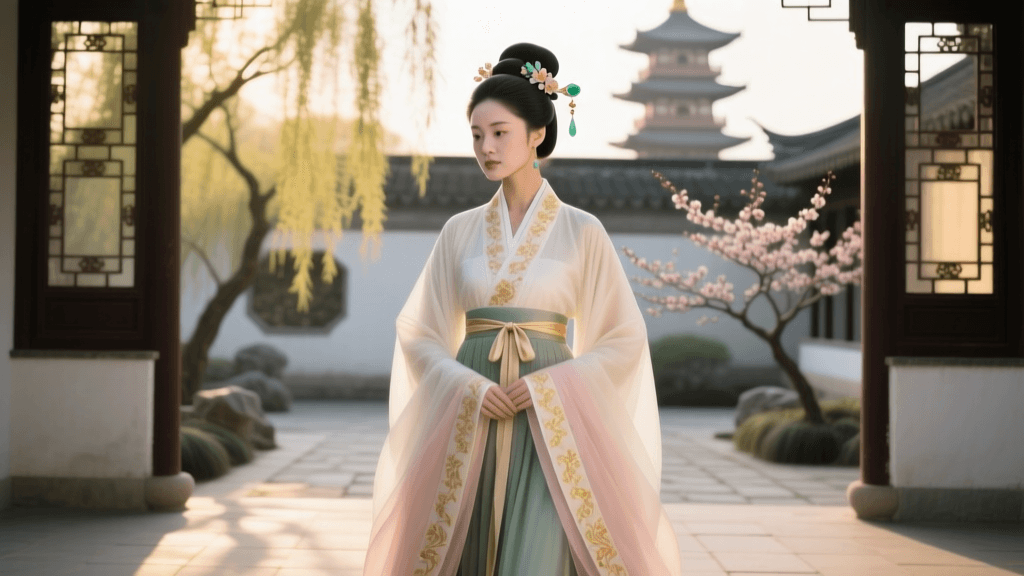
Iconic Tang Hanfu: Wu Zetian and Yang Guifei's Imperial Style
The Golden Age of Tang Dynasty Fashion
The Tang Dynasty (618–907 AD) is widely celebrated as the zenith of Chinese cultural, artistic, and sartorial achievement. Characterized by unprecedented cosmopolitanism and the flourishing of the Silk Road, Tang fashion was bold, vibrant, and heavily influenced by global trade. According to the Encyclopedia Britannica, the Tang era was marked by an openness to foreign cultures, which directly translated into the textiles, patterns, and silhouettes worn by the imperial court. For modern Hanfu enthusiasts and historians alike, the Tang Dynasty represents a fascinating period where clothing was not merely functional, but a profound expression of political power, social status, and aesthetic philosophy.
When discussing the iconic outfits of this era, two historical figures stand out as the ultimate archetypes of Tang fashion: Wu Zetian, the only female emperor in Chinese history, and Yang Guifei, one of the Four Beauties of ancient China. Their distinct approaches to dress—power dressing versus opulent aesthetics—continue to inspire the modern Hanfu revival movement.
Wu Zetian: The Architecture of Power Dressing
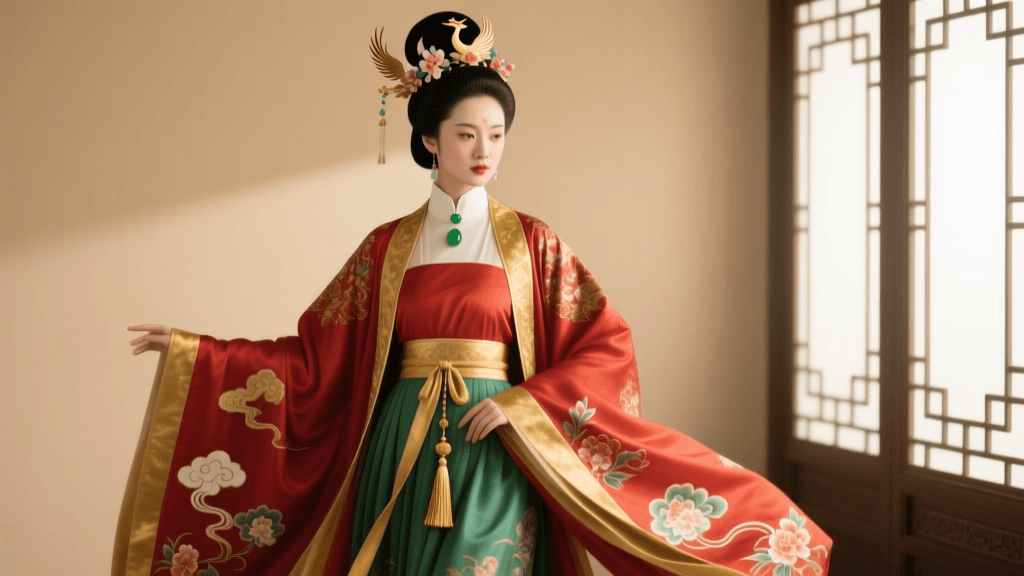
Wu Zetian (624–705 AD) navigated a deeply patriarchal society to ultimately claim the throne, establishing her own Zhou Dynasty. Her wardrobe was a calculated tool of political messaging. While traditional Tang women often wore the Qixiong Ruqun (chest-high skirt), Wu Zetian frequently adopted the Yuanlingpao (round-collar robe), a garment traditionally reserved for male officials and the emperor. By wearing the Yuanlingpao paired with a Putou (black gauze cap) or elaborate imperial crowns, she visually asserted her mandate to rule.
Historical records and artifacts detailed by the Metropolitan Museum of Art reveal that Tang textiles utilized during her reign featured structured, heavy brocades that commanded authority. Wu Zetian’s color palette leaned heavily into imperial yellow, deep purples, and crimson—colors strictly regulated by sumptuary laws. Her garments were heavily embroidered with Fenghuang (phoenixes) and dragons, blending masculine imperial motifs with feminine sovereignty. For modern practitioners, recreating Wu Zetian’s look requires a focus on structured tailoring, stiff brocade fabrics, and regal, symmetrical embroidery.
Yang Guifei: The Pinnacle of Opulent Aesthetics
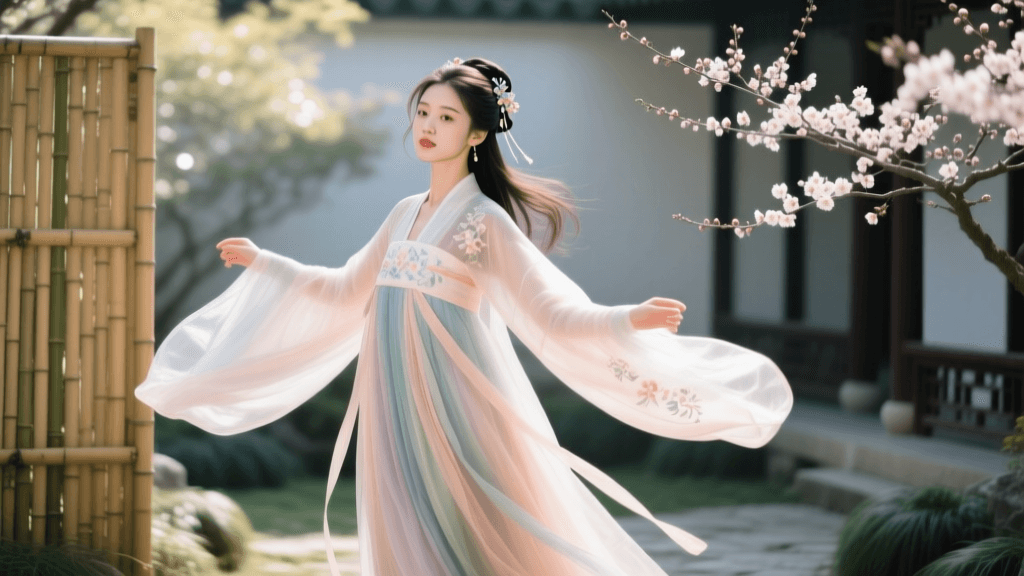
Consort Yang, known as Yang Guifei (719–756 AD), represented the romantic, artistic, and opulent side of the High Tang period. Unlike Wu Zetian’s structured authority, Yang Guifei’s style was defined by fluidity, luxury, and the celebration of the Tang beauty ideal, which favored a fuller, plumper figure. Her iconic outfit was the quintessential Qixiong Ruqun, paired with a Banbi (half-sleeve jacket) and a sweeping Pibo (silk shawl).
As noted by researchers at the World History Encyclopedia, the Silk Road brought an influx of Persian and Central Asian motifs into Tang China, which Yang Guifei popularized at court. She was famously associated with pomegranate-red skirts, dyed using precious safflower, and sheer, lightweight silks that draped elegantly over her form. Her Pibo was often woven with gold threads and draped over the arms to create a celestial, almost ethereal silhouette. Recreating Yang Guifei’s aesthetic today involves prioritizing drape, vibrant floral embroidery, and lightweight, translucent layering.
Recreating Imperial Tang Hanfu Today: A Practical Guide
Transitioning from historical appreciation to practical wardrobe building requires an understanding of modern Hanfu manufacturing, fabric behavior, and precise measurements. Whether you are aiming for the authoritative structure of Wu Zetian or the flowing grace of Yang Guifei, here is how to source and style these iconic looks today.
Fabric Selection and Sourcing
- For Wu Zetian (Yuanlingpao): Opt for heavy silk brocade (Zhuanghua), jacquard, or high-density cotton-linen blends. These fabrics hold the stiff, architectural shape required for round-collar robes. Expect to pay $25 to $45 per yard for quality jacquard.
- For Yang Guifei (Qixiong Ruqun & Pibo): Choose mulberry silk chiffon, crepe de chine, or organza for the shawl, and heavier silk satin or rayon for the skirt to ensure proper drape. Silk chiffon typically costs $15 to $30 per yard.
Key Measurements and Tailoring
Proper fit is critical for Tang Dynasty garments, particularly the chest-high skirt, which relies on tension rather than modern zippers or elastic.
- Qixiong Skirt Waistband: The waistband must be at least 12 cm (4.7 inches) wide to distribute pressure and prevent slipping. The total length of the skirt fabric must be a minimum of 1.5 times your bust measurement to allow for a secure, overlapping wrap.
- Skirt Length: For an authentic floor-grazing look, measure from your armpit down to the floor, typically 115 cm to 125 cm (45 to 49 inches) depending on your height. Subtract 3 cm if you plan to wear flat shoes instead of traditional cloud-toe shoes.
- Yuanlingpao Collar: The round collar must sit flush against the base of the neck. Ensure the tailor leaves a 2 cm ease around the neck circumference to prevent choking when sitting or bowing.
Costs, Timing, and E-Commerce Sourcing
The modern Hanfu market is vast, primarily driven by Chinese e-commerce platforms like Taobao and specialized global retailers. Entry-level polyester sets, ideal for casual festivals or cosplay, range from $40 to $80 and ship within 1 to 2 weeks. For museum-quality recreations using real mulberry silk, natural plant dyes, and hand-woven gold-leaf brocade, expect to invest between $250 and $600. Custom, high-end pieces from renowned studios (such as Shisanyu or Minghuang) often require a pre-order lead time of 4 to 8 weeks. It is highly recommended to order spring and summer collections in late winter (January/February) to ensure delivery before major cultural festivals like the Qixi Festival or Mid-Autumn Festival.
Comparison Chart: Wu Zetian vs. Yang Guifei Styles
| Feature | Wu Zetian (Power Dressing) | Yang Guifei (Opulent Aesthetics) |
|---|---|---|
| Primary Garment | Yuanlingpao (Round-collar robe) | Qixiong Ruqun (Chest-high skirt) |
| Silhouette | Structured, broad-shouldered, authoritative | Fluid, high-waisted, ethereal and draped |
| Key Accessories | Putou (cap), leather belts, structured boots | Pibo (silk shawl), Banbi (half-sleeve), hairpins |
| Color Palette | Imperial yellow, deep purple, crimson | Pomegranate red, pastel pinks, jade green |
| Modern Styling Use | Formal events, gender-neutral fashion, winter wear | Summer festivals, photography, romantic styling |
The Art of Layering and Maintenance
Achieving the authentic Tang silhouette requires mastering the art of layering. For the Qixiong Ruqun, begin with a lightweight Zhongyi (inner garment) to protect the outer silk from body oils. Next, tie the skirt securely above the bust, using the traditional double-wrap method to ensure the heavy fabric does not slip throughout the day. Drape the Pibo over your elbows rather than your shoulders to keep the chest area visually open and elegant.
Maintaining these garments requires specific care. Silk brocades used in Wu Zetian-style robes should never be machine washed; they require professional dry cleaning or gentle spot cleaning. The sheer chiffon and organza used in Yang Guifei-style shawls can be hand-washed in cold water with a pH-neutral silk detergent, then laid flat to dry away from direct sunlight to prevent the vibrant pomegranate and floral dyes from fading. By understanding the historical context and practical requirements of these iconic outfits, modern wearers can respectfully and beautifully bring the golden age of Tang fashion into the contemporary world.