Tang Dynasty Court Fashion: Sourcing Authentic Ruqun
The Evolution of Tang Dynasty Court Silhouettes
The Tang Dynasty (618–907 CE) represents an undisputed zenith in Chinese cultural, economic, and sartorial history. As the Silk Road flourished, the cosmopolitan capital of Chang'an became a melting pot of global influences, profoundly impacting court fashion. According to the Metropolitan Museum of Art, the influx of foreign merchants, diplomats, and artisans introduced new textile techniques, vibrant dyes, and exotic motifs that transformed the traditional Han Chinese wardrobe. The rigid, conservative silhouettes of the preceding Sui and Han dynasties gave way to bold, expansive, and highly expressive garments.
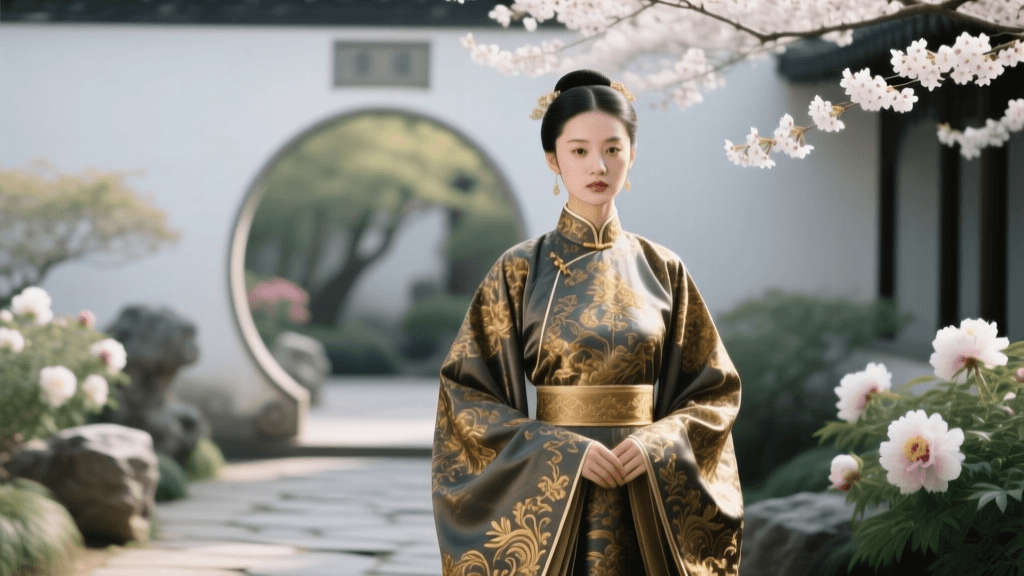
Early Tang court fashion favored relatively slender silhouettes with fitted bodices and narrow sleeves, reflecting lingering nomadic influences from the Northern Wei and Sui periods. However, as the dynasty entered its High Tang era (circa 713–765 CE) under Emperor Xuanzong, the aesthetic shifted dramatically. Court women embraced voluminous, flowing garments characterized by wide sleeves, high-waisted skirts, and daring necklines. The iconic Qixiong Ruqun (chest-high skirt) emerged as the definitive silhouette of the era, often paired with a translucent shawl known as a Pibo and a short half-sleeve jacket called a Banbi. This evolution was not merely aesthetic; it was a visual manifestation of the Tang Empire's unprecedented wealth, confidence, and openness to the world.
Sumptuary Laws and Court Color Regulations
While Tang fashion was remarkably diverse, it was strictly governed by sumptuary laws designed to maintain social hierarchy. As noted in Britannica's historical analysis of Chinese dress, color and fabric quality were legally restricted based on official rank and social status. Bright yellow was exclusively reserved for the Emperor and the immediate imperial family. High-ranking court officials and their wives were permitted to wear deep purples, crimsons, and rich greens, often adorned with intricate gold-thread embroidery. Lower-ranking officials and commoners were restricted to muted earth tones, pale blues, and unbleached linens or hemp. For modern collectors and historical reenactors, understanding these color hierarchies is crucial when commissioning authentic court-grade garments. A historically accurate High Tang court ensemble should heavily feature deep jewel tones, metallic thread accents, and complex woven patterns rather than the pastel, printed cottons often seen in modern commercial Hanfu.
Key Garments of the Tang Court
To accurately recreate or collect Tang Dynasty court fashion, one must understand the specific layers and components that make up the ensemble. Below is a structured comparison of the primary garments worn by Tang noblewomen, along with modern sourcing recommendations and estimated commissioning costs for authentic, custom-tailored pieces.
| Garment Type | Historical Role & Silhouette | Modern Fabric Recommendation | Estimated Commission Cost (USD) |
|---|---|---|---|
| Qixiong Ruqun | Chest-high pleated skirt tied under the arms; creates an elongated, flowing lower silhouette. | Heavy Mulberry Silk Crepe or Song Brocade (Songjin) for the skirt body. | $250 - $450 |
| Shan (Upper Garment) | Long-sleeved, wide-cuffed blouse worn tucked into or over the skirt, featuring a crossed collar. | Lightweight Silk Chiffon or raw silk for breathability and drape. | $120 - $200 |
| Banbi | Half-sleeve jacket worn over the Shan; originated from nomadic riding gear but became a court staple. | Woven Damask or Xiangyunsha (Gambiered Canton Silk) for structured contrast. | $150 - $300 |
| Pibo | Long, flowing silk shawl draped over the arms and shoulders; adds movement and ethereal volume. | 100% Silk Organza or sheer silk gauze with hand-embroidered borders. | $80 - $180 |
| Daxiushan | Grand ceremonial outer robe with massive, trailing sleeves; reserved for highest nobility. | Heavy Silk Brocade with gold-leaf thread (Kesi tapestry weave). | $600 - $1,200+ |
A Modern Buyer’s Guide to Commissioning Tang Hanfu
Sourcing historically accurate Tang Dynasty garments requires navigating the modern Hanfu market, which is flooded with cheap, mass-produced costumes made of synthetic polyester. For serious collectors, museum consultants, and dedicated enthusiasts, commissioning custom pieces from specialized traditional tailors is the only way to achieve historical accuracy. This process requires precise knowledge of traditional weaving techniques, accurate measurements, and an understanding of bespoke tailoring timelines.
Fabric Selection and Authenticity
The Victoria and Albert Museum highlights that the complexity of Chinese silk weaves, such as Kesi (cut silk tapestry) and Song brocade, were the true markers of luxury in historical court dress. When commissioning a Qixiong Ruqun, avoid modern digital printing on synthetic fabrics. Instead, source the following authentic textiles:
- Song Brocade (Songjin): Originating from the Song dynasty but heavily used in Tang revivals, this fabric features intricate, raised geometric and floral patterns woven with multiple colored threads. It provides the necessary weight and structure for the outer skirt panels. Cost: $60 to $120 per meter.
- Xiangyunsha (Gambiered Canton Silk): A highly prized, labor-intensive silk dyed with薯莨 (shoulang) yam juice and river mud. It has a distinct leathery texture, a dark bronze or black sheen, and is naturally water-resistant. Ideal for the Banbi jacket. Cost: $80 to $150 per meter.
- Silk Gauze (Luo): An open-weave silk that was immensely popular in the Tang court for summer wear and Pibo shawls. Authentic hand-woven Luo is rare and expensive. Cost: $45 to $90 per meter.
Essential Measurements for the Qixiong Ruqun
The construction of the Tang chest-high skirt (Poqun) relies on a multi-panel pleating technique that differs vastly from modern Western tailoring. The skirt is not fitted to the natural waist but is bound tightly around the ribcage, just below the underarm. When providing measurements to a traditional tailor, you must include the following specific metrics:
- Underbust / High Chest Circumference: Measure snugly around the ribcage where the skirt band will sit. Add 2-3 cm for ease and overlapping closure. (e.g., 78 cm + 3 cm = 81 cm total band length).
- Skirt Length: Measure from the underbust line down to the floor, accounting for the height of the shoes you intend to wear. Traditional Tang skirts often pooled slightly on the floor; a standard measurement is 135 cm to 145 cm.
- Arm Span (For Daxiushan/Shan): Tang court sleeves were exceptionally wide. Measure from the nape of the neck, over the shoulder, down to the wrist, and add 20-30 cm for the traditional trailing sleeve length. Total sleeve width at the cuff should be at least 60 cm for court-grade accuracy.
- Pibo Length: A historically accurate Pibo should be exceptionally long to allow for intricate draping. Request a minimum length of 250 cm and a width of 60 cm.
Styling, Timing, and the Commissioning Process
Commissioning a bespoke Tang court ensemble is an exercise in patience and historical dedication. Unlike purchasing off-the-rack Hanfu from e-commerce platforms, working with traditional weavers and tailors requires a specific timeline.
- Phase 1: Sourcing and Weaving (4 to 8 weeks): If you require custom-woven Song Brocade or authentic Xiangyunsha, the fabric must be woven or dyed to order. Gambiered Canton Silk, for instance, can only be dyed during specific humid months in Guangdong, which can delay production.
- Phase 2: Tailoring and Embroidery (3 to 6 weeks): Hand-embroidery using traditional gold-couching techniques (Panjin) for court motifs like peonies, phoenixes, and cloud collars is incredibly time-consuming. A fully embroidered Daxiushan can take a master embroiderer over a month to complete.
- Phase 3: Fittings and Adjustments (2 weeks): The binding of the Qixiong skirt must be precise; if the tension is too loose, the heavy silk skirt will slip down during wear. Tailors often require a mock-up fitting to adjust the inner ties and structural boning of the waistband.
Total Estimated Timeline: Expect to wait 3 to 5 months from initial consultation to final delivery for a complete, historically accurate Tang court ensemble.
Finally, styling the garment is paramount to achieving the Tang court aesthetic. Hair should be styled in elaborate updos, such as the Gaoji (high bun), adorned with gold buyao (step-shake hairpins) and silk flowers. Makeup should reflect the bold trends of the High Tang era, featuring the iconic Huadian (floral forehead appliqué), heavy rouge on the cheeks, and striking, dark red lip colors. By combining historically accurate textiles, precise traditional tailoring, and meticulous styling, modern collectors can successfully resurrect the breathtaking majesty of Tang Dynasty court fashion.