Best Hanfu Styles for Tai Chi and Qigong Practice 2026
The Intersection of Hanfu and Traditional Wellness
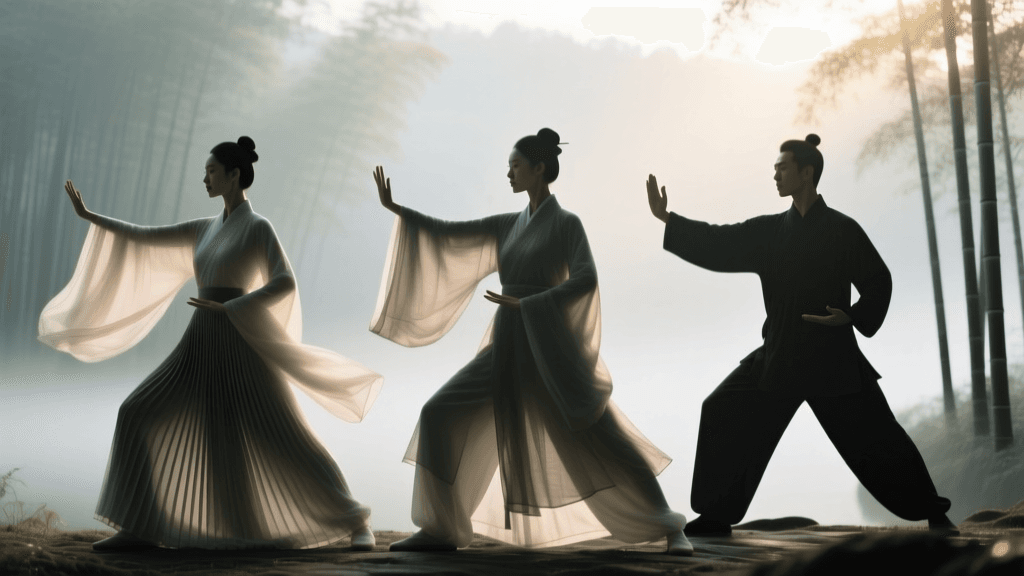
As the global wellness movement increasingly embraces ancient Eastern practices, the intersection of traditional Chinese clothing and mindful movement has never been more relevant. In 2026, the Xin Zhongshi (New Chinese Style) movement has evolved beyond everyday fashion and streetwear, deeply penetrating the wellness and martial arts communities. Practitioners of Tai Chi and Qigong are no longer settling for generic, mass-produced cotton uniforms. Instead, they are turning to historically accurate, thoughtfully tailored Hanfu to enhance their practice. But how does one choose the right traditional garment for the deep stances, sweeping arm movements, and internal energy work required in these disciplines?
According to the National Qigong Association, the physical environment and the clothing worn during practice play a vital role in allowing the body to relax and the mind to focus. Restrictive clothing can impede circulation and distract from the internal flow of Qi (vital energy). This guide explores the best Hanfu silhouettes, fabric weaves, and 2026 market innovations specifically suited for Tai Chi and Qigong practitioners.
Why Garment Drape Matters for Qi Circulation
Traditional Chinese Medicine (TCM) and martial arts philosophies emphasize the unobstructed flow of Qi and blood through the body’s meridians. Modern activewear, while functional, often relies on compression and elastic synthetics that bind the skin and restrict the subtle expansion of the ribcage during deep diaphragmatic breathing. Hanfu, by contrast, is historically designed around the principles of drape, volume, and structural ease.
When performing expansive Tai Chi forms like “Single Whip” or “White Crane Spreads Its Wings,” the fabric must move fluidly with the body without pulling at the shoulders or waist. The natural weight of silk and linen allows the garment to ground the practitioner, providing a gentle, continuous sensory feedback that aids in proprioception and balance. Research highlighted by Harvard Medical School notes that the meditative and flowing nature of Tai Chi significantly reduces stress and improves balance; wearing garments that physically support this flow rather than restricting it amplifies these mind-body benefits.
Top Hanfu Silhouettes for Tai Chi and Qigong in 2026
Not all Hanfu styles are created equal when it comes to physical exertion. Ceremonial garments with heavy layers or restrictive collars are unsuitable for the training hall. Here are the top silhouettes dominating the 2026 wellness space.
1. Song Dynasty Beizi (褙子) for Upper Body Freedom
The Beizi is an open-front, long-sleeved jacket that was highly popular during the Song Dynasty. For Qigong practitioners, the Beizi is arguably the most functional upper-body garment. Because it lacks a closed front placket and ties, it allows for maximum chest expansion during deep abdominal breathing. The straight, vertical lines of the Beizi create a calming visual aesthetic, while the side slits (usually extending up to the armpit or waist) ensure that the fabric never bunches up when the arms are raised above the head.
2. Song Ku (宋裤) for Deep Stances and Grounding
While the pleated Mamianqun (horse-face skirt) is a stunning fashion staple, it is entirely impractical for the deep Ma Bu (horse stance) or Pu Bu (drop stance) required in Tai Chi. The 2026 standard for lower-body wellness Hanfu is the Song Ku. These wide-leg trousers feature a high waist and a generous, flowing cut that mimics the drape of a skirt while providing the bifurcated freedom of pants. Modern 2026 iterations often include a hidden inner layer of lightweight, moisture-wicking bamboo viscose to handle perspiration during rigorous forms.
3. Ming Dynasty Daopao (道袍) for Flowing Forms
Despite its name, which translates to “Daoist robe,” the Daopao was a common everyday garment for men during the Ming Dynasty. It features side slits with hidden internal panels (dark pleats) that prevent the legs from being exposed during wide stances. The voluminous sleeves and structured collar provide a commanding presence, making it a favorite among Tai Chi instructors and advanced practitioners who want their garment to visually echo the sweeping, circular motions of their forms.
The 2026 Fabric Guide: Weaves that Breathe
The silhouette provides the structure, but the fabric dictates the comfort. The 2026 Hanfu textile market has seen a massive resurgence in heritage weaving techniques that offer natural temperature regulation and antimicrobial properties.
Xiangyunsha (Gambiered Canton Gauze)
Often referred to as “soft gold,” Xiangyunsha is a luxury silk fabric dyed with the juice of the yam plant and coated in iron-rich river mud. As documented by The Metropolitan Museum of Art in their extensive archives on Chinese silk production, this centuries-old technique creates a fabric that is naturally cooling, water-resistant, and highly antibacterial. For a Qigong practitioner sweating in a humid outdoor park during a summer morning session, a Xiangyunsha Beizi will not cling to the skin, nor will it harbor odors. In 2026, specialized wellness brands are offering pre-washed Xiangyunsha that is softer against the skin right out of the box, eliminating the traditional break-in period.
Hangzhou Luo (罗) and Sha (纱)
Luo (gauze with twisted warp threads) and Sha (plain weave gauze) are incredibly lightweight, porous silk weaves. They are ideal for indoor Qigong or gentle Ba Duan Jin (Eight Brocades) practice. The micro-pores in the Luo weave allow for unparalleled air circulation, acting as a natural cooling system for the body. However, these delicate weaves are best reserved for low-impact, meditative movements rather than vigorous Chen-style Tai Chi, which involves sudden stomping and silk-reeling force that could snag the delicate threads.
Modern Xin Zhongshi Linen-Silk Blends
For practitioners who require the durability of linen but the luxurious drape of silk, 2026 has introduced optimized linen-silk blends (typically 60% linen, 40% mulberry silk). These fabrics offer the structural memory and sweat-absorption of European flax linen, combined with the smooth, frictionless glide of silk. They are exceptionally popular for outdoor Tai Chi practice, as they resist wrinkling far better than pure linen while maintaining a natural, earthy aesthetic.
2026 Hanfu Wellness Fabric Comparison Chart
| Fabric Type | Best Practice Style | Breathability | Durability | Estimated 2026 Cost (USD) |
|---|---|---|---|---|
| Xiangyunsha (Gambiered Silk) | Outdoor Summer Qigong | High | Very High | $250 - $450 |
| Hangzhou Luo (Twisted Gauze) | Indoor Meditative Qigong | Very High | Low (Delicate) | $120 - $200 |
| Linen-Silk Blend (60/40) | Outdoor Tai Chi Forms | Medium-High | High | $85 - $150 |
| Heavyweight Mulberry Crepe | Winter Indoor Tai Chi | Medium | High | $180 - $300 |
Caring for Your Wellness Hanfu
Practicing martial arts and wellness routines inevitably leads to perspiration. Proper maintenance of your Hanfu is crucial to preserving its drape and longevity. Never machine-wash Xiangyunsha or pure Luo silk. Instead, spot-clean with a damp cloth and a pH-neutral silk detergent. For linen-silk blends, a gentle hand wash in cold water followed by air-drying in the shade is recommended. Avoid direct sunlight, which can degrade the natural dyes and weaken the silk proteins over time.
To maintain the structural integrity of the collars and cuffs, store your practice Hanfu flat or folded along its natural seams. Hanging heavy silk garments on thin wire hangers will distort the shoulder drape, which can throw off the visual symmetry of your Tai Chi forms.
Final Thoughts on Mindful Movement
The integration of Hanfu into Tai Chi and Qigong is more than a stylistic choice; it is a holistic approach to traditional wellness. By selecting garments that honor the body’s natural mechanics and utilizing heritage fabrics that interact harmoniously with the environment, practitioners in 2026 can achieve a deeper, more grounded state of mindfulness. Whether you are flowing through a morning sword form in a breathable Xiangyunsha robe or centering your breath in a structured Song Ku, the right traditional garment becomes an extension of your practice, moving seamlessly with your Qi.