Best Hanfu for Tai Chi and Qigong Practice in 2026
The Intersection of Hanfu and Mindful Movement in 2026
As the global wellness industry continues to evolve in 2026, a profound shift is occurring at the intersection of physical health and cultural heritage. Practitioners of traditional Chinese wellness arts, specifically Tai Chi and Qigong, are increasingly moving away from synthetic, mass-produced activewear. Instead, they are embracing authentic Hanfu and the modern Xin Zhongshi (new Chinese style) movement to deepen their mind-body connection. According to Harvard Medical School, Tai Chi is often described as 'medication in motion,' offering profound benefits for balance, flexibility, and cardiovascular health. When practicing these slow, deliberate forms, the garment you wear is not merely a covering; it is an extension of your body's energetic field.
The National Center for Complementary and Integrative Health (NCCIH) notes that Qigong practices integrate posture, movement, breathing technique, and focused attention. For the flow of Qi (vital energy) to remain uninterrupted, clothing must not bind, restrict, or trap heat. In 2026, the market for wellness-specific traditional garments has matured, offering practitioners a wide array of historically accurate silhouettes crafted from advanced natural fibers. This guide explores the best Hanfu styles, fabric technologies, and footwear options for your Tai Chi and Qigong practice this year.
Top Hanfu Silhouettes for Tai Chi and Qigong
The Daopao (道袍): The Ultimate Flow State Garment
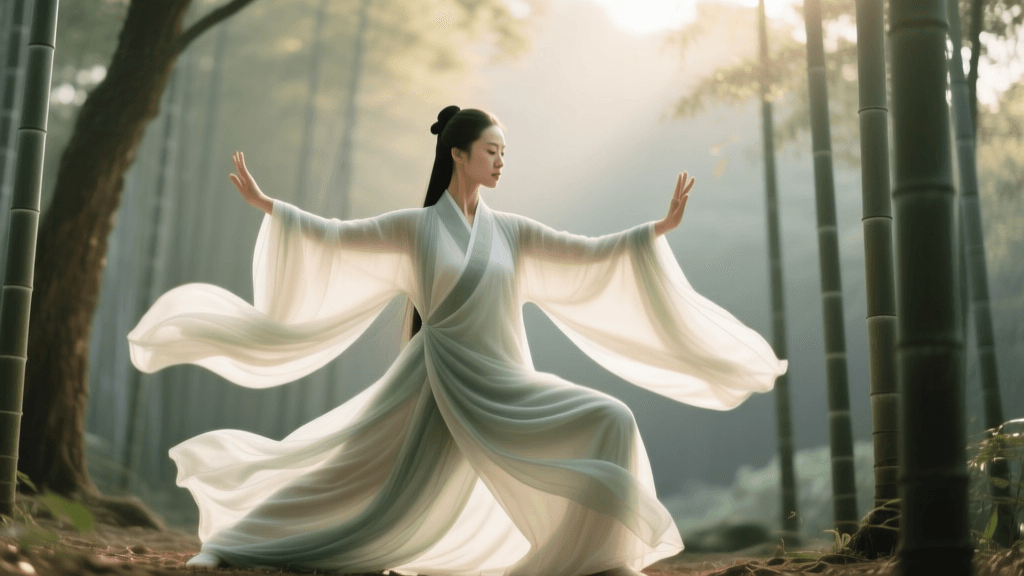
The Daopao, historically worn by Taoist scholars and monks, remains the gold standard for serious Tai Chi practitioners in 2026. Characterized by its cross-collar (jiaoling youren), wide sleeves, and generous side slits, the Daopao is engineered for deep, grounded stances. The side slits typically begin at the waist—approximately 45 centimeters from the hem—allowing the practitioner to drop into a deep Ma Bu (horse stance) or execute sweeping leg movements without any fabric tension across the hips or thighs. The sleeves, often measuring 60 centimeters in width, create a beautiful, fluid drape that accentuates the circular arm movements of the Yang-style 24-form. In 2026, premium Daopao sets designed specifically for martial wellness feature hidden interior ties to secure the inner layer, ensuring the garment stays centered during dynamic transitions.
Song Dynasty Beizi (褙子): Lightweight Layering
For outdoor morning Qigong sessions in the spring and autumn, the Song Dynasty Beizi is an exceptional choice. The Beizi features a parallel collar (duiling) and side slits that run all the way from the armpit down to the hem. This unique construction provides maximum ventilation and unrestricted shoulder mobility, which is crucial for forms that require repetitive overhead reaching and chest-opening expansions. Modern 2026 interpretations of the Beizi for wellness often utilize lightweight raw silk or bamboo-linen blends, providing a gentle, cooling sensation against the skin as the body's microclimate warms up during practice.
Xin Zhongshi (新中式) Wellness Blends
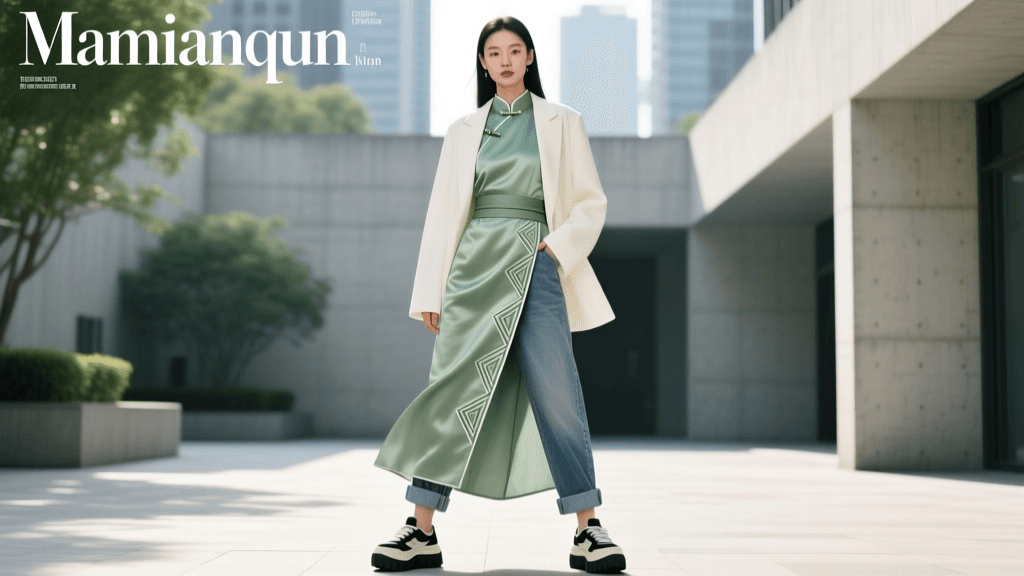
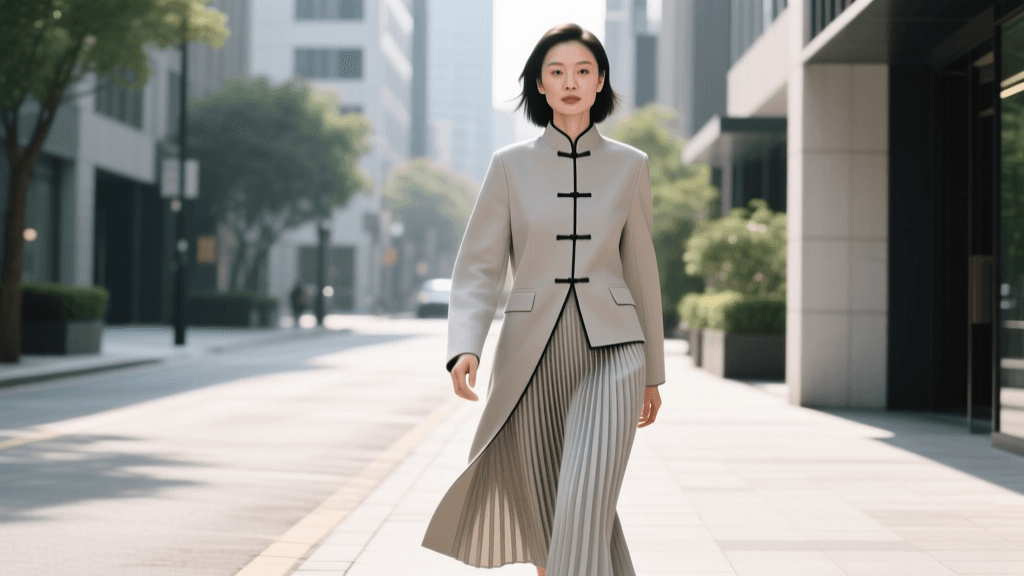
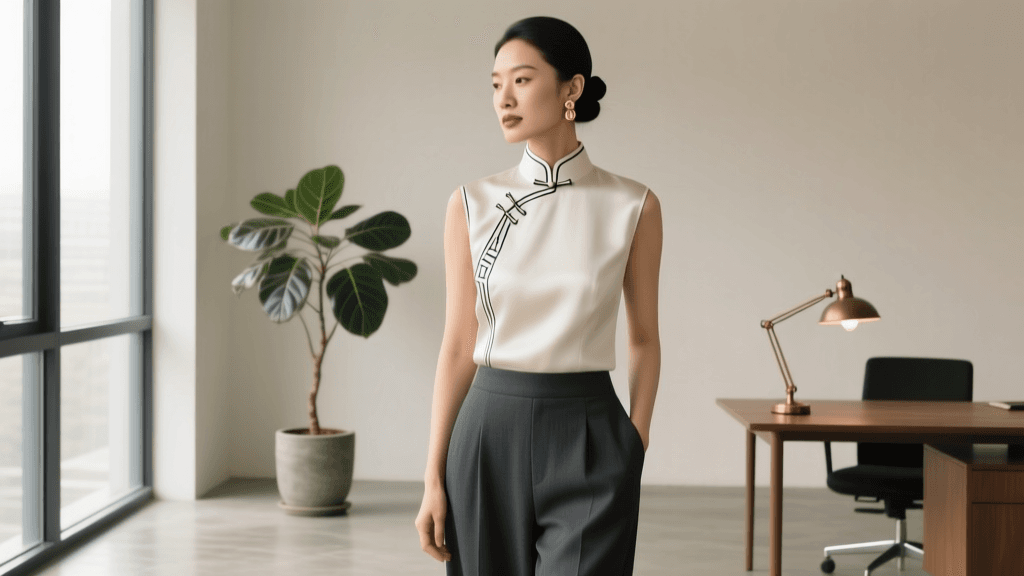
The Xin Zhongshi movement has reached its third major iteration in 2026, blending traditional aesthetics with ergonomic activewear principles. For practitioners who prefer a more tailored fit or practice in urban environments where full-length robes might be impractical, Xin Zhongshi wellness sets offer a compelling alternative. These garments retain the iconic cross-collar and knot-button (pankou) details but incorporate hidden gussets under the arms and bio-based stretch fibers woven into the natural cotton matrix. This allows for a full range of motion while maintaining the dignified, grounded aesthetic of traditional Chinese attire.
Fabric Analysis: Choosing the Right Textile
The fabric of your wellness Hanfu dictates how your body regulates temperature and how the garment moves through the air. Synthetic fabrics like polyester trap moisture and disrupt the body's natural thermoregulation, which can lead to stagnation and discomfort during slow, sweat-inducing Qigong routines. As detailed by the Metropolitan Museum of Art, the historical evolution of silk weaving in China has always prioritized the harmony between the textile and the human form. Today, we have access to both heritage silks and innovative plant-based fibers.
| Fabric Type | Breathability | Drape Quality | Best Season | 2026 Avg. Price (USD) |
|---|---|---|---|---|
| Xiangyunsha (Gambiered Silk) | Excellent | Fluid, Heavy | Summer | $350 - $600 |
| Raw Mulberry Silk | Very Good | Light, Ethereal | Spring / Autumn | $150 - $280 |
| Bamboo-Linen Blend | Superior | Structured, Crisp | Summer | $60 - $120 |
| Xin Zhongshi Tech-Cotton | Good | Moderate Stretch | All Seasons | $80 - $150 |
Understanding Xiangyunsha (Gambiered Canton Gauze)
For advanced practitioners and those practicing in humid, hot climates, Xiangyunsha is the pinnacle of wellness textiles. This intangible cultural heritage fabric is dyed using the juice of the Dioscorea cirrhosa tuber and coated with river mud, resulting in a dark, lustrous silk that is naturally antibacterial, quick-drying, and incredibly cooling. While the investment is higher, the way Xiangyunsha glides over the skin without clinging makes it unparalleled for summer Tai Chi practice.
The Role of Footwear: Grounding Your Practice
Traditional Chinese wellness arts emphasize the connection between the soles of the feet and the earth. Historically, practitioners wore Bu Xie (traditional cloth shoes) featuring multi-layered cotton soles stitched tightly together. These shoes provide a zero-drop profile, allowing the practitioner to feel the ground, distribute weight evenly across the Yongquan (Kidney 1) acupressure point, and maintain optimal balance.
In 2026, while traditional handmade cotton shoes are still available and cherished for indoor studio practice, many outdoor practitioners opt for modern minimalist wellness shoes. These contemporary shoes mimic the thin, flexible sole of the Bu Xie but incorporate durable natural rubber outsoles to protect against rough park terrain and morning dew. When selecting footwear, ensure the toe box is wide enough to allow the toes to splay naturally during weight-shifting movements like 'Part the Wild Horse's Mane.'
Care, Storage, and Maintenance of Wellness Hanfu
Because Tai Chi and Qigong generate internal heat and subtle perspiration, proper garment care is essential to maintain the integrity of natural fibers and prevent the buildup of odors. After each practice session, your Hanfu should be hung in a well-ventilated area to air out. Avoid direct sunlight, which can degrade the amino acids in silk and cause natural dyes to fade.
- Washing: Raw silk and Xiangyunsha should be hand-washed in cool water using a pH-neutral silk detergent. Bamboo-linen blends and tech-cotton Xin Zhongshi sets can typically be machine-washed on a gentle cycle inside a mesh laundry bag.
- Drying: Never wring out silk garments. Gently press the water out with a clean towel and lay the garment flat to dry. Bamboo-linen can be hung, but smooth the seams to prevent deep wrinkles.
- Storage: Store your wellness Hanfu flat or folded in a breathable cotton garment bag. Insert natural cedar blocks to repel moths and absorb excess ambient moisture, ensuring your garments remain fresh and ready for your next morning practice.
Final Thoughts on Mindful Movement
The garments we wear during mindful movement shape our physical experience and our mental focus. By choosing historically informed, breathable, and thoughtfully constructed Hanfu or Xin Zhongshi apparel in 2026, you honor the deep cultural roots of Tai Chi and Qigong. Whether you are flowing through a Daopao in a misty park or practicing grounding Qigong in a bamboo-linen set, the right traditional attire transforms your daily wellness routine into a moving meditation, bridging the ancient past with your present vitality.