Eco-Friendly Hanfu Dyeing 2026: Chinese Indigo & Gardenia Guide
The 2026 Shift Toward Sustainable Hanfu
As the global Hanfu movement matures in 2026, enthusiasts, historians, and designers are increasingly turning away from mass-produced, synthetically dyed garments. The environmental toll of fast fashion has prompted a renaissance in Cao Mu Ran (traditional Chinese plant dyeing). Today, eco-friendly dyeing is not just a historical reenactment; it is a vital component of sustainable Asian fashion. According to the Ellen MacArthur Foundation, transitioning to circular textile economies is paramount, and natural dyes offer a biodegradable, non-toxic alternative to petroleum-based synthetic colorants.
In this comprehensive guide, we explore the cultivation, extraction, and application of two cornerstone plants in traditional Chinese dyeing: Chinese Indigo (Strobilanthes cusia or Indigofera tinctoria) and Gardenia (Gardenia jasminoides). Whether you are restoring a vintage Ming dynasty-style Mamianqun or dyeing raw silk for a modern Song-style Beizi, mastering these botanical dyes ensures your wardrobe is as kind to the earth as it is beautiful.
Chinese Indigo (Ma Lan): The Blue of the Ancients
Indigo has been the backbone of Asian textile coloring for millennia. While synthetic indigo dominates the modern denim industry, natural indigo remains a prized commodity for luxury Hanfu silks and linens. The Royal Botanic Gardens, Kew notes that Indigofera tinctoria and related species contain indican, a colorless precursor that, through fermentation and oxidation, transforms into the iconic, colorfast blue pigment.
Sourcing and Preparing the Indigo Vat in 2026
In 2026, organic indigo farms in Guizhou and Yunnan provinces have optimized sustainable harvesting techniques, ensuring soil health and fair-trade wages for local artisans. A kilogram of premium, organically fermented indigo paste (known as lan ni) currently retails for approximately $25 to $35 USD.
- Alkaline Agent: Traditional wood ash lye is still used, but many 2026 eco-dyers opt for food-grade calcium hydroxide (pickling lime) for a more predictable pH level (around 11-12).
- Reducing Agent: Instead of harsh synthetic hydrosulfite, modern sustainable vats use fructose, henna, or iron to reduce the indigo, making it water-soluble.
- The Process: Mix the indigo paste, calcium hydroxide, and fructose in warm water (50°C). Allow the vat to rest for 24 hours. A coppery, metallic sheen on the surface and a yellow-green liquid underneath indicate a healthy, active vat.
Gardenia Yellow (Zhi Zi): The Sunshine Mordant
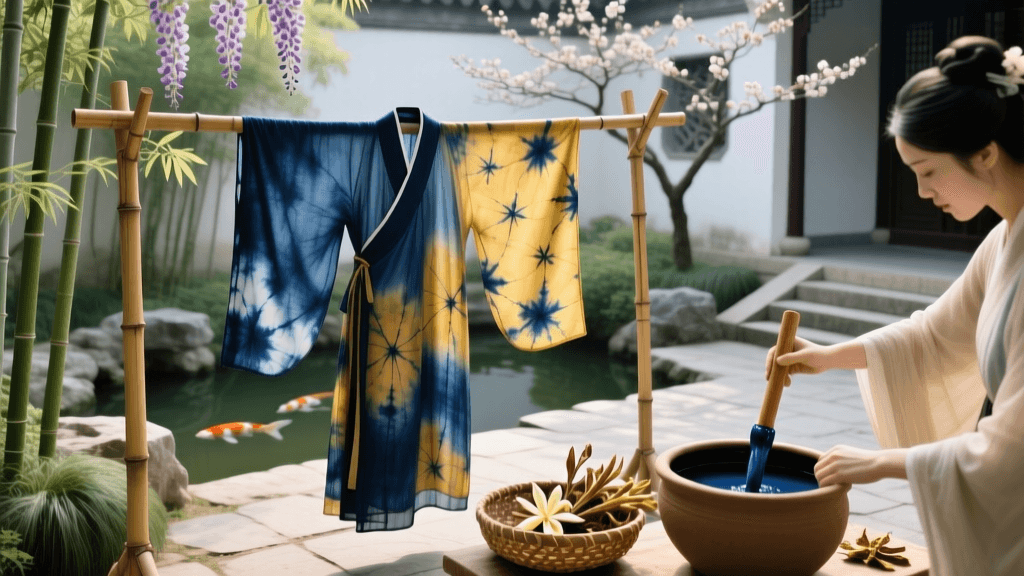
While indigo requires a complex chemical reduction, Gardenia yellow is remarkably straightforward, making it an ideal starting point for beginners in traditional Chinese dyeing. The dried fruits of Gardenia jasminoides (Zhi Zi) contain crocin, the same water-soluble carotenoid pigment found in saffron.
Gardenia yields a vibrant, warm yellow on silk and wool. However, it is highly sensitive to UV light. To improve colorfastness in 2026, textile conservators recommend pre-mordanting the silk with alum (potassium aluminum sulfate) or using a tannin-rich synergistic dye, such as pomegranate rind, to anchor the color.
Step-by-Step Eco-Friendly Dyeing Process for Silk
Dyeing silk Hanfu requires patience and precise temperature control. Here is the standard 2026 protocol for achieving a deep, lasting Gardenia yellow on a 100-gram silk charmeuse fabric.
- Scouring: Wash the raw silk in a pH-neutral, eco-friendly detergent at 40°C to remove sericin (silk gum) and manufacturing oils. Rinse thoroughly.
- Mordanting: Dissolve 15 grams of alum and 5 grams of cream of tartar in warm water. Submerge the damp silk and simmer gently at 80°C for 45 minutes. Let it cool in the bath.
- Extraction: Crush 100 grams of dried Gardenia fruits. Simmer in 3 liters of distilled water for one hour. Strain the liquid through a fine muslin cloth. Repeat the extraction once more and combine the liquids.
- Dyeing: Place the mordanted silk into the dye bath. Heat to 60°C and hold for 45 minutes, stirring gently to ensure an even color. Allow the fabric to cool completely in the dye bath for maximum pigment absorption.
- Washing and Curing: Rinse the silk in cool water with a splash of white vinegar to set the pH. Hang to dry in a shaded, well-ventilated area. Never dry natural dyes in direct sunlight.
Soy Milk (Dou Jiang): The Traditional Protein Binder
In the pursuit of zero-waste dyeing, 2026 has seen a massive resurgence in the use of soy milk as a natural binder and pre-mordant, particularly for cellulose fibers like linen and hemp often used in summer Hanfu. While silk and wool are protein fibers that readily accept natural dyes, plant-based fabrics require a protein bridge. By soaking raw linen in freshly extracted, unsweetened soy milk and allowing it to cure in the shade for 48 hours, the soy proteins bind to the cellulose. This creates a receptive surface for both indigo and gardenia, drastically improving colorfastness without the need for mined alum. This technique, documented in ancient agricultural texts like the Tiangong Kaiwu, perfectly aligns with modern vegan and biodegradable fashion standards.
Regional Nuances: Yunnan vs. Jiangnan Dyeing Traditions
China's vast geography has birthed distinct regional dyeing styles that continue to influence 2026 Hanfu design. In Yunnan province, the Bai and Miao ethnic groups utilize a resist-dyeing technique known as Zha Ran (tie-dye), using tight thread bindings and beeswax to create intricate, geometric white patterns against deep indigo backgrounds. This method is highly favored for creating dynamic, everyday Hanfu skirts and wrap tops. Conversely, the Jiangnan region (south of the Yangtze River) is famous for its delicate, gradient dyeing (Jian Ran). Artisans in Suzhou slowly dip silk scarves and Beizi collars into progressively weaker dye baths, achieving a ethereal, mist-like fade that mimics traditional ink wash paintings. Understanding these regional techniques allows modern eco-dyers to tailor their botanical processes to the specific aesthetic of their chosen Hanfu dynasty and style.
Comparative Analysis: Natural vs. Synthetic Dyes in 2026
To understand the true value of Cao Mu Ran, we must compare it to the synthetic alternatives that flooded the market in the late 20th century. The following table outlines the environmental and practical differences based on 2026 textile industry data, aligned with reports from the United Nations Environment Programme (UNEP) on textile circularity.
| Feature | Traditional Plant Dyes (Indigo/Gardenia) | Synthetic Chemical Dyes (Azo/Reactive) |
|---|---|---|
| Water Toxicity | Non-toxic; wastewater can be composted or used for irrigation. | High toxicity; heavy metals and microplastics require intensive treatment. |
| Colorfastness | Moderate to High (Indigo is excellent; Gardenia requires UV protection). | Very High (Engineered to resist fading, but at an ecological cost). |
| Carbon Footprint | Low; plants sequester carbon during growth. | High; derived from petrochemicals and energy-intensive manufacturing. |
| Cost per 100g Silk (2026) | $8 - $15 (Higher labor and agricultural costs). | $1 - $3 (Mass-produced, externalized environmental costs). |
| Skin Sensitivity | Hypoallergenic; historically used in traditional Chinese medicine. | Can cause contact dermatitis and allergic reactions. |
Preserving the Legacy: Care for Naturally Dyed Hanfu
Owning a naturally dyed Hanfu garment is an exercise in mindful consumption. Because plant dyes are living pigments, they interact with the environment. Store your indigo and gardenia-dyed silks in breathable cotton garment bags, away from direct sunlight and cedar wood, which can alter the pH and shift the colors over time.
When washing, use cold water and a specialized silk wash. Avoid alkaline detergents, which can strip the mordant and cause the gardenia yellow to fade or shift to a dull brown. By embracing these traditional methods, the 2026 Hanfu community is not merely wearing history; they are actively participating in the ecological restoration of the global fashion industry.
'The beauty of Cao Mu Ran lies in its impermanence and its deep connection to the earth. Every time we dye a garment, we are capturing a specific moment in nature's cycle.' — Master Artisan Lin, Guizhou Indigo Cooperative, 2026.