Styling Silk Haori & Mandarin Jackets for 2026 Office Wear
The Evolution of Traditional Outerwear in 2026
The global fashion landscape of 2026 has fully embraced the concept of the transcultural wardrobe. Moving far beyond the realm of costume or festive novelty, traditional Asian garments have been recontextualized as sophisticated, architectural staples for the modern professional. As remote and hybrid work models have permanently altered corporate dress codes, the demand for outerwear that balances comfort, cultural heritage, and executive presence has skyrocketed. At the forefront of this movement are two iconic pieces: the Japanese haori and the Chinese Mandarin-collar jacket (encompassing styles derived from the tangzhuang and modern qipao outerwear).
According to the Metropolitan Museum of Art's Heilbrunn Timeline of Art History, the T-shaped silhouette of traditional Japanese garments has influenced Western fashion design for over a century. However, the 2026 approach is no longer about mere imitation; it is about authentic integration. Today’s professionals are pairing historically significant textiles with minimalist, contemporary tailoring, creating a hybrid aesthetic that respects the garment's origins while serving the practical needs of the modern workday.
The Haori: A Masterclass in Relaxed Corporate Elegance
Originally worn by samurai and later adopted by merchants and geisha, the haori is a hip- or thigh-length jacket characterized by its open front and flowing sleeves. In 2026, the haori has emerged as the ultimate alternative to the structured, restrictive Western blazer.
Fabric Innovations and Proportions
While vintage silk haori remain highly sought after, 2026 has seen a massive rise in climate-adaptive peace silks and matte-finish recycled poly-blends. These modern textiles mimic the luxurious drape of traditional rinzu (damask silk) but offer breathability and wrinkle resistance crucial for long commutes and travel. The defining feature of the haori is its drop-shoulder seam. For office wear, look for a shoulder drop of exactly 2.5 to 3 inches past your natural shoulder line. This provides the signature relaxed drape without looking sloppy or oversized.
Styling the Haori for the Office
To anchor a haori in a corporate setting, contrast its voluminous silhouette with structured, streamlined basics. A cropped, hip-length haori pairs beautifully with high-waisted, wide-leg wool trousers and a fine-gauge merino turtleneck. While traditional haori are secured with haori himo (woven silk cords), the 2026 office standard favors leaving the jacket entirely open to create long, vertical lines that elongate the torso, or utilizing hidden, minimalist magnetic clasps for a clean, uninterrupted front panel.
The Mandarin Collar Jacket: Redefining Power Dressing
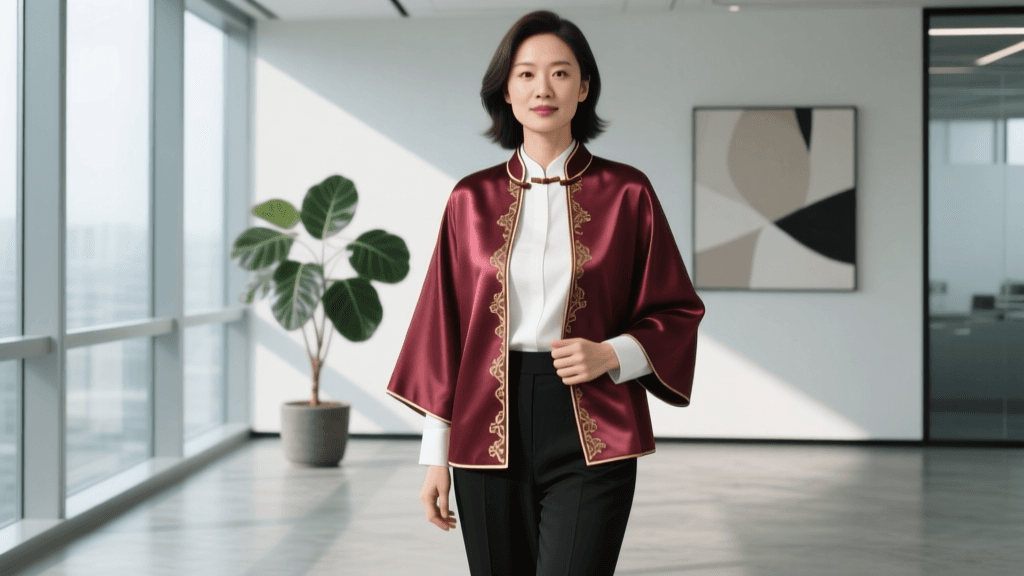
The Mandarin-collar jacket, with its distinctive stand-up collar and asymmetrical or central frog closures, offers a sharper, more structured alternative to the haori. In 2026, designers have successfully stripped away the overly ornate, festive brocades of the past, replacing them with monochromatic wool-crepes, matte cupro, and subtle tonal embroidery that align perfectly with contemporary corporate minimalism.
Collar Height and Pankou Closures
The success of a Mandarin jacket in a professional environment hinges entirely on the collar. A 1.5-inch stand collar is the 2026 sweet spot; it is high enough to provide a striking, regal silhouette but low enough to prevent chafing during long hours at a desk. The pankou (frog buttons) are another critical detail. Mass-market versions often use shiny, synthetic knots that cheapen the garment. For office wear, seek out bespoke or high-end contemporary pieces where the pankou are crafted from matte leather, suede, or tone-on-tone silk, functioning as subtle hardware rather than loud embellishments.
Proportion and Pairing: A Comparative Guide
Choosing between a haori and a Mandarin jacket depends on your specific professional environment, body type, and personal style. Below is a structured comparison to help you make an informed purchasing decision in 2026.
| Feature | Silk Haori | Mandarin Collar Jacket |
|---|---|---|
| Silhouette | T-shaped, open front, flowing | Structured, fitted, closed front |
| Shoulder Fit | Drop-shoulder (2.5 - 3 inches) | Natural or slightly padded shoulder |
| Best Modern Pairing | Wide-leg trousers, turtlenecks | Tailored cigarette pants, silk blouses |
| Ideal Office Environment | Creative, academic, hybrid work | Corporate, legal, executive meetings |
| 2026 Average Price | $180 - $350 (Contemporary) | $400 - $850 (Bespoke/Tailored) |
5 Rules for Mixing Traditional Outerwear with Modern Basics
Integrating these pieces requires a careful balance to ensure the outfit reads as intentional and modern rather than costumey. Follow these five actionable rules:
- Embrace the 7/8th Sleeve: Ensure the sleeves of your haori or Mandarin jacket end just above the wrist bone. This allows you to showcase a modern smartwatch or the cuff of a crisp underlying shirt, bridging the gap between heritage and modernity.
- Pattern Restraint: If your traditional piece features a bold historical pattern (such as seigaiha waves or asanoha hemp leaves), keep the rest of your outfit in solid, neutral tones like charcoal, navy, or camel.
- Footwear Matters: Avoid traditional sandals or slippers in the office. Ground your outfit with modern, architectural footwear such as square-toe leather loafers or minimalist Chelsea boots.
- Mind the Lapel: Never wear a collared dress shirt under a Mandarin jacket. The clash of the Western collar and the Eastern stand-collar creates visual clutter. Opt for crewnecks, V-necks, or collarless blouses instead.
- Hardware Harmony: Match the tone of your modern jewelry and belt buckles to the subtle tones of the garment's frog closures or the metallic threads in the silk weave.
Sourcing, Tailoring, and Garment Care
Investing in traditional Asian outerwear requires a commitment to proper maintenance. The Victoria and Albert Museum's Asian Collections provides extensive documentation on the historical preservation of delicate silks and structural collars, offering valuable insights into how we should care for these garments today to ensure their longevity.
Modern Care Routines
The harsh chemical solvents used in traditional dry cleaning can strip the natural luster from peace silks and degrade the internal fusing of a Mandarin collar. In 2026, the industry standard for high-end traditional garments is liquid CO2 cleaning or specialized eco-friendly wet cleaning. These methods preserve the integrity of the fibers and the vibrant natural dyes.
When storing your haori, never use wire hangers. The weight of the silk will cause the shoulders to stretch and tear. Instead, use wide, padded wooden hangers that support the entire drop-shoulder seam. For Mandarin jackets, which often feature delicate internal structuring to keep the collar standing upright, store them in a breathable cotton garment bag with cedar blocks to deter pests without introducing the harsh odors of chemical mothballs.
The Future of the Transcultural Wardrobe
As we move deeper into 2026, the integration of the haori and the Mandarin jacket into Western workwear represents a broader shift toward globalized, culturally fluent fashion. By understanding the history, respecting the proportions, and investing in quality construction, professionals can build a wardrobe that is not only deeply stylish but also rich in cultural narrative. These garments are no longer just artifacts of the past; they are the power pieces of the future.