The 2026 Guide to Styling Haori and Hakama with Kurume Kasuri
Japanese fashion in 2026 represents a masterclass in balancing profound historical reverence with cutting-edge international design. As global consumers seek sustainable, meaningful garments, traditional Japanese clothing—specifically the haori (jacket) and hakama (pleated trousers)—has transcended its ceremonial roots. Today, we explore the comprehensive guide to styling these iconic pieces, focusing on the intricate Kurume kasuri weaving method, Zen spiritual aesthetics, and modern footwear integration. Whether you are navigating the streets of Harajuku or attending a formal tea ceremony, understanding the nuances of these garments is essential for the modern wardrobe.
The Resurgence of Kurume Kasuri Weaving in 2026
Kasuri (ikat) is a weaving method where threads are dyed prior to weaving, creating distinctive, slightly blurred patterns. Originating in the Ryukyu Kingdom and perfected in regions like Kurume (Fukuoka), this textile is experiencing a massive renaissance in 2026. According to the Kyoto Costume Institute, contemporary Japanese designers are increasingly collaborating with rural weaving cooperatives to preserve these techniques while adapting them for modern streetwear.
In 2026, a genuine, hand-woven Kurume kasuri haori crafted from organic indigo-dyed cotton represents a significant investment, typically starting at ¥85,000 (approximately $580 USD). The preservation of this craft is not merely about aesthetics; it is an educational endeavor. Many weaving studios in Fukuoka now offer immersive travel experiences, allowing international visitors to learn the complex thread-tying mathematics required to produce the iconic geometric patterns. This intersection of travel, education, and trade ensures that the kasuri tradition remains economically viable for the next generation of artisans.
Zen Spirituality and the Philosophy of Layering
To style a haori in 2026 is to engage with Zen spirituality, specifically the concept of Ma (negative space). Unlike Western tailoring, which often seeks to contour the body, traditional Japanese fashion embraces a two-dimensional, architectural silhouette. The haori is designed to hang straight from the shoulders, creating a fluid, unstructured drape that allows air to circulate and the wearer to move without restriction.
Core Principles of Zen Layering
- Ma (Negative Space): Allow the garment to drape without clinging, honoring the space between the body and the cloth.
- Wabi-Sabi (Imperfection): Embrace the natural slubs and slightly blurred edges inherent to hand-woven kasuri textiles.
- Shibui (Subtle Beauty): Restrict the color palette to deep indigos, charcoal, and natural unbleached fibers to let the weave speak.
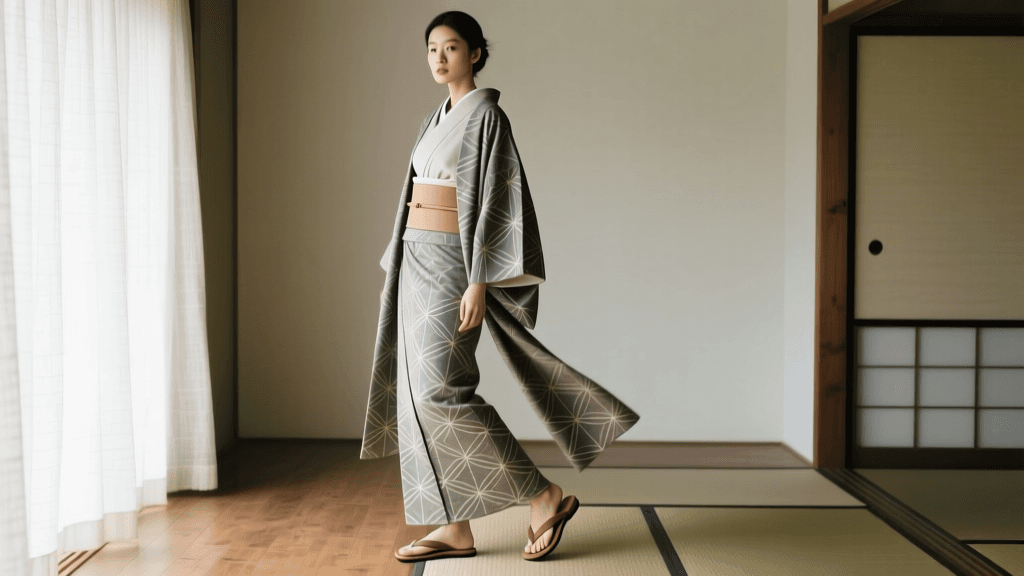
When layering a kasuri haori over a modern base—such as a high-neck merino wool sweater or a minimalist linen kimono-inspired dress—the focus is on the interplay of textures. The slightly slubbed, matte finish of the kasuri cotton contrasts beautifully with smooth, contemporary fabrics. Zen aesthetics dictate restraint; therefore, limit your color palette to indigo, charcoal, and unbleached cotton whites. The subtle, blurred edges of the kasuri pattern provide enough visual interest without overwhelming the senses, embodying the Zen principle of finding profound beauty in understated imperfection.
Hakama Styling: Formality, Life Stages, and Modern Travel
The hakama, traditionally worn by samurai and later adopted by martial artists and Shinto priests, has evolved into a versatile staple in 2026 Japanese fashion. Historically, the hakama denotes specific life stages and educational milestones. For instance, female university graduates wear the andon-bakama (a tube-like, skirt-style hakama) during their graduation ceremonies, often paired with a vibrant furisode kimono.
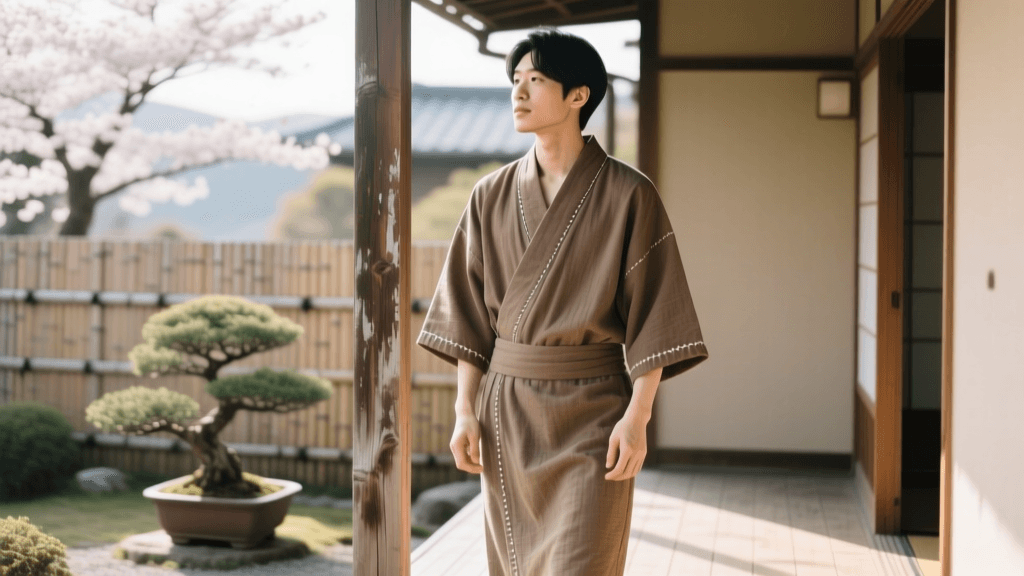
However, in contemporary international design, the hakama has been reimagined for daily wear and travel. Modern iterations feature adjustable side buckles, deep hidden pockets, and wrinkle-resistant polyester-blend fabrics that make them ideal for long-haul flights or navigating uneven cobblestone streets in Kyoto. For men, the umanori-bakama (divided, trouser-style hakama) offers a striking, wide-legged silhouette that pairs exceptionally well with a tailored haori.
Educational Milestones and Life Stage Garments
In Japan, clothing is inextricably linked to life stages and educational milestones. The Shichigosan festival celebrates children at ages three, five, and seven, marking their growth and health. In 2026, parents are increasingly opting for sustainably sourced, organic cotton haori for these ceremonies, reflecting a broader societal shift toward environmental consciousness. Similarly, the Seijin no Hi (Coming of Age Day) remains a vital cultural touchstone. While the vibrant silk furisode remains the standard for young women, there is a growing 2026 trend of incorporating vintage, upcycled kasuri textiles into the obi (sash) or hako-seko (decorative pouch), blending generational history with modern eco-friendly values.
Footwear Integration: From Traditional Zori to Modern Tabi
No comprehensive guide to Japanese fashion is complete without addressing footwear. The traditional pairing for hakama and formal kimono remains the zori (flat, thonged sandals) or geta (wooden clogs). However, the sensory experience of wearing traditional footwear on modern city infrastructure can be challenging.
In 2026, the global fashion landscape has fully embraced the tabi boot as the ultimate bridge between traditional Japanese dress and urban practicality. The split-toe design, originally developed for jika-tabi (outdoor work boots) to accommodate the thong of the zori, provides superior balance and tactile grounding. High-end international design houses continue to iterate on the tabi silhouette, but for authentic styling, look to heritage Japanese brands like Sou-Sou or Marugo.
Pairing a casual cotton kasuri haori with dark denim hakama and leather tabi boots creates a cohesive, transnational look. For formal occasions, the rules remain strict: white tabi socks must be worn with pristine, woven-rush zori. The sensory experience of slipping into a fresh pair of cotton tabi socks—the snug embrace around the heel and the distinct separation of the big toe—grounds the wearer, providing a mindful transition from the outside world into a space of tradition.
2026 Garment Sizing and Fabric Weight Guide
Navigating the sizing of traditional Japanese garments can be daunting for international buyers. Unlike Western sizing, which is based on chest and waist measurements, kimono and haori sizing is primarily dictated by the wearer's height and shoulder span (yuki). Below is a comprehensive comparison chart for 2026 standard sizing and fabric weights, essential for both online trade and bespoke tailoring.
| Garment Type | Standard Yuki (Shoulder-to-Wrist) | Ideal Wearer Height | 2026 Fabric Weight (Winter/Spring) | Primary Use Case |
|---|---|---|---|---|
| Men's Silk Haori | 78 cm - 82 cm | 170 cm - 175 cm | Heavy (Crepe / Rinzu Silk) | Formal Ceremonies, Tea Ceremony |
| Women's Kasuri Haori | 62 cm - 66 cm | 155 cm - 165 cm | Medium (Hand-woven Cotton) | Casual Travel, Daily Layering |
| Men's Umanori Hakama | N/A (Waist: 85 cm - 95 cm) | 170 cm - 180 cm | Heavy (Stiff Polyester/Silk Blend) | Martial Arts, Graduation, Formal |
| Women's Andon Hakama | N/A (Waist: 65 cm - 75 cm) | 155 cm - 168 cm | Medium (Wool / Synthetic Blend) | University Graduation, Semi-Formal |
International Design and the Global Trade of Japanese Textiles
In 2026, the global trade of traditional Japanese garments has shifted from niche antique markets to mainstream luxury and sustainable fashion platforms. International design houses are no longer merely appropriating Japanese silhouettes; they are engaging in direct, equitable trade with regional cooperatives. For example, European luxury brands are now commissioning bespoke runs of Kurume kasuri directly from Fukuoka artisans, injecting vital capital into rural economies. This cross-cultural exchange has led to innovative hybrid garments, such as the kasuri-lined trench coat and the hakama-inspired wide-leg denim, which cater to global tastes while preserving the structural integrity of the original weaving methods.
Sensory Experiences and the Future of Textile Preservation
The true magic of traditional Japanese clothing lies in its multi-sensory experience. The auditory rustle of silk (kinugoshi) when walking in a formal kimono, the olfactory scent of natural fermented indigo and camphor wood stored in a tansu chest, and the tactile weight of a hand-pleated hakama all contribute to a deeply immersive cultural practice.
As we move through 2026, the preservation of these sensory details is paramount. Organizations and archives, such as The Metropolitan Museum of Art's Asian Textile Collection, play a crucial role in documenting the chemical and structural integrity of historical dyes and weaves. This research directly informs modern artisans, allowing them to replicate historical fermentation vats and loom tensions.
Furthermore, the integration of smart-textiles into traditional weaving is an emerging frontier. While purists may balk, some avant-garde studios in Kyoto are experimenting with embedding micro-conductive threads into kasuri patterns, allowing the garment to subtly regulate temperature without altering the historic visual aesthetic. This blend of ancient craft and futuristic utility ensures that Japanese fashion will continue to captivate and evolve.
Conclusion
The landscape of Japanese fashion in 2026 is a vibrant tapestry where the sacred and the secular, the ancient and the avant-garde, seamlessly intertwine. By understanding the intricate weaving methods of Kurume kasuri, embracing the Zen philosophy of spatial layering, and thoughtfully selecting footwear that honors both tradition and modern mobility, you can curate a wardrobe that is profoundly meaningful. Whether you are investing in a bespoke silk hakama for a life-stage milestone or a durable cotton haori for global travel, these garments offer a timeless connection to one of the world's most enduring sartorial traditions.