Best Traditional Chinese Footwear 2026: Cloud Shoes & Boots
The Renaissance of Traditional Chinese Footwear in 2026
As we navigate the fashion landscape of 2026, the global appreciation for traditional Asian garments has reached unprecedented heights. The Hanfu movement and the broader Xin Zhongshi (New Chinese Style) aesthetic have evolved from niche subcultures into mainstream sartorial choices. However, while enthusiasts often invest heavily in meticulously crafted silk robes, Mamianqun (horse-face skirts), and cross-collar ruqun, footwear is frequently an afterthought. Pairing a historically accurate Ming dynasty robe with modern sneakers or generic leather boots breaks the visual harmony of the ensemble. In 2026, authentic traditional Chinese footwear—ranging from delicate cloud shoes to structured equestrian boots—has become an essential pillar of the complete traditional wardrobe.
Modern artisans and heritage brands have spent the last few years perfecting the balance between historical accuracy and contemporary ergonomic comfort. Today’s traditional shoes incorporate hidden memory foam insoles, reinforced arch support, and water-resistant nano-coatings, all while maintaining the exquisite silk brocades and hand-stitched soles of antiquity. Whether you are attending a formal tea ceremony, participating in a historical reenactment, or simply integrating Xin Zhongshi elements into your daily streetwear, understanding the nuances of traditional Chinese footwear is paramount.
Cloud Shoes (Yunxie): The Pinnacle of Elegance
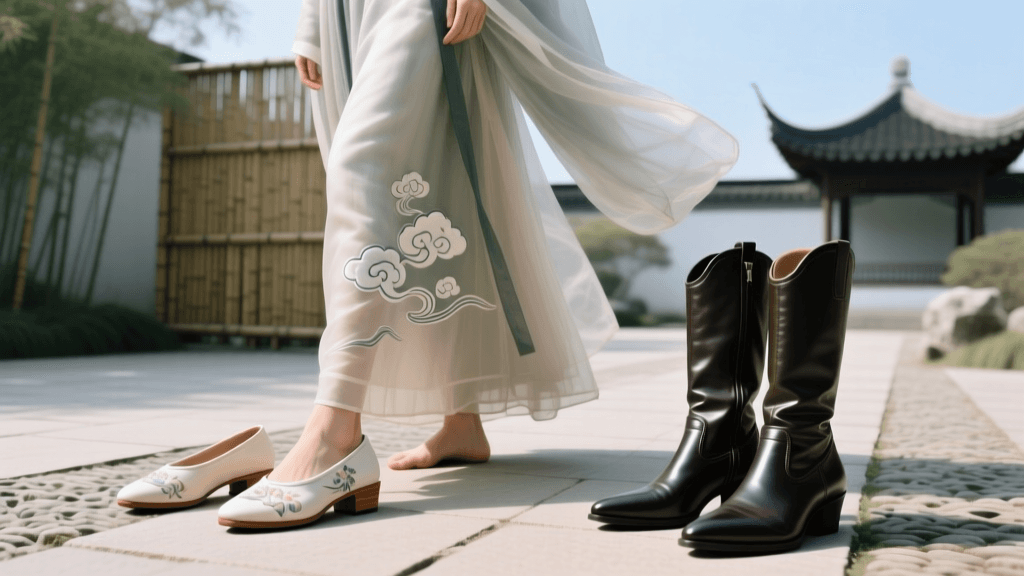
Cloud shoes, or Yunxie, are arguably the most recognizable and romanticized form of traditional Chinese footwear. Historically worn by women of the Han ethnic group, these shoes are characterized by their delicate silhouettes, vibrant silk uppers, and intricate embroidery. According to the Metropolitan Museum of Art's Heilbrunn Timeline of Art History, Ming dynasty clothing and accessories were characterized by a refined elegance, and footwear from this era heavily influences the cloud shoes we see on the market in 2026.
The Anatomy of the Upturned Toe (Qiaotou)
The most striking feature of many traditional cloud shoes is the Qiaotou, or upturned toe. While modern observers might view this purely as a decorative flourish, the upturned toe served a highly practical purpose in historical contexts. The elongated, upward-curving toe box was designed to catch and support the heavy, floor-sweeping hems of traditional pleated skirts and long robes, preventing the wearer from tripping while walking. In 2026, heritage brands offer both exaggerated theatrical Qiaotou designs for photography and cosplay, as well as subtle, slightly pointed toe boxes for everyday streetwear compatibility.
The Thousand-Layer Sole (Qiancengdi)
Authentic cloud shoes often feature the legendary Qiancengdi, or 'thousand-layer sole.' This traditional technique involves stacking dozens of layers of cotton cloth, adhering them with natural flour paste, and stitching them together with thick hemp thread. The result is a sole that is incredibly durable, naturally shock-absorbent, and breathable. While mass-produced shoes in 2026 may use molded rubber to mimic the look, high-end artisanal brands still produce hand-stitched thousand-layer soles, which mold perfectly to the wearer's foot over time, offering bespoke orthopedic comfort.
Traditional Boots (Xue): From Equestrian Roots to Streetwear
While cloud shoes dominate the feminine aesthetic of the Song and Ming dynasties, traditional boots, or Xue, bring a structured, commanding presence to the wardrobe. Originally popularized by nomadic equestrian cultures and later integrated into Han Chinese court and military dress during the Tang, Ming, and Qing dynasties, boots are inherently gender-neutral in their historical application and modern styling.
Ming Dynasty Court and Riding Boots
Ming-style boots are typically characterized by their thick, white, multi-layered soles and black satin or leather uppers. In 2026, modern interpretations of these boots have become a staple in the Xin Zhongshi streetwear scene. Designers are pairing traditional black brocade uppers with modern lug soles or hidden wedge heels, allowing wearers to achieve the imposing silhouette of a Ming official or cavalry officer while navigating modern urban environments. These boots pair exceptionally well with wide-leg trousers, pleated Mamianqun, and structured cross-collar jackets.
Qing Dynasty Ankle Boots
The Qing dynasty introduced distinct Manchu-influenced footwear, including the iconic platform shoes worn by Manchu women and the sleek, velvet ankle boots worn by men and women alike. Modern 2026 collections frequently draw inspiration from these velvet ankle boots, utilizing rich jewel tones, metallic thread embroidery, and side-button closures. They are an excellent transitional footwear choice for autumn and winter, offering warmth and a sophisticated historical aesthetic without the bulk of a full riding boot.
Straw and Woven Sandals (Caixie): The Breathable Summer Alternative
For the sweltering summer months, silk and heavy brocade are impractical. Enter the Caixie, or woven straw and hemp sandals. Historically worn by commoners, scholars, and monks, these sandals represent the minimalist, Daoist-inspired side of traditional Chinese fashion. In 2026, elevated versions of the Caixie feature tightly woven rattan, bamboo, and softened hemp, often adorned with subtle jade or wooden bead accents. They are the perfect companion for lightweight linen Hanfu, Song-style Beizi (long jackets), and casual tea-house gatherings. The natural fibers provide excellent grip and allow the foot to breathe, making them a sustainable, eco-friendly choice for the environmentally conscious consumer.
2026 Buyer’s Guide: Sizing, Fit, and Material Breakdown
Purchasing traditional Chinese footwear online requires an understanding of historical sizing conventions and modern material adaptations. Below is a comprehensive guide to the primary footwear styles available in 2026, their ideal pairings, and current market pricing.
| Footwear Style | Historical Era Origin | Best 2026 Hanfu Pairing | Average Price (USD) | Comfort Level |
|---|---|---|---|---|
| Qiaotou Cloud Shoes | Ming / Qing | Mamianqun, Aoqun | $65 - $140 | High (with modern insoles) |
| Flat Embroidered Buxie | Song / Ming | Ruqun, Song Trousers | $45 - $90 | Very High |
| White-Sole Court Boots | Ming | Yeshan, Wide-Leg Trousers | $120 - $220 | Moderate (requires break-in) |
| Velvet Ankle Boots | Qing | Winter Cloaks, Pifeng | $95 - $180 | High |
| Woven Hemp Sandals | Antiquity / Tang | Linen Beizi, Summer Ruqun | $30 - $60 | Moderate (textured footbed) |
Navigating Sizing and Width
Traditional Chinese shoe lasts were historically narrower than modern Western footwear. When ordering from heritage brands in 2026, it is crucial to consult the specific millimeter (mm) size charts provided by the manufacturer rather than relying on standard US or EU conversions. If you have a wider foot, it is highly recommended to size up by half a size or seek out brands that explicitly advertise 'wide-fit' or 'modern ergonomic' lasts, which have become increasingly common to accommodate global buyers.
Essential Care and Maintenance for Silk and Brocade
Investing in high-quality traditional footwear means committing to proper maintenance. The Smithsonian National Museum of Asian Art highlights the intricate craftsmanship and delicate nature of historical Asian textiles, noting that environmental factors like humidity and direct sunlight can rapidly degrade natural fibers. To ensure your silk and brocade shoes last for years, follow these 2026 best practices for garment care.
Cleaning Embroidered Uppers
Never submerge silk or brocade shoes in water. Water can cause the silk threads to bleed, warp the fabric, and dissolve the natural adhesives used in the sole construction. Instead, use a soft-bristled horsehair brush to gently sweep away dry dirt and dust. For localized stains, use a specialized, pH-neutral dry-cleaning foam designed for delicate textiles. Apply the foam to a microfiber cloth and gently dab the affected area, never rubbing, to avoid fraying the embroidery threads.
Storage and Shape Retention
Because traditional shoes often lack the rigid internal plastic structures of modern footwear, they are prone to collapsing and creasing when not in use. Always insert cedar wood shoe trees or acid-free tissue paper into the toe box to maintain the shoe's shape and absorb ambient moisture. Store your shoes in breathable cotton dust bags in a cool, dark closet. Avoid plastic bins, which can trap humidity and promote mold growth on natural cotton soles and silk uppers. Including a few silica gel packets in your storage area will further protect against humidity damage.
Styling Traditional Footwear for the Xin Zhongshi Wardrobe
The beauty of the 2026 Xin Zhongshi movement lies in its flexibility—the seamless blending of ancient aesthetics with modern pragmatism. You do not need to wear a full, historically accurate Hanfu set to enjoy traditional footwear. Cloud shoes look remarkably chic when paired with modern tailored wide-leg trousers, a simple silk camisole, and a structured linen blazer. The subtle embroidery of the shoe adds a touch of heritage and romance to an otherwise contemporary outfit.
Similarly, Ming-style boots have found a permanent home in modern avant-garde streetwear. Pairing black brocade boots with dark denim, an oversized knit sweater, and a long wool overcoat creates a striking, neo-traditional silhouette that commands attention. By treating traditional Chinese footwear not as a costume piece, but as a versatile luxury accessory, you honor the deep cultural history of these garments while forging a unique, forward-looking personal style.