Traditional Chinese Cloud Shoes & Boots: 2026 Style Guide
The 2026 Renaissance of Xin Zhongshi Footwear
As we navigate the global fashion landscape of 2026, the Xin Zhongshi (New Chinese Style) movement has firmly transitioned from a niche cultural revival to a dominant force on international runways and everyday streetwear. While modern adaptations of the Mamianqun (horse-face skirt) and Song-style jackets have captured widespread attention, the foundation of any authentic traditional ensemble lies in its footwear. Traditional Chinese footwear, specifically the iconic Yunxie (cloud shoes) and Xue (embroidered boots), are experiencing a massive resurgence. Artisans and contemporary designers are merging centuries-old craftsmanship with 2026 ergonomic innovations, creating pieces that are as comfortable for modern commutes as they are visually stunning.
At The Garment Atlas, we believe that understanding the historical significance, styling potential, and preservation requirements of these garments is essential for any serious enthusiast. This comprehensive guide explores the intricate world of traditional Chinese footwear, offering actionable advice on how to integrate, source, and care for cloud shoes and boots in your 2026 wardrobe.
The Anatomy and Heritage of Yunxie (Cloud Shoes)
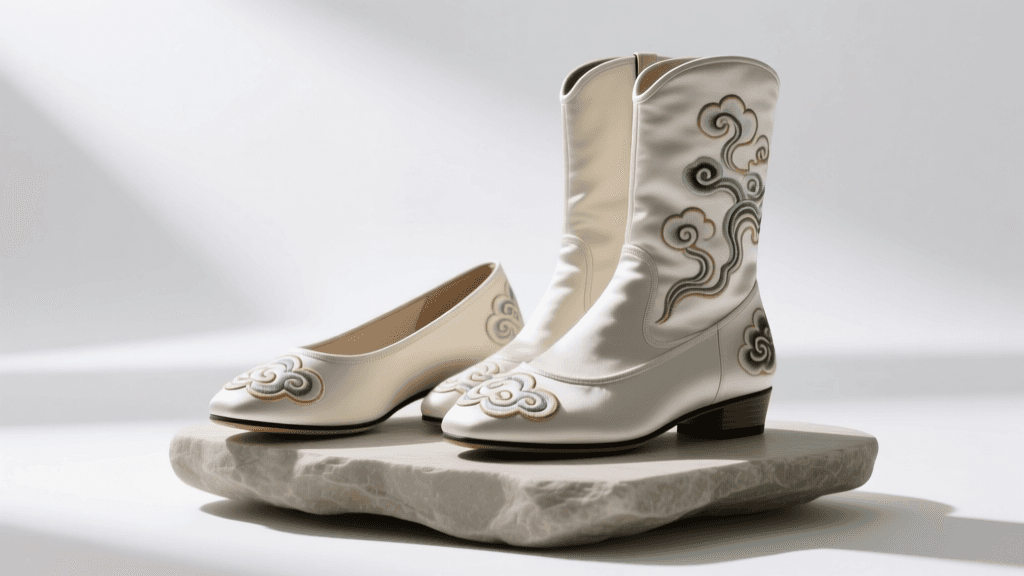
Yunxie, or cloud shoes, are perhaps the most recognizable form of traditional Chinese footwear. Originating in the Ming Dynasty and reaching peak artistry during the Qing Dynasty, these shoes are characterized by their upturned, cloud-shaped toe caps and intricate surface embroidery. Historically, the upturned toe served both a practical and symbolic purpose: it prevented the wearer from tripping over long, flowing robes while symbolizing an ascent to the heavens and a connection to the divine.
The Thousand-Layer Sole (Qian Ceng Di)
The defining structural element of the traditional cloud shoe is the Qian Ceng Di, or thousand-layer sole. Historically, artisans would stack dozens of layers of cotton cloth, paste them together with natural rice glue, and stitch them tightly with hemp thread. This meticulous process created a sole that was remarkably durable, breathable, and shock-absorbent. In 2026, master cobblers in Suzhou and Beijing are preserving this technique but augmenting it with modern bio-resin stiffeners and memory foam insoles, ensuring that the shoes meet contemporary orthopedic standards without sacrificing their historical silhouette.
Embroidery and Motifs
The upper part of the Yunxie is typically crafted from silk or satin and serves as a canvas for Su Xiu (Suzhou embroidery). Common motifs include peonies for wealth, bats for good fortune, and lotus flowers for purity. According to the China Silk Museum, the integration of sustainably dyed silk threads using plant-based pigments like madder root and indigo has become the industry standard in 2026, appealing to eco-conscious consumers while reviving ancient dyeing vats.
Exploring Xue (Traditional Boots)
While cloud shoes are often associated with women's fashion and literati casual wear, Xue (boots) hold a prestigious place in the history of Chinese officialdom, martial arts, and winter attire. Traditional boots are generally divided into two categories: the flat-soled satin boots worn by scholars and officials, and the thick-soled, often leather or heavily quilted boots used for riding and winter travel.
Scholar Boots and Satin Elegance
The classic scholar boot features a soft, flat sole and an upper made of black or deep blue satin, often adorned with subtle tonal embroidery. In the context of 2026 Xin Zhongshi fashion, these boots have been adapted with slight wedge heels and flexible rubberized outsoles to provide better traction on modern urban surfaces. They are the quintessential footwear for pairing with tailored, wide-leg traditional trousers and structured Ming-style jackets.
Winter and Equestrian Boots
For colder climates, traditional quilted boots lined with wool or faux shearling offer exceptional warmth. The 2026 iterations of these boots frequently feature waterproofed silk-blend uppers treated with natural waxes, allowing wearers to navigate snowy or rainy environments without damaging the delicate exterior embroidery. The upturned toes on winter boots are generally less pronounced than those on cloud shoes, prioritizing thermal retention and structural stability.
2026 Styling Matrix: Footwear and Garment Pairings
Styling traditional footwear requires an understanding of proportion, silhouette, and historical context. Below is a structured guide to pairing cloud shoes and boots with contemporary Xin Zhongshi garments in 2026.
| Footwear Type | Historical Origin | 2026 Material Innovation | Best Xin Zhongshi Pairing | Ideal Occasion |
|---|---|---|---|---|
| Classic Yunxie (Cloud Shoe) | Ming/Qing Dynasty | Bio-resin reinforced thousand-layer sole | Mamianqun (Horse-face skirt) with a fitted modern blouse | Festivals, tea ceremonies, gallery openings |
| Flat-Soled Scholar Boot | Ming Dynasty | Stretch-satin upper with ergonomic arch support | Wide-leg Songku trousers and a structured Ru jacket | Office wear, academic conferences, formal dinners |
| Quilted Winter Boot | Qing Dynasty | Wax-treated waterproof silk-blend exterior | Heavy wool-lined Beizi (cloak) and layered skirts | Winter travel, outdoor photography, cold-weather events |
| Slip-On Embroidered Loafer | Republic Era adaptation | Vegan silk and recycled cotton lining | Modern tailored suits with subtle Chinese knot buttons | Casual streetwear, daily commuting, weekend outings |
Sourcing Authentic Footwear in 2026
The market for traditional Chinese footwear has expanded significantly, but discerning between mass-produced costumes and authentic, artisan-crafted garments is crucial. In 2026, the most reputable sources for authentic Yunxie and Xue are specialized heritage brands based in Suzhou, Hangzhou, and Beijing. These ateliers often employ intangible cultural heritage inheritors who specialize in Su Xiu embroidery and traditional sole-stitching.
When shopping online or visiting boutique showrooms, look for specific markers of authenticity. Genuine thousand-layer soles will have visible, dense stitching patterns on the bottom, often numbering over thirty stitches per square inch. The embroidery should exhibit a slight three-dimensional texture, indicative of hand-stitched layering techniques rather than flat machine embroidery. For a deeper understanding of the textile foundations used in these shoes, the UNESCO Intangible Cultural Heritage registry on Chinese sericulture provides excellent context on the silk craftsmanship that makes these garments possible.
Comprehensive Care and Maintenance Protocols
Investing in high-quality, handcrafted traditional footwear requires a commitment to proper maintenance. Silk, satin, and natural cotton soles are highly susceptible to moisture, friction, and UV degradation. Implementing the following care protocols will ensure your footwear remains pristine for decades.
Cleaning Embroidered Silk and Satin
Never submerge traditional cloud shoes or embroidered boots in water. The natural rice glue used in the soles will dissolve, and the silk threads may bleed. Instead, follow these spot-cleaning steps:
- Dust Removal: Use a soft-bristled makeup brush or a specialized textile brush to gently sweep away surface dust and dirt from the embroidery. Always brush in the direction of the stitch grain.
- Spot Treatment: For minor stains on the silk upper, use a microfiber cloth lightly dampened with distilled water and a drop of pH-neutral silk detergent. Dab the stain gently; never rub, as this will fray the embroidery threads.
- Sole Maintenance: If the cotton edges of the thousand-layer sole become soiled, use a slightly damp cloth to wipe the edges. Allow the shoes to air dry in a well-ventilated area away from direct sunlight or heat sources.
Storage and Humidity Control
Proper storage is the most critical factor in preserving the structural integrity and color vibrancy of traditional footwear. In 2026, many collectors utilize smart-humidity storage boxes to maintain an optimal environment.
- Shoe Trees: Insert custom-carved cedar shoe trees or acid-free tissue paper into the shoes to maintain their shape and absorb excess moisture. Avoid plastic or synthetic inserts that can trap humidity.
- Light Protection: Store the footwear in breathable cotton dust bags. Prolonged exposure to ambient light, even indirect sunlight, will cause natural plant dyes and vintage silk to fade rapidly.
- Climate Control: Maintain a storage environment with a relative humidity of 45% to 55%. If you live in a highly humid climate, include silica gel packets in your storage boxes, but ensure they do not directly touch the silk uppers to prevent localized drying and brittleness.
The Future of Traditional Footwear
The integration of traditional Chinese footwear into the modern wardrobe is a testament to the enduring appeal of cultural heritage. As the Xin Zhongshi movement continues to evolve throughout 2026, we are witnessing a beautiful synthesis of ancestral techniques and contemporary lifestyle needs. Whether you are stepping out in a pair of vibrant, peony-embroidered cloud shoes or grounding your winter ensemble with a pair of sturdy, satin scholar boots, you are participating in a living history. By understanding the anatomy, styling nuances, and preservation requirements of these remarkable garments, you ensure that the legacy of Chinese footwear craftsmanship continues to walk confidently into the future.
For further reading on the historical context of Ming and Qing dynasty costumes that accompany these shoes, The Metropolitan Museum of Art's Heilbrunn Timeline of Art History offers an invaluable scholarly perspective on the evolution of Chinese sartorial traditions.