How to Style a Haori Jacket for Everyday Casual Wear
The Haori: From Samurai Armor to Modern Streetwear
The traditional Japanese wardrobe is often misunderstood as a rigid collection of formal garments reserved strictly for ceremonies, tea houses, or coming-of-age celebrations. However, the reality of Japanese textile history reveals a rich culture of everyday, casual wear designed for movement, comfort, and daily life. Among the most versatile and enduring of these garments is the haori. Originally worn as a practical outer layer, the haori has seamlessly transitioned from the battlefields and merchant districts of feudal Japan to the modern global streetwear scene. Today, integrating a haori jacket into your everyday casual wardrobe is not only a nod to exquisite Asian craftsmanship but also a masterclass in layered, seasonless styling.
To understand the haori’s place in casual wear, we must look at its origins. According to the Metropolitan Museum of Art, the haori evolved during the Muromachi and Edo periods. Initially, it was a functional garment worn by samurai over their armor to protect against the elements and display clan crests (mon). As the Edo period (1603–1867) ushered in an era of peace and economic growth, wealthy merchants adopted the haori. Because sumptuary laws often restricted commoners from wearing overtly luxurious outer garments, merchants began commissioning haori with subdued, dark exteriors and wildly extravagant, hand-painted silk linings—a hidden luxury known as 'iki'. This duality of modest exterior and vibrant interior perfectly suits the modern minimalist wardrobe, allowing for subtle pops of color and pattern.
Unlike Western tailored jackets that rely on darts, seams, and structured shoulders, the haori is cut from straight bolts of fabric (tanmono). This T-shaped construction means the garment drapes naturally over the body, making it incredibly forgiving and comfortable for daily wear. The defining features include the open front (which does not overlap like a kimono), the wide sleeves, and the small, triangular gussets (waki) under the arms that provide ease of movement.
Sizing and Measurements: Achieving the Perfect Drape
One of the most common hurdles for Western consumers adopting traditional Asian garments is sizing. Because the haori is meant to be worn open and loose, exact sizing is less critical than in Western tailoring, but understanding three key measurements will ensure a flattering silhouette:
- Yuki (Sleeve Span): Measured from the center back of the neck, across the shoulder, and down to the wrist. For a modern oversized look, aim for a yuki of 65cm to 75cm (25.5 to 29.5 inches). If the yuki is too short, the sleeves will look awkwardly cropped when layered over long-sleeve shirts.
- Mitage (Body Length): Measured from the base of the collar down the back to the hem. A standard casual haori falls anywhere from the high hip to the mid-thigh. For a jacket-like silhouette that pairs well with jeans, look for a mitake between 75cm and 85cm (29.5 to 33.5 inches).
- Katahaba (Shoulder Width): Because of the drop-shoulder design, the seam where the sleeve attaches to the body will naturally fall down your upper arm. Do not try to match this seam to your exact anatomical shoulder; a drop of 2 to 4 inches is intentional and necessary for the correct drape.
Three Actionable Ways to Style a Haori Everyday
The haori’s open front and lack of complex tying (unlike the kimono’s obi) make it the ultimate throw-on-and-go layer. Here are three practical ways to integrate it into a modern rotation.
1. The Smart-Casual Office Layer
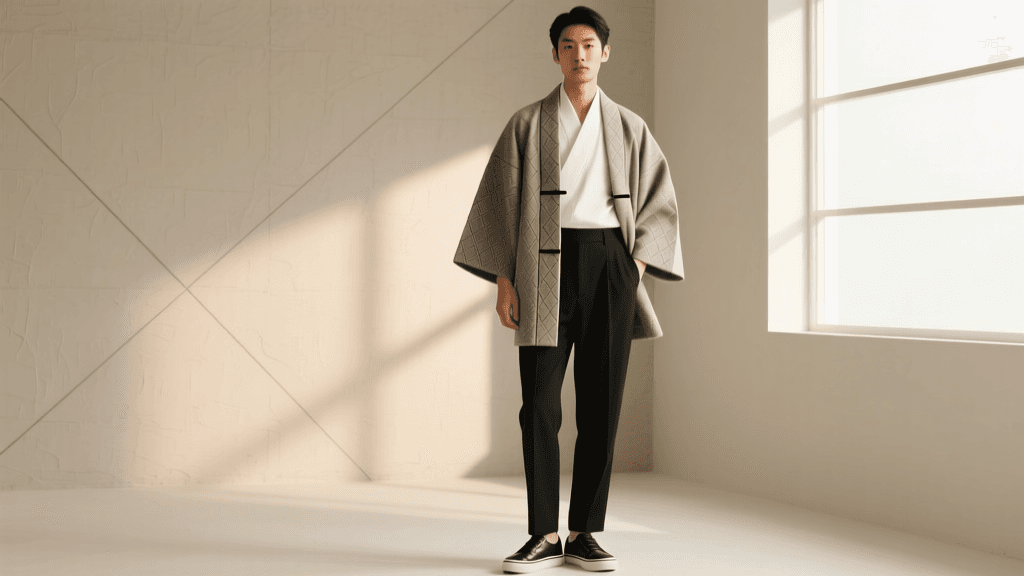
Replace your standard wool blazer or cardigan with a solid-colored, wool or polyester-blend haori. Pair it with a fine-gauge merino turtleneck, tailored trousers, and leather loafers. The straight cut of the haori provides a sleek, architectural line that elevates simple basics. Actionable Tip: Remove the traditional braided front ties (haori himo) for a cleaner, more contemporary lapel-like effect.
2. Weekend Denim Duster
For running errands or casual weekend outings, a lightweight cotton or linen haori works beautifully as a spring or autumn duster. Wear it over a crisp white heavyweight t-shirt, straight-leg vintage denim, and canvas sneakers. The contrast between the structured, historical T-shape of the haori and the rugged texture of denim creates a striking, high-low fashion statement.
3. Evening Elegance Over Slip Dresses
A vintage silk haori with a subtle jacquard weave (rinzu) or hand-painted yuzen dye makes a breathtaking alternative to a shawl or evening coat. Drape it over a simple silk or satin slip dress and ankle boots. The vibrant, hidden lining of the haori will catch the light and reveal itself as you walk, embodying the historical concept of 'iki' (hidden elegance).
Garment Comparison: Haori vs. Happi vs. Kimono
To ensure you are purchasing the correct garment for casual outerwear, it is vital to distinguish the haori from other Japanese tops. The Japan Guide notes that while many traditional garments share similar T-shaped silhouettes, their functions and formality levels vary drastically.
| Feature | Haori | Happi | Kimono |
|---|---|---|---|
| Primary Use | Outerwear / Jacket | Festival / Workwear | Main Garment / Robe |
| Front Closure | Open (optional ties) | Open or tied with belt | Overlapping, secured with obi |
| Length | Hip to Mid-Thigh | Hip to Knee | Ankle-length |
| Formality | Casual to Formal | Strictly Casual | Casual to Highly Formal |
| Avg. Vintage Cost | $30 - $120 USD | $15 - $40 USD | $50 - $300+ USD |
Fabrics, Seasonality, and Sourcing Guide
When building a casual haori collection, fabric choice dictates the season and care requirements. According to textile conservation guidelines from the Victoria and Albert Museum, traditional silk requires meticulous care, but modern and vintage markets offer a wealth of everyday-friendly alternatives.
- Spring/Autumn: Look for 'awase' (lined) haori made from cotton, wool, or polyester blends. These provide warmth without bulk and are often machine-washable (on gentle cycles) or easy to spot-clean.
- Summer: Seek out 'hitoe' (unlined) haori woven from linen, hemp, or lightweight ro (gauze) silk. These are highly breathable and function similarly to a summer kimono duster.
- Winter: Heavy wool crepe (omeshi) or quilted cotton haori offer excellent insulation. Layer them over thick flannels or heavy knitwear.
Where to Buy: For authentic vintage pieces at accessible prices ($30–$80), utilize Japanese proxy services like Buyee or ZenMarket to bid on Yahoo Auctions Japan using search terms like '羽織' (haori) and 'ウール' (wool) or '綿' (cotton). For new, ethically made artisan haori, expect to invest between $150 and $400 from specialized boutiques that partner directly with Kyoto and Tokyo artisans.
Everyday Care and Maintenance
Treating a haori as everyday wear means accepting that it will encounter the elements. Unlike formal silk kimono that must be disassembled and washed (arai-hari), casual cotton and wool haori are robust. After wearing, hang the haori on a wide, padded hanger in a well-ventilated area to air out odors and release wrinkles. For minor stains on cotton or poly-blends, use a damp cloth with a mild, pH-neutral detergent to spot-clean. Never wring the fabric. If you own a vintage silk haori, avoid water entirely; instead, use a soft garment brush to remove surface dust and rely on professional dry cleaners who specialize in Asian textiles for deep cleaning. Store your seasonal rotation in breathable cotton garment bags, accompanied by natural cedar blocks to deter moths without the harsh chemicals of traditional mothballs, which can damage delicate dyes.
Conclusion
The haori is a testament to the enduring brilliance of Japanese garment engineering. By stripping away the rigid rules of formal kimono dressing, you unlock a versatile, sustainable, and deeply historical piece of outerwear. Whether you are layering a wool haori over a winter turtleneck or throwing a linen duster over a summer dress, you are participating in a living tradition—one that values comfort, hidden beauty, and the art of everyday dressing.