Southern African Shweshwe Indigo Printing And Resist Dyeing Process
The Origins and Cultural Anchors of Shweshwe
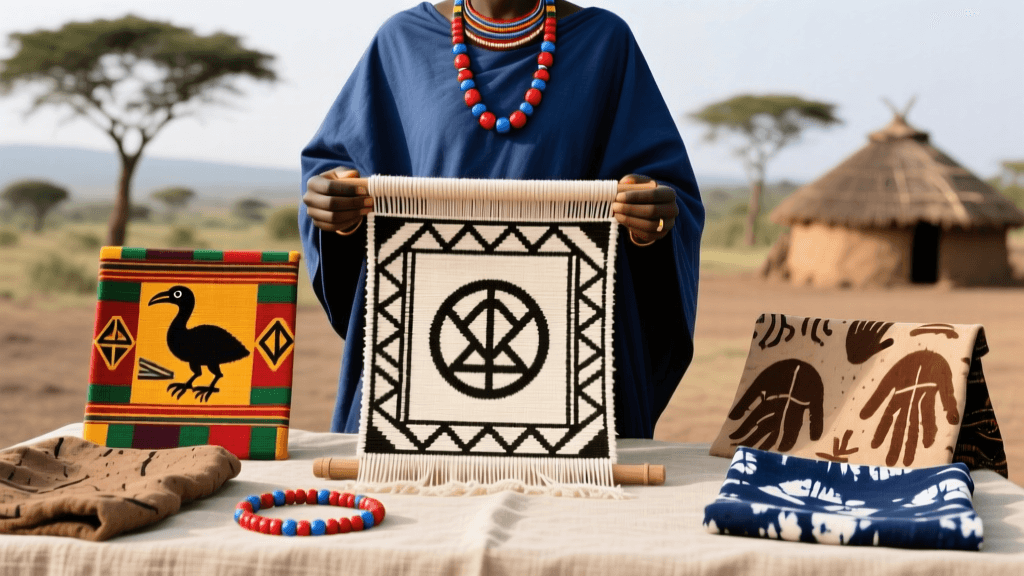
Shweshwe is a distinctive indigo-dyed cotton fabric deeply rooted in the textile traditions of Southern Africa, particularly among the Sotho people of Lesotho and South Africa’s Eastern Cape. Its name derives from King Moshoeshoe I, who received the first bolts as diplomatic gifts from European traders in the 1840s. Unlike West African adire or mud cloth—both reliant on locally sourced dyes and hand-applied resist techniques—Shweshwe evolved through a fusion: Swiss calico printing technology adapted to indigenous aesthetic sensibilities and spiritual frameworks. The fabric was historically reserved for significant life events: initiation ceremonies, weddings, and funerals. Among Basotho women, wearing a full shweshwe ensemble—including the mokorotlo (conical hat) and sekhapa (pleated skirt)—signals lineage continuity and communal belonging.
Indigo Cultivation and Dye Chemistry in Southern Africa
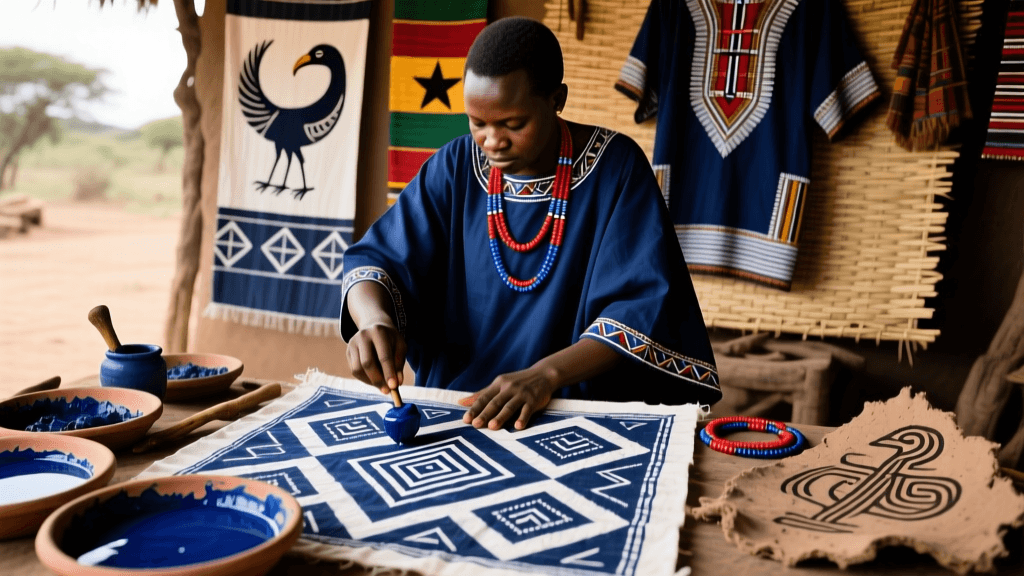
While imported synthetic indigo dominates contemporary production, traditional dyeing relied on native Indigofera arrecta, cultivated in riverine zones near Quthing (Lesotho) and the Kei River basin. Field studies by the University of Fort Hare’s Department of Botany (2017) documented that optimal leaf harvest occurs between 65–72 days after planting, yielding 1.8–2.3% indigotin by dry weight. Fermentation vats were maintained at 28–32°C for 48 hours to reduce indigo to leuco-indigo—the soluble, colorless form that binds to cellulose fibers. Each vat required precise pH control: 11.2–11.6, achieved using wood ash lye from Acacia karroo bark. This biochemical precision ensured consistent depth across batches—a standard still upheld at the National Museum of Lesotho’s textile conservation lab in Maseru.
Resist Printing: Copper Roller Engraving and Stencil Precision
Shweshwe’s signature geometric motifs—such as the “litema” (ploughed field), “tshepe” (spear), and “moholobela” (tortoise shell)—are applied via copper roller printing, not hand-stamping. Each engraved roller measures exactly 152 mm in diameter and 914 mm in length, accommodating repeating patterns every 38 cm. A single roller bears between 420 and 560 individually chiseled cells per square centimeter, each carved to a depth of 0.12–0.15 mm to regulate paste penetration. The resist paste itself is a proprietary blend: 68% cassava starch, 22% lime slurry (Ca(OH)₂), and 10% gum arabic—mixed to a viscosity of 1,250–1,400 cP at 25°C. This exact formulation prevents bleeding during the 12-hour oxidation phase post-dyeing.
Three Core Resist Techniques
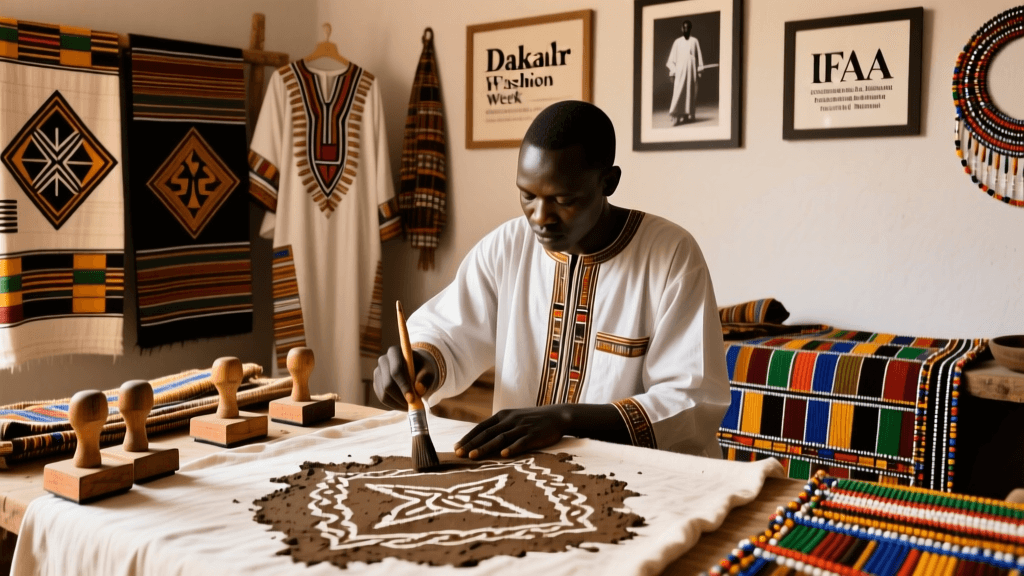
- Block-resist: Used for large-scale motifs like the “motsoalle” (friendship knot); requires wooden blocks weighing 4.2–5.7 kg with carved grooves 1.8 mm deep
- Stitch-resist: Employed for ceremonial garments; involves hand-sewing with waxed cotton thread (12-ply, 32 tex) before dye immersion
- Wax-resist (rare): Reserved for royal commissions; uses beeswax blended with Sclerocarya birrea resin at 7:3 ratio, melted at 63°C
Weaving Foundations and Fabric Specifications
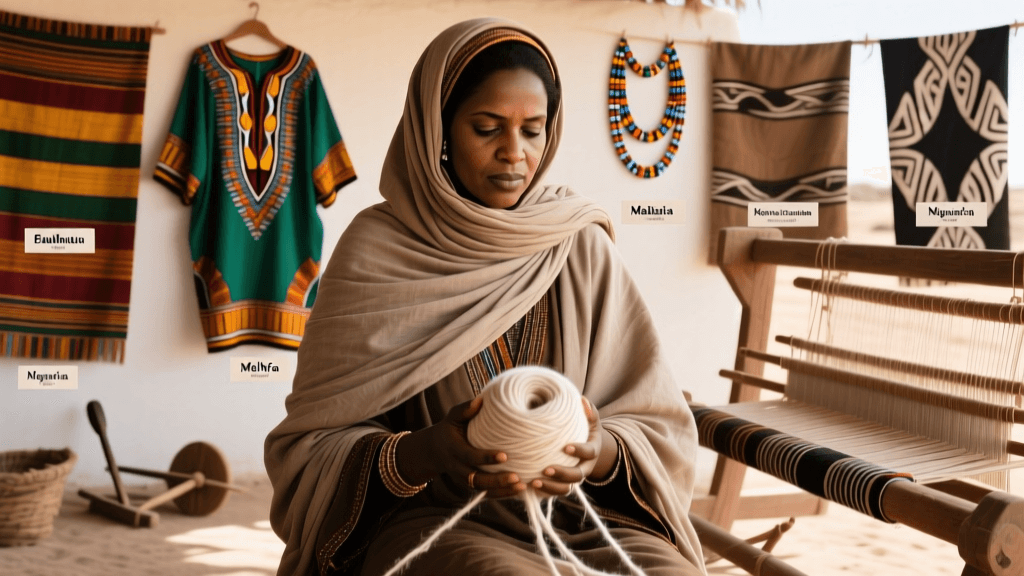
Though Shweshwe is printed—not woven—it begins as a plain-weave cotton substrate manufactured exclusively at the Da Gama Textiles mill in Zwolle, Netherlands, under license from South Africa’s Springbok Textiles. The base cloth meets strict dimensional criteria: 148 g/m² areal density, 92 ± 2 warp ends per cm, and 46 ± 1 weft picks per cm. Warp yarns are spun to 29.5 Ne (English count), while weft yarns run at 27.8 Ne—ensuring balanced shrinkage during dye fixation. Post-printing, the fabric undergoes caustic soda scouring at 98°C for precisely 8 minutes, followed by hot-water rinsing at 72°C to remove unbound resist. These parameters are codified in SANS 10400-X:2021, the South African National Standard for heritage textile processing.
Motif Symbolism and Contextual Usage
Each pattern carries layered meaning tied to Sotho cosmology. The “lebollo” (initiation) motif features interlocking triangles representing the three stages of male rite-of-passage: separation, liminality, and reintegration. The “thaba” (mountain) design—comprising stacked chevrons—references the Maloti Mountains and signals resilience. In contrast, the “mohlakeng” (waterfall) motif, rendered in fine parallel lines, denotes fertility and ancestral blessing. These symbols are never arbitrarily combined: a wedding garment will integrate “lebollo” and “thaba” but exclude “mohlakeng”, which is reserved for childbirth rituals. The Iziko Museums of South Africa’s 2022 exhibition Threads of Sovereignty catalogued over 1,200 documented motif permutations across 23 regional variants.
Institutional Stewardship and Contemporary Revival
Three institutions anchor Shweshwe’s preservation and innovation. The National Museum of Lesotho in Maseru maintains a climate-controlled archive housing 347 original copper rollers dating from 1872–1958, each annotated with maker marks and village of commission. In Johannesburg, the Bag Factory Artists’ Studios hosts an annual residency where designers like Thandiwe Msebenzi collaborate with master printers from the Nkandla region to reinterpret motifs using digital embroidery overlays. Meanwhile, the Cape Town Fashion Council mandates that all garments labeled “Authentic Shweshwe” must carry a holographic certification tag verifying origin, dye batch number, and adherence to the 2019 Shweshwe Protection Act—which stipulates minimum 85% cotton content and prohibits polyester blends.
Contemporary designers rigorously uphold technical fidelity. At the 2023 Durban International Fashion Week, designer Thato Mokoena presented a collection using only Shweshwe dyed with fermented indigo from Quthing—each bolt tested for indigotin concentration (minimum 1.65%) and heavy metal residue (<0.02 ppm lead). Her “Tšepiso” line featured jackets cut with 17° bias seams to exploit the fabric’s natural drape, requiring 2.4 meters of cloth per garment—18% more than conventional tailoring due to grain alignment constraints.
The resurgence extends beyond aesthetics. A 2022 study by the Southern African Development Community (SADC) Centre for Textile Innovation confirmed that communities engaged in Shweshwe production saw a 31% increase in household income compared to non-participating villages—attributed to value-added services like motif registration and certified dye training.
“The geometry isn’t decoration—it’s syntax. Every angle, every repeat interval, encodes land tenure rights, marriage alliances, and seasonal knowledge passed through maternal lines.” — Dr. Nomsa Dlamini, Senior Curator, Iziko Museums of South Africa, 2021
Material Science and Environmental Protocols
Modern production integrates sustainability without compromising authenticity. Da Gama Textiles now sources 100% BCI-certified cotton, reducing water use by 37% versus conventional methods. Wastewater from scouring and dye baths is treated onsite using constructed wetlands planted with Phragmites australis, achieving 94.6% removal of residual indigo and 89.3% reduction in chemical oxygen demand (COD). All resist paste components are biodegradable within 72 hours under aerobic soil conditions, verified by the Council for Scientific and Industrial Research (CSIR) in Pretoria.
Production Timeline and Quality Benchmarks
- Base cloth weaving: 14 hours per 100-meter roll
- Resist application: 22 minutes per meter at 18 m/min roller speed
- Dye immersion: 3 cycles × 18 minutes each, with 12-minute air oxidation intervals
- Final wash and calendaring: 9 minutes at 135°C and 4.2 bar pressure
- Quality inspection: 100% visual check under 3,200K LED lighting; maximum 0.8 defects per square meter
These benchmarks ensure consistency across generations. In Qwaqwa, artisans still test new dye lots by immersing a 5 cm × 5 cm swatch for precisely 18 minutes—then comparing against the museum’s 1947 reference standard under north-facing daylight at 10:15 a.m. local time. Such rigor preserves not just technique, but epistemology: the understanding that cloth is both artifact and archive.
| Metric | Traditional Standard | 2023 Industry Average |
|---|---|---|
| Indigo concentration (g/L) | 1.8–2.3 | 2.05 ± 0.11 |
| Roller engraving depth (mm) | 0.12–0.15 | 0.137 ± 0.009 |
| Fabric shrinkage (%) | 4.2–5.8 | 4.9 ± 0.4 |
The fabric’s endurance lies in its refusal to be static. When worn today by students at the University of the Western Cape or displayed in the permanent collection of the Zeitz MOCAA in Cape Town, Shweshwe continues its quiet work: mapping memory, asserting sovereignty, and translating soil, sweat, and starlight into wearable history.