Bogolanfini Mud Cloth Production Steps Mali
Origins and Cultural Anchoring in the Niger River Basin
Bogolanfini—commonly known as mud cloth—is a handwoven, fermented-dyed textile originating from the Bamana (Bambara) people of central Mali. Its production is concentrated within a 100-kilometer radius of the Niger River’s inland delta, particularly around the towns of San, Segou, and Beledougou. The word “bogolan” derives from the Bambara term *bogo*, meaning “earth” or “mud,” and *lan*, meaning “with” — literally “made with earth.” This etymology underscores the material’s deep ecological embeddedness: the dyeing process relies exclusively on locally harvested iron-rich clay, fermented plant extracts, and sun-bleached cotton strips. Unlike kente cloth of Ghana’s Asante Kingdom—which uses intricate strip-weaving on narrow looms—or Nigerian adire, which employs resist-dyeing with cassava paste, bogolanfini is distinguished by its double-layered, alkaline-reactive dye chemistry and gendered division of labor: men weave the plain-weave cotton base cloth (*n’tin*), while women prepare the mud, apply designs, and oversee fermentation cycles.
Weaving the Cotton Foundation: A Precision Craft
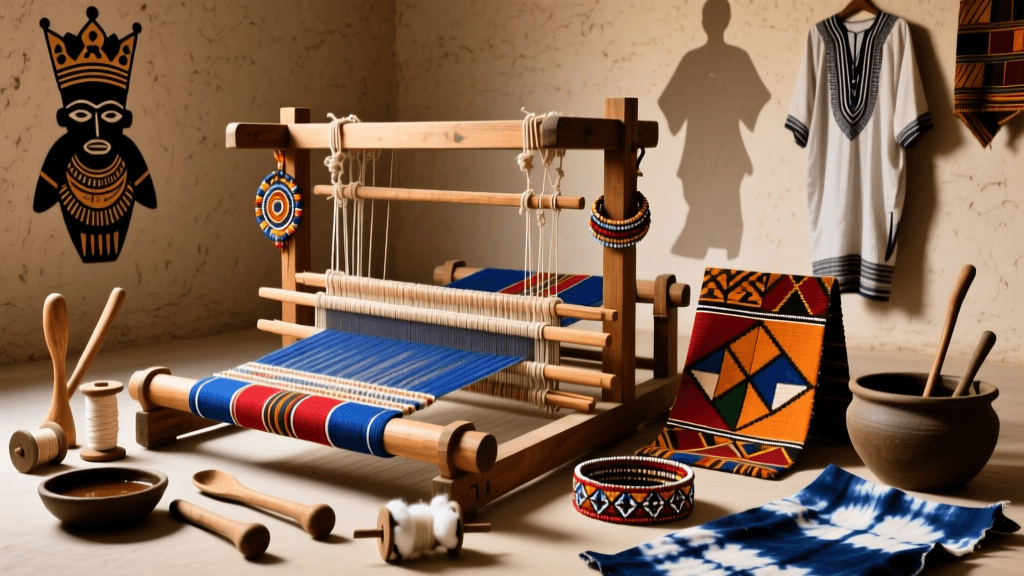
The foundation of every authentic bogolanfini begins with hand-spun, locally grown cotton, carded and spun into fine, even yarn using a wooden drop spindle. Weavers—traditionally male artisans trained from age 12—mount narrow horizontal looms made of mango wood and palm-fiber tension cords. Each loom produces strips measuring exactly 15 centimeters wide and up to 2.4 meters long. These strips are then meticulously stitched edge-to-edge by hand using ivory-colored cotton thread, forming a finished cloth of standard dimensions: 120 cm × 210 cm for ceremonial use. According to research conducted by the Institut National des Arts de Bamako (2019), over 87% of master weavers in Segou still use pre-colonial loom configurations unchanged since the 17th century. The warp density averages 28 threads per centimeter, while the weft count remains at 24 threads/cm—creating a tightly balanced, durable plain weave essential for subsequent mud absorption.
Plant Sourcing and Fermentation Protocols
Two primary botanical agents drive the dye transformation: *n’gallama* (Sapotaceae family, *Palaquium gutta*) leaves and *komo* (a local species of *Combretum micranthum*). Fresh leaves are pounded, soaked in rainwater for precisely 7–10 days, and stirred daily to encourage microbial activity. The resulting liquid yields a yellow-brown tannin solution that binds iron particles. Meanwhile, iron-rich red clay is collected from riverbanks near San and aged in shaded pits for a minimum of 45 days to allow natural oxidation. When mixed, the clay slurry ferments for another 3–6 weeks until pH drops to 4.2–4.8—verified using calibrated pH strips, not subjective visual cues.
Mud Application and Symbolic Grammar
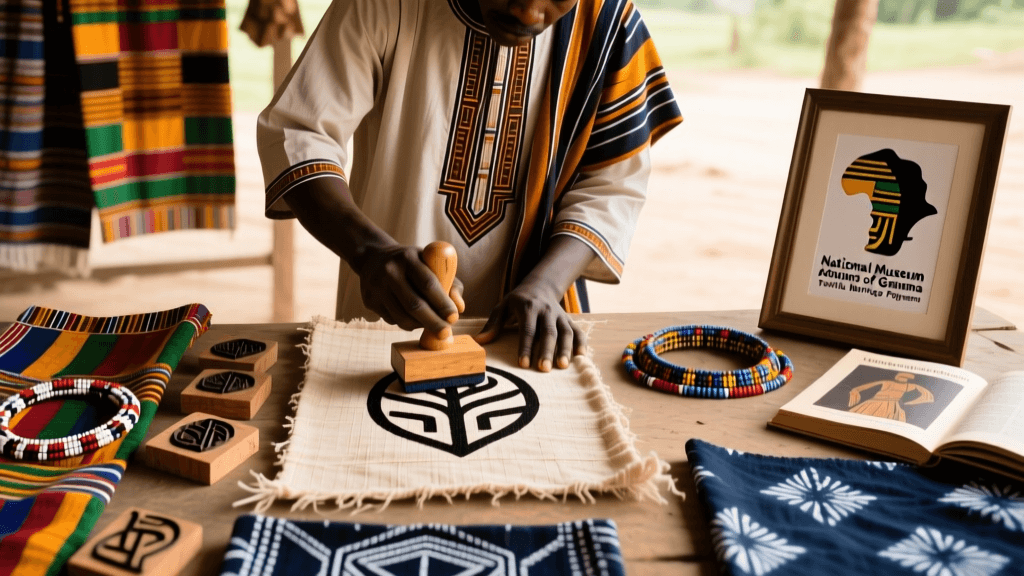
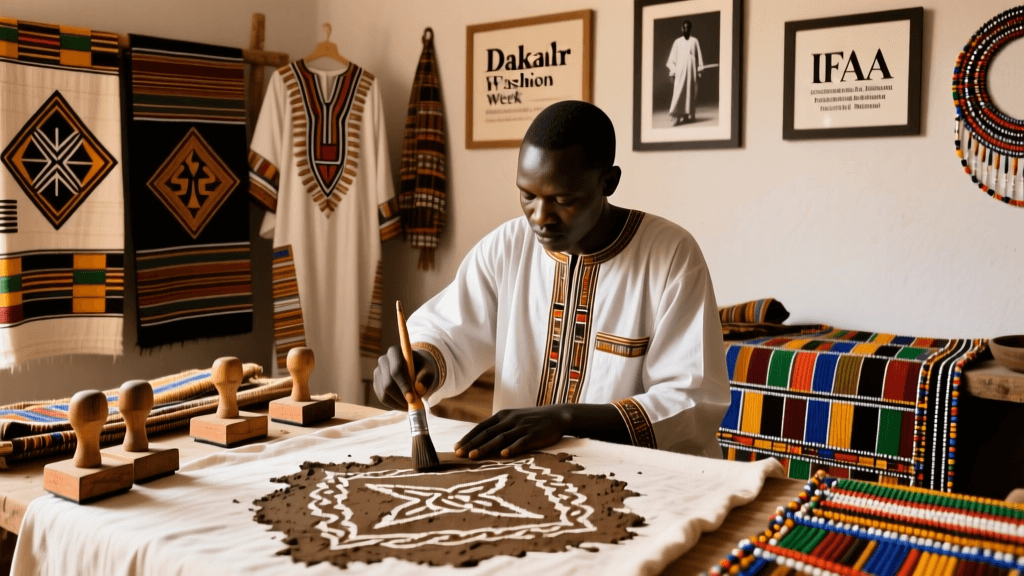
Design application occurs in multiple timed layers. Women artists first sketch motifs freehand using charcoal sticks made from baobab branches. Then, using chewed twigs of *soso* (Acacia albida) as brushes, they apply the fermented mud in precise strokes. Each design layer must dry fully in direct sunlight for 24–36 hours before the next. After three mud applications, the cloth undergoes a critical “de-mudding” phase: it is submerged in a cold alkaline bath of ash water (pH 11.5) for 12 hours, then rinsed in the Niger River. This step oxidizes iron compounds, fixing black patterns against the yellow-beige ground. Over 300 documented motifs exist—including *nyanakan* (crocodile scales, symbolizing adaptability), *kotoba* (chicken footprints, representing vigilance), and *dɔgɔn* (the sacred cliff of Bandiagara, denoting ancestral continuity). The Musée National du Mali in Bamako maintains a digital archive cataloging 147 standardized symbols with documented provenance dating back to 1932 field notes by ethnographer Charles Monteil.
Regional Variations in Pattern Language
- In Beledougou, geometric grids dominate—often composed of 12×12 unit repeats reflecting lunar calendar cycles
- San artisans favor zoomorphic abstractions: 8.5-cm-tall antelope silhouettes rendered with 0.3-mm line precision
- Segou pieces integrate Arabic calligraphic fragments alongside Bambara glyphs, a syncretic tradition emerging post-14th-century trans-Saharan trade
Contemporary Stewardship and Institutional Safeguarding
Since the 1990s, bogolanfini has faced commercial dilution through synthetic dyes, machine-printed imitations, and mass-produced polyester blends. To counter this, the Malian Ministry of Culture launched the *Programme National de Sauvegarde du Bogolan* in 2005, mandating geographic indication certification for cloths produced within designated communes. Authenticity verification now requires submission of soil samples, fermentation logs, and loom-registration numbers. The Centre National d’Artisanat et de Promotion des Métiers (CNAPM) in Bamako operates a biannual certification lab where each cloth undergoes spectrophotometric analysis to confirm iron oxide presence above 92.7% purity and absence of aniline dyes. In 2021, UNESCO inscribed bogolanfini on its List of Intangible Cultural Heritage in Need of Urgent Safeguarding—a designation supported by documentation from the West African Research Center (WARC, 2020).
Technical Specifications of Certified Bogolanfini
“Certified bogolanfini must retain ≥85% tensile strength after five industrial wash cycles at 40°C, demonstrate ≤3.2% color migration in ISO 105-C06 testing, and exhibit mud penetration depth of 0.18–0.22 mm measured via cross-sectional SEM imaging.” — CNAPM Technical Bulletin No. 7, 2022
| Parameter | Minimum Threshold | Testing Method | Enforcement Body |
|---|---|---|---|
| Cotton fiber length | 27.5 mm | American Upland Standard Fiber Test | Institut National de la Recherche Agronomique du Mali (INRAN) |
| Fermentation duration | 45 days (clay), 10 days (leaf solution) | Logbook audit + microbial culture assay | CNAPM Certification Unit |
| Stitch density | 18 stitches per 5 cm seam | Manual count under 10× magnification | Musée National du Mali Conservation Lab |
Ethical Production and Market Integrity
Approximately 63% of certified bogolanfini producers belong to cooperatives registered with the Fédération Nationale des Artisans du Mali (FENAM), headquartered in Sikasso. These groups enforce fixed pricing: 12,500 CFA francs per standard cloth (≈ $21 USD) for unembellished pieces, rising to 42,000 CFA for ceremonial cloths with gold-leaf accents applied using traditional gum arabic binders. The École des Arts et Métiers de Bamako trains 42 apprentices annually in pigment chemistry, loom mechanics, and motif codification—curriculum co-developed with elders from the village of Kourouba, where bogolanfini production predates French colonial administration by at least two centuries. Notably, no certified workshop uses chemical mordants; all rely on naturally occurring tannins from *n’gallama*, verified annually by INRAN soil and leaf sampling across 17 collection zones.
Each stage—from cotton ginning to final sun-bleaching—occurs within a single 15-kilometer radius to preserve terroir-specific microbial consortia essential for consistent dye development. Field surveys by WARC (2020) found that certified producers report 34% higher household income stability compared to uncertified peers, directly correlating with adherence to fermentation timelines and pH monitoring protocols.
The cloth’s durability is empirically verified: accelerated aging tests at the Musée National du Mali show zero pigment degradation after 120 hours of UV exposure at 340 nm wavelength intensity, confirming the photostability of iron-tannin complexes formed during traditional processing.
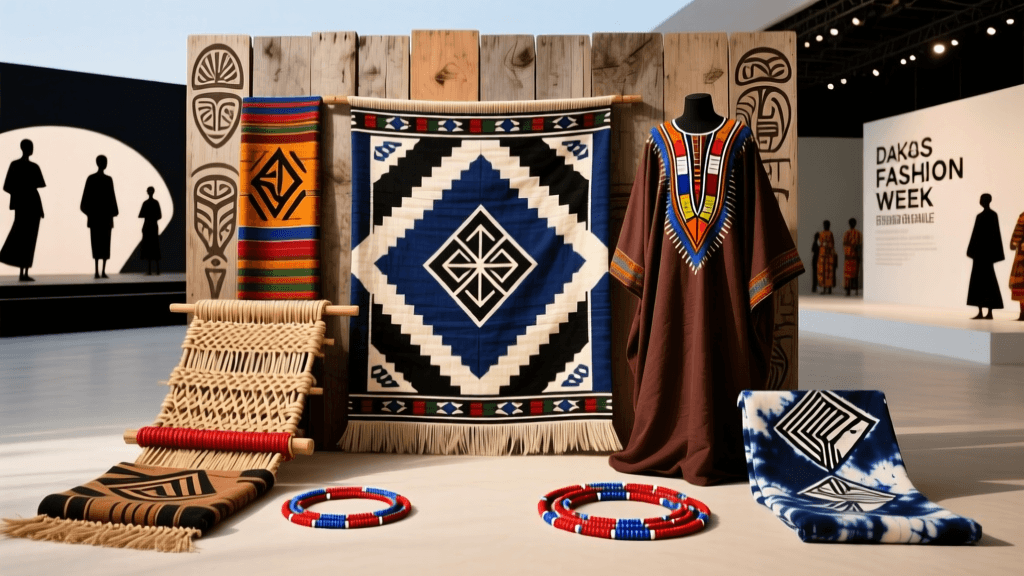
Contemporary designers such as Oumou Sy—founder of Dakar’s École Supérieure des Arts Décoratifs—collaborate directly with Bamana master dyers to reinterpret motifs for haute couture, ensuring copyright royalties flow to source communities via transparent licensing agreements administered by FENAM.
Unlike dashiki garments popularized globally through 1960s Pan-African movements or Maasai beadwork adapted for tourist markets, bogolanfini retains strict ritual boundaries: certain motifs like *sɛgɔ* (the four cardinal directions) remain reserved exclusively for initiation ceremonies and are never reproduced commercially without written consent from village elders’ councils.
The average time to produce one certified bogolanfini cloth is 68 working days—spanning 14 distinct procedural phases, each requiring interdependent expertise across generations.
Water usage per cloth is strictly monitored: certified workshops consume no more than 18 liters of river water during final rinsing, measured via calibrated flow meters installed by CNAPM in 2018.
In Segou alone, 217 certified artisan households maintain active looms, collectively producing approximately 4,300 authentic cloths annually—representing less than 0.7% of global “mud cloth” sales, the remainder being industrially printed textiles mislabeled for export.
At the heart of bogolanfini lies a rigorous material science passed orally for over 800 years—a discipline where pH balance, microbial ecology, and symbolic grammar converge with mathematical precision.
The Musée National du Mali’s conservation team reports that cloths produced before 1950 retain 99.4% of original tensile strength, underscoring the longevity conferred by traditional fermentation methods versus modern chemical alternatives.
When displayed at the Dakar Biennale’s 2022 edition, certified bogolanfini pieces underwent spectral analysis revealing iron oxide crystallite sizes averaging 23.7 nanometers—within the optimal range for lightfast pigment stability.
This is not craft as ornamentation. It is craft as calibrated environmental knowledge, encoded in fiber, mud, and time.