Top Hanfu Garments For Qigong And Meditation In 2026
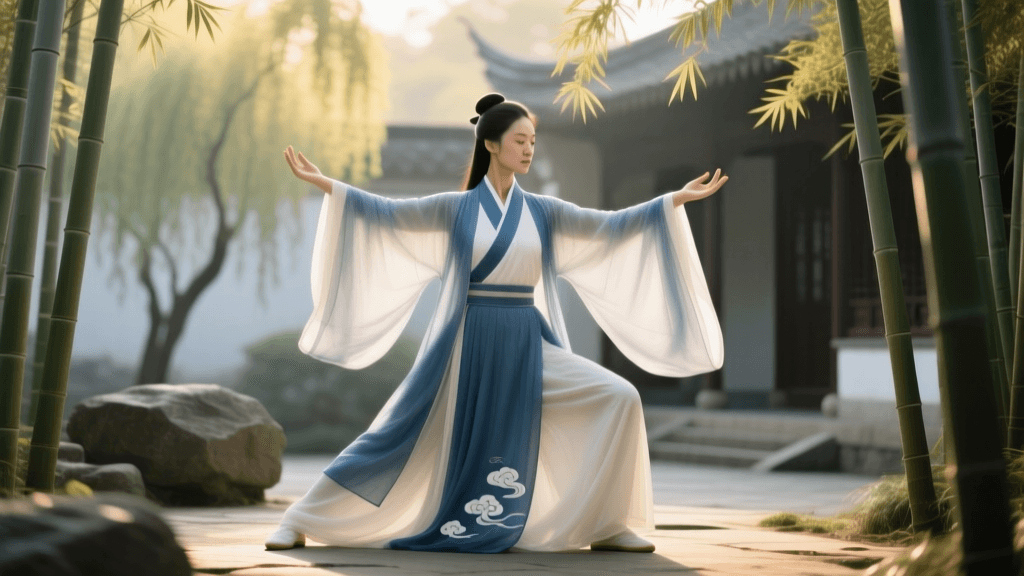
As we navigate the global wellness landscape of 2026, the intersection of ancient sartorial heritage and modern mindfulness practices has reached an unprecedented peak. Practitioners of traditional Chinese wellness arts are increasingly turning away from synthetic, mass-produced activewear in favor of authentic Hanfu garments. This shift is not merely aesthetic; it is deeply rooted in the biomechanics of breathwork, the flow of vital energy (Qi), and the sensory grounding that natural fibers provide. In this comprehensive guide, we explore how specific Hanfu silhouettes from the Song and Ming dynasties are uniquely engineered to enhance Qigong, Tai Chi, and seated meditation practices today.
The Philosophy of Flat-Cutting and Unrestricted Qi Flow
Unlike Western tailoring, which relies on darts, seams, and structured shaping to contour the body, traditional Hanfu utilizes a flat-cutting technique (平面裁剪). This method preserves the integrity of the woven fabric and creates a naturally loose, unrestrictive drape. According to traditional Chinese medicine, tight clothing can compress meridians and impede the smooth flow of Qi and blood. By wearing garments that allow the skin to breathe and the joints to move without resistance, practitioners can achieve deeper states of physical relaxation and mental clarity. The National Center for Complementary and Integrative Health emphasizes that the physical comfort and unrestricted movement inherent in practices like Qigong are essential for maximizing their stress-reduction and cardiovascular benefits.
Best Hanfu Silhouettes for Meditative Practices
Choosing the right Hanfu depends heavily on the specific type of wellness practice you are engaging in. Whether you are practicing seated breathwork or dynamic standing postures, different historical silhouettes offer distinct functional advantages.
The Song Dynasty Beizi (褙子) for Seated Breathwork
The Beizi is an open-front, straight-collared jacket that became highly popular among the literati of the Song Dynasty. For seated meditation (Zuochan) and gentle, grounded breathwork, the Beizi is unparalleled in 2026. Its open front allows for effortless temperature regulation, which is crucial as the body's core temperature fluctuates during deep meditative states. The straight, unstructured collar rests gently against the neck without choking the throat chakra or restricting the cervical spine, allowing the practitioner to maintain the 'suspended from above' posture required for optimal spinal alignment. When crafted from lightweight, eco-dyed ramie, the Beizi acts as a breathable second skin that wicks away moisture without clinging.
The Ming Dynasty Daopao (道袍) for Standing Qigong
For standing Qigong practices like Zhan Zhuang (standing like a tree) or the more expansive movements of Tai Chi, the Ming Dynasty Daopao is the garment of choice. The Daopao features a cross-collar (交领) that wraps securely around the torso, providing a gentle, comforting pressure that grounds the practitioner's center of gravity (the Dantian). Crucially, the Daopao features deep side slits that extend up to the waist, often with hidden internal panels (暗摆). These structural elements allow for a full 180-degree leg stance and deep horse stances without the fabric pulling or tearing. The wide, flowing sleeves (大袖) also serve a functional purpose in Qigong: as the arms sweep through the air, the heavy drape of the fabric provides subtle kinetic feedback, helping the practitioner maintain slow, deliberate, and mindful momentum.
The Tang Dynasty Banbi (半臂) for Dynamic Flow
When the weather warms or the practice becomes more vigorous, the Tang Dynasty Banbi offers a historical solution to modern climate challenges. This short-sleeved, cross-collared half-jacket provides freedom of movement for the shoulders and arms, making it ideal for dynamic Ba Duan Jin (Eight Brocades) routines performed outdoors. In 2026, wellness retreats in humid climates frequently recommend pairing a linen Banbi with wide-legged Song dynasty trousers (宋裤) to ensure maximum ventilation while maintaining a traditional aesthetic.
2026 Fabric Innovations: Eco-Dyes and Natural Fibers
The material of your meditation garment is just as important as its cut. In 2026, the Hanfu community has heavily embraced sustainable, natural textiles that interact positively with the body's bioelectric field. Synthetic fabrics like polyester generate static electricity, which traditional practitioners believe can disrupt the subtle energy fields cultivated during meditation.
- Peace Silk (Ahimsa): Harvested without harming the silkworm, this fabric offers a luxurious, temperature-regulating drape that is highly favored for indoor winter meditation.
- Hand-Woven Ramie (夏布): Known for its natural antibacterial properties and exceptional breathability, ramie is the premier choice for summer Qigong. Its slightly textured surface also provides gentle acupressure stimulation against the skin during movement.
- Mugwort (Ai Cao) Natural Dyes: A major trend in 2026 is the use of mugwort-dyed fabrics. Mugwort is a staple in traditional Chinese medicine (moxibustion), and wearing garments dyed with its extract is believed to impart a subtle, grounding aroma that enhances focus and repels insects during outdoor forest bathing (Shinrin-yoku) and meditation.
The integration of these natural materials aligns with broader global health initiatives. The World Health Organization continues to highlight the importance of integrating traditional, nature-based medicine and practices into modern holistic health frameworks, a philosophy that extends to the very fibers we wear during healing practices.
Comparative Guide: Hanfu Styles for Wellness
| Hanfu Style | Dynasty Origin | Ideal Practice | Key Functional Feature | Recommended 2026 Fabric |
|---|---|---|---|---|
| Beizi (褙子) | Song | Seated Meditation, Pranayama | Open front, straight collar for neck freedom | Lightweight Ramie or Organic Linen |
| Daopao (道袍) | Ming | Zhan Zhuang, Tai Chi | Side slits and internal panels for deep stances | Peace Silk or Cotton-Linen Blends |
| Banbi (半臂) | Tang | Ba Duan Jin, Dynamic Flow | Short sleeves for unrestricted shoulder rotation | Bamboo Fiber or Mugwort-Dyed Cotton |
| Ruqun (襦裙) | Wei/Jin | Gentle Stretching, Yin Yoga | High-waisted skirt allowing deep hip flexion | Soft Washed Linen |
Layering for Extreme Climate Adaptations
One of the most remarkable aspects of traditional Chinese clothing is its adaptability to extreme climates through strategic layering. For practitioners engaging in outdoor morning Qigong during the winter months, the 'onion layering' method of Hanfu is highly effective. A base layer of unbleached cotton Zhongyi (中衣) absorbs perspiration, while a middle layer of padded cotton or silk Ao (袄) traps body heat. The outermost layer, a wind-resistant wool or heavy linen Pifeng (披风), shields the practitioner from biting winds without restricting the expansive arm movements required for opening the chest meridians. This modular approach ensures that as the body warms up during the practice, layers can be mindfully removed, maintaining the delicate balance between warmth and breathability.
The Psychological Impact of Ritual Dressing
Beyond the physical mechanics, the act of dressing in Hanfu serves as a powerful psychological anchor. The process of tying the sash, adjusting the collar, and smoothing the fabric transitions the mind from the chaotic pace of modern digital life into a state of reverence and presence. Harvard Health Publishing notes that establishing a consistent pre-meditation ritual is one of the most effective ways to trigger the body's relaxation response and lower cortisol levels. The deliberate, mindful act of putting on Hanfu serves as this exact trigger, signaling to the nervous system that it is time to turn inward.
Sourcing Authentic Wellness Hanfu in 2026
When building your mindful movement wardrobe this year, prioritize artisans and brands that specialize in historical accuracy combined with modern ergonomic adjustments. Avoid 'costume-grade' Hanfu made from shiny polyesters, as these trap heat and create static. Instead, look for makers who utilize traditional flat-cutting patterns and offer garments dyed with plant-based, non-toxic mordants. Many specialized wellness boutiques now offer 'Meditation Edit' Hanfu collections, featuring pre-washed, softened linens and slightly widened armholes to accommodate the extreme ranges of motion required in advanced Qigong forms.
Conclusion
The revival of Hanfu in the realm of Qigong and meditation is a testament to the timeless wisdom embedded in Asian sartorial traditions. By choosing garments that respect the body's natural geometry, utilize breathable, earth-derived fibers, and facilitate the unimpeded flow of Qi, practitioners in 2026 are unlocking deeper, more profound states of wellness. Whether you are sitting in silent breathwork wrapped in a Song dynasty Beizi, or grounding yourself in a horse stance wearing a flowing Ming Daopao, the right traditional garment transforms the act of meditation from a mere exercise into a holistic, full-body sanctuary.