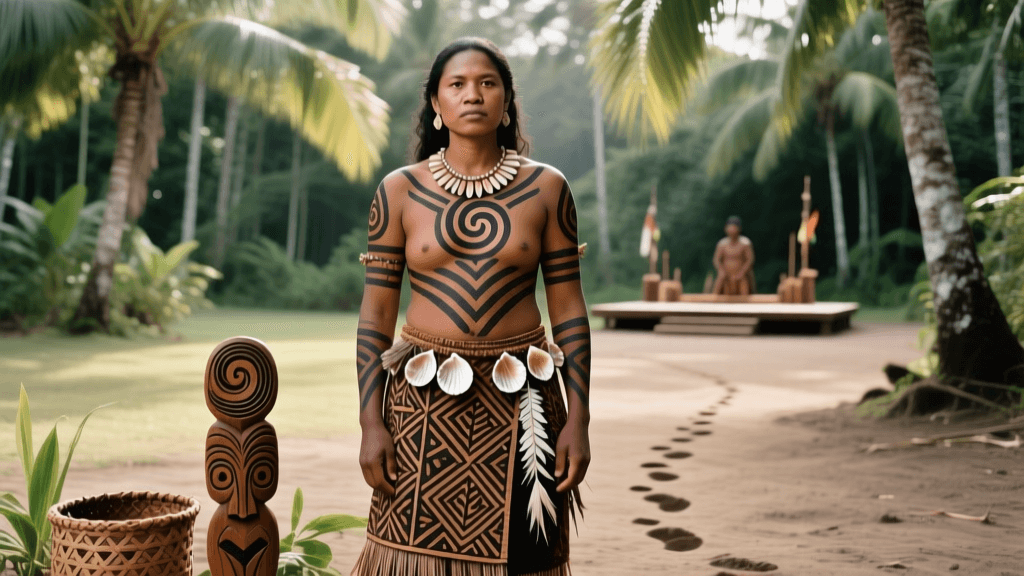
Solomon Islands Shell Money Stringing Techniques And Status Symbolism
Shell Money as Social Currency and Identity Marker
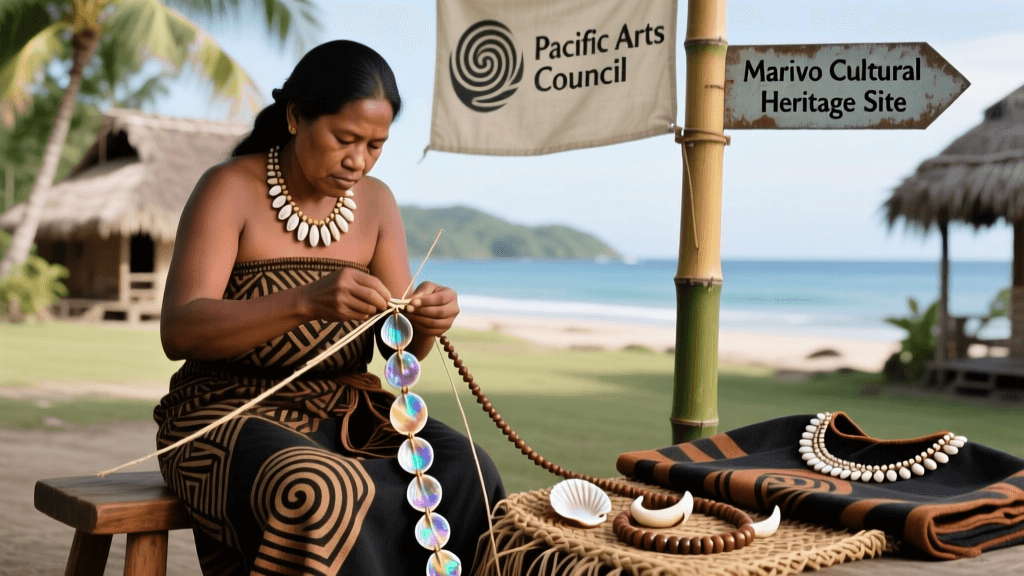
In the Solomon Islands, shell money—known locally as tambu—functions far beyond economic exchange. It serves as a living archive of lineage, marriage alliances, and chiefly authority. Unlike Western currency, tambu is not standardized by weight or denomination but by provenance, craftsmanship, and ritual validation. Each string carries ancestral memory: a 120-centimeter strand of Conus millepunctatus shells may represent three generations of bride-price negotiations in Isabel Province, while a 95-centimeter string of Nassa francisca from Malaita signals recognition of a newly installed ramo (clan elder). The value is inseparable from the act of stringing itself—a slow, meditative process requiring precise knotting techniques passed orally across decades.
Regional Variations in Shell Selection and Preparation
Shell species differ markedly across island groups, reflecting both ecological availability and cultural preference. In Guadalcanal, artisans prefer Oliva carneola, harvested during the dry season (May–October) when tides recede sufficiently to expose intertidal beds. On Rennell Island, the larger Cypraea caputserpentis is favored for ceremonial strings—each shell measuring 3.2–4.1 cm in length and drilled with obsidian-tipped bone awls. Artisans on Makira use Strombus luhuanus shells, which are polished for 4–6 hours using crushed coral and coconut oil before drilling. A single 80-shell string requires approximately 17 hours of cumulative labor, including harvesting, cleaning, drying, drilling, and threading.
Drilling Techniques Across Provinces
Drilling methods vary by geography and generational knowledge. In Central Province, elders teach youth to hold shells steady against a wooden block while rotating a hand-drill fitted with a shark-tooth bit. In contrast, Western Province practitioners use a foot-powered bow drill made from Intsia bijuga wood, achieving consistent 1.8 mm diameter holes. Drill bits are replaced every 12–15 shells to maintain precision. Failure to center the hole renders the shell unusable for high-status strings, as asymmetry violates cosmological principles of balance (ta’arua).
The Stringing Process: Ritual and Precision
Stringing begins only after shells have been ritually cleansed with saltwater and blessed by a village elder. The cord—traditionally twisted from Musa textilis fiber or wild hibiscus bark—is prepared through a three-stage process: soaking for 48 hours, beating with river stones, and sun-drying for 72 hours. Each knot is tied with the left hand only, following strict gender protocols: women prepare cord and sort shells; men perform final stringing and blessing. A full ceremonial string contains exactly 100 shells—never more, never less—as dictated by oral law codified in the Kastom Law of the Eastern Outer Islands.
Measurement Standards and Symbolic Lengths
Length carries encoded meaning. Strings measuring 65 cm signify betrothal; those at 112 cm mark a chief’s investiture; and 158 cm strings accompany funerary rites for paramount chiefs. These measurements derive from anthropometric references: 65 cm equals the span from wrist to elbow of an adult male; 112 cm matches the distance from navel to ankle; 158 cm corresponds to the height of the first recorded ramo of the Sinalagu clan, documented in 1923 field notes archived at the Solomon Islands National Museum.
- A standard bride-price string contains 80–100 shells, each drilled to 1.8 mm depth
- Shell preparation time averages 11.5 hours per 25-shell batch
- Traditional cord tensile strength: 28 kg/mm² when dried under shade for 72 hours
- Minimum viable shell thickness for ceremonial use: 2.3 mm (measured with calipers calibrated annually at the Honiara Craft Centre)
- Maximum allowable knot spacing: 1.2 cm between adjacent shells, verified using bamboo rulers marked in traditional units (lau)
Cultural Protocols Governing Use and Display
Tambu is never worn casually. During the ‘Are’are harvest festival, strings are displayed on woven pandanus mats—not hung on walls—to avoid contact with human feet, which are considered ritually impure. In Kwara’ae villages, a man may wear only one string at a time, placed horizontally across the chest, secured with a knot tied behind the right shoulder. Violating this protocol invites social censure enforced by the Kastom Court in Auki. At weddings, the bride receives strings totaling 320 shells—arranged in four strands of 80—each representing a founding ancestor of her maternal line.
“The shell is not money until it has passed through three hands: the gatherer, the driller, and the stringer. To skip one is to break the chain of life.” — Senior artisan John Fara’ao, Lata Village, Makira, cited in *Solomon Islands Cultural Heritage Survey*, Solomon Islands National Museum (2019)
Institutional Safeguarding and Contemporary Practice
The Solomon Islands National Museum in Honiara maintains the largest documented collection of historic tambu strings—over 1,240 specimens catalogued since 1975. Its conservation lab uses humidity-controlled cabinets set at 55% RH and 22°C to prevent shell desiccation. The museum partners with the University of the South Pacific’s Institute of Pacific Studies to digitize oral histories from 37 master stringers across eight provinces. Fieldwork conducted in 2021 confirmed that only 14 villages retain full intergenerational transmission of stringing protocols, down from 42 documented in 1987 (Pacific Islands Forum Secretariat, 2022).
Revival Initiatives and Youth Engagement
The Roviana Cultural Centre on New Georgia Island launched a five-year apprenticeship program in 2020, training 63 young artisans in shell identification, drilling, and knotting. Participants must complete 200 hours of supervised practice before receiving certification. Curriculum includes mapping shell beds using GPS coordinates validated by the Ministry of Environment and Conservation. Students also learn to calculate shell yield per hectare: average Conus density in monitored sites is 8.3 shells/m² during peak spawning season (August–September).
At the annual Kastom Festival held at the National Cultural Centre in Honiara, tambu strings are evaluated not by market value but by adherence to protocol—knot symmetry, cord tension, and shell alignment are judged using vernacular standards codified in the Solomon Islands Kastom Code. Judges include elders from the Malaita Council of Chiefs and curators from the Auckland War Memorial Museum, which holds 217 tambu artifacts collected between 1904 and 1972.
Contemporary artists like Mereana Tavita (Makira) integrate tambu motifs into modern kākahu-inspired garments, using laser-cut acrylic shells alongside natural ones to explore continuity and rupture. Her 2023 exhibition Threaded Ancestors at the Fiji Museum featured a 2.4-meter-long installation replicating a 1931 Rennell Island string—scaled precisely at 1:1 using archival photographs and shell measurements preserved in the British Museum’s Pacific Ethnography Collection.
Shell money remains embedded in land tenure disputes: in 2022, the High Court of Solomon Islands accepted tambu strings as legal evidence of customary land ownership in Case No. CIV 2021/047, affirming their status as juridical objects under the Customary Land Act 2019. This precedent underscores that tambu is not relic—it is active law, materialized through disciplined handwork and unwavering adherence to place-based knowledge.
| Island Group | Primary Shell Species | Average Shell Length (cm) | Standard String Length (cm) | Key Institution Supporting Transmission |
|---|---|---|---|---|
| Malaita | Nassa francisca | 2.9–3.4 | 95 | Malaita Provincial Cultural Office |
| Rennell & Bellona | Cypraea caputserpentis | 3.2–4.1 | 112 | Rennell Island Cultural Centre |
| Guadalcanal | Oliva carneola | 2.1–2.7 | 65 | Solomon Islands National Museum |
Artisans in the Shortland Islands continue to use traditional sea-urchin spine needles to thread Dentalium shells into hybrid strings combining marine and terrestrial materials—a practice documented in 1938 by ethnographer H. Ian Hogbin and recently reconfirmed during a 2023 survey led by the Solomon Islands College of Higher Education. These hybrid strings measure precisely 132 cm—symbolizing the number of known reef passages around Choiseul Island—and are presented exclusively during canoe-launching ceremonies.
Transmission occurs not in classrooms but along shorelines, where grandfathers demonstrate shell selection by sound: tapping each shell to discern internal integrity. A resonant “ping” indicates readiness; a dull “thud” means rejection. This auditory test, unrecorded in written form, remains one of the most resilient forms of embodied knowledge in the archipelago—resisting digitization, yet persisting through touch, sound, and shared silence.
The durability of tambu lies not in shell hardness but in the rigor of its making: 12 distinct procedural stages, each governed by named ancestors, seasonal markers, and kinship obligations. When a young stringer in Savo completes her first full-length ceremonial string—verified by three elders using bamboo calipers and oral recitation of lineage—she does not receive wages. She receives a name: Fala’ani, “she who holds the thread.” That naming, like the string itself, cannot be bought, sold, or replicated without consent.