Sogdian Samite Silk: 2026 Archaeological Textile Finds
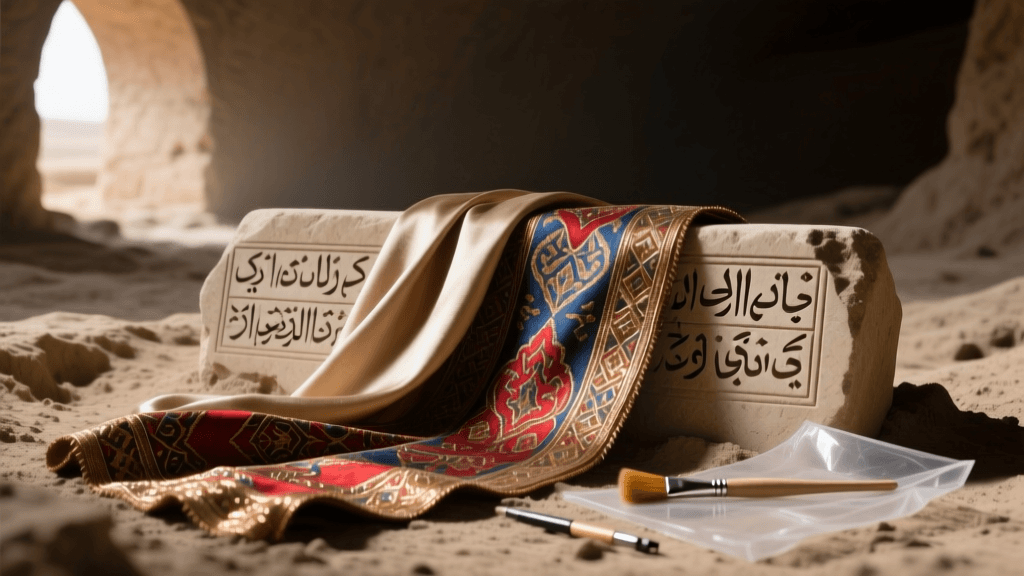
The Silk Road has long been celebrated as a vast conduit for spices, precious metals, and philosophical exchange, but its most enduring and intimate legacy lies in its textiles. As we navigate the archaeological landscape of 2026, a specific subtopic has captivated historians, weavers, and conservators alike: the exchange and evolution of Sogdian samite silk. The Sogdians, an ancient Eastern Iranian people who acted as the primary middlemen of the Silk Road, were instrumental in blending Sasanian, Byzantine, and Chinese textile traditions. Today, cutting-edge archaeological finds and non-invasive scanning technologies are shedding unprecedented light on how these luxurious fabrics were produced, traded, and preserved in the arid climates of Central Asia.
Understanding Samite: The Weft-Faced Compound Twill
To appreciate the 2026 archaeological breakthroughs, one must first understand the structural complexity of samite. Derived from the Greek word hexamiton (meaning six threads), samite is a weft-faced compound twill. Unlike the warp-faced silks traditionally produced in Han Dynasty China, which relied on the warp threads to create the surface pattern, samite utilizes multiple weft threads to form intricate, often polychrome designs. This technique allowed for heavier, more durable fabrics with a rich, lustrous surface that was highly prized by royalty and elites across Eurasia.
The Sogdian merchants did not merely transport Chinese silk to the West; they actively facilitated the cross-pollination of weaving technologies. Chinese weavers in regions like Sichuan and the Tarim Basin adapted their traditional draw-looms to accommodate the weft-faced structures demanded by Western markets. This synthesis resulted in unique hybrid textiles that feature Chinese motifs—such as dragons and lotus flowers—woven in the Sasanian-inspired roundel patterns characteristic of Sogdian aesthetic preferences.
2026 Breakthroughs: Non-Invasive Textile Scanning at Astana
The Astana Cemetery in the Turfan Depression of Xinjiang has been a treasure trove for Silk Road textiles since its initial excavations. However, the fragile nature of these ancient silks has historically limited the depth of material analysis. In 2026, the deployment of advanced Macro-X-ray Fluorescence (Macro-XRF) and high-resolution Multispectral Imaging (MSI) has revolutionized our understanding of these artifacts without requiring destructive sampling.
According to recent reports from the China National Silk Museum, 2026 field studies utilizing portable MSI units have successfully mapped the faded dye profiles of excavated Sogdian samite fragments. Conservators can now identify trace elements of organic dyes that have been invisible to the naked eye for over a millennium. For instance, what was once presumed to be a uniform, faded brown on a 7th-century samite roundel was revealed through MSI to be a complex interplay of madder root (red) and weld (yellow), originally producing a vibrant, color-fast orange that signified high social status among Sogdian nobility.
Comparative Dye Analysis: Ancient vs. 2026 Reproductions
For modern textile artists and academic researchers attempting to reproduce these historical masterpieces, understanding the exact chemical composition of ancient dyes is paramount. The table below outlines the primary dyes identified in recent Silk Road samite finds and the modern, historically accurate methods used to reproduce them in 2026.
| Dye Source | Historical Application & Origin | 2026 Reproduction Method & Mordanting |
|---|---|---|
| Madder Root (Rubia tinctorum) | Primary red dye; widely traded from Central Asia to China. | Alum mordant with a calcium carbonate buffer to achieve deep, lightfast crimson. |
| Indigo (Indigofera tinctoria) | Vat dye used for deep blues; required complex fermentation vats. | Organic fructose vat reduction, maintaining an alkaline pH of 10.5 for optimal silk uptake. |
| Safflower (Carthamus tinctorus) | Yielded brilliant, fugitive pinks and reds for luxury court garments. | Alkaline extraction followed by citric acid precipitation; requires UV-protective storage. |
| Weld (Reseda luteola) | Primary yellow dye; often over-dyed with indigo to create Sogdian greens. | Alum and cream of tartar mordant; heat extraction kept below 80°C to preserve luteolin. |
Practical Guide for Modern Textile Conservators and Weavers
The intersection of ancient archaeology and modern technology offers actionable pathways for conservators and weavers in 2026. If you are working in textile preservation or historical reproduction, consider integrating the following methodologies into your practice:
1. Spectrophotometric Color Matching
When reproducing the exact hues of excavated samite, visual matching is insufficient due to the metameric effects of museum lighting. In 2026, conservators rely on benchtop spectrophotometers, such as the X-Rite Ci7800 series, to measure the exact reflectance curves of fragile textiles. By utilizing these devices, weavers can formulate precise dye recipes that match the original, unfaded colors of the silk, rather than merely copying the degraded tones seen in the archaeological record.
2. Digital Jacquard Loom Programming
Recreating the weft-faced compound twill structure of samite by hand is a monumental task that can take months for a single yard of fabric. Modern weavers are now utilizing digital jacquard looms equipped with specialized point-paper drafting software. By inputting the structural data gathered from 2026 micro-CT scans of ancient thread intersections, weavers can program the loom to replicate the exact bind points and float lengths of Sogdian samite, achieving a drape and weight that perfectly mirrors the historical artifacts.
3. Environmental Control for Fugitive Dyes
Silk Road textiles dyed with safflower are notoriously fugitive, meaning they fade rapidly when exposed to light. For institutions displaying these 2026 cataloged finds, strict environmental controls are non-negotiable. Illumination must be capped at 50 lux, utilizing LED fixtures with zero UV emission. Furthermore, relative humidity should be maintained strictly between 45% and 55% to prevent the silk fibroin from becoming brittle or fostering micro-mold growth.
Where to View Silk Road Textiles in 2026
For enthusiasts, students, and researchers looking to study these magnificent textile exchanges in person, 2026 offers several unparalleled exhibition opportunities. The UNESCO Silk Roads Programme has heavily supported the digitization and global touring of Central Asian artifacts this year. The China National Silk Museum in Hangzhou continues to host the most comprehensive permanent collection of Turfan textiles, featuring newly restored samite roundels that highlight the Sino-Sogdian design synthesis.
Additionally, the Metropolitan Museum of Art in New York provides extensive resources and rotating displays focused on the Heilbrunn Timeline of Art History, contextualizing how these textile exchanges influenced global fashion and trade routes. Studying these pieces in person allows one to appreciate the sheer technical mastery required to weave multiple weft colors into a cohesive, shimmering narrative of cross-cultural exchange.
Conclusion
The study of Sogdian samite silk is a testament to the deeply interconnected nature of the ancient world. As 2026 archaeological technologies continue to peel back the layers of time, we are reminded that the Silk Road was not merely a route for commerce, but a vibrant corridor of artistic and technological innovation. By combining rigorous archaeological science with traditional weaving practices, we ensure that the brilliant colors and complex structures of these ancient textiles continue to inspire and educate future generations.