Preserving Silk Road Samite: 2026 Archaeological Textile Guide
The Legacy of Sogdian Samite on the Silk Road
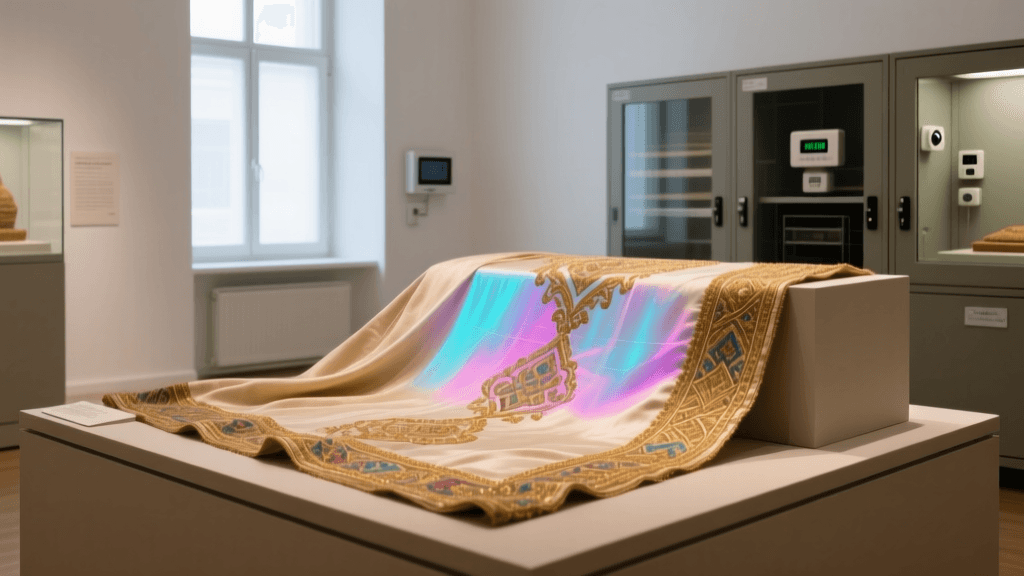
The Silk Road was not merely a conduit for physical goods, but a vibrant artery of technological, artistic, and cultural exchange that forever altered global textile history. Among the most significant archaeological finds along these ancient trade routes are the Sogdian samite textiles—luxurious weft-faced compound twills that showcase the incredible synthesis of Persian, Central Asian, and Chinese weaving traditions. Excavated primarily from the arid environments of the Astana cemetery in Turpan and the hidden libraries of the Mogao Caves in Dunhuang, these textiles offer a tangible link to the merchant networks of the first millennium. As of 2026, the study and preservation of these fragile archaeological finds have entered a new era, driven by advanced digital imaging and highly specialized micro-climate conservation techniques. According to the UNESCO Silk Roads Programme, understanding the materiality of these exchanges is vital for piecing together the socio-economic fabrics of ancient Eurasia. For museum curators, textile conservators, and serious collectors of historical replicas, mastering the 2026 protocols for handling, analyzing, and storing these complex weave structures is paramount.
2026 Breakthroughs in Archaeological Textile Imaging
One of the greatest challenges in studying Silk Road textiles is that centuries of burial, even in arid climates, severely degrade the organic dyes and protein fibers. What appears to the naked eye as a monochromatic, brownish fragment of silk often hides a vibrant, complex pattern of roundels, confronting animals, and floral motifs. In 2026, the standard for non-invasive textile analysis relies heavily on multispectral and hyperspectral imaging. Modern conservation labs now utilize 400-megapixel medium format camera systems equipped with motorized filter wheels that capture data across ultraviolet, visible, and near-infrared spectrums. This technology allows researchers to map the chemical signatures of faded organic dyes—such as madder root (Rubia tinctorum) for reds, and Japanese indigo for blues—without extracting physical samples.
Mapping Weft and Warp Tensions
Beyond dye identification, 2026's high-resolution photogrammetry enables conservators to create 3D topographical maps of the textile surface. This is particularly crucial for Sogdian samite, where the weft threads completely conceal the warp binders. By analyzing the micro-tensions and structural distortions in the weave, conservators can determine how the fabric was originally tailored, draped, or subjected to post-mortem stress in the tomb. This digital twin technology ensures that even if the physical artifact continues to degrade, its exact structural data is preserved for future academic study and virtual exhibition.
Actionable Preservation: Climate Control for Ancient Silks
Silk is a protein fiber (fibroin) that is highly susceptible to hydrolysis, photodegradation, and biological attack. For institutions and private collectors housing genuine Silk Road fragments or high-fidelity museum replicas, maintaining a strict micro-climate is non-negotiable. The 2026 consensus among textile conservators dictates a stable Relative Humidity (RH) of 50% (± 3%) and a temperature of 18°C (± 2°C). Fluctuations in humidity are far more destructive than the absolute numbers, as they cause the hygroscopic silk fibers to constantly swell and contract, leading to mechanical fatigue and shattering of the yarns.
Top 2026 Micro-Climate Display and Storage Systems
Investing in the right environmental control technology is critical. Below is a comparison of the leading archival climate control systems utilized by heritage institutions in 2026:
| System Model | Target Audience | RH Precision | 2026 Est. Cost |
|---|---|---|---|
| Preservatech Miniclima Series 5 | Small to Mid-Size Museums | ± 2% RH | $4,850 USD |
| Zephyr Archival Micro-Case Pro | Private Collectors / Galleries | ± 4% RH | $2,100 USD |
| ClimateGuard Silica-Gel Cassettes | Budget Storage / Transit | Passive Buffering | $140 USD / set |
For sealed display cases, the Preservatech Miniclima Series 5 remains the gold standard in 2026, utilizing a desiccant wheel and ultrasonic humidification to maintain flawless stability without introducing liquid water into the display environment. For transit or budget-conscious storage, pre-conditioned silica gel cassettes must be monitored via Bluetooth-enabled dataloggers to ensure the buffering capacity has not been exhausted.
Storage and Handling Protocols for Warp and Weft Silks
The physical storage methodology must be adapted to the specific weave structure of the Silk Road textile. Han dynasty silks, which are typically warp-faced, possess a different drape and structural integrity compared to the heavier, weft-faced Sogdian samites.
Rolling vs. Flat Storage
Whenever possible, archaeological textiles should be stored flat to prevent gravity-induced stress on weakened fibers. However, when dealing with larger garments or lengthy replica banners, rolling is the preferred method. In 2026, conservators utilize acid-free, unbuffered tissue paper to interleave the folds, preventing dye transfer and cushioning the weave. The textile is then rolled around an archival-grade polypropylene tube, padded with Ethafoam, and wrapped in Tyvek to protect against dust and light exposure. It is critical to roll the textile with the warp threads parallel to the tube to minimize structural distortion.
The Glove Debate: Nitrile vs. Cotton
While white cotton gloves were the historical standard for handling museum textiles, the 2026 conservation guidelines strongly advocate for powder-free nitrile gloves when handling fragile, excavated silks. Cotton fibers can easily snag on the rough, degraded edges of ancient samite or catch on exposed metallic threads (such as gold-wrapped silk). Nitrile provides a smooth, snag-free barrier while protecting the textile from the acidic oils and salts present in human sweat.
Dye Analysis and Chemical Stabilization
The vibrant colors of Silk Road textiles were achieved through complex mordanting processes using alum and iron. Over centuries, iron mordants can catalyze the oxidation of the silk protein, leading to 'black rot' where the dark-colored areas of the fabric literally disintegrate into dust. Modern 2026 stabilization techniques involve the application of nano-cellulose consolidants and specialized amino-acid treatments that chelate the rogue metal ions without altering the visual appearance or the hand-feel of the textile. Non-invasive X-ray Fluorescence (XRF) scanning is routinely performed prior to any chemical intervention to map the exact distribution of metallic mordants across the fabric surface, allowing conservators to target only the most at-risk zones.
Sourcing and Verifying Silk Road Textile Replicas
Because genuine archaeological fragments are incredibly rare and strictly regulated by international heritage laws, most educational institutions and cultural centers rely on high-fidelity replicas. When sourcing replicas of Sogdian samite or Han warp-silks, it is essential to verify the weaving technique. Many commercial 'brocades' are actually Jacquard-woven imitations that lack the structural integrity of true compound twills. For academic study and high-level exhibition, institutions frequently collaborate with specialized heritage weavers who utilize traditional draw-looms to recreate the exact thread counts and weave structures of the originals. The International Dunhuang Project (IDP) provides an invaluable, freely accessible digital database where researchers can cross-reference high-resolution scans of original Dunhuang textiles to verify the accuracy of modern replicas.
Conclusion
The preservation of Silk Road textiles is a multidisciplinary endeavor that bridges ancient history with cutting-edge 2026 materials science. From the bustling Sogdian markets of antiquity to the climate-controlled vaults of modern museums, these textiles remain a testament to human ingenuity and cross-cultural exchange. By adhering to strict environmental controls, utilizing multispectral imaging, and following rigorous handling protocols, we ensure that the vibrant legacy of the Silk Road continues to inspire and educate future generations. For further reading on the historical context of these trade routes, The Metropolitan Museum of Art's Heilbrunn Timeline of Art History offers exceptional essays on the material culture of the Silk Road.