Silk Road Samite Textiles: 2026 Archaeological Reconstructions
The Resurgence of Sogdian Samite in 2026
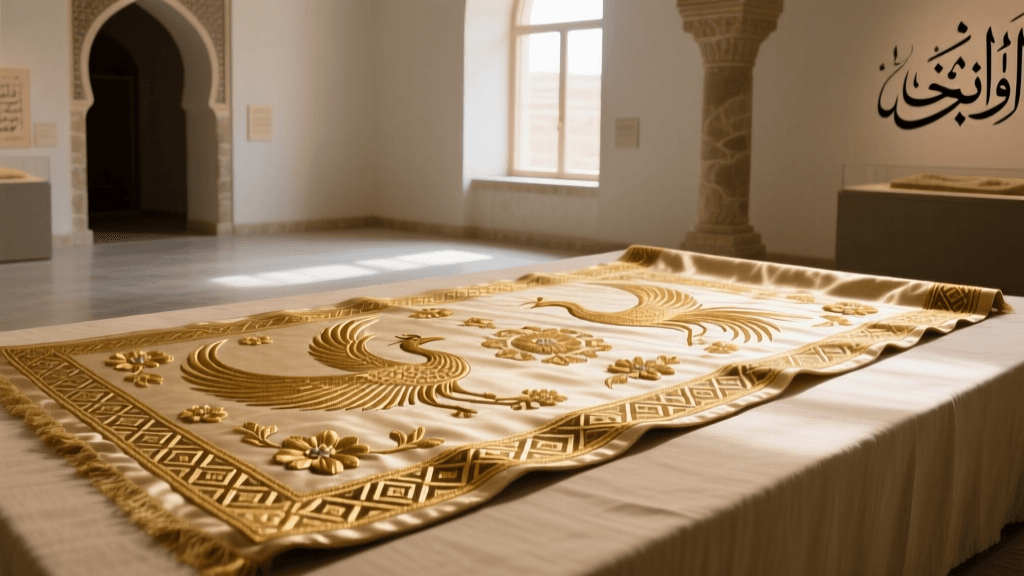
The Silk Road was never merely a conduit for the exchange of finished goods; it was a vibrant highway of technological and cultural cross-pollination. Among the most fascinating artifacts to emerge from this ancient network are the Sogdian samite textiles. In 2026, a renaissance in archaeological textile reconstruction has brought these ancient masterpieces back to life. Thanks to advanced digital loom mapping and renewed international collaborations, modern artisans and museums are now producing historically accurate replicas of these complex weft-faced compound twills. For collectors, historians, and enthusiasts of Asian traditions, understanding the 2026 landscape of Silk Road textile reconstructions offers a unique window into the past and a tangible connection to ancient craftsmanship.
Archaeological Breakthroughs: The Astana and Dunhuang Finds
The foundation of the modern samite reconstruction movement lies in the remarkably preserved textiles excavated from the Astana Cemetery in Turfan and the Mogao Caves in Dunhuang. The hyper-arid climate of the Tarim Basin acted as a natural desiccant, preserving organic materials that would have otherwise perished. According to research highlighted by UNESCO's Silk Roads Programme, the Sogdians—an ancient Iranian people who dominated the commercial networks of Central Asia—were not just merchants but master weavers who adapted Chinese silk technology to suit their own aesthetic and structural preferences.
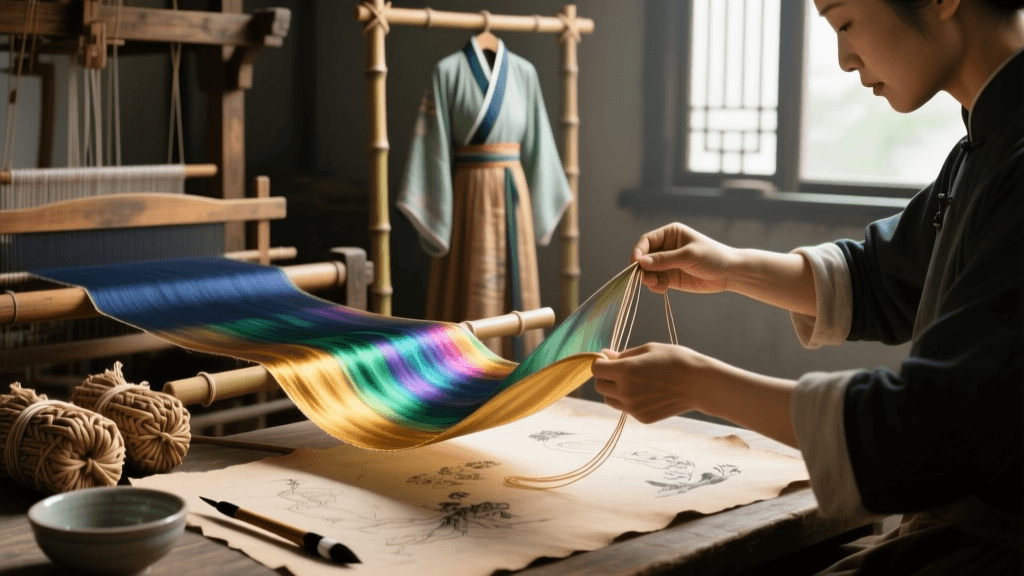
Recent 2026 archaeological analyses have utilized multispectral imaging and micro-CT scanning to map the exact thread counts, twist directions, and dye compositions of the Astana fragments. These technological leaps have allowed the China National Silk Museum and partnering institutions to reverse-engineer the precise mechanics of the ancient drawlooms used to create these textiles. The result is a new generation of museum-quality replicas that mirror the drape, weight, and luminous sheen of the 7th-century originals.
Decoding the Weave: Warp-Faced vs. Weft-Faced Compound Twill
To appreciate the significance of Sogdian samite, one must understand the fundamental shift in weaving technology it represents. Traditional early Han Dynasty silks were predominantly warp-faced, meaning the longitudinal threads (warp) dominated the surface of the fabric, dictating both its color and pattern. The Sogdians, however, popularized samite—a weft-faced compound twill. In this structure, the horizontal threads (weft) are brought to the surface to create the pattern, while the warp remains hidden, serving only as a structural skeleton.
This technical distinction is beautifully detailed in the Metropolitan Museum of Art's Heilbrunn Timeline of Art History, which notes that the weft-faced structure allowed for much denser, more intricate, and heavily stylized patterns. The hidden warp also meant that multiple colored wefts could be used without the visual interference of the warp threads, resulting in the bold, high-contrast designs characteristic of Sogdian art.
Comparison Chart: Traditional Han Silk vs. Sogdian Samite
| Feature | Traditional Han Silk (Warp-Faced) | Sogdian Samite (Weft-Faced) |
|---|---|---|
| Weave Structure | Warp-faced compound tabby or twill | Weft-faced compound twill (Samite) |
| Visual Dominance | Warp threads dictate color and pattern | Weft threads dictate color and pattern |
| Pattern Complexity | Geometric, linear, and repeating motifs | Large-scale, curvilinear, and figurative motifs |
| Loom Technology | Treadle looms with pattern rods | Complex drawlooms with pattern harnesses |
| Primary Aesthetic | Subtle, flowing, and lightweight | Heavy, opulent, and highly structured |
Iconography and Natural Dyes in 2026 Reconstructions
The visual language of Sogdian samite is instantly recognizable. The 2026 reconstruction projects have placed a heavy emphasis on replicating the iconic pearl roundels—circular borders made of pearl-like dots that enclose confronting animals such as boars, rams, or the mythical Senmurv (a dog-bird hybrid). These motifs were heavily influenced by Sasanian Persian art and were highly prized by the Tang Dynasty elite.
Beyond the weave structure, modern artisans are also reviving the ancient dyeing processes. The vibrant reds of the Astana textiles were historically derived from madder root and safflower, while the deep blues came from indigo. In 2026, master dyers in Hangzhou and Suzhou are utilizing historically accurate mordants, such as alum and iron, to achieve the exact colorfastness and subtle tonal variations found in the archaeological record. This dedication to natural dyes ensures that the replicas age gracefully, developing a patina that mimics centuries of history.
Sourcing Authentic 2026 Replicas: A Buyer’s Guide
For collectors and interior designers looking to acquire Silk Road textile reconstructions, the 2026 market offers several tiers of authenticity and pricing. It is crucial to distinguish between mass-produced jacquard imitations and true drawloom reconstructions.
- Museum-Grade Drawloom Replicas: Woven on reconstructed wooden drawlooms operated by two weavers (one managing the ground weave, the other the pattern harness). These are produced in extremely limited batches by institutions like the China National Silk Museum. Expected Cost: $1,500 to $3,500 per linear meter.
- Artisanal Jacquard Adaptations: Woven on modern electronic jacquard looms but using traditionally spun silk threads and natural dyes. These capture the visual essence and drape of samite but lack the microscopic structural anomalies of hand-drawn looms. Expected Cost: $400 to $800 per linear meter.
- Commercial Brocades: Often mislabeled as samite, these are standard warp-faced brocades featuring Sogdian-inspired prints or simple jacquard weaves. They are unsuitable for serious collectors. Expected Cost: Under $100 per meter.
When purchasing, always request a weave analysis certificate that confirms the textile is a true weft-faced compound twill. Reputable 2026 vendors will provide macro-photography of the fabric's reverse side, proving that the pattern is structurally woven into the weft rather than printed or embroidered.
Archival Care and Preservation for Silk Road Textiles
Acquiring a high-quality samite reconstruction is only the first step; preserving it requires strict adherence to modern conservation standards. The Victoria and Albert Museum's Asian textile conservation guidelines provide an excellent framework for private collectors. Because samite is a heavy, multi-layered silk, it is particularly susceptible to structural stress and environmental degradation.
Essential 2026 Preservation Protocols
- Climate Control: Maintain a stable relative humidity (RH) between 45% and 55%. Fluctuations cause the silk fibers to expand and contract, leading to micro-fractures in the weft threads. Temperature should be kept at a constant 18°C to 20°C (64°F to 68°F).
- Light Exposure: Silk is highly photosensitive. Limit exposure to natural sunlight and use UV-filtering glazing if framing. Artificial lighting should not exceed 50 lux, and textiles should be rotated out of display every six months to allow the fibers to "rest" in total darkness.
- Storage Mechanics: Never fold a samite textile; the heavy weft threads will crease and eventually snap along the fold lines. Instead, roll the textile around an acid-free, archival-quality honeycomb cardboard tube. Interleave the fabric with unbleached, washed cotton muslin or acid-free tissue paper to prevent dye transfer and abrasion.
- Pest Management: Utilize passive, non-chemical pest deterrents such as sealed cedar blocks or pheromone traps in the storage environment. Avoid direct contact with mothballs or chemical pesticides, which can react with natural mordants and permanently stain the silk.
Conclusion
The 2026 resurgence of Sogdian samite reconstructions represents a triumph of archaeological science and traditional artisanship. By bridging the gap between the dusty fragments of the Astana Cemetery and the vibrant, living looms of modern master weavers, these textiles offer a profound tactile connection to the Silk Road. For the discerning collector, investing in a historically accurate, weft-faced compound twill is not merely an acquisition of luxury fabric; it is the stewardship of a complex, cross-cultural technology that once connected the empires of the ancient world.