Silk Road Fashion: Tang Hanfu & Central Asian Influences
The Silk Road: A Loom of Cross-Cultural Exchange
The historical trade routes of Asia, collectively known as the Silk Road, were not merely conduits for spices, precious metals, and raw silk. They were vibrant arteries of cultural exchange that fundamentally altered the sartorial landscape of the Asian continent. Nowhere is this cross-cultural pollination more evident than in the traditional clothing of China during the Tang Dynasty (618–907 CE) and the enduring textile traditions of the Uyghur people in the Western Regions. As merchants, diplomats, and artisans traversed the treacherous mountain passes and vast deserts connecting Chang'an to Persia and the Mediterranean, they brought with them revolutionary weaving techniques, exotic dyes, and entirely new garment silhouettes. Understanding these historical trade routes provides a profound appreciation for modern Asian traditional garments, transforming them from mere historical costumes into living testaments of global connectivity.
According to the UNESCO Silk Roads Programme, the exchange of textile technologies was one of the most significant outcomes of these ancient routes. The introduction of complex weft-faced compound twills, known as samite, from Sasanian Persia and Sogdiana into Chinese weaving centers revolutionized the luxury fabric market. Today, as the Hanfu revival movement gains global momentum, enthusiasts and historians alike are looking back to the Silk Road to accurately recreate the cosmopolitan fashion of the Tang era and the vibrant, trade-influenced textiles of Central Asia.
The Yuanlingpao: Central Asian Roots in Tang Hanfu
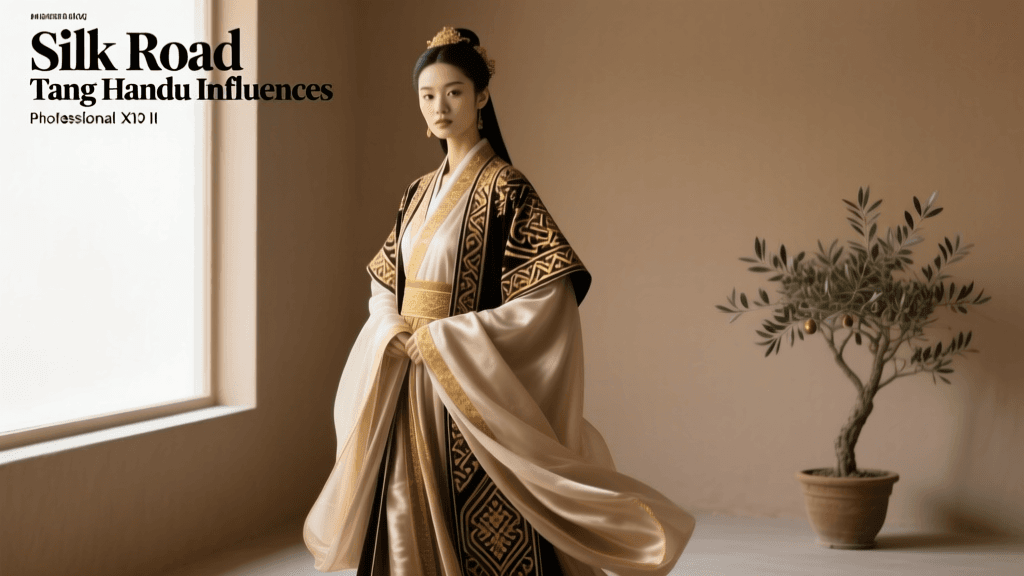
The most iconic garment to emerge from this era of cross-cultural synthesis is the yuanlingpao, or round-collar robe. While modern audiences often associate traditional Chinese clothing with the wrap-front, cross-collared ruqun or the deep sleeves of the shenyi, the yuanlingpao represents a distinct departure rooted in nomadic practicality. Originating from the Hufu (foreign clothing) of the northern and western steppe tribes, the round-collar robe was designed for horseback riding and active movement. It featured a circular neckline that fastened at the right shoulder, side slits for mobility, and was traditionally paired with a leather belt and knee-high riding boots.
During the Tang Dynasty, the capital city of Chang'an was a cosmopolitan metropolis where Sogdian merchants, Turkic guards, and Persian envoys mingled with Chinese aristocrats. The Hufu trend became wildly popular among both men and women of the Tang elite. Women, in particular, embraced the yuanlingpao as a symbol of progressive, cosmopolitan femininity, often pairing the robe with Persian-inspired striped trousers and leather boots. This blending of Central Asian tailoring with Chinese silk weaving created a unique sartorial identity that defined the golden age of the Silk Road.
Identifying Authentic Historical Motifs
When sourcing or commissioning a historically accurate Tang-style yuanlingpao, the fabric motif is just as important as the silhouette. The Silk Road introduced specific iconographic designs that became highly prized in Chinese courts. The most prominent of these is the 'pearl roundel'—a circular border of pearls enclosing facing animals such as boars, ducks, or lions. As noted by textile experts at The Metropolitan Museum of Art, these motifs were originally Sasanian and Sogdian symbols of royalty and divine power, woven into heavy silks that were traded across the Eurasian steppe. When purchasing modern replicas, look for jacquard-woven brocades featuring these specific facing-animal roundels rather than generic floral patterns, which are more characteristic of later Ming and Qing dynasties.
Uyghur Textiles: Atlas Silk and the Western Regions
While the Tang court absorbed foreign silhouettes, the oasis cities of the Tarim Basin (modern-day Xinjiang) developed their own magnificent textile traditions born from the intersection of East and West. The Uyghur Atlas silk is a masterclass in cross-cultural craftsmanship. Atlas is a vibrant, ikat-dyed silk fabric characterized by its bold, blurred geometric and floral patterns. The ikat technique—where threads are resist-dyed before weaving—has roots that trace back to ancient trade networks connecting India, Central Asia, and the Middle East.
Historically, Uyghur artisans in cities like Hotan and Kashgar utilized locally cultivated mulberry silk and natural dyes derived from walnuts, pomegranates, and indigo to create Atlas fabrics. The resulting textiles were traded along the southern branches of the Silk Road. Today, Atlas silk remains a vital component of Uyghur traditional dress, worn by women in the form of flowing dresses and by men as chapan (robes). The bold, contrasting colors of authentic Atlas silk—often featuring striking combinations of saffron yellow, emerald green, and deep crimson—serve as a visual record of the diverse botanical and mineral resources exchanged along the trade routes.
Practical Guide: Sourcing Tang-Style and Silk Road Garments
For modern collectors, historical reenactors, and cultural enthusiasts, acquiring high-quality Silk Road-inspired garments requires an understanding of tailoring, fabric selection, and market logistics. Whether you are commissioning a bespoke yuanlingpao or purchasing an off-the-rack Atlas silk robe, precision is key to achieving an authentic drape and silhouette.
Essential Measurements for the Yuanlingpao
Unlike Western tailoring, which relies heavily on darts and structured shoulders, traditional Chinese flat-cutting relies on the natural drape of the fabric. To order a custom yuanlingpao, provide your tailor with the following specific measurements:
- Chest/Bust: Measure around the fullest part of your chest. Add 15-20 cm (6-8 inches) for the traditional relaxed drape.
- Shoulder Width: Measure from the edge of one shoulder bone to the other. For a historical drop-shoulder look, the garment's shoulder seam should extend 5 cm past your natural shoulder.
- Arm Length: Measure from the base of the neck, over the shoulder, down to the wrist. Tang sleeves were often tailored to cover the hands slightly when arms are resting.
- Garment Length: Measure from the prominent vertebra at the base of the neck down to the calf or ankle, depending on whether the robe is intended for riding (shorter) or court wear (floor-length).
Fabric Selection and Cost Breakdown
The choice of fabric dictates both the historical accuracy and the cost of your garment. Below is a comparison chart of fabrics commonly used in modern Silk Road and Tang-style replicas:
| Fabric Type | Historical Accuracy | Cost (Per Yard) | Best Use Case | Care Instructions |
|---|---|---|---|---|
| Polyester Brocade | Low | $8 - $15 | Cosplay, stage performances, budget buyers | Machine wash cold, hang dry |
| Silk-Cotton Blend | Medium | $25 - $45 | Daily wear, summer Hanfu, travel | Hand wash with mild detergent |
| Mulberry Silk Samite | High | $80 - $150+ | Museum-grade replicas, formal events | Dry clean only, store away from light |
| Authentic Uyghur Atlas | High (Regional) | $40 - $70 | Uyghur traditional dresses, cultural exhibitions | Hand wash gently, avoid wringing |
Timing, Tailoring, and Sourcing Logistics
If you are sourcing directly from specialized Hanfu tailors on platforms like Taobao or through bespoke historical tailors on Etsy, expect a production timeline of 30 to 45 days for custom-woven brocades. Off-the-rack garments made from pre-existing polyester brocades can ship within 3 to 7 days. For authentic Uyghur Atlas silk, buyers should seek out specialized Central Asian textile importers or fair-trade cooperatives based in Xinjiang, ensuring that the ikat is hand-dyed rather than digitally printed. A genuine hand-woven Atlas silk dress typically costs between $120 and $250, reflecting the intensive labor required for the resist-dyeing process.
Caring for Cross-Cultural Textiles
Preserving these garments requires an understanding of their material heritage. Heavy silk samites and metallic-thread brocades are highly susceptible to humidity and UV degradation. The China National Silk Museum recommends storing heavy historical replica garments flat or rolled on acid-free tissue paper to prevent stress on the warp and weft threads. Never hang heavy silk brocades on wire hangers, as the weight of the fabric will distort the traditional flat-cut shoulder seams over time. For Atlas silk, avoid harsh chemical detergents which can strip the natural sericin from the silk fibers and cause the vibrant, naturally dyed colors to bleed.
Conclusion: Wearing History
The garments born from the Silk Road are more than just beautiful textiles; they are woven archives of human migration, diplomacy, and artistic synthesis. By understanding the Central Asian roots of the Tang yuanlingpao and the intricate trade history of Uyghur Atlas silk, modern wearers can engage with Asian traditions on a much deeper level. Whether you are investing in a bespoke silk samite robe or a vibrant ikat tunic, you are participating in a continuous, living tradition of cross-cultural exchange that began thousands of years ago on the dusty roads connecting East and West.