Kimono Travel Guide 2026: Packing, Transport & Care Tips
The Renaissance of Kimono Travel in 2026
As global cultural tourism reaches new heights in 2026, the desire to travel with traditional garments has never been stronger. Whether you are an international collector attending a textile symposium in Kyoto, a practitioner of the tea ceremony traveling to a conference, or simply a fashion enthusiast wanting to wear your prized silk kimono to a special destination event, transporting these delicate garments requires meticulous planning. Unlike modern Western formalwear, which is often structured and heavily padded, a traditional Japanese kimono is an elegant, flat-constructed garment made from continuous bolts of fabric. While this geometric brilliance makes it uniquely packable, the materials—particularly high-grade silk (shoken) and intricate metallic embroidery—demand specialized care.
According to the Japan National Tourism Organization (JNTO), cultural and heritage travel has surged in 2026, bringing a renewed focus on how travelers can sustainably and safely transport delicate cultural artifacts and garments. The primary enemies of silk during transit are friction, compression, sudden humidity changes, and prolonged folding along the same crease lines. In this comprehensive guide, we will explore the definitive 2026 methods for packing, transporting, and maintaining your kimono on the go, ensuring it arrives at your destination in pristine, exhibition-ready condition.
The 2026 Kimono Packing Toolkit
Before you begin folding, you must assemble the proper materials. The days of relying on dry-cleaner plastic bags are long gone; in fact, plastic traps moisture and accelerates the degradation of natural protein fibers. To pack a kimono safely in 2026, you need a curated toolkit:
- Traditional Tatoushi (Wrapping Paper): Specially manufactured, acid-free, moisture-wicking paper used in Japan for storing and transporting kimono. It allows the silk to breathe while protecting it from dust and light.
- Breathable Cotton Garment Bag: If you prefer a modern approach, a 100% unbleached cotton or muslin garment bag is essential. Avoid synthetic materials that generate static electricity, which can attract dust and stress delicate threads.
- Activated Bamboo Charcoal Desiccants: Instead of harsh chemical silica gels, 2026 best practices recommend natural activated bamboo charcoal packets. These regulate humidity bidirectionally, preventing both mold in damp environments and fiber brittleness in dry airplane cabins.
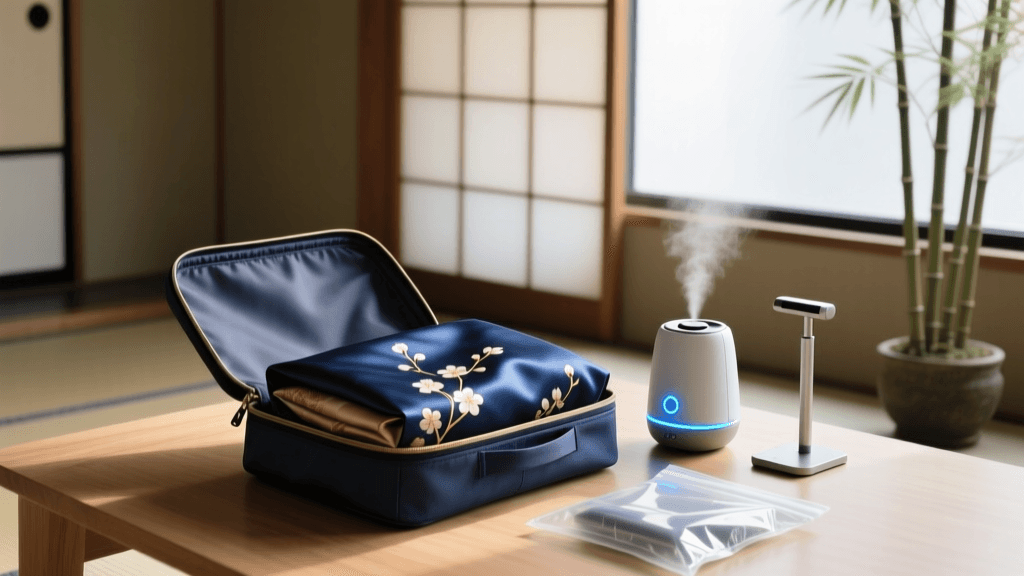
- Portable Precision Steamer: A high-quality handheld travel steamer with a dedicated 'silk' setting (capping at around 110°C/230°F). Models with continuous steam flow and anti-spit technology are crucial to prevent water spots on delicate dyes.
Mastering the Hon-Datami Folding Method
The kimono is cut in straight lines from a single bolt of fabric (tanmono), meaning it is inherently designed to be folded into a perfect, uniform rectangle. The standard folding method is called hon-datami. When executed correctly, this method ensures that all major creases fall along the seams rather than across the visible, decorated panels of the garment.
Step-by-Step Folding Guide
Always fold your kimono on a clean, flat surface. If you are in a hotel room, lay down a freshly washed cotton sheet to protect the fabric from dust and abrasion.
- Align the Seams: Lay the kimono face down with the collar (eri) away from you. Fold the left side over to the right, aligning the side seams (waki) perfectly.
- Fold the Front Panels: Fold the outer edge of the right front panel (okumi) inward to meet the center seam. This ensures the visible front design is protected inside the fold.
- Tuck the Sleeves: Fold the sleeves (sode) back over the body of the kimono. Do not fold the sleeves in half; rather, let them rest flat against the main body to prevent harsh creases across the sleeve motifs.
- The Final Thirds: Fold the collar area down towards the hem, and then fold the hem up towards the collar, creating a compact, rectangular bundle. The collar, which holds the most structural tension, should be on the outside of the final fold.
Once folded, wrap the bundle securely in your tatoushi paper. The paper should be folded like an envelope, securing the garment without the need for tape or pins, which can rust or leave adhesive residue.
Transit Logistics: Flights and Shinkansen
Navigating modern transit infrastructure with traditional garments requires an understanding of both airline policies and regional rail regulations. As of 2026, transit authorities have updated their guidelines to accommodate the rise in specialized cultural luggage.
Air Travel Strategies
Never check a silk kimono in the cargo hold. The extreme temperature fluctuations and potential for baggage handlers to crush your suitcase make the cargo hold a high-risk environment. Always carry your kimono onto the aircraft. If you are flying in a premium cabin, politely request the flight attendant to hang the garment bag in the first-class closet. If you are in economy, lay the folded tatoushi bundle completely flat on top of all other items in the overhead bin. Never place heavy items on top of the bundle, as compression combined with cabin vibration will set permanent creases into the silk.
Shinkansen and Rail Travel
If your journey includes Japan's bullet trains, you must be aware of the Central Japan Railway Company's luggage policies. According to JR Central's official oversized baggage regulations, any suitcase with combined dimensions (length + width + height) exceeding 160cm requires a special oversized baggage seat reservation. However, a properly folded kimono wrapped in tatoushi or housed in a standard canvas tote easily bypasses this rule. You can safely store the folded bundle in the overhead rack above your seat or rest it on your lap, keeping it in your direct line of sight and climate-controlled environment at all times.
On-the-Go Care and Emergency Wrinkle Removal
Even with perfect packing, minor creases may form during long-haul flights. Upon arriving at your destination, immediately unwrap the kimono and hang it on a wide, padded wooden hanger. Never use wire or thin plastic hangers, as they will distort the shoulder seams and cause irreversible stretching.
The Bathroom Steam Technique
If you do not have a portable steamer, the classic hotel bathroom steam method remains highly effective. Hang the kimono on the back of the bathroom door (away from any direct water spray) and run a hot shower for 15 minutes. The ambient steam will gently relax the silk fibers, allowing gravity to pull out minor wrinkles. Ensure the bathroom is well-ventilated afterward to prevent lingering dampness.
Using a Portable Steamer Safely
For stubborn creases, use your precision travel steamer. The Victoria and Albert Museum's textile conservation guidelines emphasize that direct heat and moisture can cause dyes to bleed or fibers to weaken. Always maintain a distance of at least two inches between the steamer nozzle and the silk. For heavily embroidered or metallic-threaded areas, place a clean, white cotton press cloth between the steamer and the garment to protect the delicate embellishments from heat damage.
Packing Method Comparison Chart
Choosing the right packing method is critical for the longevity of your garment. Below is a comparison of common transport methods evaluated for 2026 travel standards.
| Packing Method | Moisture Control | Crease Prevention | Space Efficiency | Verdict for Silk |
|---|---|---|---|---|
| Traditional Tatoushi | Excellent (Acid-free paper breathes) | Excellent (When folded via Hon-datami) | High (Creates a flat, uniform rectangle) | Highly Recommended |
| Cotton Garment Bag | Good (Allows airflow) | Moderate (Depends on hanger quality) | Low (Requires hanging space or careful rolling) | Recommended for Short Trips |
| Plastic Dry-Cleaner Bag | Poor (Traps humidity, causes mold) | Poor (Static causes friction and micro-tears) | High | Never Use |
| Vacuum Compression | N/A (Crushes fibers permanently) | Poor (Sets deep, unremovable creases) | Very High | Strictly Forbidden |
Handling Spills and Stains on the Road
Traveling increases the risk of accidental spills. If you stain your kimono while wearing it at a destination event, do not rub the fabric. Rubbing grinds the particulate into the silk weave and damages the fibers. Instead, gently blot the area with a clean, dry, lint-free microfiber cloth. For oil-based stains, a small amount of cornstarch or talc-free baby powder applied to the back of the stain can help draw out the oil. Leave it to sit for a few hours before gently brushing it away. Never apply commercial liquid stain removers to silk, as the harsh chemicals will strip the natural sericin coating and cause permanent discoloration. Always defer to a professional textile conservator or a specialized kimono dry cleaner (arai-hari service) upon returning home.
Conclusion
Traveling with a traditional kimono in 2026 is a rewarding endeavor that bridges the gap between historical preservation and modern global exploration. By respecting the geometry of the garment through the hon-datami folding method, utilizing breathable, acid-free packing materials, and adhering to careful transit protocols, you ensure that your silk garments remain vibrant and structurally sound. Whether you are stepping off a Shinkansen in Kyoto or attending a cultural gala in Paris, proper preparation guarantees that your kimono will drape flawlessly, carrying centuries of artisanal heritage with elegance and grace.