Best Archival Storage for Silk Kimonos & Hanboks 2026
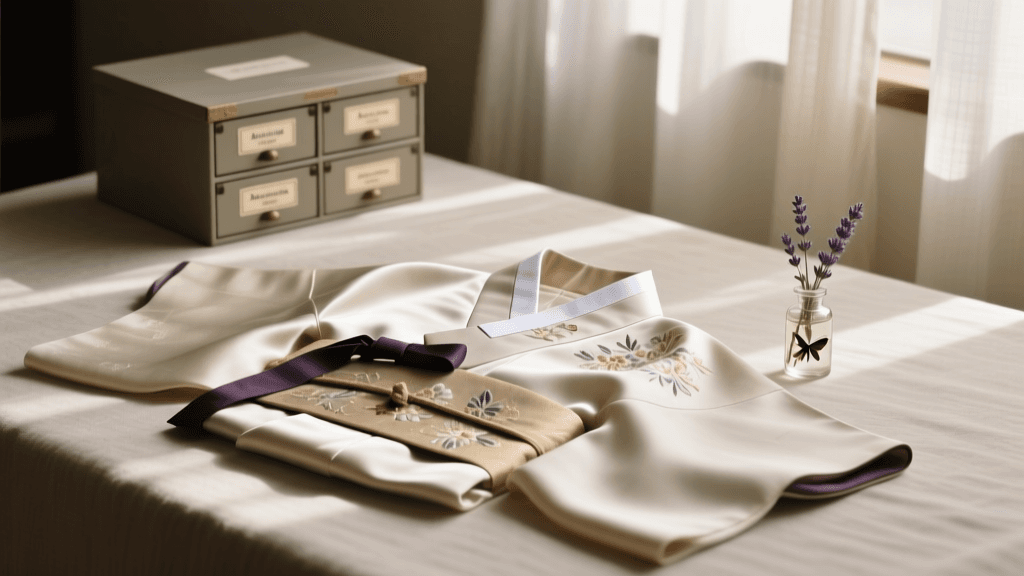
The Vulnerability of Asian Silk Garments
Preserving traditional Asian garments, particularly vintage silk kimonos and hanboks, requires a meticulous understanding of protein-based fibers. As we navigate the fluctuating indoor climates of 2026, textile conservators are increasingly warning against outdated storage methods that accelerate silk degradation. Silk is composed primarily of fibroin, a protein that is highly susceptible to environmental stressors, light exposure, and chemical off-gassing. When stored improperly, the sericin coating breaks down, leading to the dreaded 'silk shattering' phenomenon where the fabric becomes brittle and fractures along fold lines. Furthermore, the vibrant natural and synthetic dyes used in mid-century and antique East Asian textiles can migrate or fade if exposed to acidic materials or improper humidity levels. According to guidelines published by the Smithsonian Museum Conservation Institute, maintaining a stable microclimate and utilizing chemically inert storage materials are the most critical steps in extending the lifespan of historical garments.
The Golden Rule: Unbuffered vs. Buffered Archival Tissue
One of the most common and devastating mistakes made by well-meaning collectors is the use of buffered acid-free tissue paper for silk garments. Buffered tissue contains an alkaline reserve, typically calcium carbonate, which is excellent for neutralizing acids in plant-based fibers like cotton and linen. However, this alkaline environment actively degrades protein fibers. For silk kimonos, hanboks, and any garments featuring metallic threads or protein-based embellishments, you must exclusively use unbuffered, pH-neutral (7.0) acid-free tissue paper. In 2026, leading archival suppliers have introduced ultra-thin, lignin-free unbuffered glassine alternatives that provide exceptional drape and reduce the bulk inside storage boxes, allowing for safer folding of heavily embroidered obi sashes and hanbok chima (skirts).
2026 Archival Storage Material Comparison
Selecting the right enclosure is paramount. Below is a comparison of common storage materials evaluated against current 2026 conservation standards for protein fibers.
| Material Type | Pros for Silk/Protein | Cons & Risks | 2026 Verdict |
|---|---|---|---|
| Unbuffered Acid-Free Tissue | pH 7.0, prevents acid migration, soft cushioning | Can compress over time, requires periodic replacement | Essential for interleaving folds and wrapping |
| Archival Corrugated Boxes | Rigid protection, blocks light, allows breathability | Bulky, susceptible to water damage if flooded | Highly recommended for long-term flat storage |
| Unbleached Muslin Cloth | Breathable, washable, traditional feel | Must be pre-washed to remove sizing, offers no pest barrier | Good for outer dust covers, not primary wrapping |
| Plastic Polypropylene Bins | Waterproof, pest-proof, stackable | Traps moisture, risks mold if not climate-controlled | Use only with internal silica gel and hygrometers |
Advanced Moth and Pest Prevention Protocols
The webbing clothes moth (Tineola bisselliella) and the black carpet beetle remain the apex predators of vintage silk and wool. Historically, collectors relied on naphthalene or paradichlorobenzene mothballs, which are now widely banned or heavily restricted due to severe toxicity and their tendency to melt into plasticizers that permanently stain silk. In 2026, integrated pest management (IPM) is the gold standard. The American Institute for Conservation (AIC) strongly advocates for passive monitoring and non-toxic eradication methods.
First, utilize pheromone-baited sticky traps in your storage room to monitor male moth activity. These traps do not eradicate an infestation but provide an early warning system. If an infestation is suspected, the safest eradication method for delicate kimonos and hanboks is anoxic treatment or deep freezing. To freeze a garment, seal it in a ziplock bag with a desiccant pack to prevent condensation, place it in a standard chest freezer at -20°C (-4°F) for 72 hours, and then allow it to thaw slowly at room temperature before removing it from the bag. Avoid using cedar blocks or lavender sachets directly inside the storage box; while they repel some pests, their volatile essential oils can cause yellowing and staining on pale silk fabrics over time.
The Art of Folding: Tatoushi and Hanbok Wrapping
How you fold a garment dictates where the stress fractures will eventually occur. The traditional Japanese method of folding a kimono, known as tatoushi, is specifically designed to align the seams and distribute the bulk evenly, preventing sharp creases on the delicate silk. When storing a kimono, always pad the folds with rolls of unbuffered tissue paper to create soft curves rather than hard edges. The collar and the heavily embroidered sections of the obi should never bear the weight of the folded garment.
For Korean hanboks, the voluminous chima (skirt) and the structured jeogori (jacket) require different approaches. The chima should be loosely rolled rather than folded to avoid permanent horizontal creasing across the silk panels. The jeogori should be wrapped in a traditional bojagi (wrapping cloth) made of unbleached, pre-washed cotton or hemp, with a layer of unbuffered tissue between the bojagi and the silk to prevent any potential dye transfer or friction damage. Never hang vintage silk kimonos or heavy hanboks on wooden or wire hangers; the gravitational pull will inevitably distort the shoulder seams and stretch the fragile fibroin structures over time.
Smart Climate Monitoring for Home Archives
In 2026, the integration of smart home technology into textile preservation has become highly accessible. Maintaining a relative humidity (RH) between 45% and 55% is critical. Humidity below 40% causes silk to desiccate and shatter, while humidity above 65% invites mold spores and encourages pest activity. Modern Bluetooth and Wi-Fi enabled hygrometers, such as the latest iterations of Temp Stick or Govee smart sensors, are small enough to be placed directly inside archival storage boxes. These devices log temperature and RH data to the cloud, sending instant push notifications to your smartphone if the microclimate inside your kimono storage drifts outside the safe parameters. By combining these smart sensors with passive climate control materials like conditioned silica gel cassettes, collectors can create museum-grade preservation environments within standard bedroom closets.
Conclusion
Preserving the intricate artistry of Asian traditional garments is an ongoing commitment that bridges historical reverence with modern material science. By abandoning toxic chemicals, upgrading to pH-neutral unbuffered enclosures, mastering traditional folding techniques, and leveraging 2026 smart monitoring technology, you can ensure that your vintage silk kimonos and hanboks survive for future generations to study, admire, and cherish.