Theater Kimono Guide 2026: Kabuki, Noh & Bunraku Costumes
The Art of Shozoku: Japan's Theatrical Kimono in 2026
The world of traditional Japanese theater is inextricably linked to the evolution of the kimono. In 2026, as global interest in Asian textile heritage reaches new heights, the theatrical costumes—collectively known as shozoku—remain some of the most breathtaking, engineered, and symbolically rich garments in the world. Unlike everyday kimono, stage garments for Kabuki, Noh, and Bunraku are designed to manipulate stage lighting, exaggerate movement, and convey profound narrative subtext. From the gravity-defying quick-changes of Kabuki to the sculptural brocades of Noh, understanding these garments unlocks a deeper appreciation of Asian performance arts.
Kabuki: Extravagance, Weight, and the Hikinuki
Kabuki theater is synonymous with visual spectacle, and its costumes, known as isho, are designed to project larger-than-life emotions. In the 2026 Kabuki season, audiences continue to marvel at the sheer physical endurance required by actors, as many stage kimono weigh between 15 and 20 kilograms. This immense weight is due to the lavish use of metallic threads, heavy silk brocades, and extensive padding.
The Onnagata's Hikizuri
One of the most iconic garments in Kabuki is the hikizuri, the trailing kimono worn by onnagata (male actors specializing in female roles). Unlike a standard kimono that is hemmed at the ankles, the hikizuri features an extended hem padded with cotton wadding called fukige. This padding allows the heavy silk to trail elegantly across the wooden stage, creating a sweeping, serpentine line that emphasizes the actor's stylized, gliding movements. The obi (sash) tied with the hikizuri is equally massive, often requiring the assistance of two dressers to secure properly.
Hikinuki and Bukkagaeri: The Art of the Quick Change
Kabuki is famous for its dramatic on-stage transformations, achieved through ingenious costume engineering. The hikinuki technique involves stage assistants dressed in black (kuroko) pulling specific basting threads on the actor's kimono. In a fraction of a second, the outer garment falls away to reveal a contrasting kimono beneath, instantly signaling a shift in the character's morality, emotional state, or supernatural identity. Similarly, bukkagaeri involves the actor flipping the front panels of their kimono over their head and attaching them to the obi, instantly transforming a male warrior's garment into a female mourner's attire.
Noh: Symbolism, Brocade, and the Karaori
While Kabuki relies on dynamic spectacle, Noh theater embraces yugen—a profound, mysterious, and subtle beauty. Noh costumes are less about realistic representation and more about spiritual and emotional symbolism. The textiles used in Noh are predominantly woven in Kyoto's Nishijin district, utilizing techniques that have been refined over centuries and continue to be supported by specialized artisan guilds in 2026.
Karaori and Nuihaku: Dressing the Spirit
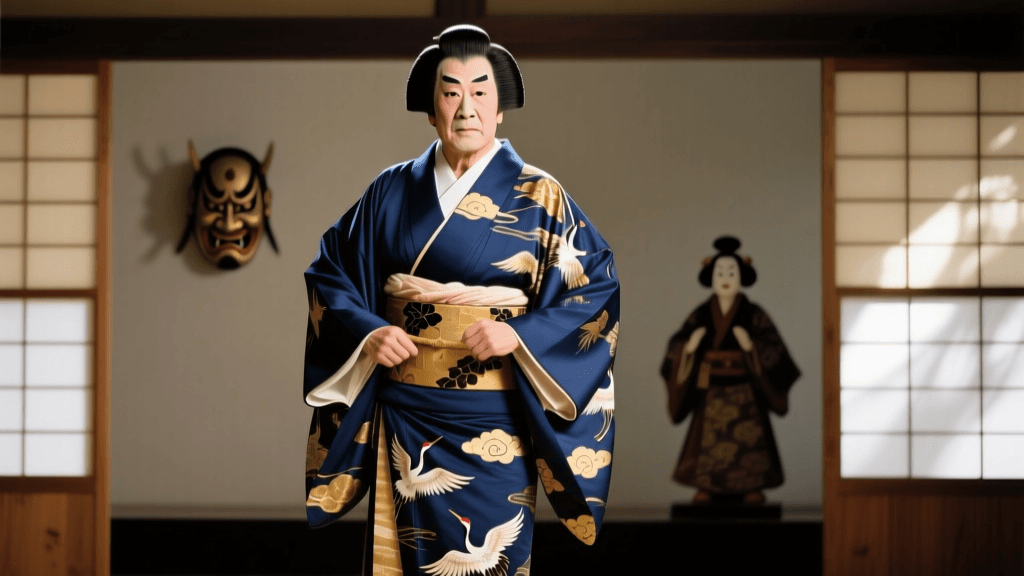
The karaori is a thick, stiff brocade woven with silk and metallic threads, traditionally featuring motifs of pine, bamboo, plum blossoms, and cranes. It is typically worn by actors portraying women of high status or divine beings. The extreme stiffness of the karaori is entirely intentional; it restricts the actor's natural movement, forcing them into the characteristic suriashi (sliding walk) and creating a sculptural, architectural silhouette on stage.
For female characters of lower status, spirits, or women consumed by intense emotion, actors wear the nuihaku. This garment features intricate silk embroidery combined with haku (gold or silver leaf) applied directly to the fabric using lacquer adhesives. According to performance archives maintained by the Japan Arts Council, the preservation of these delicate gold-leaf applications remains a top priority for theater conservators today, as the friction of performance slowly degrades the metallic surfaces over decades of use.
Bunraku: Engineering Kimono for the Puppet Stage
Bunraku, Japan's traditional puppet theater, presents a unique challenge for kimono construction. The garments are not worn by human bodies but are draped over complex bamboo and wood armatures. Each main puppet is manipulated by three puppeteers (ningyozukai), and the kimono must be engineered to facilitate this intricate choreography while maintaining the illusion of a living, breathing human form.
Rigging the Silk
The lead puppeteer (omozukai) controls the head and the right arm, inserting their hand directly into the right sleeve of the kimono. The second puppeteer (hidari-zukai) operates the left arm, while the third (ashi-zukai) manipulates the legs beneath the heavy skirts of the kimono. To ensure the textiles drape realistically without sagging awkwardly around the wooden armature, Bunraku kimono are carefully weighted at the hems and sleeves. The internal structure includes specialized loops and ties that allow the puppeteers to secure the fabric to their own bodies, distributing the weight of the heavy silk so they can perform for hours without fatigue.
Comparative Guide: Kabuki vs. Noh vs. Bunraku Costumes
Understanding the distinct textile applications across the three major theatrical forms enhances the viewing experience. Below is a comparison of their primary costume characteristics as observed in the 2026 theater season.
| Theater Form | Primary Costume Term | Visual Aesthetic | Movement Impact | Key Textile Technique |
|---|---|---|---|---|
| Kabuki | Isho / Hikizuri | Extravagant, bold, high-contrast | Heavy, requires physical endurance | Yuzen dyeing, heavy metallic embroidery |
| Noh | Karaori / Nuihaku | Sculptural, symbolic, subdued elegance | Restrictive, enforces the sliding gait | Nishijin-ori brocade, gold leaf application |
| Bunraku | Ningyozukai Shozoku | Realistic draping, scaled for puppets | Weighted for puppeteer manipulation | Internal rigging, weighted hems, Tsumugi silk |
Where to Experience Theater Kimono in 2026
For cultural travelers and textile enthusiasts visiting Japan in 2026, experiencing these garments live is an unforgettable endeavor. The Kabuki-za Theatre in Tokyo's Ginza district remains the premier destination for Kabuki. In 2026, the theater continues to offer single-act tickets (hitomaku-mi), allowing international visitors to experience the visual splendor of a single performance without committing to a full four-hour program. Multilingual audio guides are highly recommended, as they provide real-time explanations of the costume symbolism and quick-change mechanics.
For Noh, the National Noh Theatre in Tokyo and the Kongo Noh Theatre in Kyoto offer intimate settings where the subtle textures of the karaori can be appreciated under traditional stage lighting. Bunraku enthusiasts should travel to the National Bunraku Theatre in Osaka, the historical heartland of the art form, where the intricate manipulation of the puppet kimono is best observed from the front rows.
Preservation and Modern Archiving
The preservation of theatrical kimono is a critical issue, as the organic silk, natural dyes, and metallic threads are highly susceptible to humidity, light, and the physical stress of performance. In 2026, institutions like the Tokyo National Museum are increasingly utilizing multispectral imaging and 3D textile scanning to archive the structural integrity and color profiles of 18th and 19th-century stage garments. These digital preservation efforts ensure that even as physical textiles inevitably age, the precise weaving techniques, dye recipes, and tailoring methods of historical shozoku are preserved for future generations of artisans and scholars.
Whether you are a dedicated student of Asian fashion history or a first-time theatergoer, the kimono of Kabuki, Noh, and Bunraku offer a masterclass in the intersection of textile art and human performance. They are not merely clothes; they are the architectural skins of the characters, woven with centuries of tradition and engineered for the magic of the stage.