2026 Kimono Milestones: Shichi-Go-San & Coming of Age Guide
The Evolution of Milestone Dressing in 2026
In Japanese culture, the transition through life’s major milestones is deeply intertwined with the art of traditional dress. The kimono is not merely a garment; it is a visual language that communicates age, social status, and the specific rite of passage being celebrated. As we navigate 2026, the landscape of milestone dressing has evolved to blend centuries-old sartorial rules with modern sensibilities, sustainable practices, and shifting legal definitions of adulthood. Whether you are a parent preparing for the Shichi-Go-San festival or a young adult approaching the Hatachi no Tsudoi (Coming of Age ceremony), understanding the nuances of these garments is essential for honoring tradition while embracing contemporary style.
According to the Metropolitan Museum of Art's Heilbrunn Timeline, the kimono's T-shaped structure and surface decoration have historically served as a canvas for expressing seasonal awareness and life-stage symbolism. Today, this symbolism remains vibrant, though the methods of sourcing, styling, and preserving these garments have adapted to the fast-paced realities of 2026.
Shichi-Go-San: Celebrating Early Childhood Milestones
Held annually on November 15th (though celebrations stretch throughout October and November), Shichi-Go-San (Seven-Five-Three) is a vital rite of passage for children. Historically rooted in the Heian and Kamakura periods, this festival celebrates the survival and growth of children at ages three, five, and seven—ages traditionally considered vulnerable to misfortune. In 2026, families are increasingly prioritizing lightweight, easy-to-care-for textiles that allow children to move comfortably during shrine visits and lengthy photo sessions.
Age Three (San-sai): The Hifu Vest
At age three, both boys and girls traditionally celebrate their first major milestone. For girls, the defining garment of this age is the hifu, a padded, sleeveless silk vest worn over a standard kimono. The hifu eliminates the need for a tightly tied obi, which is crucial for the comfort of a toddler. In 2026, modern parents are favoring hifu sets made from advanced washable synthetic silks that perfectly mimic the drape and texture of traditional chirimen (crepe silk) but can withstand the inevitable spills of a three-year-old. Boys at this age may wear a simple kimono with a hakama (pleated trousers) or a hifu featuring auspicious motifs like cranes or pine trees.
Age Five (Go-sai): The First Hakama
The five-year-old milestone is exclusively celebrated by boys. This marks the hakamagi ceremony, where the child dons his first formal hakama and haori (jacket). The 2026 trend for five-year-olds leans heavily into bold, graphic haori designs—moving away from subdued traditional crests toward dynamic motifs like eagles, dragons, or even subtle geometric patterns inspired by the Taisho-Roman era. The hakama is typically striped in charcoal, navy, or deep plum, grounded by white tabi socks and zori sandals.
Age Seven (Nana-sai): The Obitoki Ceremony
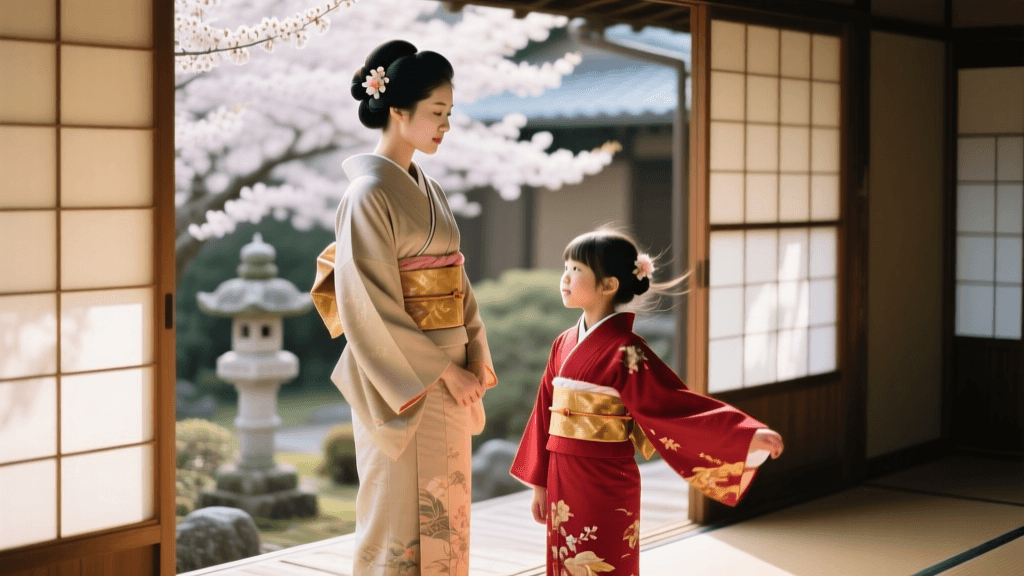
For seven-year-old girls, the milestone is known as obitoki, translating to 'untying the obi.' Prior to age seven, girls wear simple, narrow cords to secure their kimonos. At seven, they transition to wearing a real, structured obi (though often a simplified shigoki sash and a decorative handan obi tied in a large bow at the back). The kimono itself features vibrant, shoulder-to-hem patterns (katamoyo) that leave room for future alterations as the child grows. Sourcing vintage 1990s and early 2000s silk sets for seven-year-olds has become a massive trend in 2026, allowing families to access high-quality, heavily embroidered silks at a fraction of the cost of new bespoke pieces.
Hatachi no Tsudoi: The 20-Year-Old Gathering
One of the most significant cultural shifts in recent years solidified fully by 2026: the distinction between legal adulthood and the traditional Coming of Age ceremony. While Japan lowered the legal age of adulthood to 18 in 2022, municipalities overwhelmingly continue to host the traditional winter ceremonies for 20-year-olds. As reported by The Japan Times, the event has been widely rebranded from Seijin no Hi (Adult's Day) to Hatachi no Tsudoi (Twenty-Year-Old Gathering) to avoid confusion with 18-year-olds who are typically occupied with grueling university entrance exams.
Furisode Trends for 2026
For young women, the furisode—characterized by its long, swinging sleeves (ranging from 85cm to 114cm)—remains the undisputed garment of the Hatachi no Tsudoi. The sleeve length is a strict marker of unmarried youth. In 2026, the aesthetic has bifurcated into two distinct camps:
- The Neo-Classic Revival: Deep, jewel-toned backgrounds (emerald, sapphire, and oxblood) featuring hyper-detailed yuzen dyeing of traditional flora, accented with generous amounts of metallic gold leaf and shibori (tie-dye) textures.
- The Retro-Modern Fusion: A continuation of the Taisho-Roman revival, featuring bold, contrasting geometric patterns, Art Deco influences, and unconventional color pairings like mustard yellow with deep violet. Many young women are pairing these vintage-style furisode with modern, oversized lace collars or pearl hair accessories, blending Western vintage aesthetics with Japanese tradition.
Men's Montsuki Haori Hakama
While Western suits are common for men at the Twenty-Year-Old Gathering, the traditional montsuki haori hakama (a black crepe kimono bearing five family crests, worn with a striped hakama and a decorative jacket) is experiencing a renaissance. In 2026, young men are personalizing their formalwear through the haori himo (the braided cords used to tie the jacket), opting for hand-woven silk cords in vibrant, unconventional colors or incorporating subtle, tonal patterns in the haori lining that are only visible when moving.
2026 Cost Breakdown: Buying vs. Renting vs. Vintage
Navigating the financial aspect of milestone dressing requires careful planning. The table below outlines the average costs in 2026 for the most common milestone garments, factoring in the booming 'circular fashion' economy which has made vintage and upcycled kimonos more accessible than ever.
| Milestone & Garment | Rental (2026 Avg) | Purchase (New Silk) | Vintage / Upcycled |
|---|---|---|---|
| Shichi-Go-San (Age 3 Hifu Set) | ¥12,000 ($80) | ¥45,000 ($300) | ¥18,000 ($120) |
| Shichi-Go-San (Age 5 Hakama) | ¥15,000 ($100) | ¥60,000 ($400) | ¥25,000 ($165) |
| Shichi-Go-San (Age 7 Obitoki) | ¥25,000 ($165) | ¥120,000 ($800) | ¥35,000 ($230) |
| Hatachi (Furisode Full Set) | ¥80,000 - ¥150,000 ($530-$1000) | ¥400,000+ ($2,650+) | ¥60,000 - ¥120,000 ($400-$800) |
| Hatachi (Men's Montsuki) | ¥30,000 ($200) | ¥150,000 ($1,000) | ¥40,000 ($265) |
Note: USD conversions are approximate based on early 2026 exchange rates. Rental packages typically include dressing services (kitsuke), hair styling, and basic photography, whereas purchasing requires separate budgeting for accessories and dressing appointments.
Actionable Planning Guide for 2026
Whether you are dressing a child or preparing for your own Coming of Age ceremony, the logistics of kimono dressing require a strategic timeline. The expertise of the Victoria and Albert Museum highlights that the kimono is not a single garment, but a complex ensemble of under-layers, ties, and outerwear that must be meticulously coordinated.
Booking Timelines and Kitsuke (Dressing)
- 8 to 10 Months Prior: For January Hatachi no Tsudoi ceremonies, booking must begin by April or May of the previous year. Premium furisode rentals and sought-after vintage pieces are reserved almost a year in advance. For November Shichi-Go-San, begin browsing in February.
- 6 Months Prior: Finalize the garment selection. If purchasing vintage, this is the time to take the piece to a shitaku-ya (kimono preparation specialist) for cleaning, stain removal, and re-stitching if the sleeve lengths need adjusting for the wearer's specific height.
- 3 Months Prior: Book the kitsuke (professional dressing) and hair styling appointments. In 2026, many studios offer 'eco-kitsuke' using reusable, adjustable padding and modern, cruelty-free silk alternatives for the obi-jime (decorative cords).
- 1 Month Prior: Purchase or rent the zori sandals and tabi socks. Tabi must be fitted precisely to the foot to prevent blisters during long shrine visits. Break in the zori by wearing them around the house with thick socks to soften the straps.
Preservation and Post-Ceremony Care
After the milestone is celebrated, proper storage is critical. Silk garments must be aired out in the shade for a day before being folded along their original seams and stored in tatoushi (traditional paper wrappers) inside a paulownia wood chest. For the growing 2026 market of synthetic and washable milestone kimonos, gentle hand-washing with specialized pH-neutral detergents followed by flat-drying ensures the garment can be passed down to younger siblings, continuing the cycle of tradition into the next generation.