Top Seoul Hanbok Sewing Workshops 2026: In-Person & Virtual
The Global Renaissance of Hanbok Tailoring
As we navigate the fashion landscape of 2026, the global appetite for traditional Asian garments has shifted dramatically from passive consumption to active, hands-on creation. Among the most sought-after sartorial traditions is the Korean Hanbok. No longer just a garment rented for a day of tourism in Seoul, the Hanbok is being studied, deconstructed, and meticulously recreated by a new generation of slow-fashion enthusiasts and bespoke tailors. According to recent cultural tourism data published by the Seoul Metropolitan Government, enrollment in heritage craft workshops has surged by over 40% in early 2026, driven by international students and local artisans alike who wish to master the geometric brilliance of traditional Korean dress.
Learning to construct a Hanbok is fundamentally different from Western pattern drafting. There are no darts, no rigid armholes, and no complex curved seams designed to force fabric against the body. Instead, the Hanbok relies on flat, linear construction that comes alive only when worn, creating a fluid, architectural silhouette that moves with the human form. For those looking to immerse themselves in this ancient craft, 2026 offers an unprecedented array of in-person masterclasses in Seoul and high-fidelity virtual seminars accessible from anywhere in the world.
Top In-Person Hanbok Sewing Workshops in Seoul for 2026
Seoul remains the undisputed epicenter of Hanbok craftsmanship. In 2026, the city's premier cultural institutions have expanded their English-language cohorts to accommodate the massive influx of international textile students.
1. Bukchon Traditional Craft Center: The Authentic Jeogori Masterclass
Nestled in the historic Bukchon Hanok Village, this center offers the most rigorous, historically accurate Hanbok sewing program in the country. The 2026 Spring and Autumn cohorts focus entirely on the jeogori (the traditional upper garment). Students spend six weeks learning to draft the flat pattern, cut the myeongju (traditional silk), and execute the invisible hand-stitching techniques required for the lining. The highlight of the Bukchon curriculum is the creation of a saekdong jeogori, featuring the iconic colorful striped sleeves that require precise fabric joining and an understanding of obangsaek (the traditional Korean five-color spectrum). Tuition for the 2026 cohort is 550,000 KRW (approximately $410 USD), which includes all raw silk materials and traditional brass sewing implements.
2. Dongdaemun Design Plaza (DDP): Contemporary Hanbok Innovation Lab
For those interested in the intersection of heritage and modernity, the DDP's Innovation Lab offers a 4-week intensive seminar focused on the chima (skirt) and baji (trousers). The 2026 curriculum has been heavily updated to include sustainable upcycling, teaching students how to deconstruct vintage silk Hanboks and re-engineer them into modern, wearable silhouettes without losing the traditional volumetric drape. Uniquely, the DDP lab incorporates 2026's latest 3D body-scanning technology to help students understand how traditional flat patterns map onto diverse, modern body types. The course costs 700,000 KRW and culminates in a digital portfolio and a physical garment exhibition.
Best Virtual Hanbok-Making Seminars for International Students
Not everyone can relocate to Seoul for a month. Recognizing this, the Global Hanbok Heritage Academy has launched a fully immersive virtual seminar series for 2026. Unlike pre-recorded video tutorials, these are live, interactive Zoom masterclasses limited to 15 students per cohort to ensure the instructor can critique stitching techniques in real-time.
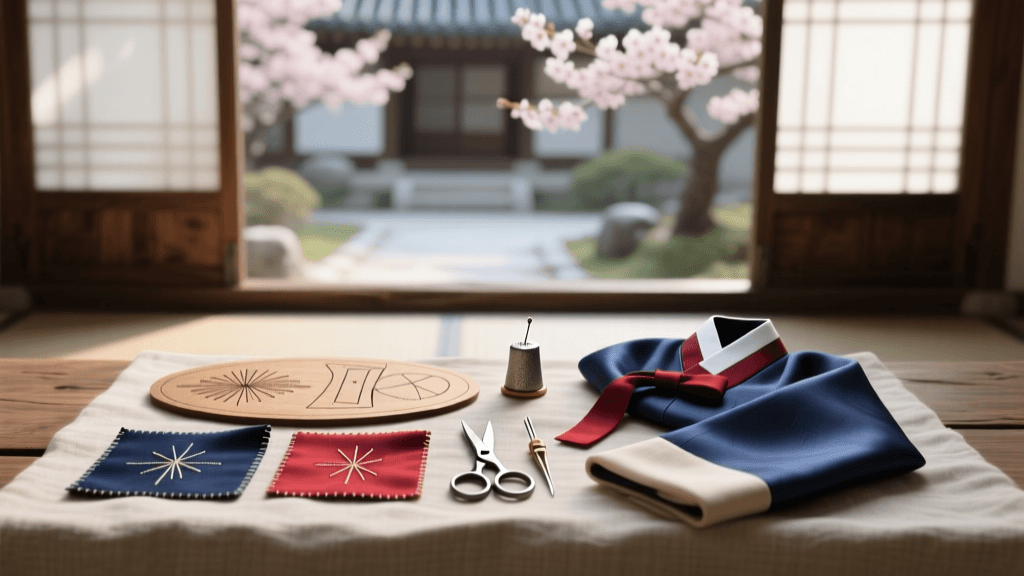
Upon enrollment, students receive a physical 'Heritage Kit' shipped via international courier. The 2026 kit includes pre-dyed ramie (mosi) fabric, traditional Korean thimbles (golmu), a bamboo measuring ruler (dae), and a specialized curved needle for sewing the collar. The virtual seminar runs for eight weeks, covering the complete construction of a daily-wear Hanbok set. The tuition is $650 USD, inclusive of global shipping for the materials kit.
Essential Tools for Your 2026 Hanbok Sewing Kit
Traditional Korean sewing (chimseon) requires specific tools that differ significantly from Western sewing kits. If you are preparing for a workshop or practicing at home, you will need to acquire the following specialized items. Below is a breakdown of the essential tools and their estimated 2026 market costs.
| Tool Name | Korean Term | Purpose in Hanbok Construction | 2026 Est. Cost (USD) |
|---|---|---|---|
| Bamboo Ruler | Dae | Measuring and creating perfectly straight fabric folds without stretching the silk. | $18 - $25 |
| Curved Needle | Goban-chim | Specifically designed for attaching the stiff white collar (git) to the curved neckline. | $12 - $15 |
| Brass Thimble | Golmu | Worn on the middle finger to push thick needles through multiple layers of silk and cotton batting. | $8 - $12 |
| Weight Stones | Jinchi | Used instead of Western sewing pins to hold delicate silk patterns in place without leaving puncture holes. | $20 - $30 |
| Powder Chalk | Garu | Traditional marking powder that brushes off silk completely, unlike modern wax or pencil tailors chalk. | $6 - $9 |
Core Curriculum: Mastering Traditional Korean Construction
Whether you attend an in-person seminar in Bukchon or a virtual class, the foundational curriculum of Hanbok making revolves around mastering specific structural elements. As noted by the Encyclopedia Britannica's overview of Hanbok, the beauty of the garment lies in its structural contradictions: rigid collars paired with flowing sleeves, and flat patterns that create three-dimensional volume. Here are the core techniques you will learn:
- The Baerae (Sleeve Curve): Unlike Western set-in sleeves, the Hanbok sleeve is cut as a single piece with the bodice. Students learn to draft the baerae, the gentle, sweeping curve under the arm that allows for unrestricted movement and creates the iconic bell shape when the arms are raised.
- The Git and Dongjeong (Collar Construction): The git is the fabric band that wraps around the neck. You will learn to interface it with traditional paper or stiff cotton to maintain its shape. The dongjeong is the removable, bright white paper or fabric collar that sits on top of the git, providing a striking visual contrast against the colored silk of the jeogori.
- The Goreum (Tying Ribbon): The goreum is not merely a functional tie; it is a highly stylized decorative element. Masterclasses teach the precise geometry of folding and stitching the goreum so that the asymmetrical bow sits perfectly flat against the chest, with the shorter and longer ends falling at exact, traditional ratios.
- Flat-Felling and Invisible Stitching: Because Hanbok garments are often unlined or lined with contrasting colors, all internal seams must be finished flawlessly. Students spend hours practicing saekdong joining and invisible slip-stitching to ensure no raw edges are visible from either the inside or the outside of the garment.
Workshop Comparison: Costs, Duration, and Outcomes
Choosing the right workshop depends on your budget, location, and whether you prefer historical purity or modern adaptation. The National Museum of Korea frequently highlights the importance of both preserving historical techniques and encouraging contemporary applications, a philosophy reflected in the diverse workshop options available today.
| Workshop / Seminar | Format | Duration | 2026 Tuition | Primary Focus |
|---|---|---|---|---|
| Bukchon Craft Center | In-Person (Seoul) | 6 Weeks | 550,000 KRW | Historical accuracy, hand-stitching, saekdong sleeves. |
| DDP Innovation Lab | In-Person (Seoul) | 4 Weeks | 700,000 KRW | Modern silhouettes, 3D body mapping, sustainable upcycling. |
| Global Heritage Academy | Virtual (Live Zoom) | 8 Weeks | $650 USD | Complete daily-wear set, accessible to international students. |
Final Thoughts on Preserving Sartorial Heritage
The act of sewing a Hanbok is an exercise in mindfulness and cultural preservation. In an era dominated by fast fashion and automated manufacturing, taking the time to hand-stitch a goreum or perfectly align the baerae curve connects you to centuries of Korean artisans. The workshops and seminars available in 2026 represent a golden age for textile enthusiasts, offering unprecedented access to master tailors and authentic materials. Whether you find yourself sitting on the wooden floors of a Bukchon Hanok or logging into a live stream from your studio halfway across the world, learning to construct the Hanbok is a profound journey into the heart of Asian sartorial tradition.