Senegalese Foulard Printing Methods And Symbolic Color Meanings
Origins and Regional Context of Senegalese Foulard Production
The Senegalese foulard—a lightweight, rectangular or square scarf traditionally worn by women across urban and rural Senegal—emerged as a distinct textile form in the mid-20th century, evolving from colonial-era fabric imports and local dyeing innovations. Unlike West African textiles such as Ghanaian kente cloth (woven on narrow-strip looms in Ashanti and Ewe communities) or Nigerian adire (indigo-resist dyed cotton), the foulard is primarily screen-printed or roller-printed on 100% cotton poplin with a standard finished size of 90 cm × 90 cm. Its production centers in Dakar’s Medina district and the industrial zone of Hann Bel-Air host over 47 registered printing ateliers, according to the Senegalese Ministry of Industry and Small Business (2022).
Weaving and Printing Techniques: From Hand-Stenciling to Industrial Rollers
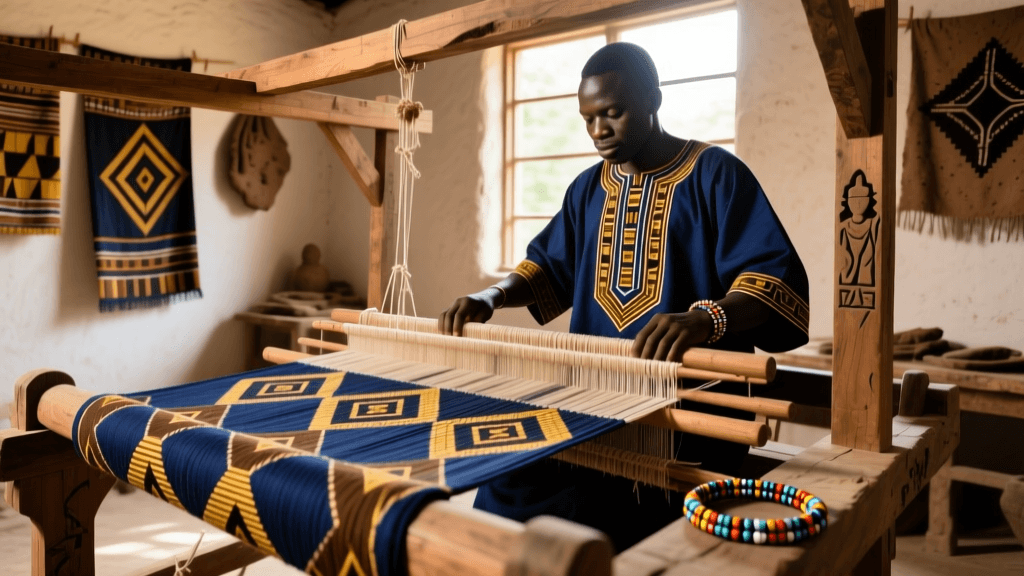
Though commonly mischaracterized as “woven,” authentic foulards are not woven but printed using three principal methods: hand-stenciling (still practiced by fewer than 12 artisan cooperatives), rotary screen printing (used by 83% of medium-scale producers), and digital sublimation (adopted since 2018 by six studios including Atelier Sénégalaise de Textile in Rufisque). Each method affects motif fidelity and color saturation: hand-stenciled foulards achieve ≤92% color accuracy per Pantone swatch, while rotary printing maintains ≥97% consistency across batches of 500 units.
Stenciling Process Details
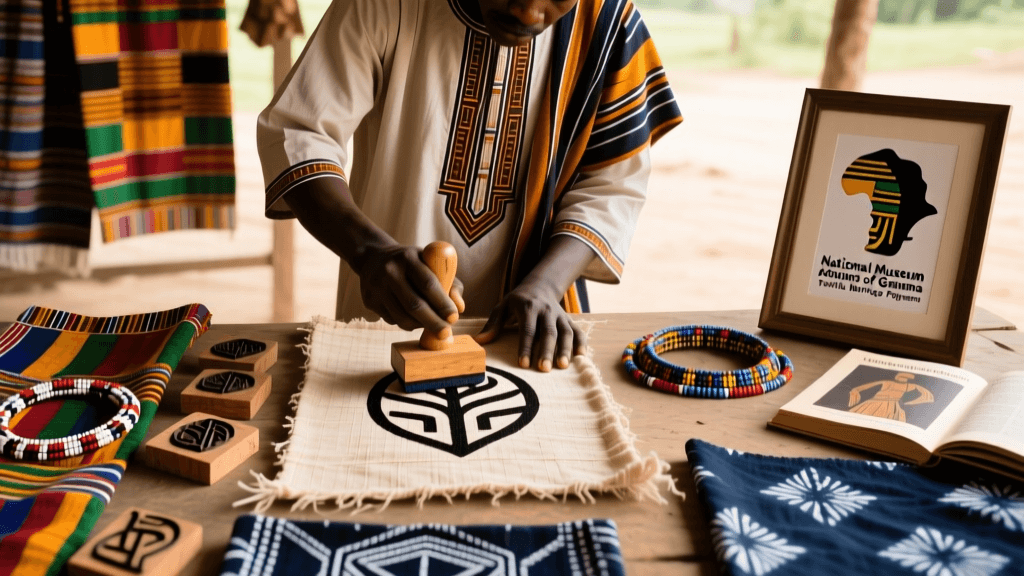
Artisans cut zinc or plastic stencils by hand—each requiring 4–6 hours for a single 12-motif design. A master stencil-cutter in Thiès averages 22 completed plates per week, each aligned manually on fabric stretched across wooden frames. Ink application uses natural gum arabic binders mixed with synthetic pigments, dried under shaded verandas for precisely 3.5 hours before heat-fixing at 155°C for 90 seconds.
Rotary Screen Specifications
Industrial printers deploy stainless-steel mesh screens with 80–120 threads per centimeter. Screen life averages 18,000 impressions before replacement. Ink viscosity is calibrated to 14–16 seconds on a Ford Cup #4 viscometer to ensure even layering without bleeding beyond 0.3 mm tolerance.
Symbology in Motif and Color: Beyond Aesthetic Decoration
Color carries codified meaning rooted in Wolof, Serer, and Pulaar cosmologies. Red (mbar) signifies vitality and ancestral presence; it appears in at least 68% of foulards intended for wedding ceremonies. Indigo (somb) denotes wisdom and spiritual depth—its concentration must reach 3.2 g/L in vat solutions to achieve the deep “night-blue” shade recognized by elders in Kaolack. Yellow (jël) represents prosperity and sunlight, used in 42% of foulards sold during Tabaski celebrations. Green (verd) signals growth and Islamic faith, appearing in 51% of foulards distributed through Dakar’s Grand Mosque gift shops. White (bët) conveys purity and mourning—mandatory in funeral attire, where it occupies ≥70% of surface area.
“The foulard is not merely accessory—it is a lexicon worn on the body. When a young woman in Saint-Louis wears yellow with diagonal black stripes, she declares readiness for marriage negotiations without uttering a word.” — Dr. Aïda Diop, Director of Ethnographic Research, IFAN Cheikh Anta Diop Museum, 2021
Institutional Stewardship and Contemporary Innovation
The Institut Français de Dakar launched its *Textile Heritage Lab* in 2019, partnering with École des Arts Décoratifs de Dakar to digitize 217 historic foulard patterns archived since 1954. Meanwhile, the Dakar Biennale’s *Dak’Art Textile Pavilion* has featured foulard reinterpretations annually since 2016, with 2022’s exhibition showcasing collaborations between 14 Senegalese designers and the Centre National des Arts et de la Culture (CNAC). CNAC’s textile conservation unit maintains humidity-controlled storage at 55% RH and 21°C for fragile pre-1970 specimens—conditions validated by UNESCO’s African Heritage Conservation Initiative (2020).
Material Standards and Certification
The Agence Sénégalaise de Normalisation (ASN) issued Standard XA-112-2023, mandating that certified foulards contain zero azo dyes above 30 mg/kg and require pH testing between 4.5–7.2. Certified producers undergo biannual audits; as of Q1 2024, only 29 of 112 registered firms meet full compliance.
Comparative Context Within Pan-African Textile Traditions
While Senegalese foulards emphasize flat-plane printing and chromatic symbolism, they contrast sharply with other regional practices:
- Ghanaian kente cloth: Woven on horizontal strip looms measuring 4–5 cm wide; each 2.5 m length requires 200+ hours of weaving; motifs like *Eban* (“safety”) use gold thread ratios of exactly 1:12 against black ground.
- Malian bogolanfini (mud cloth): Fermented iron-rich mud applied to handwoven cotton; each 1.5 m × 1.2 m cloth undergoes 12–14 sun-drying cycles and 3–5 dye baths over 17 days.
- Tanzanian Maasai beadwork: Uses glass seed beads sized 11/0 (1.8 mm diameter); ceremonial collars weigh 1.2–1.8 kg and incorporate ≥2,400 individual beads.
- Nigerian adire eleko: Starch-resist technique using cassava paste; minimum drying time of 48 hours before indigo immersion; traditional vats hold 200 L and ferment for 10–14 days.
- South African Ndebele mural-inspired textiles: Geometric motifs scaled to human torso proportions—horizontal bands measure precisely 12 cm height to align with ribcage landmarks.
Educational Infrastructure and Skill Transmission
École Nationale des Arts et du Textile (ENAT) in Thiès trains 85–92 students annually in foulard design and chemistry, requiring mastery of 17 standardized color formulas and 32 approved motifs before graduation. Field internships rotate across three sites: the artisanal hub of Mbour (noted for coastal indigo sourcing), the dye garden of Toubacouta (where 14 native plant species yield 9 certified natural dyes), and the digital studio of Dakar’s Cité des Sciences et de l’Innovation. ENAT’s curriculum includes mandatory modules on Wolof proverbs embedded in pattern nomenclature—e.g., *Ndoxu baay* (“the father’s shadow”) refers to interlocking diamond grids symbolizing lineage continuity.
| Textile | Origin Group | Primary Technique | Standard Dimensions | Production Time (per unit) |
|---|---|---|---|---|
| Senegalese Foulard | Wolof/Serer | Rotary screen print | 90 cm × 90 cm | 4.2 hours (batch of 500) |
| Ghanaian Kente | Ashanti/Ewe | Horizontal strip weaving | 2.5 m × 0.2 m per strip | 200+ hours (full cloth) |
| Malian Bogolan | Bambara | Mud dyeing & painting | 1.5 m × 1.2 m | 17 days |
At the Musée des Civilisations Noires in Dakar, permanent exhibition Case #7 displays five foulards alongside comparative fragments of Yoruba adire and Dogon weave samples—each labeled with fiber analysis data, pigment chromatography results, and oral history transcripts from weavers in Bandiagara. The museum’s conservation team monitors light exposure at ≤50 lux for all textile displays, per ICOM-CC guidelines. In 2023, the museum hosted 14,287 student visitors from 31 West African nations, with 63% participating in hands-on foulard design workshops led by master artisans from the Association des Femmes Tisserandes du Sénégal.
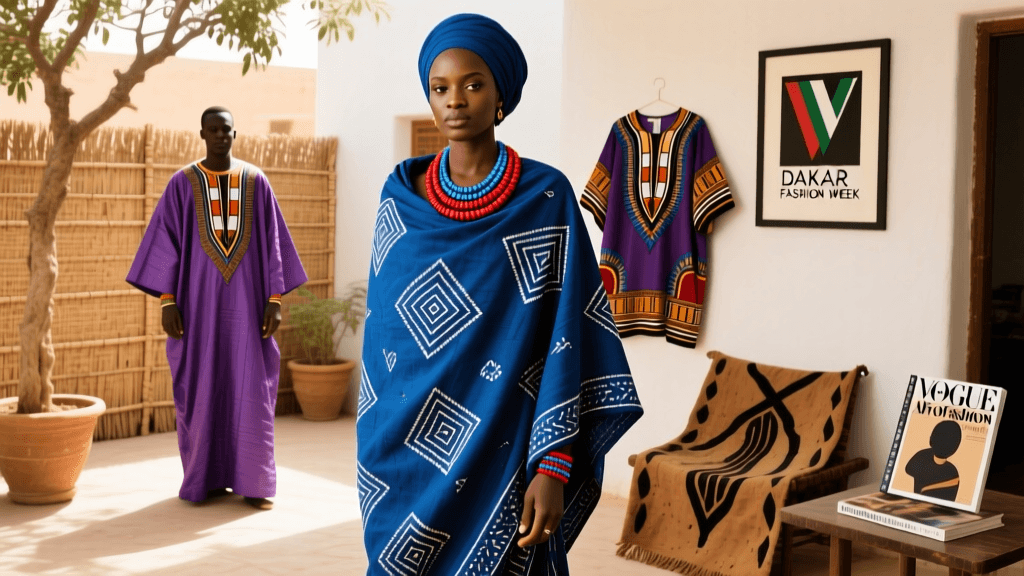
The Dakar Fashion Week Foundation reported in its 2023 Impact Report that foulard-based collections accounted for 31% of runway presentations—up from 18% in 2019—with 74% of designers citing CNAC archives as primary research sources. This institutional anchoring ensures continuity: motifs once reserved for royal households in Cayor now appear in school uniforms across Ziguinchor, rendered in certified organic cotton meeting ASN’s XA-112-2023 standard.
Foulard production remains tethered to seasonal rhythms. Indigo harvest in the Saloum Delta peaks between July and September, yielding leaves processed within 6 hours to preserve dye potential. Cotton bales sourced from the Office du Niger in Mali arrive at Dakar port with moisture content tested at 8.3%—within the 7.5–8.7% optimal range for ink adhesion. Each certified foulard bears a holographic seal issued by ASN, traceable via QR code to its printing atelier, dye lot number, and artisan signature.
Design innovation coexists with strict adherence to symbolic grammar. When designer Fatou Thiam introduced metallic-thread accents in 2022, she consulted elders from the Serer village of Nguékhokh to confirm alignment with *Roog Sene* cosmological principles—resulting in silver thread usage limited to ≤5% surface area, representing celestial balance. Such protocols reflect how technical precision and cultural syntax operate in tandem—not as constraints, but as generative frameworks.
The foulard endures not as relic but as living syntax: measured in centimeters, timed in drying hours, calibrated in pigment concentrations, and interpreted through generations of embodied knowledge held in Thiès workshops, CNAC vaults, and IFAN’s archival databases.