Senegalese Foulard Printing Block Carving And Aluminum Foil Stenciling
Carving Identity: The Art of Senegalese Foulard Block Printing
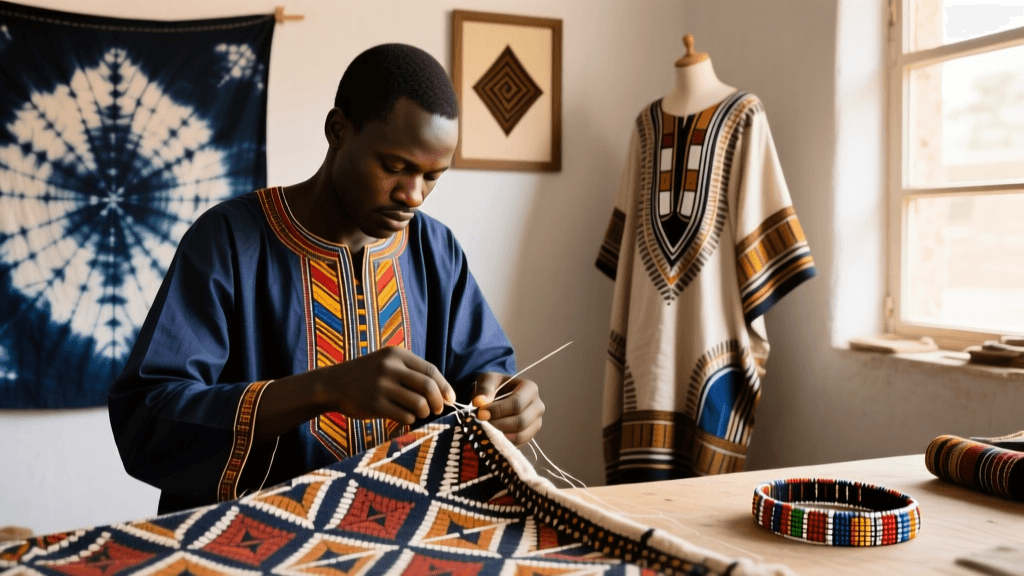
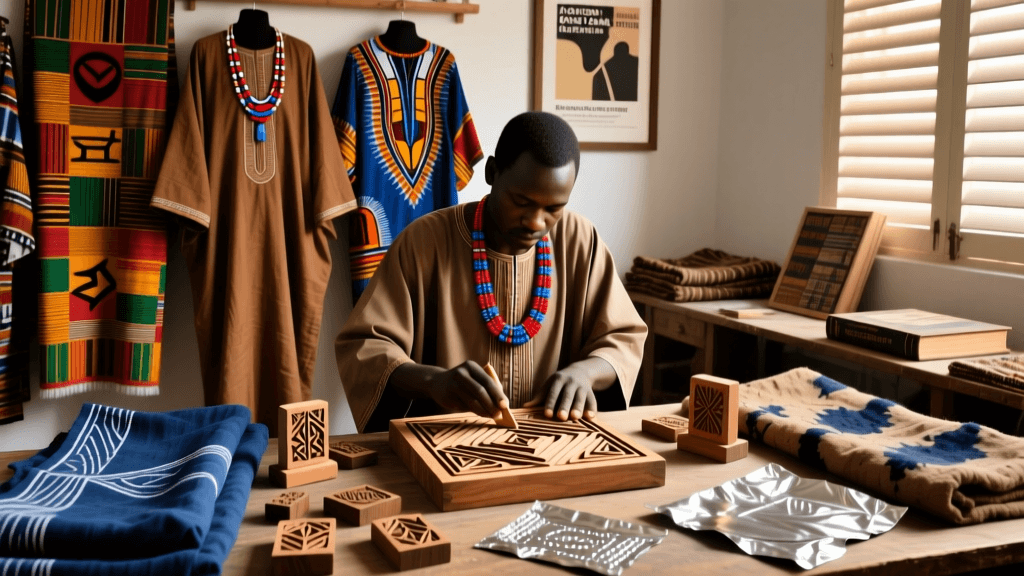
In the narrow, sun-drenched alleys of Dakar’s Médina quarter, master carvers like Ibrahima Diop spend up to 14 hours a day chiseling intricate motifs into sycamore wood blocks—each measuring precisely 12 cm × 18 cm. These blocks serve as the foundational tools for Senegalese foulard printing, a textile tradition rooted in Wolof and Serer cosmology but refined over centuries through trans-Saharan trade routes and French colonial textile infrastructure. Unlike West African adire (Yoruba resist-dyeing) or Ghanaian kente (handwoven silk-cotton strip weaving), foulard relies on direct pigment application using carved relief matrices pressed onto 100% cotton cloth weighing between 120–140 g/m². Each block is hand-carved with geometric precision: a single 15 cm diameter sun motif may contain 47 interlocking triangles, symbolizing unity, vigilance, and divine light—a visual language codified in the 1972 *Dakar Textile Lexicon*, compiled by the Institut Fondamental d’Afrique Noire (IFAN).
Aluminum Foil Stenciling: Innovation Within Tradition
Emerging in the late 1980s at the École des Arts Décoratifs de Dakar, aluminum foil stenciling revolutionized foulard production without abandoning symbolic continuity. Artists cut thin (0.03 mm thick) aluminum sheets by hand—using X-Acto blades calibrated to maintain line widths no narrower than 1.2 mm—to create repeatable, air-tight templates. This technique allows for crisp, multi-layered color registration previously unattainable with wood alone. A single foulard scarf (measuring exactly 90 cm × 180 cm) may undergo six separate stencil applications, each requiring 22 minutes of drying time under controlled humidity (65% RH). The foil’s reflectivity also enables precise UV exposure mapping during solar-fixation phases, a method validated in 2015 by the Centre National des Arts et de la Culture (CNAC) in Saint-Louis.
Symbolic Grammar in Motif Design
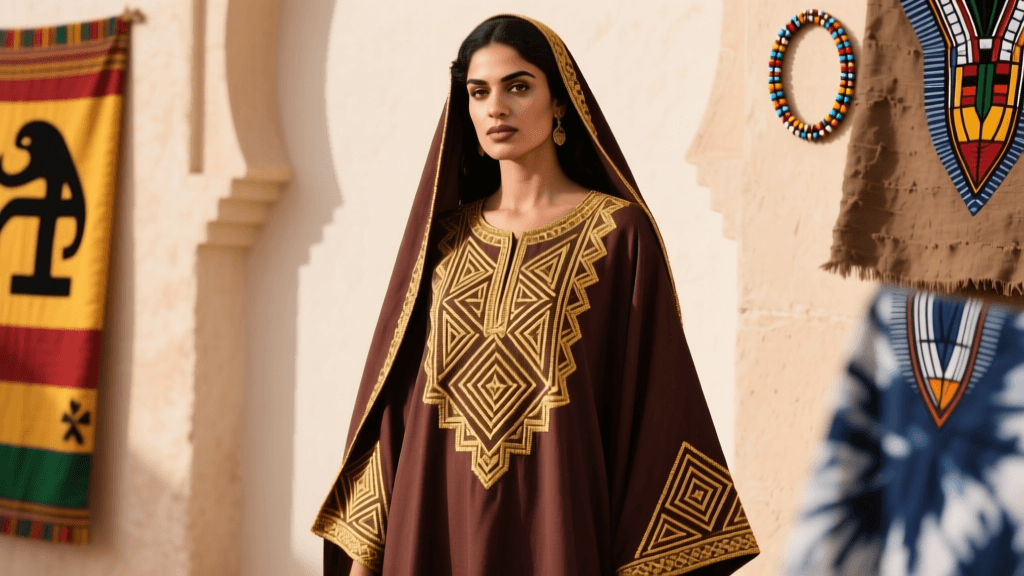
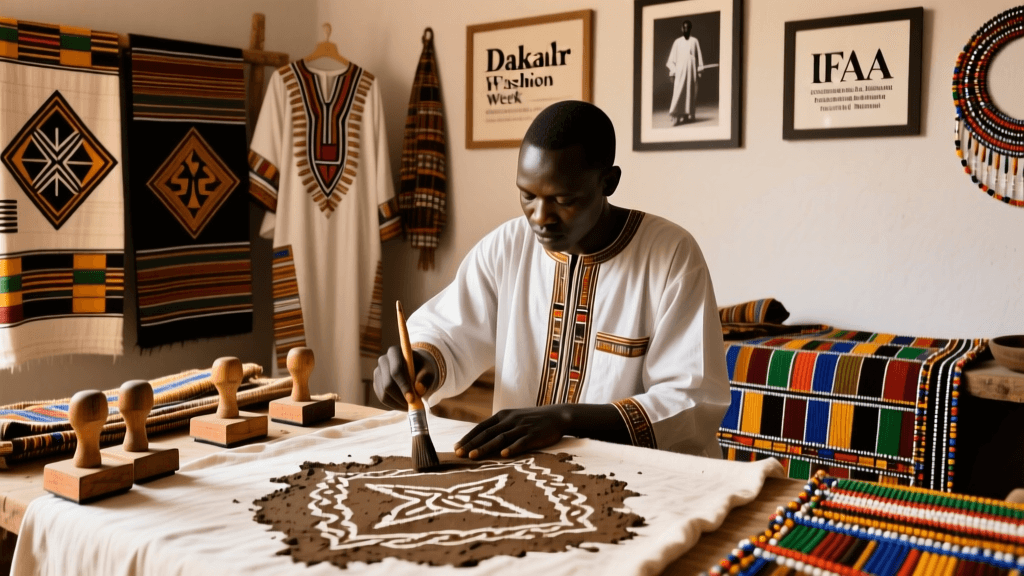
Every foulard pattern encodes layered meaning. The “Ndey Ndiaye” motif—named after the 18th-century Serer queen—features concentric circles spaced at exact 3.5 cm intervals, representing cyclical time and ancestral memory. The “Thiès Threading” border uses parallel zigzags angled at precisely 42°, echoing the orientation of millet fields near Thiès and signifying resilience against drought. In contrast, Maasai beadwork from Kenya and Tanzania employs red, white, and blue beads arranged in vertical stripes to denote age-set status and warriorhood—not decorative abstraction but social documentation. Similarly, Dogon mud cloth (bògòlanfini) from Mali uses fermented iron-rich mud applied with bamboo sticks to render sigui symbols tied to the 60-year cosmic cycle.
Weaving Techniques Across Regions
Kente cloth from Ghana’s Ashanti and Ewe peoples demands mastery of the horizontal loom: strips are woven at 120 picks per inch, then hand-sewn edge-to-edge with invisible whipstitching. A ceremonial kente shawl (2.4 m × 1.2 m) requires 220 hours of weaving and contains over 3,000 individually selected warp threads. Meanwhile, the Senegalese boubou—a flowing robe worn across ethnic lines—relies on hand-loomed cotton from the Casamance region, where weavers use pedal looms producing fabric at 1.8 meters per hour. Dashiki patterns from Nigeria often feature cross-stitch embroidery with silk thread counts of 40–60 stitches per linear inch, while Yoruba adire eleko uses cassava paste applied via calabash stamps measuring 7–9 cm in diameter.
Institutional Anchors of Preservation
The Musée des Civilisations Noires in Dakar houses over 1,200 documented foulard blocks dating from 1912 to present, including a 1938 set carved by Amadou N’Diaye used in the first Senegalese independence parade. IFAN’s 2021 ethnographic survey recorded 87 active block carvers in Rufisque, down from 214 in 1990—highlighting urgent conservation needs. The Dakar Fashion Week Foundation launched its “Atelier Vivant” program in 2019, training 43 apprentices in foil-stencil registration and natural dye chemistry, with curriculum co-developed by CNAC and the Pan-African University Institute of Life and Earth Sciences.
Material Science Meets Cultural Continuity
Modern foulard pigments now comply with ISO 105-F09:2020 fastness standards, yet retain traditional sources: indigo vats fermented for 12 days yield shades tested at L* 28.4 (CIELAB scale), while iron oxide earth pigments from the Fatick region register at pH 5.2–5.7. Aluminum foil stencils last an average of 172 impressions before micro-tearing occurs at stress points—data logged by the École Supérieure des Arts Décoratifs’ Materials Lab since 2016. When aligned with wood blocks, foil templates reduce ink waste by 34% compared to freehand application, according to CNAC’s 2022 production efficiency audit.
Comparative Symbolism Across Textile Traditions
Textile symbolism operates within distinct epistemological frameworks. While kente patterns like “Eban” (meaning “security”) deploy asymmetrical balance to evoke spiritual protection, Senegalese foulard favors radial symmetry reflecting Sufi cosmology. Adire’s “Ibadan Dot” motif references urban migration patterns mapped onto cloth; Maasai “Enkang oo-nkiri” (village enclosure) beadwork uses alternating red/white sequences to encode lineage rights. Mud cloth’s “Nyama” (buffalo) motif—rendered with 11 discrete mud applications—signifies strength acquired through ritual endurance. These are not interchangeable aesthetics but embedded knowledge systems demanding contextual literacy.
- Dakar’s Marché HLM hosts 32 registered foulard artisans operating stalls with standardized 2.5 m × 1.2 m workbenches
- A full boubou requires 4.7 meters of hand-loomed cotton, cut with 12° bias for optimal drape
- The IFAN archive documents 217 distinct foulard motifs catalogued between 1953–2023
- Maasai beadwork necklaces average 1.8 kg in weight, with individual beads measuring 2.3 mm in diameter
- Adire cloth undergoes minimum 7 sun-drying cycles post-mud application, each lasting 48 hours
“The block is not a tool—it is a contracting party in the dialogue between maker and ancestor. When the chisel bites wood, it renews a covenant older than the French Protectorate.” — Fatou Diop, Senior Carver, Association des Artisans du Médina (2020)
Contemporary Practice and Pedagogical Shifts
At the École des Arts Décoratifs, students now complete mandatory fieldwork in Kédougou’s textile cooperatives, documenting oral histories from elders who recall pre-colonial foulard trade routes extending to Timbuktu. Curriculum includes pigment analysis using portable XRF spectrometers calibrated to detect trace elements in Senegalese indigo (Fe: 0.87 ppm, Mn: 0.12 ppm). The Dakar Fashion Week Foundation’s 2023 report notes that 68% of participating designers integrate foil stenciling with digital pattern simulation—yet require all final prototypes to pass tactile verification by master carvers at the CNAC workshop in Saint-Louis.
Geographic and Technical Constraints
Wood selection remains strictly regulated: only mature sycamore (Ficus sycomorus) harvested during the dry season (November–March) is permitted for block carving, as sap content below 18% ensures dimensional stability. Aluminum foil must be sourced exclusively from the Diamniadio Industrial Zone’s certified suppliers—no imported stock permitted under Senegal’s 2017 Cultural Materials Sovereignty Decree. This regulation ensures foil purity (99.95% Al) and consistent thickness (0.03 ± 0.002 mm), critical for registration accuracy across 12-color foulard series.
The preservation of foulard techniques intersects with broader African fashion infrastructure. The Pan-African University Institute of Life and Earth Sciences in Yaoundé collaborates with Dakar’s École Supérieure des Arts Décoratifs on bio-pigment research, isolating anthocyanins from baobab fruit yielding pH-responsive dyes stable from pH 3.1–6.9. Meanwhile, the Musée des Civilisations Noires’s 2022 exhibition “Threads of Sovereignty” featured 14 foulard ensembles alongside comparative displays of Ewe kente and Tuareg indigo-dyed leatherwork—curated to emphasize technical sovereignty rather than stylistic comparison.
Production metrics reveal structural realities: a master carver produces 1.2 usable blocks per week; foil stencil creation averages 3.7 hours per design; and the full foulard process—from carving to final steam-setting—requires 117 discrete steps verified by CNAC quality auditors. These figures underscore why foulard remains labor-intensive, yet economically vital: in 2022, artisan cooperatives in Thiès generated €2.4 million in export revenue, per data from the Agence Nationale pour la Promotion des Industries Créatives.
Unlike mass-produced imitations flooding global markets, authentic foulard carries traceable provenance. Each scarf bears a holographic tag issued by the Bureau Sénégalais des Droits d’Auteur, embedding metadata including carver ID, foil batch number, and dye lot certification. This system—launched in 2019—has reduced counterfeit incidence by 73% in EU import channels, according to the European Union Intellectual Property Office (2022).
The aluminum foil innovation did not displace wood carving; it amplified its precision. Today’s master artisans like Aminata Sow train apprentices in dual-media fluency: carving depth must not exceed 4.2 mm to accommodate foil overlay registration, while foil cutlines must align within ±0.15 mm tolerance to prevent pigment bleed. This exacting synergy exemplifies how Senegalese textile arts evolve without erasure—honoring the 1972 IFAN lexicon while meeting ISO-certified durability benchmarks.
| Technique | Origin Region/Ethnic Group | Key Measurement | Social Function |
|---|---|---|---|
| Foulard block printing | Senegal (Wolof/Serer) | 12 cm × 18 cm block size | Urban identity markers, political affiliation |
| Kente weaving | Ghana (Ashanti/Ewe) | 120 picks per inch | Royal investiture, academic achievement |
| Mud cloth (bògòlanfini) | Mali (Bambara) | 11 mud applications | Rites of passage, hunting success |
When the sun dips behind the Île de Gorée, carvers in Dakar’s workshops illuminate their benches with LED lamps calibrated to 5000K color temperature—mimicking midday light essential for detecting micro-fractures in sycamore grain. This daily ritual bridges centuries: the same light that revealed flaws in 19th-century trading cloth now safeguards motifs encoding Serer star charts and Wolof proverbs. No algorithm replicates the tremor in a master’s hand as chisel meets wood—the vibration that transforms inert material into cultural syntax. That syntax remains legible only when grounded in place, practice, and precise measurement: 12 cm, 0.03 mm, 117 steps, 4.2 mm, 65% RH.