Schuhplattler Dance Costumes: Authentic Festival Guide 2026
The Demands of the Schuhplattler: Why Dance Mobility Matters
When attending major European cultural celebrations in 2026, such as the Gaufest or the world-renowned Oktoberfest, the distinction between tourist apparel and authentic folk dress becomes immediately apparent. This is especially true for the Schuhplattler, a traditional Alpine folk dance originating from Bavaria, Tyrol, and Salzburg. The dance is highly athletic, characterized by vigorous leaping, spinning, and the rhythmic slapping of thighs, knees, and shoes (the "Plattln"). For male and female dancers, standard commercial costumes are not merely inadequate; they are a physical hindrance and a safety risk.
Authentic Tanz-Tracht (dance costume) is engineered for extreme mobility, durability, and historical accuracy. According to the Bayerischer Trachtenverband (Bavarian Tracht Association), preserving the functional integrity of these garments is just as important as preserving the dance steps themselves. In 2026, the revival of heritage textile techniques has led to a surge in demand for bespoke, dance-grade garments that honor 19th-century construction while meeting the rigorous demands of modern festival performances.
Authentic Lederhosen for the Male Plattler Dancer
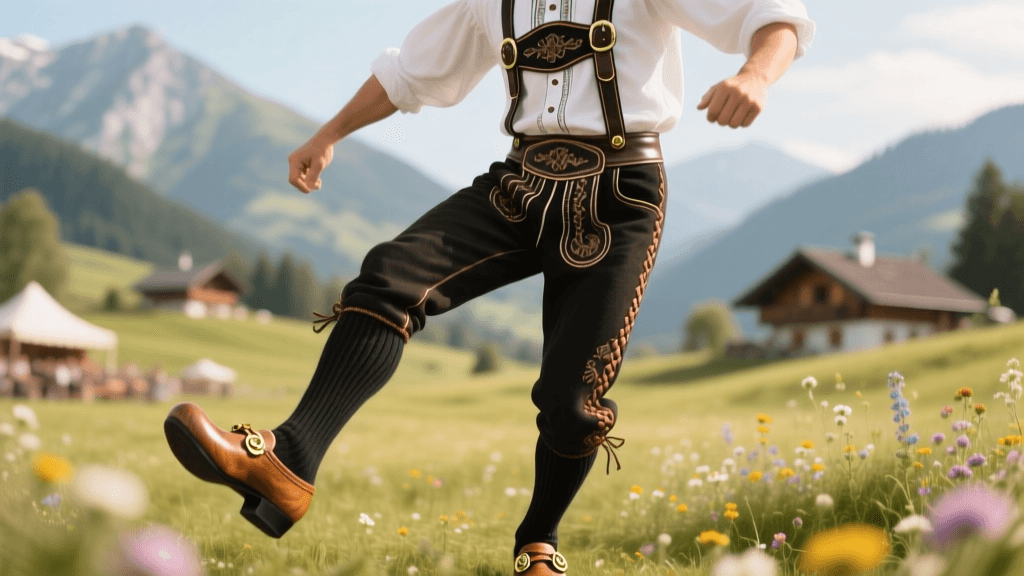
For the male dancer, the Lederhosen is the foundation of the Schuhplattler. However, the mass-produced leather shorts found in souvenir shops are typically made from cowhide or pigskin, which is stiff, heavy, and prone to tearing under the stress of high kicks and deep squats. Authentic dance Lederhosen are crafted from Hirschleder (deer leather) or Gamsleder (chamois leather), tanned using the traditional Sämisch (oil and smoke) method.
The Säckler Seam and Structural Fit
The hallmark of genuine Lederhosen is the raised, hand-stitched "Säckler" seam. This technique, documented extensively in the textile archives of the Bavarian National Museum, creates a flexible yet incredibly strong bond that moves with the dancer's body. For the Schuhplattler, the fit must be precise: the shorts should sit high on the natural waist, secured by wide, embroidered suspenders (Hosenträger). The cut around the thigh must be snug enough to provide a clear target for the hand-slapping routines, yet feature a hidden gusset that allows for the deep, lunging stances required during the "Watsch" (the duck-waddle step).
As of 2026, the European Union's stricter environmental regulations on leather tanning have made authentic Sämisch-tanned Hirschleder more exclusive. Expect to invest between €950 and €1,600 for a master-crafted pair of dance-grade Lederhosen from a certified Säckler (leatherworker). While this is a significant upfront cost, a properly maintained pair will last a lifetime and actually mold to the dancer's specific striking patterns over time.
The Dirndl: Engineering the Perfect Spin
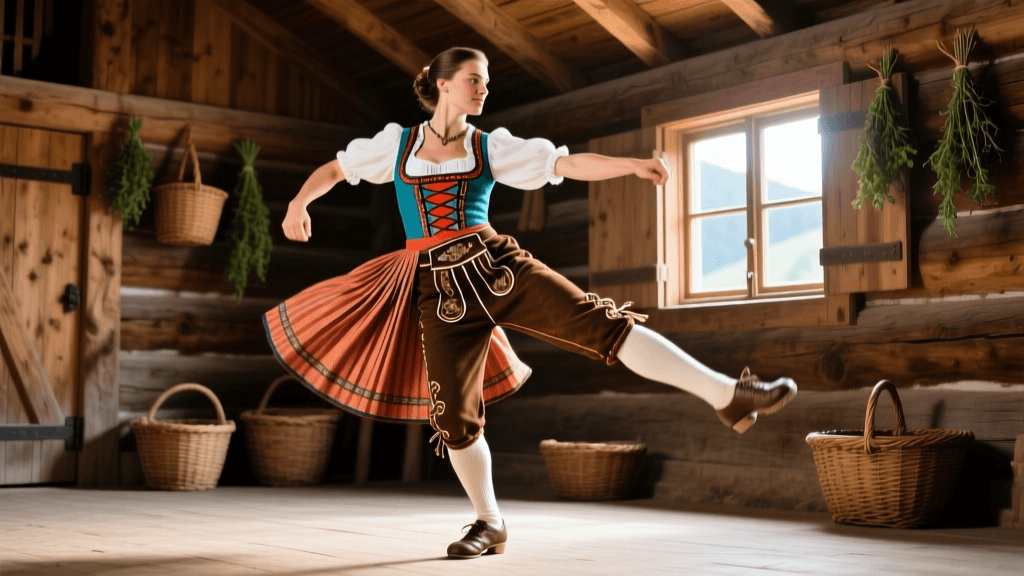
The female counterpart in the Schuhplattler is the Dirndl, but the dance version (Tanzdirndl) differs vastly from the fashionable, form-fitting versions seen in beer tents. The primary objective of the Tanzdirndl is to facilitate the "Drehen"—the rapid, multi-turn spins executed by the female dancer while holding her skirt.
Skirt Circumference and Pleating
A standard fashion Dirndl skirt might have a circumference of 1.5 to 2 meters. An authentic Tanzdirndl requires a minimum circumference of 3.5 to 4.5 meters. This massive amount of fabric is achieved through intricate pleating techniques, such as the Kellerfalten (box pleats) or Faltenwurf (cartridge pleating), which gather the fabric tightly at the waistband but allow it to bloom outward dramatically during a spin. In 2026, lightweight, breathable wool blends and high-quality linen are the preferred materials, as they provide the necessary drape and weight to keep the skirt from flying up uncontrollably during outdoor festival winds.
Bodice Structure and Blouse Mobility
The bodice (Mieder) of a dance Dirndl is structured with internal boning to provide back support during vigorous movement, but it is never laced to the point of restricting breathing. The accompanying blouse (Dirndlbluse) must feature reinforced armholes and slightly puffed sleeves that allow the dancer to raise her arms above her head without pulling the bodice upward. Furthermore, the traditional apron (Schürze) is tied securely with a specialized knot that prevents it from unraveling mid-performance, a common mishap with tourist-grade costumes.
2026 Comparison: Tourist Tracht vs. Authentic Dance Tracht
To help festival-goers and aspiring folk dancers make informed purchasing decisions this season, we have compiled a detailed comparison of standard commercial costumes versus authentic dance-grade garments.
| Feature | Tourist / Party Tracht (2026 Market) | Authentic Tanz-Tracht (Dance Grade) |
|---|---|---|
| Leather Material (Lederhosen) | Split cowhide or synthetic PU leather | Sämisch-tanned Hirschleder (Deer) or Gamsleder |
| Dirndl Skirt Circumference | 1.2 to 1.8 meters | 3.5 to 4.5 meters (cartridge or box pleated) |
| Bodice Construction | Unstructured, decorative lacing | Internally boned, structural support, hook-and-eye |
| Average Price Range (2026) | €60 - €150 (Full set) | €1,200 - €2,500+ (Bespoke full set) |
| Lifespan & Durability | 1-2 seasons; seams tear under dance stress | Generational; leather softens and strengthens with use |
Essential Accessories for the Dance Ring
Accessories in the Schuhplattler are not merely decorative; they serve functional purposes or must be adapted for safety during the dance.
- Loferl (Calf Warmers): Worn by male dancers, these are essentially leg warmers made of thick wool or linen. They keep the calf muscles warm during outdoor Alpine festivals and provide a slight layer of protection during aggressive thigh-slapping routines.
- Haferlschuhe (Traditional Shoes): The standard Bavarian shoe features a side-lacing system and a robust leather sole. For 2026 dance competitions, many performers opt for custom Haferlschuhe fitted with specialized rubberized leather soles to ensure grip on polished wooden festival stages while still producing the required percussive sound when striking the floor.
- Federhut (Feathered Hat): The traditional Tyrolean hat, adorned with a Gamsbart (chamois hair tuft) or eagle feather, must be securely pinned to the dancer's hair or head. During acrobatic figures or headstands—occasionally incorporated into advanced Plattler routines—an unpinned hat will immediately fly off, resulting in point deductions in formal competitions.
- Charivari (Silver Chain): While a prized accessory for men, displaying hunting trophies and silver coins, the Charivari is strictly removed before stepping into the dance ring. The swinging metal can cause severe bruising or catch on the suspenders during high-kick sequences.
Sourcing and Caring for Your Dance Costume in 2026
Acquiring an authentic Tanz-Tracht requires bypassing mainstream retail and connecting directly with heritage artisans. In Munich and surrounding Alpine regions, historic houses like Lodenfrey and specialized local Säckler workshops accept bespoke commissions. Because the 2026 festival season is seeing record attendance, lead times for custom Hirschleder Lederhosen are currently averaging four to six months. Dancers are advised to take their measurements and place orders in the late autumn prior to the summer festival circuit.
Care for these garments is highly specific. Hirschleder should never be washed with water or standard detergents, which will strip the natural oils and cause the leather to harden like cardboard. Instead, dancers use specialized leather brushes and natural wool fat (Lanolin) treatments to maintain suppleness. The heavy wool skirts of the Dirndl are aired out after performances and spot-cleaned, with full dry-cleaning reserved only for the end of the festival season to preserve the integrity of the intricate pleating.
Conclusion
Participating in the Schuhplattler is a profound way to engage with European folk culture, but it demands respect for the textiles that make the dance possible. As we navigate the 2026 festival season, the shift away from fast-fashion costumes toward sustainable, historically accurate, and functionally superior Tanz-Tracht is a positive evolution. By investing in properly constructed Lederhosen and Dirndls, dancers not only protect their own bodies from injury but also ensure that the vibrant, spinning, and thundering legacy of Alpine folk dance continues to captivate audiences for generations to come. For more insights into European heritage garments and regional festival guides, explore the archives at the German National Tourist Board and plan your cultural journey today.