Ceremonial vs Everyday Hanbok: 2026 Buyer & Styling Guide
The Evolution of Korean Dress in 2026
As we navigate the global fashion landscape of 2026, the Korean hanbok continues to captivate audiences, designers, and cultural enthusiasts alike. Once reserved strictly for major holidays and life milestones, the hanbok has undergone a radical transformation over the last decade. Today, the market is distinctly divided into two primary categories: the grand, structured ceremonial hanbok (often referred to as Hollyebok for weddings or Myeongjeolboks for major holidays) and the fluid, highly practical everyday hanbok (known as Saenghwal Hanbok or modern hanbok).
Understanding the nuanced differences between these two styles is crucial for anyone looking to invest in authentic Korean traditional garments. Whether you are a bride planning a traditional Pyebaek ceremony, a fashion-forward professional seeking a culturally rooted daily wardrobe, or a textile collector, this comprehensive 2026 guide will break down the construction, fabrics, pricing, and styling rules for both ceremonial and everyday hanbok.
Understanding Ceremonial Hanbok: Tradition and Grandeur
Ceremonial hanbok is designed to project status, respect, and cultural continuity. According to the Encyclopædia Britannica, while the basic silhouette of the hanbok has remained remarkably intact since the Joseon Dynasty, ceremonial garments utilize the most luxurious materials and the most complex layering techniques available. In 2026, the demand for bespoke, historically accurate ceremonial wear remains incredibly strong, particularly for weddings, first birthday celebrations (Doljanchi), and ancestral rites (Charye).
Key Characteristics of Ceremonial Garments
- Fabrics: Ceremonial sets rely heavily on premium natural fibers. Myeongju (traditional Korean silk), high-grade ramie (mosi), and heavily embroidered brocades are standard. In 2026, master weavers in the Andong region are producing ultra-fine silk blends that offer a subtle, modern sheen while maintaining historical accuracy.
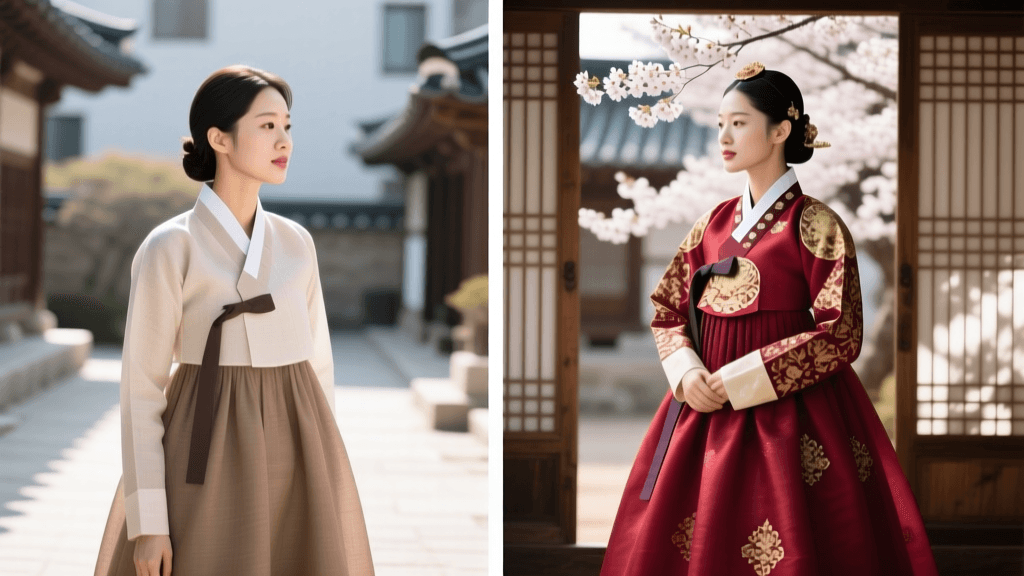
- Silhouette and Volume: The chima (skirt) for women is exceptionally voluminous, often requiring multiple layers of under-skirts (sokchima) to achieve the iconic bell shape. The hem is designed to graze the floor, completely hiding the wearer's feet and shoes.
- The Goreum (Ribbon): The goreum on a ceremonial jeogori (jacket) is long, wide, and meticulously hand-tied into a specific traditional knot. The length and drape of the ribbon are indicators of the garment's formality.
- Color Palette: Ceremonial wear embraces Obangsaek (the traditional Korean color theory of five cardinal colors). Brides often wear vibrant reds and blues, while elders wear subdued, dignified tones like deep jade, maroon, or charcoal.
2026 Pricing and Sourcing
Investing in a ceremonial hanbok is a significant financial commitment. As of early 2026, a bespoke silk wedding hanbok (Hollyebok) crafted by a recognized master artisan in Seoul's Bukchon district ranges from $1,400 to $3,800 USD. Off-the-rack ceremonial sets made from high-quality synthetic silk blends can be found in the Dongdaemun market for $350 to $600 USD, though they lack the intricate hand-embroidery and structural longevity of bespoke pieces.
The Rise of Everyday Hanbok (Saenghwal Hanbok)
While ceremonial wear honors the past, the Saenghwal Hanbok (literally "daily life hanbok") is engineered for the present. The modern hanbok movement has exploded in the 2020s, and by 2026, it has firmly established itself as a staple in contemporary Korean streetwear and global slow-fashion circles. Everyday hanbok strips away the cumbersome layers and delicate fabrics of its ceremonial counterpart, prioritizing mobility, machine-washability, and minimalist aesthetics.
Design Innovations for Daily Wear
The Victoria and Albert Museum notes that the structural foundation of the hanbok relies on the contrast between the tight, structured upper garment and the loose, flowing lower garment. Modern designers in 2026 have maintained this contrast but drastically altered the proportions for daily life.
- Simplified Jeogori: The jacket is often cropped slightly higher or tailored with darts to flatter modern body types without restricting arm movement. The traditional white collar (dongjeong) is sometimes made from detachable, stain-resistant silicone or easily replaceable cotton.
- Practical Chima and Baji: The women's skirt is significantly narrower and shorter, typically hitting mid-calf or exactly two inches above the ankle to prevent tripping on subway stairs or city streets. Men's baji (trousers) are tailored closer to the leg, resembling modern harem pants or wide-leg linen trousers.
- Modern Fastenings: While the visual aesthetic of the goreum (ribbon) is often retained, many 2026 everyday designs utilize hidden magnetic snaps, hook-and-eye closures, or side zippers for ease of dressing.
- Textile Innovations: Everyday hanbok utilizes durable, breathable, and machine-washable fabrics. In 2026, eco-friendly bamboo-rayon blends, Tencel, and washed linen are the dominant materials, offering beautiful drape without the dry-cleaning requirements of silk.
"The genius of the 2026 Saenghwal Hanbok lies in its modularity. You can pair a modern linen jeogori with a pair of standard denim jeans, or wear a traditional silk chima with a simple white turtleneck. The boundaries between traditional and contemporary have completely dissolved."
Direct Comparison: Ceremonial vs. Everyday Hanbok
To help you make an informed purchasing decision, review the detailed comparison chart below outlining the core differences between these two garment categories in the current market.
| Feature | Ceremonial Hanbok (Hollyebok / Myeongjeolboks) | Everyday Hanbok (Saenghwal / Modern) |
|---|---|---|
| Primary Occasion | Weddings, Doljanchi, Chuseok, Seollal, formal rites | Daily wear, office, casual outings, modern festivals |
| Fabrication | 100% Silk, Ramie, Brocade, heavy embroidery | Cotton, Linen, Tencel, Bamboo-rayon, Poly-blends |
| Skirt/Pants Volume | Maximum volume, requires multiple under-layers | Streamlined, A-line or wide-leg, no under-layers |
| Hemline Length | Floor-grazing (hides feet entirely) | Ankle-length or mid-calf (shows footwear) |
| Fastening Method | Hand-tied traditional Goreum knots | Magnetic snaps, hidden zippers, simplified ties |
| Care Instructions | Professional dry clean only, specialized storage | Machine washable (gentle cycle), air dry |
| 2026 Price Range (USD) | $350 (synthetic) to $3,800+ (bespoke silk) | $60 (basic separates) to $250 (designer sets) |
Sizing, Tailoring, and Measurements in 2026
Unlike Western clothing, which relies on standardized bust-waist-hip measurements, hanbok sizing focuses heavily on the shoulders, arm length, and the unique crotch depth (don) for trousers. When ordering a custom piece in 2026, accurate measurements are non-negotiable.
How to Measure for Your Hanbok
- Shoulder and Sleeve (Hwajang): Measure from the base of the neck, across the shoulder, and down to the wrist bone. The jeogori sleeve must extend slightly past the wrist to cover the hands when the arms are relaxed.
- Chest and Underbust: The jeogori is tied just under the bust for women. Measure the underbust circumference precisely to ensure the jacket sits securely without restricting breathing.
- Skirt Length (Chima): For a modern everyday skirt, measure from the underbust to exactly two inches above your ankle bone. For a ceremonial skirt, measure from the underbust to the floor while wearing the specific shoes you intend to wear with the garment.
- Trouser Depth (Don): For men's baji, the crotch depth is crucial. Traditional trousers have a very deep drop to allow for sitting cross-legged on the floor. Modern everyday baji have a shallower drop, closer to Western harem pants.
Pro-Tip for 2026: Many premium Seoul-based online boutiques now offer AI-driven body scanning via smartphone apps. By uploading a 360-degree video of yourself, their proprietary software generates a 3D mesh to calculate exact hanbok drape and sizing, significantly reducing the return rate for international buyers.
Sourcing and Shopping Guide
Finding authentic, high-quality hanbok outside of South Korea has become significantly easier, though knowing where to look is essential. For the Cultural Heritage Administration of Korea, preserving the integrity of traditional crafts is a priority, and they frequently certify ateliers that maintain historical accuracy in their ceremonial garments.
Where to Buy Ceremonial Hanbok
For weddings and major life events, bypass mass-market vendors and seek out certified artisans. Brands like Choi Bok-hee Hanbok or Lee Young-hee (and their contemporary successor ateliers) offer unparalleled craftsmanship. If you are outside Korea, utilize specialized proxy shopping services that can liaise directly with Bukchon artisans, ensuring your bespoke measurements and fabric choices are communicated flawlessly. Expect a lead time of 6 to 10 weeks for a fully bespoke ceremonial set.
Where to Buy Everyday Hanbok
The modern hanbok market is thriving online. Brands such as Leesle, Sonjjang, and Danha dominate the 2026 ready-to-wear space. These brands offer seasonal collections that align with global fashion trends—think muted celadons, dusty pinks, and charcoal grays for the "quiet luxury" aesthetic. Most of these brands offer direct international shipping via DHL or FedEx, with sets retailing between $120 and $250 USD. For budget-conscious buyers, searching the "Modern Hanbok" category on global platforms like Etsy or specialized Korean fashion export sites can yield beautiful linen sets for under $90 USD.
Care, Maintenance, and Storage
The longevity of your garment depends entirely on how you care for it, and the rules differ vastly between ceremonial and everyday pieces.
Caring for Ceremonial Silk
Never attempt to wash ceremonial silk or ramie at home. Water will destroy the structural integrity of the embroidery and cause the natural dyes to bleed. Always take ceremonial garments to a dry cleaner who specializes in traditional textiles. When storing, wrap the garment in hanji (traditional Korean mulberry paper) or unbleached cotton. Never store silk in plastic bags, as the trapped moisture will cause the fibers to degrade and yellow over time.
Caring for Everyday Blends
Everyday hanbok made from cotton, linen, or Tencel is designed for modern convenience. Turn the garments inside out and wash them on a gentle, cold-water cycle using a pH-neutral detergent. Avoid the tumble dryer entirely; the heat will warp the collar and shrink the natural fibers. Instead, hang the chima on a padded hanger and lay the jeogori flat to air dry. If ironing is required, use a low-heat steam setting, and always place a pressing cloth between the iron and the fabric to prevent shine marks.
Conclusion
The dichotomy between ceremonial and everyday hanbok in 2026 highlights the incredible versatility of Korean traditional dress. Ceremonial garments serve as vital, living artifacts that connect the wearer to centuries of history, utilizing opulent silks and meticulous hand-craftsmanship for life's most profound milestones. Conversely, the Saenghwal hanbok represents a brilliant adaptation, proving that cultural heritage can seamlessly integrate into the fast-paced, practical realities of modern daily life. By understanding the distinct fabrics, silhouettes, and care requirements of each category, you can confidently build a hanbok wardrobe that honors tradition while perfectly suiting your contemporary lifestyle.