Best Hanfu Styles for Qigong and Meditation Routines 2026
The Intersection of Sartorial Mindfulness and Movement
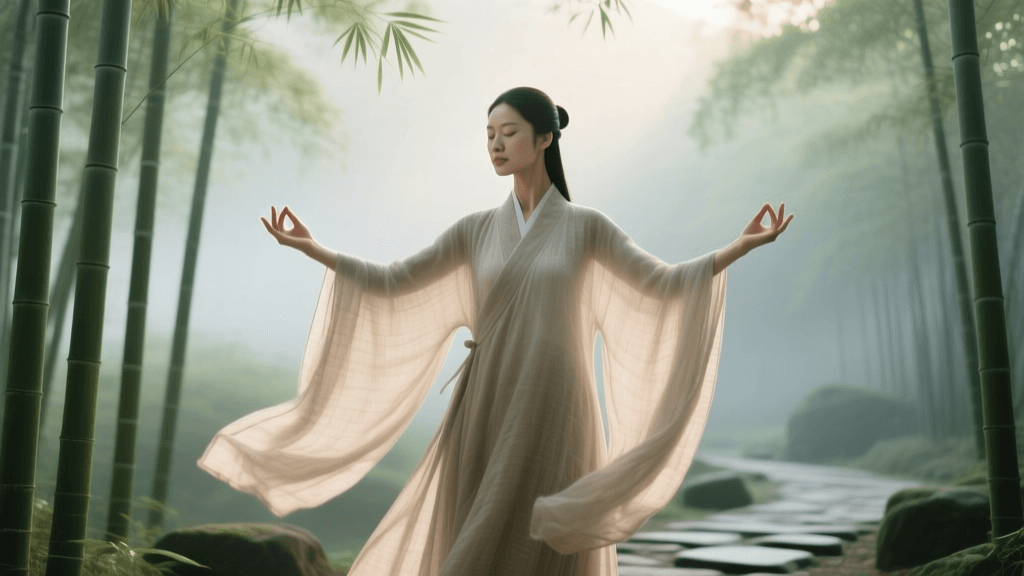
In 2026, the global wellness community has fully embraced the concept of 'sartorial mindfulness'—the practice of wearing intentional, culturally grounded garments to deepen the mind-body connection. Nowhere is this more evident than in the integration of traditional Hanfu with Chinese wellness practices like Qigong and meditation. Moving far beyond the realm of occasional festival wear or historical reenactment, modern practitioners are actively curating Hanfu wardrobes specifically designed to facilitate the flow of Qi (vital energy) and support prolonged periods of stillness or dynamic movement.
According to the National Center for Complementary and Integrative Health, mind-body practices like Qigong and Tai Chi rely heavily on physical comfort, relaxed posture, and unhindered diaphragmatic breathing. When practitioners don traditional Hanfu, the deliberate draping, natural fibers, and structural geometry of the garments serve as a tactile anchor, pulling the wandering mind into the present moment. This article explores the best Hanfu silhouettes, fabrics, and styling techniques for optimizing your Qigong and meditation routines in 2026.
Why Fabric Choice Matters for Qi Flow
The foundation of any wellness-focused Hanfu is its textile. In Traditional Chinese Medicine (TCM) and Taoist philosophy, the skin is considered the body's third lung, responsible for exchanging energy with the environment. Synthetic fabrics like polyester trap heat and moisture, creating a stagnant microclimate that disrupts the body's natural thermoregulation and, by extension, the smooth flow of Qi.
In 2026, the Hanfu market has seen a massive resurgence in heritage natural fibers, particularly Xia (ramie) and Ma (hemp and linen). Modern textile engineering has solved the historical issue of ramie's stiffness through advanced enzyme-washing techniques, resulting in fabrics that possess the structural elegance of traditional Hanfu but drape with the softness of well-worn cotton. For winter meditation, layered Sang蚕丝 (mulberry silk) remains the gold standard, as silk is believed to harmonize the body's electromagnetic field and retain warmth without adding restrictive weight.
Top Hanfu Silhouettes for Qigong and Meditation
Not all Hanfu styles are suited for movement. The sweeping, floor-length skirts of the Tang Dynasty court are beautiful but impractical for the grounded stances of Qigong. Instead, practitioners in 2026 favor specific historical silhouettes that balance modesty, tradition, and kinetic freedom.
1. The Daopao (Taoist Robe) for Deep Meditation
The Daopao is a cross-collared, wide-sleeved robe historically worn by Taoist scholars and monks. For seated meditation practices like Zuowang (sitting and forgetting) or Neidan (internal alchemy), the Daopao is unparalleled. Its generous cut allows the legs to fold comfortably into a full lotus or half-lotus position without pulling at the seams. The wide sleeves rest elegantly over the knees when the hands are placed in the cosmic mudra, creating a closed energetic circuit that practitioners report helps contain and circulate internal heat during deep meditative states.
2. The Yese and Duan Da for Active Qigong
For dynamic practices like Ba Duan Jin (The Eight Brocades) or Wu Qin Xi (The Five Animal Frolics), practitioners require garments that allow for deep lunges, arm extensions, and spinal twists. The Yese (a traditional cross-collared top) paired with Duan Da (straight, ankle-length trousers) is the ideal 2026 active-Hanfu configuration. Modern iterations often feature subtle elastic gussets hidden within the traditional side slits, offering modern athletic mobility while maintaining a strictly historical outward appearance. The trousers are typically gathered at the ankle with subtle ties, preventing excess fabric from dragging during low stances like the 'Dragon Squats.'
3. The Song Dynasty Beizi for Layering and Grounding
The Beizi is a long, parallel-collared outer coat that is left open at the front. It is exceptionally popular for morning outdoor Qigong in transitional climates. The Beizi provides a gentle, weighted sensation across the shoulders, which Harvard Health notes can help lower cortisol levels and promote a grounded, centered feeling during mindfulness exercises. It can be easily slipped off as the body generates internal heat during the later stages of a Qigong sequence.
Comparison Chart: Hanfu Fabrics for Wellness Practices
Selecting the right material is crucial for maintaining comfort during extended wellness routines. Below is a comparison of the top Hanfu fabrics favored by practitioners in 2026.
| Fabric Type | Best Practice | Breathability | Weight & Drape | 2026 Avg. Price (USD) |
|---|---|---|---|---|
| Enzyme-Washed Ramie (Xia) | Summer Qigong, Outdoor Tai Chi | Excellent | Lightweight, structured drape | $90 - $140 |
| Washed Linen (Ma) | Year-round Meditation, Indoor Yoga | Very Good | Medium weight, soft drape | $75 - $120 |
| Mulberry Silk (Sang) | Winter Neidan, Static Meditation | Moderate | Ultra-light, fluid drape | $180 - $250 |
| Cotton-Hemp Blends | Active Qigong, Travel Wardrobes | Good | Durable, flexible | $60 - $95 |
Botanical Dyes and TCM Wellness Synergy
A major trend in the 2026 Hanfu wellness space is the use of Caomu Ran (botanical dyes) that align with Traditional Chinese Medicine principles. Rather than purely aesthetic choices, practitioners are selecting garment colors based on their energetic and therapeutic properties.
- Mugwort (Ai Cao) Dye: Yielding a muted, earthy yellow-green, mugwort is a foundational herb in TCM used for moxibustion. Wearing mugwort-dyed Hanfu during meditation is believed to promote grounding and ward off damp, cold energy, making it highly popular for morning outdoor Qigong in autumn and winter.
- Indigo (Lan Cao) Dye: Traditional fermented indigo produces deep blues that are associated with the water element and the kidney meridian. Indigo-dyed linen Daopao are favored for evening meditation routines aimed at calming the Shen (spirit) and preparing the body for restorative sleep.
- Gardenia (Zhi Zi) Dye: Producing a vibrant, warm yellow, gardenia is associated with the earth element and the spleen meridian. It is often chosen for midday Qigong practices to stimulate digestion and mental clarity.
Diaphragmatic Breathing and the Hanfu Sash
One of the most critical, yet frequently overlooked, aspects of wearing Hanfu for wellness is the tying of the Yaodai (waist sash). In Qigong, power and breath originate from the lower Dantian (the energy center located roughly two inches below the navel). If a sash is tied too tightly, or positioned directly over the Dantian, it restricts diaphragmatic breathing and blocks the physical expansion of the lower abdomen.
Actionable Advice for 2026 Practitioners: When dressing for Qigong, tie your Yaodai slightly higher, resting it on the natural waist (above the navel) rather than the hips. Use a wide, soft cotton or silk sash rather than a stiff leather or heavily embroidered belt. The knot should be secure enough to hold the garment's cross-collar in place during 'Two Hands Hold up the Heavens' or 'Drawing the Bow,' but loose enough that you can comfortably slide two fingers between the sash and your abdomen at the peak of a deep inhale.
Sourcing Authentic Wellness Hanfu
As the demand for functional, wellness-oriented Hanfu grows, several specialized ateliers have emerged in 2026, focusing exclusively on natural fibers and ergonomic patterning. When shopping, look for brands that explicitly mention 'enzyme-washing' for their ramie and linen pieces, as this ensures the fabric will not chafe the skin during repetitive Qigong movements. Additionally, seek out flat-felled seams, a traditional tailoring technique that eliminates rough interior edges, ensuring the garment feels like a second skin during prolonged periods of stillness.
Conclusion
The integration of Hanfu into Qigong and meditation is more than a stylistic choice; it is a profound return to the holistic roots of Chinese wellness. By selecting the right natural fibers, honoring the historical silhouettes designed for movement and stillness, and utilizing botanical dyes that resonate with TCM principles, practitioners in 2026 are transforming their daily routines into deeply immersive, sartorially mindful experiences. Whether you are flowing through the Eight Brocades in a breathable linen Yese or sitting in silent meditation wrapped in a ramie Daopao, the right Hanfu acts as a bridge between the physical body and the boundless flow of Qi.