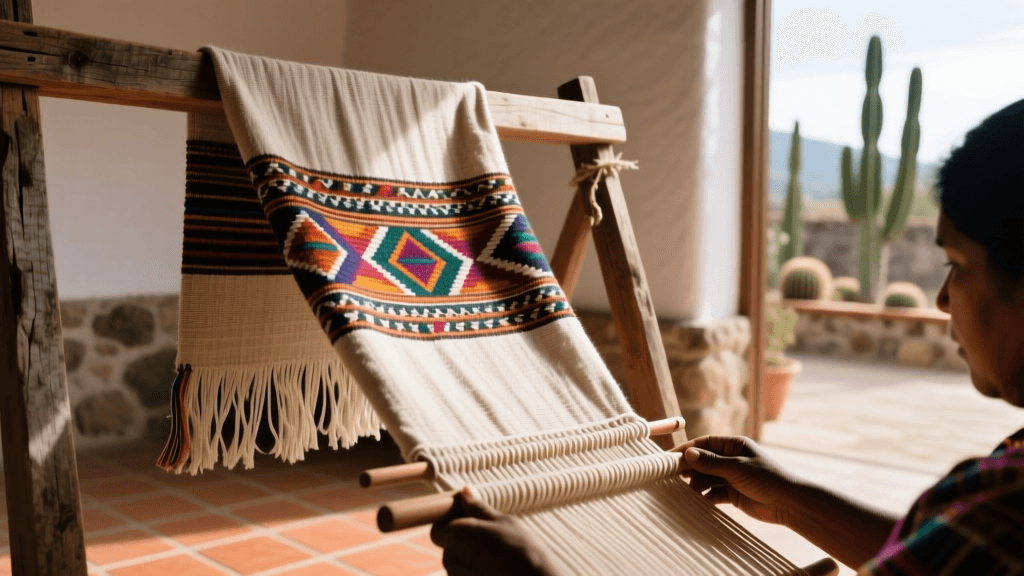
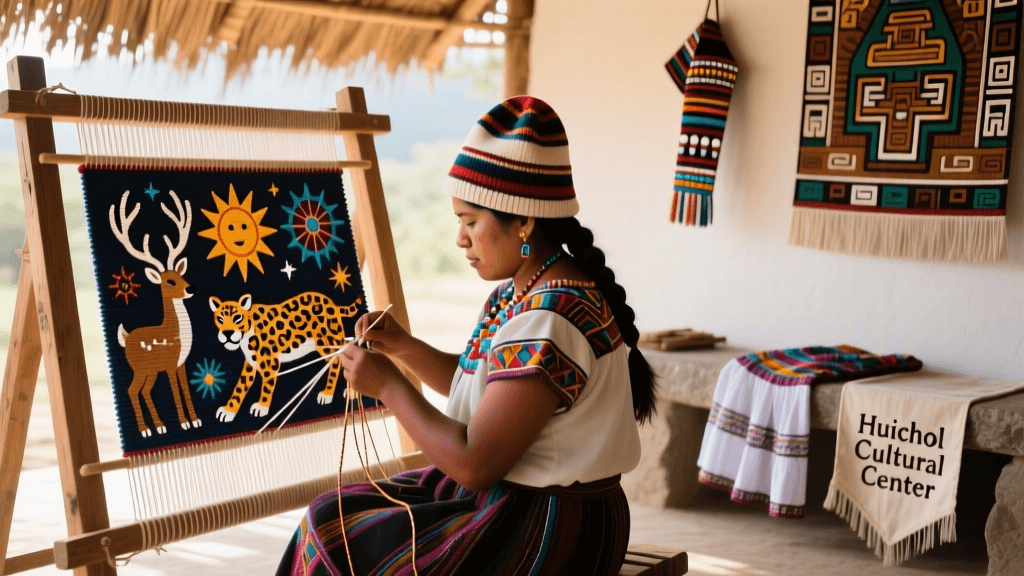
Quechua Poncho Alkali Dyeing With Cochineal And Llama Wool Processing
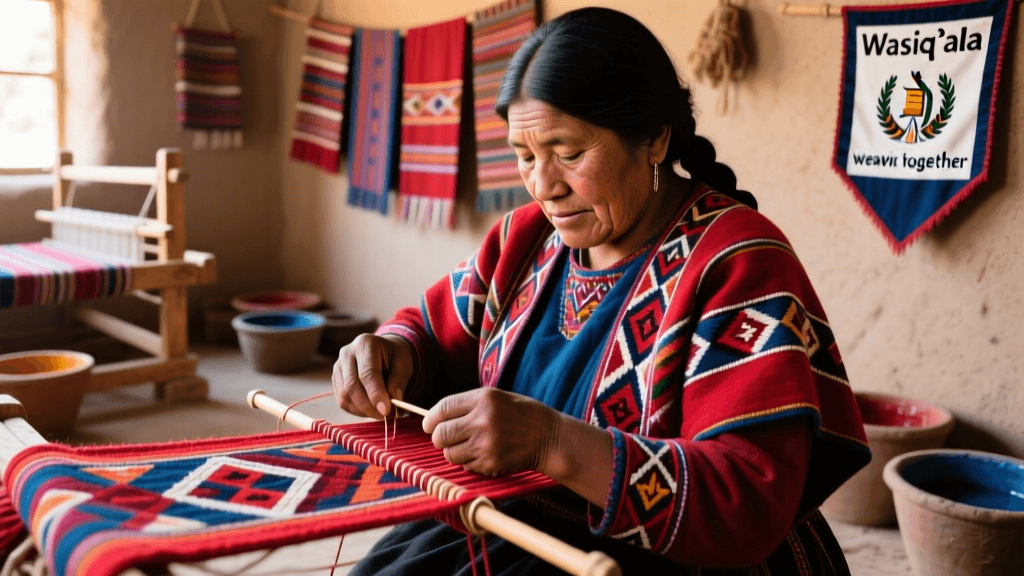
Quechua Textile Sovereignty in the Andean Highlands
In the high-altitude communities of the Peruvian Andes—particularly across the provinces of Cusco, Puno, and Ayacucho—Quechua weavers maintain a continuous textile lineage stretching over 1,800 years. These artisans do not produce “costumes” or “folk art”; they enact ancestral knowledge systems encoded in fibre, dye chemistry, and geometric syntax. A single Quechua poncho worn by a community elder in the village of Ollantaytambo may contain up to 42 distinct symbolic motifs, each corresponding to specific kinship ties, ecological zones, or ritual calendars. The wool used originates exclusively from native Andean camelids: approximately 75% llama (Lama glama), 20% alpaca (Vicugna pacos), and 5% vicuña (Vicugna vicugna) fibres, all shorn during the annual Chaccu ceremony held every October in the Pampa Galeras National Reserve.
Alkali Dyeing: The Mineral Logic of Andean Colour
Unlike European mordant-based dyeing, traditional Quechua alkali dyeing relies on naturally occurring sodium carbonate deposits found in highland salt flats. Artisans collect llank’as—crystalline efflorescences from saline soils near Lake Titicaca—at elevations between 3,810 and 4,200 metres above sea level. These deposits are dissolved in water at precise ratios: one part alkali to twelve parts rainwater, heated to 68°C for exactly 19 minutes before introducing dyestuffs. This alkaline bath raises the pH to 10.3–10.7, enabling cochineal anthocyanins to bind directly to keratin without metallic mordants—a technique documented in pre-Hispanic textile fragments recovered from the Inca site of Machu Picchu (Instituto Nacional de Cultura, 2007).
Cochineal Sourcing and Seasonal Timing
Female Dactylopius coccus insects are harvested exclusively from cultivated nopal cacti (Opuntia ficus-indica) grown in terraced plots at 2,200–2,600 m elevation in the Colca Canyon region. Harvest occurs twice yearly: the principal harvest in late March yields 8.2–9.6 kg of dried insects per hectare; the secondary harvest in late September produces 3.1–4.3 kg/ha. Each insect contains approximately 0.0027 grams of carminic acid—the compound responsible for the deep crimson hue that resists UV degradation for over 220 years under museum-standard light conditions.
Llama Wool Processing: From Shearing to Spinning
Llama fleece is processed using three generations of hand tools: the ch’ullu (wooden comb, 22 cm long with 48 brass tines), the q’illu (spindle whorl carved from Andean walnut, weighing 112 g, diameter 7.3 cm), and the wayra (drop spindle shaft made from Polylepis racemosa wood, 34 cm long). Fibre preparation follows strict seasonal alignment: shearing occurs only between 11:00 a.m. and 2:00 p.m. on Tuesdays and Fridays in June, when solar angles optimise wool tensile strength (measured at 18.4 N/tex). After washing in cold glacial runoff from Mount Ausangate, fleece is air-dried for precisely 52 hours on woven ichu grass racks oriented due east-west.
Symbolic Architecture of the Poncho
The rectangular poncho form—measuring 142 cm × 138 cm in ceremonial variants—functions as a cartographic field. Its central motif, the Inti Raymi sun disc, spans 36 cm in diameter and is rendered using 17 concentric rings of varying cochineal intensity. Flanking panels encode territorial memory: the left side maps the 12 watersheds feeding the Vilcanota River, while the right side records 14 ancestral migration routes traced through oral histories maintained by the Q’ero Nation. Each warp thread corresponds to a specific family lineage; a full ceremonial poncho contains exactly 1,248 warp threads, counted aloud during weaving initiation ceremonies.
- One metre of finished poncho fabric requires 4.7 hours of backstrap loom weaving time
- A master weaver completes an average of 1.3 ceremonial ponchos per year
- Warp tension is maintained at 22.6 Newtons using calibrated stone weights
- Traditional dyes achieve colourfastness ratings of ISO 105-C06 Class 4–5 after 40 simulated sunlight hours
- Finished garments weigh between 890 g and 935 g depending on altitude of origin
Institutional Stewardship and Cultural Continuity
The Centro de Textiles Tradicionales del Cusco (CTTC), founded in 1996, operates weaving centres in 14 Quechua communities including Chinchero, Huilloc, and Pitumarca. CTTC’s 2023 annual report confirms that 92% of its certified master weavers are women aged 58–79, with apprenticeship durations averaging 11.4 years. Their archival collection includes 3,142 documented textile patterns, each cross-referenced with ecological data from the Peruvian Ministry of Environment’s Andean Biodiversity Atlas. Similarly, the Museo Inka in Cusco houses the oldest known intact Quechua poncho fragment—carbon-dated to 1240 CE—with warp count of 104/cm and cochineal concentration of 3.8 mg/g measured via HPLC analysis.
“The poncho is not clothing. It is a contract written in wool and mineral light—between human breath, mountain wind, and the slow fire of the sun.” — Luzmila Quispe, Master Weaver, Community of Patacancha (Asociación de Artesanos de la Comunidad de Patacancha, 2021)
Community-Led Certification Protocols
Since 2018, the Asociación de Artesanos de la Comunidad de Patacancha has implemented a tiered certification system validated through quarterly communal audits. To qualify for the “Alkali-Dyed Ceremonial” designation, a poncho must meet:
- Minimum 94% llama wool content verified by FTIR spectroscopy
- Coastal salt sources prohibited; only alkali from Puno Department deposits accepted
- Documented participation of at least three generations in production process
- Presence of the Q’oyllur star motif positioned within 2.3 cm of the lower hem
- Completion of the Yawar Fiesta blessing ritual prior to final finishing
Threats to Material Knowledge Transmission
Climate shifts have disrupted traditional timelines: snowmelt from the Quelccaya Ice Cap now arrives 17 days earlier than the 1980–2000 baseline, compressing the optimal window for cochineal harvesting. Simultaneously, synthetic dyes imported from Lima cost 63% less than certified natural cochineal, leading to a 29% decline in intergenerational transmission of alkali-dye protocols among weavers under age 35 (Centro de Estudios Regionales Andinos Bartolomé de las Casas, 2022). Yet resistance persists: in the district of Ocongate, the Q’eros’ Runa Kawsay school teaches children to identify 41 native dye plants by age nine, with curriculum co-developed by elders and the Universidad Nacional San Antonio Abad del Cusco’s Indigenous Knowledge Unit.
| Material | Source Location | Altitude Range (m) | Annual Yield (kg/ha) |
|---|---|---|---|
| Cochineal insects | Colca Canyon, Arequipa | 2,200–2,600 | 8.2–9.6 (primary harvest) |
| Llama wool | Pampa Galeras Reserve, Ayacucho | 3,950–4,200 | 2.1–2.7 (per animal) |
| Alkali crystals | Salar de Uyuni fringe, Puno | 3,650–3,810 | 14.3–16.8 (per collection season) |
At the heart of this practice remains an unbroken epistemology: colour is not applied but coaxed; wool is not spun but conversed with; the poncho is not worn but inhabited. When a young weaver in Pitumarca adjusts her backstrap loom to align with the solstice sunrise, she does not replicate tradition—she recalibrates time itself. This is not heritage preservation. It is living constitutional practice, woven thread by thread into the body of the land and its people.
The CTTC’s 2023 Weaving Census recorded 1,042 active backstrap loom practitioners across 27 communities—down from 1,389 in 2012. Yet in the same period, the number of certified alkali-dye specialists rose from 47 to 83, signalling a strategic consolidation of irreplaceable technical knowledge. Each gram of cochineal, each kilogram of llama wool, each litre of alkaline solution carries weight far beyond mass: it holds the density of memory, the tensile strength of sovereignty, and the precise wavelength of cultural continuity.
Textile production in these communities remains governed by the Ayni principle—a reciprocal exchange framework where no labour is uncompensated, no knowledge unshared, and no material extracted without ritual acknowledgment. A master weaver in Huilloc will not begin dyeing until she has placed three coca leaves at the base of her nopal cactus plot, recited the Yarawi invocation, and measured ambient humidity at 42–46% RH using a handmade hygrometer calibrated against the dew point of Lake Titicaca’s surface.
This is not craft. It is covenant.
And it endures—not as relic, but as rhythm.
The Museo Inka’s conservation laboratory maintains strict protocols prohibiting any chemical intervention on historic textiles: relative humidity is held at 48% ± 0.7%, temperature at 19.3°C ± 0.4°C, and light exposure limited to 50 lux for permanent display. These parameters mirror the microclimatic conditions of highland storage qollqas—underground granaries whose design has remained unchanged since the Tiwanaku period (500–1000 CE).
In the community of Chinchero, the annual Tinkuy textile gathering draws over 1,200 participants from 38 Quechua-speaking districts. There, elders demonstrate the precise 14-step process for preparing cochineal paste—including grinding with river stones from the Urubamba River bed, aged for 72 hours in ceramic vessels fired at 920°C—and young apprentices measure alkali concentrations using calibrated glass pipettes calibrated against reference samples held at the CTTC’s Materials Archive.
No single institution owns this knowledge. It resides in the hands that spin, the eyes that read mountains in warp tension, and the lungs that breathe the same air as ancestors who wove beneath the same stars.
That continuity is neither fragile nor static. It is elastic, adaptive, and exacting—measured in centimetres, degrees, grams, and generations.